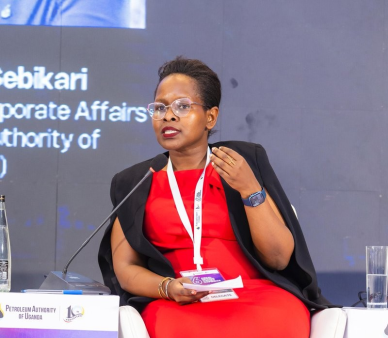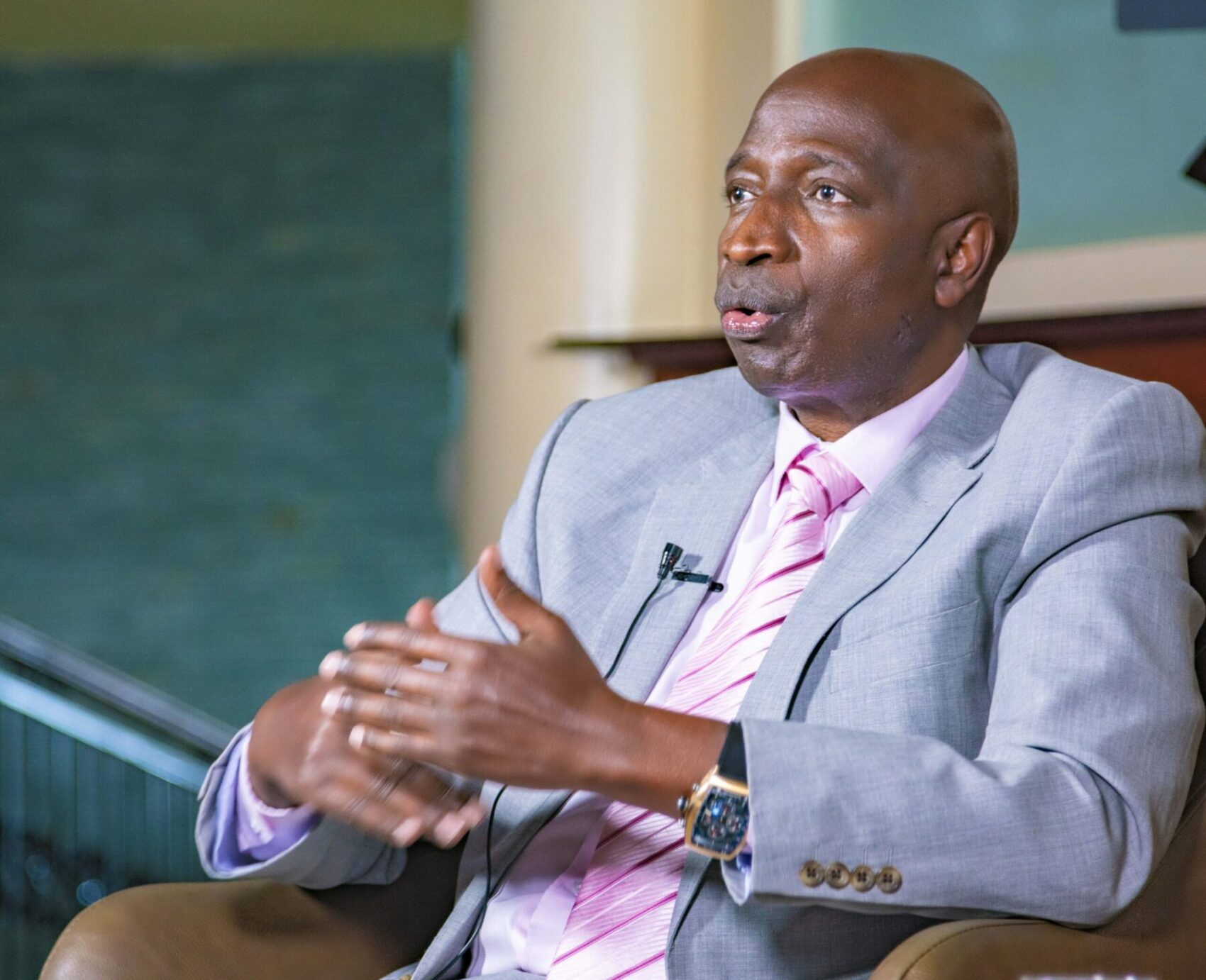
First, for the uninitiated, what exactly is the role of the Petroleum Authority of Uganda? What does regulating and monitoring the petroleum sector to create lasting value entail? How exactly do you achieve this– what is involved?
First of all, it is essential to recognise that the Petroleum Authority of Uganda (PAU) is one of the three institutions of government responsible for stewarding the oil and gas sector in the country. The other two institutions are, the Ministry of Energy and Minerals Development (MEMD) which is in charge of policy as well as licensing companies in the sector, and the Uganda National Oil Company (UNOC) which takes care of the commercial interest of government in the oil and gas sector.
In doing our work, we focus on areas (6) areas, namely:
- Petroleum Resource Management: The Authority is required to ensure that the petroleum resources in the country are known in very great detail– where they are, in what quantity and how easy it is to produce them, in the best way possible.
- Cost Management and Economic Analysis: We have a responsibility to ensure that the costs incurred during the petroleum operations are only those that are necessary and are approved. This is particularly important because all the costs that are incurred will be recovered by the oil and gas companies, when the oil production starts. To maximise value for Uganda, we ensure that only what needs to be spent is what is being spent, because the less we spend, the more Uganda will have to share when production starts.
- Petroleum Data Management: To efficiently manage the country’s petroleum resources, we must acquire, appropriately receive, archive all the data generated from oil and gas activities in Uganda. This data includes Geological and Geophysical (G&G), Engineering, Health, Safety and Environment (HSE), Costs, National Content, Subsurface and Surface Facilities. The PAU also manages and assesses and responds to requests for data with respective stakeholders, in a way that maximises value out of this data. In line with the above, the PAU continues to implement:
- The establishment of an internationally standardised and competitive tier-three data centre.
- Efficiency in service delivery by establishing Information, Communication and Technology (ICT) Infrastructure and e-Government systems; the National Supplier Database (NSD) and the National Oil and Gas Talent Register (NOGTR); and,
- The development of the National Petroleum Data Repository.
- Environment, Health, Safety and Security: The third important aspect is ensuring that the oil and gas activities are undertaken safely, and in a way that does not harm people and the environment.
- National Participation: This aspect involves ensuring the participation of Ugandans. This is very crucial because the oil and gas sector is new in the country and as such how to get Ugandans involved has been the worry of everybody. So one of our biggest responsibilities is to promote the significant participation of Ugandans in the oil and gas sector- to increase employment and business opportunities for Ugandans and Ugandan enterprises. To do this requires the enhancement of the capacities of both the people and the enterprises to enable them to compete because the oil and gas sector is competitive and does not compromise on quality.
- Stakeholder Engagement: The final and fifth area of our mandate is to ensure the sustainability of this sector by onboarding and aligning all stakeholders— government ministries, departments and agencies; the private sector; civil society, etc. But as you will appreciate, this is not specifically for the Authority alone because the Ministry of Energy and Mineral Development, as well as UNOC, also have a responsibility to engage stakeholders.
This sounds very good on paper, but with numbers, can you demonstrate how in the last five years, the PAU has indeed delivered value to the Ugandan taxpayer on the above five areas of regulation?
First of all, we now know that the oil and gas resources that have been discovered in Uganda are close to 6.5 billion barrels in 21 oil and gas fields in the Albertine Graben. We also know that out of the 6.5 billion barrels, we expect to recover about 1.4 billion barrels at a rate of about 230,000 barrels per day when production starts.
Regarding costs, the amount of money that has been invested, so far in exploration and appraisal is somewhere around USD3.8 billion. At 6.5 billion barrels discovered, this translates into less than a dollar per barrel, which is one of the lowest costs of finding petroleum, compared to a global average of USD5 per barrel. This means that, so far, the aspects of managing costs in the exploration phase has been done well.
As we move into the development or preparation of infrastructure and production, we expect much more investment, in the range of USD15-20 billion. We want to ensure that this USD15 billion is spent effectively and are working with the oil companies to ensure that even the development cost is not extremely high, and we believe that should be possible.
Regarding, the participation of Ugandans, so far, the percentage of Ugandan nationals directly employed by the oil companies to date is 81%. Ugandans consist of 59% of all management positions, 75% of technical jobs, and 100% of all support staff jobs.
The PAU has actively supported this by providing visibility of Ugandans who would like to get employment in the sector through the National Oil and Gas Talent Register (NOGTR) that was set up in 2019 and now has over 2,800 individuals and 108 companies registered.
In the last five years we have been around, we have intensified our local content engagements and as a result, out of the six hundred and thirty-eight (638) procurements valued at USD21,375,662 made by the licensed oil and gas companies, 59.6% procurements valued at USD15,484,722 or 72.44% of total expenditure were awarded to Ugandan-owned entities. Also, 31.8% of contracts worth USD4,755,732 that is equivalent to 22.3% of all expenditure, were given to Ugandan-based companies that have foreign ownership, meaning that Ugandans indirectly benefitted as well. Only 3% of the contracts worth USD 860,780 equivalent to 4% of total expenditure were awarded to foreign companies. In 2019, the ratio of procurements spent on indigenous Ugandan companies went up to 72.4%, up from 59.6% in 2018. To support the Ugandan companies that would like to participate in the sector, PAU in 2017 set up the National Supplier Database (NSD). The NSD is a register of all companies that would like to supply goods and services to the oil and gas sector. Today, 1,775 companies are qualified and registered on the NSD, up from 513 in 2017 when the NSD was established. As a result of the above, out of the USD3.8 billion that has been spent so far, Ugandan enterprises have taken in about 28%, which is close to USD1 billion.
However, this has been a phase that is not technologically heavy; Ugandans usually tend to lose out when the activities being implemented, are technologically heavy.
To achieve maximum economic value from the projects, the PAU is also working with other sectors in the economy such as the health, transport, housing, tourism, agriculture, and education sectors to identify and strengthen linkages between the oil and gas sector and in the country’s broader economy. This will facilitate a more holistic benefit for the country during the anticipated peak period of investment and thereafter. Optimal exploitation of the sectoral linkages is expected to bring close to USD12billion into the country’s economy during the 4-5 years of the development phase before production.
The numbers are important, but perhaps the most important thing to me is the fact that the country has put in place a process of monitoring and tracking how Ugandans are participating, because once you count something, then it enables you to improve it. So, the fact that Uganda, through the PAU, is evaluating and documenting the participation of Ugandans is extremely important.
Of course, the Authority does not walk alone; we have initiatives like Skilling Uganda, under the Ministry of Education, the Stanbic Business Incubator, the Skills for Oil and Gas programme by GiZ and others by the private sector, civil society, and of course, the other line government MDAs. I must mention that the private sector has come in very effectively to not only skill but also mobilise the small-scale enterprises, so they are easier to reach. We now have a challenge to see how much of that USD15 billion- USD20 billion that is going to be spent in the next phase, is spent in the country and on as many Ugandan entities as possible.
With all the above major milestones achieved in the last five years, would you say Uganda is on course to achieving first oil?
Yes, I think we are very much on course to achieving first oil. Of course, the most important thing is that oil was discovered and in commercial quantities. The licensed oil companies have been granted production licences, meaning they are ready to invest in the preparatory work that is required for production. The avenues of commercialising the oil are now known and much agreed upon by the stakeholders.
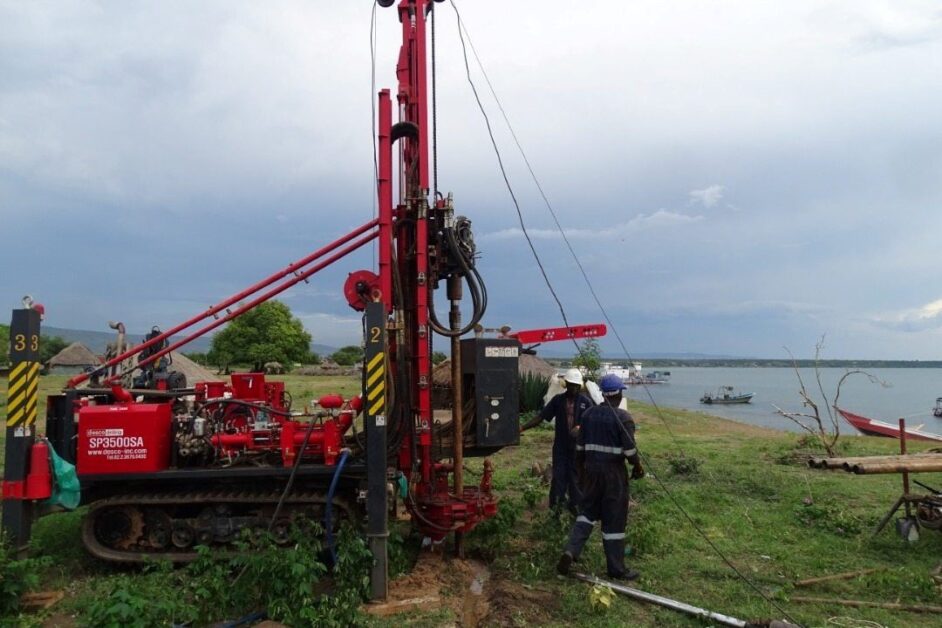
The production phase can be boiled down into two major projects, namely: The Tilenga Project and The Kingfisher Project.
The Tilenga Project includes over 400 wells that are planned to be drilled on 35 well pads and a Central Processing Facility (CPF) with a capacity to process 190,000 barrels of oil per day. This project also includes 170 kilometres of flow lines transporting the crude oil within the oil fields as well as a 96 km feeder pipeline to transport the processed crude oil from the CPF in Buliisa to the export hub and refinery in Kabaale, Hoima District. This project is estimated to cost between USD 5- 6 billion.
The Kingfisher Project, on the other hand, has a planned Central Processing Facility (CPF) with a capacity of 40,000 barrels of oil per day and 31 wells to be drilled on four well pads. The project will have 18 kilometres of flow lines and a 46-kilometre feeder pipeline from the CPF in Buhuka, Hoima district, to the export hub and refinery in Kabaale. This project is estimated to cost about USD 3-4billion.
The refinery is a 60,000 barrels per day facility with a 211-kilometre product pipeline that will be constructed at an estimated cost of US USD 3-4 billion. We then have the 1,443km East Africa Crude Oil Pipeline (EACOP) to transport 200,000 barrels of crude oil per day to the Tanzanian port of Tanga Port on the Indian Ocean and this is estimated to cost USD3.55 billion.
The designs of all this infrastructure are now in place except the one for the refinery which is we expect to be finalised next year. The environmental and social impact assessments for the oil fields have been done and have been approved by the National Environment Management Authority, and we are just waiting for the one for the EACOP.
To support the oil activities in the region, we have the under-construction Kabaale International Airport in Hoima District at USD800 million, as well as about 700 kilometres of 12 roads in the Albertine Graben, estimated to cost about USD 900 million.
What is now on everyone’s minds is when will the companies make and announce what is called a Final Investment Decision (FID). We have been engaging with the oil and gas companies and have an understanding that FID will take place before the end of this year. With the recently concluded Host Government Agreements both in Uganda and Tanzania, I am confident that we are on course.
Usually, given the size of projects mentioned above, once the FID has been made, it should take about three years of intense infrastructure construction to get the oil out of the ground. Certainly, our partners in the private sector who are making this investment have shown a lot of determination; the government has prepared itself– the institutions, the human resource and built the infrastructure. All these activities really demonstrate that, without a doubt, Uganda is on course towards first oil.
 The Smartphone Tax Trap: Is Uganda Pricing Millions Out of the Digital Economy?
There is a general feeling that Uganda has waited for perhaps too long to get this oil out of the ground. Has this wait been worth it? Are you, for example, comfortable that this wait has been necessary to steer us clear of the so-called oil curse?
First of all, I must say that when the commerciality of Uganda’s oil and gas resources was established, I was in this sector and I can tell you, the level of pessimism was much, much higher then. The words on everybody’s mouth was “oil curse”. There was a lot of anxiety. I agree with you that there are still people who have a lot of pessimism, but I think you can agree with me that the kind of pessimism we have now is nothing compared to what used to be at the beginning. This is a major success because today, more people appreciate that the government is taking forward the sector in the best way possible.

As a regulator, we have gone out to the world and looked for the best practices as well as learned from the mistakes of other countries that have been kind enough to share with us their not-so-good experiences. We do not have an excuse for things not to happen properly in Uganda, because we have all the information on what to do and what not to do– we have had all the time. Remember the goal of the national oil and gas policy of Uganda is to create lasting value for our society using these oil and gas resources. If you’re going to create lasting value, you need to go about it in a very organised, documented manner, because without documentation, data, analytics, etc., you can lose a lot of value along the way without even realising it.
What do you mean that you can lose value without realising it?
For instance, many people thought that the value of the oil and gas resources was only the revenue we are going to earn from producing and selling the crude oil, but as you have seen, even before commercialisation of the oil starts, Ugandans have been able to provide goods and services worth over USD1 billion. We are now working towards ensuring that the participation of Ugandan business and individuals, increases from 28% to 40% of the USD15-20 billion that is to be spent before the oil comes out of the ground.
Another area of value has been the ability to align the projects with our national interests as a country. For example, investors did not want a refinery; they wanted to export all the crude oil to global markets, but the interests of the government was to have a refinery so that we could stimulate other industries around the refinery as well as guarantee the security of supply of petroleum products. That is a strategic national interest that was initially not aligned with the needs of the industry, but it had to take time for such a strategic interest to be aligned. Fortunately, we now have a win-win situation because our oil was enough to have both a mid-sized refinery and an export pipeline. Such aspects like those, have necessitated the country to take a long time, but for the good of us all.

I want to believe that if we as a country had rushed to focus on producing as quickly as possible and fixing these other things on the go like some people were suggesting, this other aspect of value would have been lost, and it would never have come back. So yes, the wait has been worth it. What we may see as delays, has given Ugandans a good learning curve that has prepared us for both the opportunities before and during the production.
But besides, our oil was discovered in the middle of a continent, in a landlocked country. If you must move it to the ocean for export, you have to put the infrastructure in place. If you compare that to other countries that found their oil in the middle of an ocean and it was a matter of sinking a well and bringing a ship to load the crude, then you appreciate the complexity of the decisions that we have had to go through.
All in all, Ugandans have had an opportunity to prepare themselves, and certainly, the government has prepared itself. The oil companies too, are benefiting significantly from this delay because as you are aware, the government is developing infrastructure in the Albertine Graben- they are tarmacking roads, building an international airport, etc, These are things that are going to facilitate and make it easier for the development and production of oil.
Some activists have stated that the environmental costs of getting this oil out may outweigh the commercial benefits of the oil eventually. So how are you as a regulator making sure that we still attain that lasting value that PAU stands for without hurting the environment, especially given that this oil is in a very environmentally sensitive area?
Our oil and gas resources are indeed located in very pristine environments, and therefore, everything needs to be done to ensure that these environments are not destroyed. But regarding this aspect, it is important to realise that Uganda has been lucky or is different in a way because in many places where the development of the oil and gas sector has caused challenges, the environmental standards and regulations, and systems, were not in place when the oil was discovered and or development started. But in our case, by the time the oil was discovered, the environmental standards, laws and regulations were already in place. Most of the developments in the oil and gas sector are being implemented under those laws and this has helped a lot.

For instance, all the activities in the oil and gas sector undergo Environmental and Social Impact Assessment (ESIAs) and the processes for ESIAs in Uganda follow global best practices- they are recognised by everybody. All activities, the drilling, seismic surveys, building camps, etc., It is important to remember that most of the development activities are going to be funded by international financial institutions such as International Finance Corporation (IFC) and all these have standards on the environment that must be followed to the letter. I am proud to say that the oil and gas activities in the country are not only being benchmarked on Uganda’s environment legislation, they are also being benchmarked on international standards.
To date, the PAU has reviewed three (3) ESIA reports in a process that included seven (7) public hearings: two (2) for the Tilenga Project ESIA report in 2018; two (2) for the KFDA ESIA report in 2018; and, three (3) for the EACOP ESIA report in 2019. The ESIA certificates for the Tilenga and Kingfisher Projects were issued in April 2019 and March 2020 respectively, and we expect that NEMA will issue the remaining ESIAs for the other projects. The ESIAs we have received so far from NEMA all indicate that the oil and gas sector can very well exist with the environmental ecosystem in the Albertine Graben.
There is a new round of exploration licensing for new oil blocks. What are the latest developments from this phase and what milestones have been achieved? What can we expect in the coming months?
That is quite an interesting question because all the oil we have been talking about has been discovered as a result of exploration in 40% of the Albertine Graben. It is indeed true that there is potential for Uganda to find new oil. I must, however, first say that exploration licensing is the role of the Ministry and not the PAU.
In this regard, the Minister held a licensing round in 2017 and two companies, a Nigerian company called Oranto Petroleum Limited and an Australian Company called Armour Energy Limited emerged successful. Oranto has undertaken seismic surveys, and Armour is wrapping up theirs. The Minister announced another licensing round which is expected to bring on board additional investors, and we expect to find more oil in the Albertine Graben. That is a process that the Ministry is taking forward. The applications will be evaluated, and winners announced at an appropriate time.
Our expectations are pegged on the previous very high success rates, specifically 88% of the wells that were drilled during exploration found oil. This is one of the highest global rates given that on average, only 25% of the wells the world over yield oil at the exploration phase. Over and above this exploration success, I am sure that the companies involved in these two licensing rounds will have more confidence, given the fact that they are now sure where the oil they discover will be going- either into the refinery or the export pipeline. It is a different ball game, to explore for oil when you are not sure whether it will be refined or exported, like the companies that came at the beginning.
Lastly, where do you see Uganda’s oil and gas sector in the next five years and beyond? What will be the role of the PAU in shaping those five years and laying a firmer long-term ground?
If we start with the sector, as I indicated earlier, our understanding with the Licensees is that they will take the Final Investment Decision (FID) before the end of the year. But even before the FID, some on-ground activities are ongoing like land acquisition, environmental impact assessments, etc., So in the first year of taking the FID, we should see those early activities completed, the land acquisition completed and some early civil works that are required for the construction beginning as well as contracts concluded for many of the mega-projects that are going to follow.
As we go into the year after that, we should begin to see some intense activity on the ground especially in terms of preparations for drilling and actual drilling– up to 500 wells will be dug during development and subsequent production. Then the construction of the facilities for the Tilenga and Kingfisher projects will begin; that should see a lot of engineering works. All this beehive of activity will be going on into the third year, and after that, we start the production phase.
On our part as the PAU, the next five years will continue to rotate around the core regulatory areas mentioned earlier, i.e. resource management, costs efficiency, the environment, national participation, data management and sustainability. This time, however, this is going to be benchmarked on a bigger activity. You can imagine developing the Tilenga and Kingfisher oil fields while at the same time, building an export pipeline— all this beehive of activity at the same time!
As an Authority, we will need to fill up our staff structure and have all the systems in place to try and monitor these aspects as they happen in real-time. This preparation has begun; for instance, in the Authority, we plan to have a real-time operation centre where we will, in real-time, view all these things as they happen and where they happen.
We will continue building enhanced capacity to regulate efficiently, even amidst this beehive of activity. But this beehive of activity won’t only be for the Petroleum Authority of Uganda, or for the oil and gas sector alone but it will be by and large for the whole of Uganda.
You can imagine the numbers of people who will be landing at the airports to go and work; the persons that will be transporting equipment to and from the fields, the place where these people will be eating and sleeping etc., That beehive of activity, we expect it to cut across all aspects of the economy; that is how I see the next five years building up.
What is coming is not small, but I know that Ugandans have had some good time to prepare themselves, so we are waiting to see when the rubber hits the road.