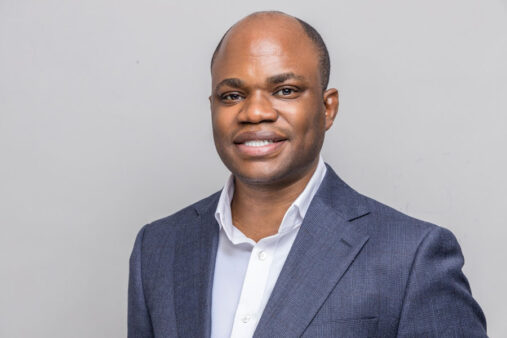
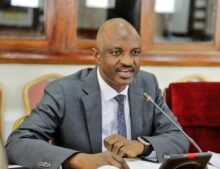
Paul Musasizi is the chief executive of Uganda’s most ambitious industrial experiment, one that ended 2025 on a high, even as the pressure on execution has never been greater.
In September 2025, Uganda officially commissioned the Kiira Vehicle Plant in Jinja, a $120 million industrial facility unveiled by President Museveni and described by government as the largest and most capable bus manufacturing plant on the African continent.
The plant brings together body assembly, painting, chassis integration, testing, and in-house engineering in one location, with an installed capacity of 2,500 vehicles a year, scalable to 10,000 units, and a target of 65% local content across its supply chain, a project expected to create more than 14,000 jobs across the wider mobility ecosystem.
Uganda, which has historically spent over $800 million a year importing vehicles, now has a physical industrial platform to change that equation.
Two months later, in November 2025, Kiira took that capability onto the continental stage.
The company launched the Grand Trans-Africa Electric Expedition, sending a Made-in-Uganda Kayoola Electric Coach on a 13,000-kilometre, 30-day journey across six African countries, Uganda, Tanzania, Zambia, Botswana, Eswatini, and South Africa, to demonstrate that its technology is not just symbolic, but road-worthy, scalable, and export-ready.
The expedition was designed to unlock regional markets and position Uganda as a serious player in Africa’s green-mobility future.
These were not public relations stunts. They were proof-of-life moments for a company long accused of existing mainly on PowerPoint.
Musasizi now leads a corporation that has crossed the hardest threshold of industrialisation: from prototype to plant, and from concept to continental showcase.
The Auditor General’s findings describe the cost of getting here. What happens next determines whether those costs were an investment or a warning.
Clean books, brutal numbers
On paper, Kiira’s finances are clean. The Auditor General’s latest report confirms that the company’s accounts comply with IFRS and public finance laws. Operationally, however, the numbers are brutal and unforgiving.
In the 2023/24 financial year, Kiira targeted UGX 197.49 billion in revenue. It collected just UGX 2.345 billion, barely 1.2% of the target.
Vehicle sales missed almost entirely. Contract manufacturing and spare-parts sales delivered nothing. These figures were recorded before the plant reached full physical completion, which makes the next audit cycle far less tolerant.
Management points to undercapitalisation. Kiira required UGX 80 billion in equity but received only UGX 45.36 billion.
Over five years, it estimates it needs UGX 524 billion to reach scale. But funding gaps have become structural, keeping the company in a prolonged start-up posture even as its physical infrastructure has now been completed.
A factory built under strain
Execution failures run deeper. Government released the full UGX 97.84 billion budget for the year, but UGX 30.04 billion went unused.
At the time of the Auditor General’s review, the Kiira Vehicle Plant was still incomplete. Equipment installation lagged. Parts worth UGX 14.43 billion were only partially delivered. More than UGX 51 billion in capital expenditure sat idle.
 Inside Ramathan Ggoobi’s Plan to Raise UGX 2.3 Trillion in New Taxes and UGX 2.54 Trillion Through Enforcement
That context matters: the plant is now complete, but it has arrived carrying the weight of those delays.
Governance weaknesses compound the strain. Kiira has operated without a full board since May 2024.
Only two of the 11 directors remain in office. The Auditor General described this as a major governance weakness, precisely as the company entered its most critical execution phase.
Staffing gaps further constrain momentum. Only 155 of 247 approved positions are filled.
Marketing and sales, the revenue engine, are two-thirds vacant. In manufacturing, this is not a delay; it is a choke point.
With the plant now physically ready, these vacancies are no longer administrative issues. They are direct revenue blockers.
The narrow window for proof
Works and Transport Minister Edward Katumba Wamala has already called for urgent staff expansion following Kiira’s Southern Africa exhibition, where Kayoola buses reportedly attracted more than 400 expressions of interest from transport operators.
The risk is obvious: if production cannot scale fast enough, reputational damage may arrive before commercial credibility is fully earned.
Cash-flow friction adds another layer of pressure. Quarterly fund releases arrive an average of 56 days late through the Science, Technology, and Innovation Secretariat. Salaries stall. Procurement slows. Momentum dissipates.
There is, however, a narrow window of proof.
Since late 2024, seven pilot e-Xpress electric buses have operated on Jinja routes, generating UGX 425 million in revenue. Management plans to scale this into a business-to-business fleet model targeting schools, government institutions, and corporate clients.
Mid-term, Kiira targets annual production of 2,500 vehicles; long-term, 5,000; and by 2030, up to 10,000 units, a scale that could meaningfully reduce Uganda’s UGX 2.9 trillion ($800 million) annual vehicle import bill.
But promise alone will not satisfy 2026. The factory is built. The lines are installed. The showcase is complete.
Now the plant must run. Staff must be in place. Orders must turn into deliveries. Cash must flow. Buses must roll out — consistently and at scale.
That is why Paul Musasizi is in the hot seat. Kiira does not need another vision. The infrastructure is done. It needs results, now.