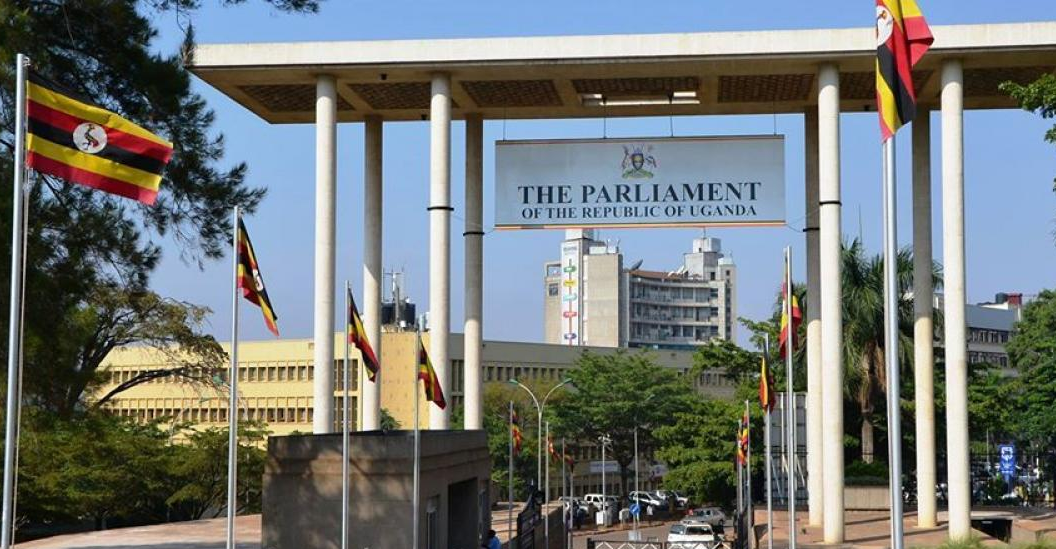
Last year Parliament approved loans to the tune of UGX18.69 trillion, according to the report detailing the business transacted by the House in the year 2020.
The approved loans are up from the UGX6.15 trillion that legislators approved in 2019.
According to the report, 17 loan request proposals authorizing government to borrow were approved. These were tabled by government through the Ministry of Finance, Planning and Economic Development and considered by the House National Economy Committee.
These include; a UGX1.1 trillion (US$ 300.0 million) loan from the International Development Association (IDA) of the World Bank Group for budget support for financial year 2019/2020 to provide sufficient financial resources to the health sector and to mitigate negative effects of COVID-19 on the economy and UGX1.8 trillion (US$ 491.5 million) from the International Monetary Fund (IMF) for Balance of Payments and Budget Support to address the negative effects of COVID-19 in the financial year 2019/2020.
The others include; UGX1.67 trillion (US$ 456.3 million) from the Exim Bank of China to finance the upgrade and construction of national oil roads, UGX2.2 trillion (US$ 600 million) from the International Monetary Fund (IMF) and UGX3.2 trillion through domestic borrowing to finance the budget deficit for the financial year 2020/202, UGX2.7 trillion (Euros 600 million) from Stanbic Bank [U] Limited and the Trade Development Bank to finance the budget deficit for financial year 2019/2020 among others.
A recent International Monetary Fund- IMF report raised a red flag at Uganda’s rate of borrowing warning that by 2022, the country’s debt would be unsustainable.
According to the Bank of Uganda (BoU) monetary policy report for August 2020, the country’s public debt increased by 20.5 percent from 46.2 trillion in June 2019 to 56.5 trillion in June 2020. The increase in the public debt according to the report was attributed to accumulation of interest on old debts and the many acquired new debts.
The Central Bank says that the bulk of the debt had been acquired in 2020 to enable government counter the economic distress occasioned by the COVID-19 pandemic.
In the past financial years, debt repayment has been taking the biggest chunk of the National budget. Out of the 2020/2021 financial year’s budget of UGX45.5 trillion, 29 percent of it (UGX13 trillion) is appropriated for debt repayment.
Auditor General John Muwanga last year noted that although Uganda’s debt to GDP ratio is still below the IMF risky threshold of 50 percent and compares well with other East African countries, it is unfavorable when debt repayment is compared to national revenue collected in the region at 54 percent. Muwanga also says that some loans absorption levels are as low as 10 percent.
Parliament Approved Loans Worth UGX 18.6 Trillion in 2020, report says
Following the approval of the draft budget, government will go ahead to incorporate recommendations by parliament and present the final budget in March 2023