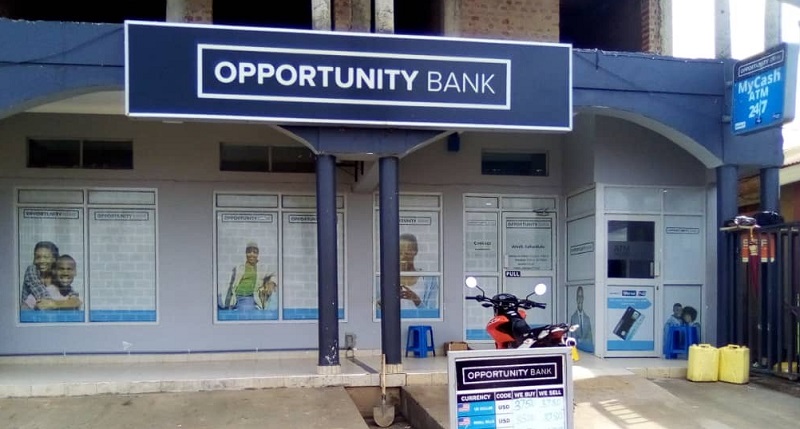
Effective September 13th, Opportunity Bank Uganda Limited (OBUL) – previously a tier 2 credit institution, started operating as a fully-fledged commercial bank, licensed by Bank of Uganda- the industry regulator. Although newly licensed as the 26th commercial bank, Opportunity Bank won’t have to start from scratch, thanks to its 24-year presence in the market. The bank hits the ground running, with a country-wide network consisting of 20 branches and 2 service centres- 68% of the branches are in rural towns serving the bottom of the market.
Going by 2018 results of the financial services sector, OBUL also enters the big boys’ league as Uganda’s 23rd biggest bank by assets, 20th by lending and 17th by profitability.
At UGX90.5billion in lending as at end of 2018, OBUL’s loan portfolio was larger than that of 5 commercial banks i.e. (UGX85.8 billion), Guaranty Trust Bank (UGX72.3billion), Cairo International Bank (54.8billion), United Bank for Africa (33 billion) and ABC Capital Bank (19.6billion).
With an asset base of UGX132 billion, OBUL is bigger than Cairo International Bank and ABC Capital Bank who at the end of 2018 had UGX124.8 billion and UGX61.7 billion in assets respectively.

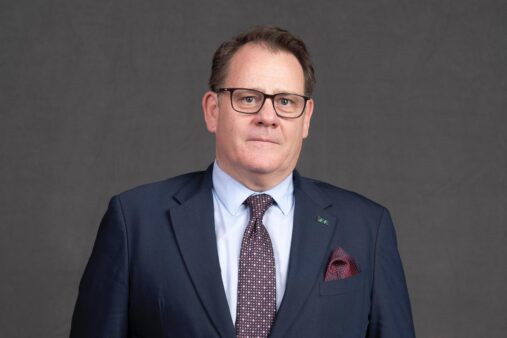
Tineyi Mawocha Emmanuel, OBUL’s Managing Director says with a commercial banking license, the real winners will be the bank’s consumers with whom the bank shares a mutual growth story.
“Our quest to seek a commercial banking license was driven by a request by the very same customers who as they grew required other services such as current accounts, overdrafts and trade finance. In addition, we struggled to attract transactional deposits which are cheaper, due to our non-direct participation on the RTGS platform,” he says.
“Our old customers can now count on us to provide them seamless services, enhanced products and services and the ability to continue banking with us as they grow,” he says.
We are not in for just the money; we deeply care about the people we serve
Mawocha adds that Opportunity Bank enters the heavily competitive banking industry armed with a unique knowledge of their customer base- and is now banking on adding fintech to the mix, so as to “continue building an efficient and profitable operation” in a market segment that many other banks would love to avoid.
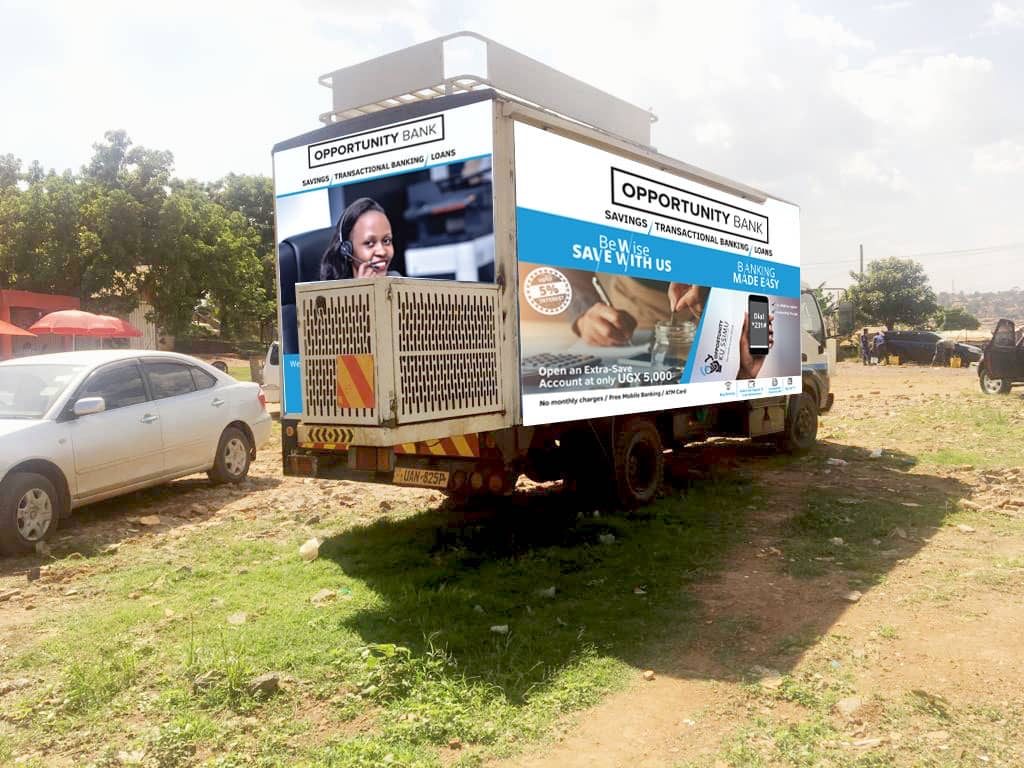
“We have been focused on growing outreach and helping our clients grow their small businesses. We have promoted account opening and savings through campaigns including our own mobile outdoor promotional van. The greatest driver of our growth though, has been from getting closer to our customers and understanding their pain points then developing solutions to address these,” he notes.
“We are not in just for the money, we care deeply about the people we serve. Clients at the base of the pyramid become profitable as they grow, providing mutual growth and an incentive to do more,” he says adding: “We remain committed to providing financial literacy training to our clients and also continue to work with trust groups- this is our nursery where such clients grow to become SMEs.”

On what explains the healthy growth Opportunity Bank has enjoyed in a segment that is largely unbanked and considered unbankable, he says that much as their products are not necessarily unique, but rather it is the “quality of service and care for the customer, arising out of our mission and vision, that have helped us to grow.”
This, coming from the man who has been at the centre of Opportunity Bank’s transformation over the last 5 years, should mean something.
Customer is king; fintech is the magic stick
Related
 Katikkiro Mayiga hails JCRC, Pearl Bank, Rotary over USD 4 million bone marrow facility drive
Before 2016, Opportunity Bank was a small Tier 2 credit institution majority owned by Opportunity Transformation Inc. (OTI) a US-based micro-lending non-profit organization that owned 93%; Food for the Hungry International (FHI) owned the remaining 7%. In October 2016, MyBucks SA a fintech company listed on the Frankfurt Stock Exchange acquired 49% in the business, becoming the majority shareholder.
In October 2016, Tineyi Mawocha Emmanuel a seasoned banker, arrived in Uganda from Urwego Opportunity Bank in Rwanda, where he had worked for two and half years as the bank’s Chief Executive. Before that, he worked as CEO of Standard Bank Swaziland for 7 years and Standard Bank- the parent company for Stanbic Bank for nearly 5 years.
The Stellenbosch Business School alumni who attributes his “servant leadership” management style to his early days as Chief Executive Officer of Nando’s/Innscor East Africa from August 1998 to December 2000, says the focus on the customer coupled with the bank’s renewed focus on technology has given the bank a new spark of life.
“The human element is core to our success. My own leadership style is “servant leadership” and this springs from my career in the hospitality industry where I learnt that the customer and their satisfaction is central to success. We therefore try to hire like-minded people; I have a great team at Opportunity Bank and consequently, many of them are being targeted by other institutions,” he says.
He also says because of the high cost associated with serving clients at the base of the pyramid, the bank is banking on technology to “take the costs out of serving this market.”
“It would be beneficial for the industry, for government to embrace new technologies and after allowing for “sand-boxing” come up with the correct and enabling regulatory framework to allow financial institutions and their fintech partners to serve this market more cost-effectively,” he says.
Triple assets and profit growth on the back of double growth in lending and deposits
So far Mawocha’s combination is working. In the 3 years that Mawocha has been at Opportunity Bank Uganda, he has ramped up customer deposits by 152% from UGX26 billion to UGX65.5 billion- a compounded annual growth rate (CAGR) of 36%. As a result, lending has also more than doubled, growing by more than 115% from the UGX42 billion that he inherited in 2016 to UGX90.5 billion at the end of 2018- on average 29% per year.
With growing lending, income too grew by 47%- from UGX24.5 billion to UGX36 billion in the same year. As a result, net profit has also more than tripled- growing by 214% from UGX1.4 billion in 2016 to UGX4.4 billion- a CAGR of 46%.

Total assets too have grown by 76% from UGX75 billion to UGX132.3 billion- an annual average growth of 21%.
Despite all the limitation of tier 2 financial institutions, as at end of 2018, OBUL was more profitable than 8 commercial banks, 5 of which were loss making. The 8 banks are: Bank of India (UGX4.1 billion), Commercial Bank of Africa (UGX600 million), ABC Capital (UGX300 million), Cairo International Bank (UGX3.5 billion loss), NC Bank (UGX4 billion loss), Tropical Bank (UGX5.8 billion loss), Guaranty Trust Bank (UGX10.1 billion loss) and Exim Bank (UGX16 billion loss).
But Mawocha says this is just the beginning.
“2019 has been for us a year of investment. We are upgrading our core banking platform, increasing our product and services range, building capacity and finding the right fintech partners to help us scale up. We remain profitable and growing, but the best is yet to come!” he says confidently.