By Annet Nakawunde Mulindwa
Women’s Day has been commemorated internationally since 1911. In Uganda, personalities coming out of the affirmative action movement have dominated the political space for women, with more women participating in competitive politics and taking up leadership positions.
It is however still a struggle to register a significant improvement in the economic empowerment index. The economic empowerment index covers issues like access to land, employment, participation in the business sector and access to credit.
Being a player in the struggle for women empowerment through financial inclusion, I know that all the issues raised above are key determinants for women to be part of the financial eco- system. Their success is also hinged on literacy, health and good governance.
In 2015, the world signed up to the 17 global Sustainable Development Goals (SDGs, Agenda 2030) to guide their efforts to end poverty and achieve sustainability by 2030. Gender equality and women’s economic empowerment have been recognized as central to this ambition. But how much have women done for themselves to achieve these goals?
We have all heard the chorus of; “Gavumenti etuyambe” (Can the government help us?) But again, I will pose the question; what can women do for themselves? The answer is clear and within our reach. Keep doing the good things to help others.
A story has been told before about the only women-centric bank in Uganda that has evolved from being a group initiative to a Non- Governmental Organization, into a Trust, then a Micro Deposit taking Institution (MDI) and almost seven years ago emerged as the first women-centric Tier 1 Commercial Bank- Finance Trust Bank. Out of the goodness of their hearts, the pioneers of this great initiative; a group of urban based working women, decided to pool funds to help women in the rural areas start on a journey to financial independence. The journey that has now taken 36 years is yielding.

The Africa Development Bank Group reported in 2016 that in Uganda, women own 38% of all registered enterprises but access only 9% of formal finance and that, nearly all female-headed households reported a desire to expand their agricultural activities, but they lacked the funds to purchase the necessary inputs, such as fertilizers or pesticide, or to hire extra laborers.
But there are testimonies to prove that all these barriers are surmountable. The potential that rural women have in growing the percentage of women participating in the economy is enormous. They are more economically active as farmers and entrepreneurs. Women are known to work 50% longer hours than men, the pay gap between men and women is however very wide because women spend too much time on non-monetized pursuits, such as fetching water, firewood and care giving.
Women are growing financially through group lending, micro lending with chattel collateral, salaried loans and achieving their economic goals to improve household livelihoods, and raise families with a better standard that is contributing to the human capital of this country, while making households more resilient to shocks and uncertainties.
 Deal Makers: Meet Deloitte Advisors Behind Absa’s Acquisition of StanChart’s Wealth and Retail Business in Uganda
With all these pursuits, women need greater access to financial services, including savings, credit and insurance, to develop their homes and businesses. In particular, they need access to credit to provide working capital, smooth over gaps in income and increase their capacity to produce. But how can we achieve this?
Provision of services such as financial literacy and financial inclusion in a way that suits the rural woman is key. How can this be achieved?
Infrastructure projects such as rural electrification, fiber optic internet installation will support financial service provision for the rural woman.
Reducing the structural barriers that impede the participation of women in economic activities with sub-optimal returns, such as the industrial sectors (i.e. extractive industries at the artisanal and small-scale levels) and agri-business has got to be embarked on.
Designing and piloting specifically designed financial solutions for rural women; innovative products such as loan ku simu where one can borrow up to UGX 1m payable in 3 months helps women solve immediate needs for business capital, school fees and other personal needs.
The UNDP estimates that if urgent action on the rural women’s economic empowerment and unpaid care work is not taken, the annual economic losses to sub-Saharan Africa, Uganda inclusive could exceed an equivalent of about 6% of GDP. If the current rate of progress continues unchanged, it would take Africa at least another 81 years to achieve gender equality. Can we wait that long?
Happy Women’s Day friends!
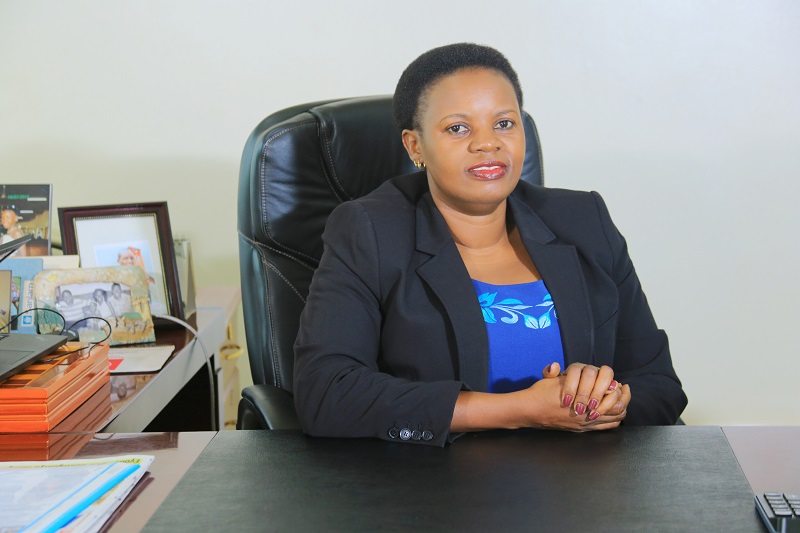
The writer is Chief Executive Officer, Finance Trust Bank