
BY MATSIKO KAHUNGA
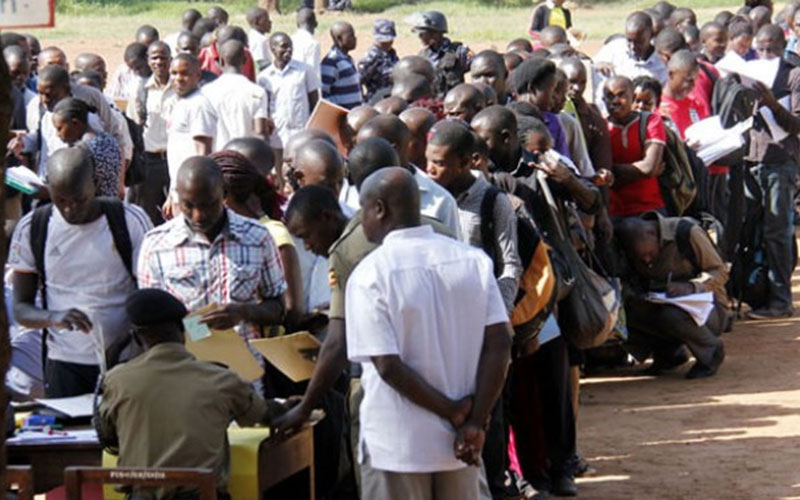
Nkore-Karagwe wisdom has it that ebibibihitahitana amatamagahitaamashuyo (someone with chubby cheeks is less ugly than one with permanent mumps).
And this wisdom aptly applies to the question of labour export from Uganda. Selling and buying labour is what propels economic development: employers don’t offer jobs, they buy skills, at different levels of sophistication. And this is what makes each one of us earn a living. Unable to provide avenues for buying the skills that its citizens have and continue to acquire, the Uganda Government has opted for exporting this labour principally to the Middle-East.
Whereas the principle may sound fine, the practice is grossly wrong and needs urgent correction. The now frequent stories of Ugandans tortured by ‘employers’ in Gulf countries tell us only the surface of the whole system. Forget the licencing of labour exporting firms, the registration at the Ministry of Labour, Gender and Social Development; the involvement of the Ugandan embassies, the call for tough legislation by Parliament and related initiatives. The determinant factor is the ultimate employer.
Laws and regulations enacted in Uganda have no meaning to (much less impact on) an oil baron family employing a Ugandan domestic worker. They will treat them the way they want, as the stories from Ugandans in the Gulf tell us.
What then is the way forward? Let’s take the ‘chubby cheeks’, the less ugly of the two ugly scenarios. And this is how it works. The Ministry of Labour, Gender and Social Development establishes the Uganda Foreign Employment Bureau (UFEB) as a government agency. The bureau recruits and contracts Ugandans willing and able to sell their skills in foreign countries.
Priority marketing should be given to European countries, for several obvious reasons, including language. For example, Southern European economies, notably Spain, Italy, and Portugal, have huge horticultural farms that need massive labour. UFEB will enter into contracts with the commercial farmers to provide labourers, not farmers directly engaging individual labourers. Job opportunities also available in other sectors: factories, hotels, public transport, schools, et al.
In the countries where it takes Ugandans, UFEB will provide accommodation (no worker is accommodated by the employer), feeding, medical insurance, security, transport, gratuity scheme, leisure facilities and all other amenities in structured labour towns for the Ugandans recruited there. With gratuity, social security savings and related schemes, a graduate who has worked for five years in Europe can return and be able to start a decent life back home. We have living examples of people who have made it from their own initiative at doing kyeyo in Japan or even Europe.
 Ruparelia Group Wins Key Entebbe Land Case, Clearing Path for the New Mega Speke Resort and Convention Centre, Entebbe
Better still, in collaboration with relevant agencies, such as National Housing, a long-term mortgage scheme will enable the workers put up decent homes, where they can return at will. Others would even pool funds into mega investment schemes that grow into private equity firms for transformative investments.
Moreover, with the current demographic trends in Europe, it would be no crime for Ugandans to seek permanent settlement in their new homes. Dual citizenship here comes in handy. With time, these Ugandans will graduate from menial jobs into more professional employment, thanks to a planned skilling programme established by UFEB and the host countries. In the short run, they become a market for Ugandan foods and other products, but in the long run, an influential minority in their new homes, the way the Jews do hold influence in America and elsewhere.
Nothing new here. The Philippines does it that way.Already countries like Germany, upon realising their populations going down, are recruiting professionals in key sectors from India, to become citizens.
Our own history here tells us as much: the management of Ugandan Protectorate was outsourced to Captain Lugard under his Imperial British East African Company (IBEA) by Britain. When patriotic kings resisted British imperialism, it was Emin Pasha and his mercenaries that were outsourced to provide military service. The building of the Uganda Railway was done by labourers recruited from India, whose descendants today hold the economic might in East Africa. That is how Kenya has over 4 million Kenyans of Asian descent.
Humanity has since creation migrated for countless factors and reasons. We can do it even now in a planned structured manner.
Over to you, our thinkers and planners.
 The author is a concerned Ugandan.