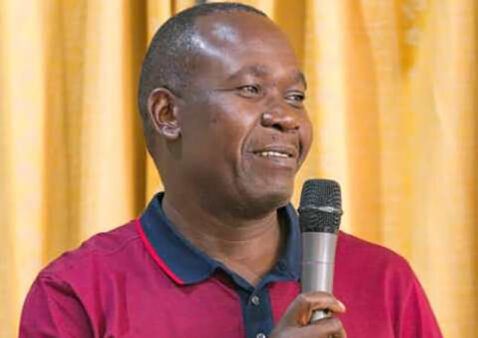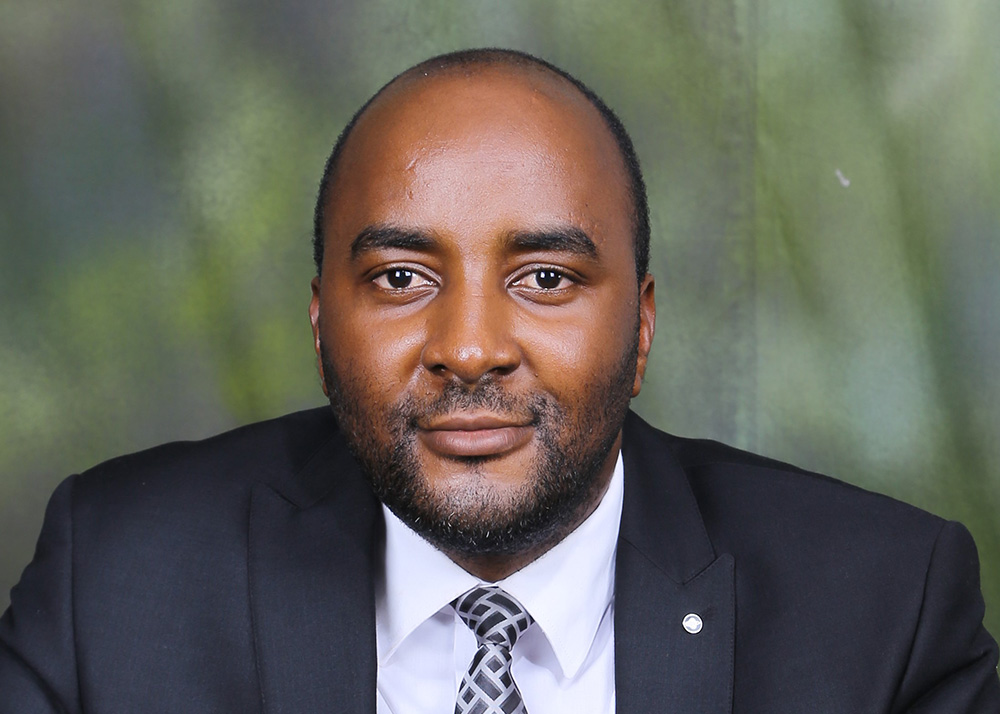
Qn: Whenever you are talking to businesspeople, you speak with a lot of passion, what drives you?
RM: At Enterprise Uganda, we work with people in business; those starting and those continuing. This is also one of our big pain points in our society. Many young people are struggling to get an income and the last option is to start a business. They call it the hustle. The problem is real and it exists. On the other side, the rules of success also exist. What we do is to relate the experiences the entrepreneurs have on a daily basis with the real life experiences in the working world. The problem is there just as the solution. We are the teachers that act as the link in between.
Qn: Would you say you are a teacher? Is teaching your background?
RM: I always wanted to teach but professionally, I am an accountant. I have spent the better part of my past life working with small and medium enterprises doing training and mentorship. The way I look at it is that there is a big problem on one hand and a solution on the other. Our part is to deliver the solution.
I am a firm believer in connecting people with what they already know.
The objective is to push people to take action. To do small things. I am a firm believer in gradual change in business. There are things we take for granted yet they create the biggest change in the world.
Small things like separating personal finance from business finance cause the change. The purpose of our training is to make people understand that the action of this makes it easy to improve their business.
Yet as simple as it is, we all have mindsets which are hard to break. The hardest part is why someone who has done business for more than ten years has to consider such changes. The same is true for taxation and employment.
You don’t know which action one needs to make but there are actions that have to be made.
The strength of our training is that we use examples and experiences that all these people have. When we start with what we know, it eases the burden of training.
Qn: How long have you been doing these training sessions?
RM: About 12 years now.
Qn: What has been your biggest challenge during this time?
RM: Understanding people and knowing where people are at. We work in both urban and rural areas. Being able to read the audience and come up with a message which connects with them is usually the biggest challenge. You know that there are answers that can help the audience but how you bridge the message is the challenge.
Qn: How do you deal with it?
RM: It comes with listening more. It comes with engaging. It comes with knowing what a basic Ugandan business is like.
Qn: And which is the Ugandan business?
 Why we are all vital to Uganda's Development.
RM: There is a guy running a welding plant somewhere. There is a boda boda guy always on the road. There is a dduka in the corner. There is a lady running a restaurant in every town in Uganda. These are the people that run this country. Most of the employers are the ones we call “informal” business. They are the people who make it possible for us. I always prefer not to call them informal businesses.
Every business is in the process of formalising. Of becoming better. Discussing formal or informal usually comes with missing the critical role. We should look at businesses with the lens of whether they are productive or not. We need to look at growing the business. Every business is bred in the informal soil.
As business facilitators, we should be concerned with helping that business. There is a way people have done things before but we need to help the business person grow. First you understand the client. Then you understand where they are.
Qn: What lessons have you learnt from these years of being on this road?
RM: Going around the country, one cannot miss but notice that Ugandans are very hard working and innovative people. They are go-getters.
Secondly, I have learnt that people can change. We all change differently and we all can change. You just need to package the message well.
Thirdly, people also want to change. People also believe that things can change.
The other thing I have learnt is that knowledge is shareable. You are as much a teacher as you are a student. People know so much. If you are patient with people, you will learn from them.
Qn: What does the future look like as more young people enter the enterprise space in such a disrupted world?
RM: The future is bright. We are a young country. A young continent. The world is there for us to take. I am so optimistic about the future. An average household in Uganda does not have a fridge or a proper cooking stove. This means we have so many fridges and cookers to make, a lot is not yet done. For the young people, this means there is so much for them to do.
Some of the past challenges of Africa is that there was no business-enabling environment (insecurity, unfavourable policies) , something which is changing overtime. With a thriving environment, you can have faith in the young people to bring about change.
On the other side, the young people too need to have faith that things will work out. They should know that they are going to make a country which they did not find. They should make things possible. Is it going to be painless, I doubt. But the thing is the opportunity is there for the taking. Here in Mbale where we are having this conversation, someone has come up with the idea of packaging kamalea. There should be a possibility of having a kamalea restaurant on Oxford Street in the UK. we should make it possible for someone to enjoy a can of bushera in New York. young people have the duty to dream and execute. They need to see that these things can be done and are within reach. If we don’t see that, someone else will. The only difference is that they will see it from their point of view. Young people need to see possibilities.
Qn: Lastly, briefly describe who Ronald Mukasa is
RM: Ronald is a husband, a father. I am a teacher and a coach. It is something I enjoy doing and I have the opportunity that people are willing to pay for it. I am passionate about seeing people getting better at what they do. I am also a firm believer that we can all make a contribution in someone else’s life. I am a firm believer that we all can make a contribution in someone else’s life. If you focus on the things you have control over, you can be able to expand the boundaries of your influence. The ability to talk to someone who then will reach another person is the fuel that keeps me going.
Aside from that, I’m an easygoing person who enjoys hearty laughter. I am so passionate about Uganda. I feel like we have to fulfil the possibilities and the potential.