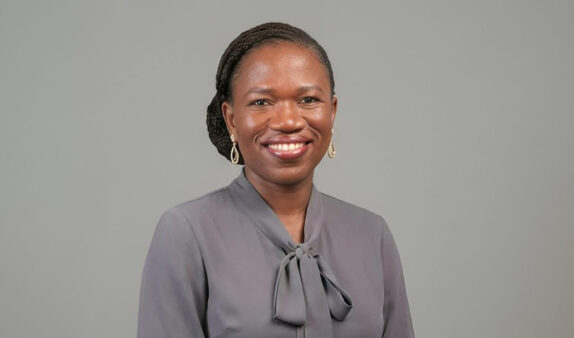
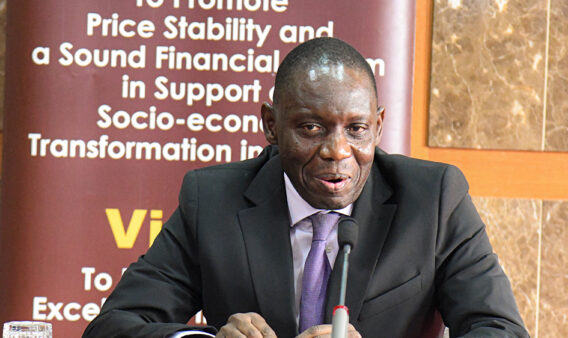
If there are any Ugandan CEOs in the hot seat, then it is Uganda Airlines’ Jennifer Bamuturaki and Uganda Electricity Distribution Limited’s Paul Mwesigwa.
They run two strategic state enterprises, and both are under intense pressure at exactly the moment when politics, performance, and public frustration are converging.
Some of the problems they face are inherited. Others stem from decisions made on their watch. But in state enterprises, where accountability is often as political as it is managerial, leaders can be sacrificed, sometimes not because they caused the crisis, but because they are the most visible symbol of it.
A crisis playing out in public
Few moments capture Uganda Airlines’ current situation better than recent viral posts from prominent Ugandans.
Veteran journalist Andrew Mwenda posted a video of angry passengers stranded after multiple delays, writing that Uganda Airlines’ crisis had reached a point where delays were “now measured in days, not hours,” citing flights delayed between 26 hours and three days.
Days later, respected broadcaster Alan Kasujja, normally a defender of the national carrier, admitted even he was losing patience.
He praised the airline’s crew but warned that customer experience appeared neglected. Phone lines went unanswered, WhatsApp support went silent, and he described the reforms required as no longer elective: “It’s now an emergency.”
These public frustrations are not isolated complaints; they shape perception, influence politics, and give Parliament and regulators ammunition. They also illustrate the precarious position in which Uganda Airlines’ leadership finds itself.
Uganda Airlines: Money invested, expectations rising, patience thinning

Bamuturaki entered 2026 with her original three-year contract extended by only one year,an unmistakable signal: deliver visible improvement or make way.
Since its revival, Uganda Airlines has accumulated losses of more than UGX 1 trillion — including about UGX 266 billion in the 2021/22 financial year, UGX 324.9 billion in 2022/23, and UGX 237.9 billion in 2023/24.
Despite the losses, Uganda Airlines’ revenues have grown steadily, rising from about UGX 28.5 billion in the 2019/20 financial year and UGX 46.9 billion in 2020/21 to UGX 141 billion in 2021/22, UGX 230.4 billion in 2022/23, and roughly UGX 369.7 billion in 2023/24.
The airline is clearly selling more seats and flying more routes, but the income growth has not yet been enough to offset operating costs, leaving the company still in loss-making territory.
Parliament’s oversight committees, particularly COSASE, have continued to pile pressure on the airline, demanding clearer and more realistic plans for profitability, stronger governance and transparency in management, and fuller explanations for the legal and operational liabilities that continue to weigh on the company.
Operational problems have increasingly defined the public’s experience of Uganda Airlines. What once looked like the occasional schedule slip has, in recent months, hardened into a pattern of disruption that repeatedly leaves passengers stranded and angry.
In mid-December, for instance, some flights were cancelled outright while others were rescheduled multiple times.
One service to Zanzibar was pushed to the next day, while its return leg was delayed to midnight and then postponed yet again, prompting Civil Aviation Authority to open inquiries into how the airline is managing its schedules.
On regional and long-haul routes, travellers heading to destinations such as Dubai, Nigeria, and the UK have reported severe interruptions, sometimes waiting for hours with little or no information from the airline.
These frustrations play out publicly. Videos, photos, and first-hand accounts circulate online showing passengers stuck at check-in counters, uncertain about onward travel while departure boards still display “on time.”
Even when disruptions originate from technical faults or grounded aircraft, the backlash often centres on communication gaps, unanswered phone lines, unresponsive WhatsApp support, and limited guidance or compensation options.
Some of these problems are structural. With such a small fleet, grounding even one aircraft can ripple across the entire network and throw schedules into chaos.
Yet the perception now taking hold among travellers, and increasingly among regulators and politicians, is that the airline’s contingency planning and customer care have not kept pace with its ambitions.
And for a national carrier, perception is almost as consequential as performance.
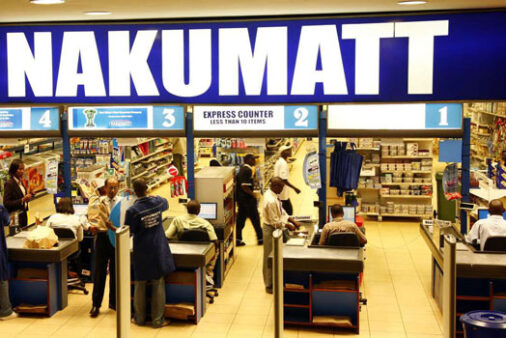
 Standard Chartered Kenya Targets Nakumatt Properties in $14.3 Million Debt Recovery Battle
To be fair, many of these constraints long predate Bamuturaki: procurement choices, a limited fleet, complex financing arrangements, and external cost pressures.
But persistent questions around management judgment, crisis handling, communication, and customer experience inevitably land at the CEO’s door.
When her short contract extension expires in July 2026, government will weigh not only the financial results, but also the optics: would replacing the CEO restore confidence, even if the deeper problems remain?
UEDCL: When the switch comes back to the government

If Uganda Airlines is battling turbulence, UEDCL is facing a storm of its own. After Umeme’s 20-year electricity distribution concession, which began on 1 March 2005 and ended on 31 March 2025, government elected not to renew it and handed the entire network back to Uganda Electricity Distribution Company Limited (UEDCL).
When distribution returned to public hands, expectations soared. Consumers wanted more affordable and reliable power; businesses demanded fewer outages; and political leaders wanted proof that the state could manage the grid without private partners. Reality, however, has proven messier.
Since April 2025, UEDCL reports it has added over 640,000 new connections to the grid in just six months, boosting customer numbers from about 1.78 million to roughly 2.43 million. Technical losses have declined from 19.1% to around 16.8%, and the physical network has expanded significantly.
Despite these gains, the public narrative is dominated by frequent outages and complaints about service reliability.
A recent study by the Economic Research Policy Centre highlighted the high cost of instability to industry, and Ministry of Energy has ordered performance reviews to assess how well distribution is performing under government control, a clear signal that regulators are watching closely.
This mix of big numerical progress and persistent operational pain points underscores the precarious terrain UEDCL now occupies, one where leadership is expected to deliver visible improvements quickly, even as the legacy of past arrangements and structural challenges looms large.
One popular online joke summed up public frustration: “UEDCL is a typical case of, if life hands you a switch, you switch it off.”
Humor aside, it reflects a deeper unease: people worry the lights could literally, and politically, go out.
To Mwesigwa’s credit, UEDCL inherited networks that many argue were run down in the final years before transition. Demand has surged. Handover logistics were inherently complex. Not all failures began with him.
But leadership is expected to stabilise systems, communicate clearly, anticipate outages, and reassure regulators. When problems linger, the CEO becomes the lightning rod.
When structure meets politics, and CEOs become expendable
Both Bamuturaki and Mwesigwa face remarkably similar vulnerabilities. They have inherited institutions with deep structural problems, yet they operate under sharply elevated expectations from the public and the state.
In organizations of this size and visibility, any failure instantly becomes national news. And they work within governments that, especially in political seasons, feel compelled to show decisive action, sometimes by changing leaders rather than fixing the underlying systems.
And in such environments, replacing a CEO can appear easier than fixing deep institutional weaknesses, even if the leadership is only partly responsible.
That is why 2026 is truly make-or-break.
Bamuturaki must prove Uganda Airlines is moving toward financial discipline and operational reliability.
Mwesigwa must show that public control of the grid can deliver stability and competence.
Neither may have caused all the problems. But both could still pay the price for them.
Because in Uganda’s state enterprises, survival is not just about performance, it is about navigating politics, managing perception, and producing results fast enough to avoid becoming the sacrifice.