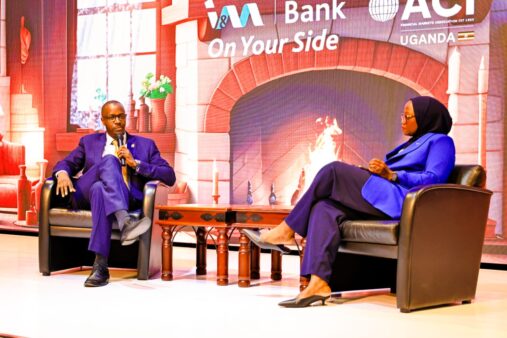
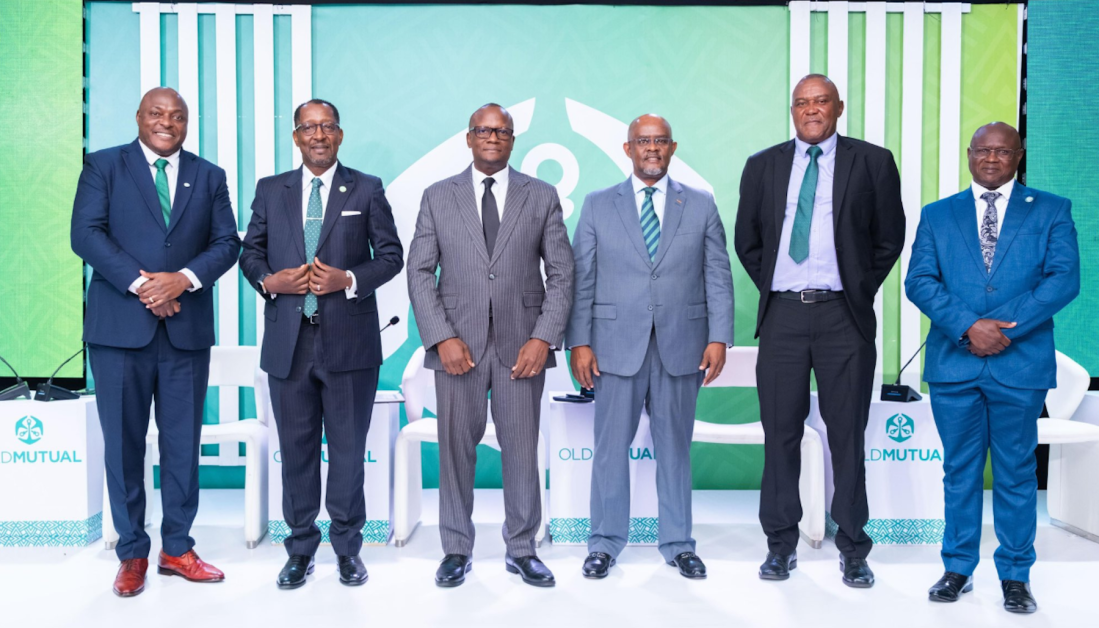
The green flame of Old Mutual is set to burn bright in Uganda. After nearly a decade of operating under the green and red hybrid identity of UAP Old Mutual, the financial giant has now officially rebranded to Old Mutual Uganda, unifying its identity with the rest of the group’s East African operations — Kenya and Rwanda — which completed their transitions earlier.
But as the brand sheds its dual heritage, the move comes at a pivotal moment — one defined by both renewed ambition and intensifying competition in Uganda’s insurance and investment landscape.
A Strategic Evolution, Not Just a New Name
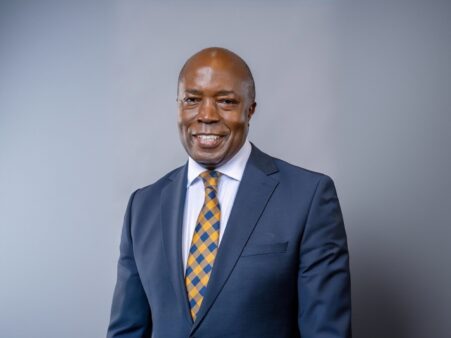
Speaking at the rebrand launch, Arthur Oginga, CEO of Old Mutual East Africa, described the shift as a strategic evolution — not merely a change in signage. He said it marked the culmination of a journey that began in 2015, when Old Mutual of South Africa acquired UAP Holdings, integrating it into its pan-African network.
“Today, we celebrate the next chapter in our journey — one that positions Uganda at the heart of our East Africa ambitions. A single unified brand makes it easier for customers to identify and choose us, helps us leverage shared expertise, and strengthens our collective ability to deliver on our promises,” Oginga said.
With over USD 1 billion (UGX 3.8 trillion) in assets under management and a leading role in the Insurance Consortium on Oil and Gas Uganda (ICOGU) — covering mega projects like Tilenga, Kingfisher, and EACOP — Old Mutual Uganda remains a crucial financial pillar in the country’s economic journey.
An Industry Leader in Transition
For over a decade, Old Mutual Uganda — until recently known as UAP Old Mutual — has been one of the defining forces in the country’s insurance landscape. It has consistently towered over the market, leading in general (non-life)insurance and ranking among the top two in life insurance, while also holding dominant positions in pensions and investments. Yet, between 2021 and mid-2025, its story has gradually shifted from unrivalled dominance to a phase of delicate transition — one where growth continues, but the competition is catching up fast.
In non-life (general) insurance, Old Mutual General was the undisputed market leader throughout the early part of this period. Its gross written premiums (GWP) rose from UGX 152.8 billion in 2021 to a peak of UGX 217.7 billion in 2022, a 42% jump, reflecting robust growth across motor, medical, and engineering lines, and dominant positions in corporate and energy sectors. In 2023, GWP eased slightly to UGX 191.3 billion, and then to UGX 185.0 billion in 2024, as competitive pricing and regulatory changes tempered growth.
By Q2 2025, Old Mutual General had written UGX 123.4 billion, a 5.6% increase compared to the UGX 119.9 billion in the same period in 2024 — signalling modest recovery but still below its 2022 peak.
Old Mutual’s market share, once comfortably above 20 per cent, now stands around 18.9 per cent, narrowly behind the newly merged SanlamAllianz Uganda, which commands roughly 20.6 per cent of the market, based on their combined UGX 201.15 billion in gross written premiums in 2024 — about UGX 16 billion more than Old Mutual’s UGX 185 billion. The merger brought together Sanlam General’s UGX 112.65 billion and Jubilee Allianz’s UGX 88.50 billion, instantly creating a powerhouse with the largest general-insurance book in the country.
Beyond raw size, the deal fuses two of Africa’s strongest franchises: Sanlam, a century-old South African group operating in more than 30 markets with over ZAR 1 trillion (≈ UGX 200 trillion) in assets under management, and Allianz, one of the world’s top-three insurers with global reinsurance and digital capabilities. Together, they bring unparalleled balance-sheet strength, technology, and pricing flexibility to Uganda’s market.
For Old Mutual, the implications are profound. SanlamAllianz’s combined distribution reach through bancassurance, medical and retail health lines, and its deep regional network pose a direct challenge to Old Mutual’s long-held corporate dominance. The two groups now compete not just for market share but for strategic relevance — and SanlamAllianz’s mix of scale, capital, and innovation could easily reshape Uganda’s general-insurance hierarchy in the next few years.
Old Mutual General’s mid-tier challengers — Britam General and ICEA Lion General — have also been growing. Britam grew its gross written premiums from UGX 70 billion in 2021 to UGX 82.2 billion in 2024, and UGX 52 billion by Q2 2025, translating into 30% cumulative growth. ICEA Lion General, on the other hand, has adopted a more measured but steadily upward trajectory, growing from UGX 29.5 billion in 2021 to UGX 48.5 billion in 2024, a 64% jump, supported by disciplined underwriting and growing penetration in health and micro-insurance lines.
In life insurance, Old Mutual has also delivered impressive, if moderating, growth. From UGX 63.5 billion in 2021, its life business surged to UGX 91.9 billion in 2022, UGX 107 billion in 2023, and UGX 133.3 billion in 2024 — a 110% cumulative increase over three years. Yet, while its premiums more than doubled, its market share slipped from 19% in 2023 to about 17.9% in 2024, and further to 14.2% by mid-2025. In Q2 2025, Old Mutual Life wrote UGX 57.3 billion, up 12.6% from the same quarter in 2024, but the pace of expansion lagged behind rivals Prudential Life and ICEA Lion Life, which have been aggressively growing through bancassurance networks, microinsurance innovations, and retail digital platforms.
By comparison, Prudential Life has extended its lead as Uganda’s No.1 life insurer, growing from UGX 95.4 billion in 2021 to UGX 196.3 billion in 2024 — a 105% rise — capturing 27.4% of the market. ICEA Lion Life, too, has nearly mirrored Old Mutual’s trajectory, rising from UGX 63.6 billion in 2021 to UGX 132.8 billion in 2024, strengthening its grip on roughly 18–19% of the segment.

Sanlam Life, while smaller than the three market leaders, has shown steady and disciplined growth — rising from UGX 41.2 billion in 2021 to UGX 80.5 billion in 2024, nearly doubling its written premiums in just three years. Now, with the creation of SanlamAllianz Uganda, the life business stands to gain significantly from deeper brand synergy, expanded distribution networks, and cross-selling opportunities with the merged general insurance arm. The merger aligns Sanlam Life’s domestic operations with a powerful pan-African and global structure — leveraging Allianz’s digital platforms, reinsurance access, and product innovation to complement Sanlam’s African heritage and capital strength. If well integrated, the combined group could evolve into a fully-fledged composite insurer capable of challenging not just Old Mutual and ICEA Lion but Prudential as well.
A comparative view of both non-life and life segments reveals a clear pattern: Old Mutual continues to grow in absolute terms but is losing relative ground as competitors scale faster — a market leader in transition.
A Fortress in Investments and Retirement Assets
If there is one domain where Old Mutual’s leadership remains deeply entrenched, it is in fund management and pensions — the backbone of Uganda’s long-term financial savings system. While competition in the insurance business has intensified, Old Mutual continues to tower over its peers in managing collective investment schemes and retirement assets.
Related
 Katikkiro Mayiga hails JCRC, Pearl Bank, Rotary over USD 4 million bone marrow facility drive
According to the Capital Markets Authority (CMA) Industry Report 2023/2024, Old Mutual Investment Group (U) Ltd remains the undisputed giant of Uganda’s Collective Investment Schemes (CIS) industry, managing UGX 2.22 trillion in assets — equivalent to a commanding 70 per cent market share of the country’s UGX 3.18 trillion CIS industry. This represents a 62.8 per cent growth from UGX 1.36 trillion the previous year, reaffirming Old Mutual’s scale, consistency, and reputation among both institutional and retail investors.
Its Money Market Fund, valued at UGX 1.32 trillion, delivered a 10.5 per cent annual return, outperforming the industry average of 9.8 per cent, and reinforcing Old Mutual’s position as the most trusted low-risk investment vehicle in Uganda. This dominance reflects years of disciplined asset allocation, robust governance, and strong brand confidence across both corporate treasuries and individual investors.
Yet, rivals are rising fast. ICEA Lion Asset Management Ltd has grown its CIS portfolio from UGX 258.6 billion to UGX 408.6 billion in one year — a 58 per cent increase — giving it 12.9 per cent of the market, while Sanlam Investments East Africa Ltd tripled its CIS assets from UGX 83.3 billion to UGX 244.9 billion, now holding 7.7 per cent. Britam Asset Managers (U) Ltd also expanded its book to UGX 200.4 billion, capturing 6.3 per cent of market share. Together, these competitors now account for nearly 30 per cent of Uganda’s CIS market, a clear sign that the segment is deepening — and that Old Mutual’s dominance, while still overwhelming, is facing credible challengers.
In the pensions space, Old Mutual Life Assurance Uganda Ltd remains one of the country’s top three fund managers, with UGX 496 billion in retirement assets under management, representing about 14 per cent of total privately managed funds. However, the 2024 URBRA Annual Report shows that the field is led by Sanlam Investments East Africa Ltd, which manages UGX 1.42 trillion, followed by GenAfrica Asset Managers (U) Ltd at UGX 1.09 trillion. Britam Asset Managers and ICEA Lion Asset Management follow with UGX 372 billion and UGX 177 billion, respectively.
Despite this hierarchy, Old Mutual’s 14 per cent growth in managed retirement assets during 2024 underscores its resilience and its strong institutional client base — from corporate pension schemes to voluntary retirement savings plans. Combined with its CIS leadership, the group now controls well over UGX 2.7 trillion in assets across Uganda’s capital and retirement markets.
Collectively, these figures affirm that Old Mutual remains Uganda’s largest non-bank asset manager, blending institutional scale with retail trust. But they also signal an emerging shift: Sanlam has become the new heavyweight in pensions, while ICEA Lion and Britam are gaining ground in collective investments. The fortress still stands strong — but its walls are being tested by well-capitalised, fast-moving rivals determined to chip away at Old Mutual’s historic lead.
New rules of engagement in a transforming insurance market
The message is clear: Old Mutual’s leadership is no longer guaranteed. Its rivals have caught up — and in some segments, overtaken it. The race ahead will not be about who has the biggest balance sheet, but about who best adapts to the new rules of engagement in Uganda’s transforming insurance market.
At the rebrand launch, Arthur Oginga, CEO of Old Mutual East Africa, emphasised that the name change is not cosmetic but strategic — aligning Uganda with Old Mutual’s Pan-African identity and enabling it to tap into the group’s regional and global expertise.

“Our focus is to continue building integrated, accessible, and customer-centric financial solutions that empower Ugandans to secure their futures, protect their families, grow their businesses, and retire with dignity,” Oginga said.
Yet, behind the optimism lies an evolving market where scale, technology, and speed have become decisive. To stay ahead, Old Mutual must reignite growth in both life and general insurance, deepen its digital transformation, and leverage its regional capital strength to sustain relevance in a market that is moving faster than ever.
The Road Ahead: Competing for the Future
The rebrand gives Old Mutual Uganda a unified identity and the full backing of a Pan-African financial powerhouse with operations in 13 markets. It marks a decisive step in aligning the Ugandan subsidiary with the broader Old Mutual East Africa and Group vision. But success will depend on how well the company executes three strategic imperatives.
First, it must reignite growth in insurance through sustained product innovation, accelerated digitisation, and a stronger retail presence that deepens reach beyond corporate clients. Second, it needs to defend its investment leadership by diversifying beyond government securities and expanding into ESG-linked and alternative portfolios that can deliver higher, more sustainable returns. Third, Old Mutual must leverage its regional strength — tapping into Old Mutual East Africa’s cross-border structure to design and distribute regional products, as well as offer integrated group coverages across markets.
Together, these priorities will determine whether the rebrand becomes a genuine transformation or simply a fresh coat of paint on a brand facing the most competitive era in its history.
A Proud Legacy Meets a Fierce New Battlefield
Old Mutual’s rebrand marks both a celebration of legacy and a call to adapt. The company enters this new phase as a seasoned leader — still dominant in investments and pensions — but in an insurance market that is rapidly consolidating around powerful rivals.
The next chapter for Old Mutual Uganda will depend on its ability to turn heritage into momentum, balancing its trusted name with modern agility.