As Uganda heads toward the 2026 general elections, the debate is increasingly focused on the economy.
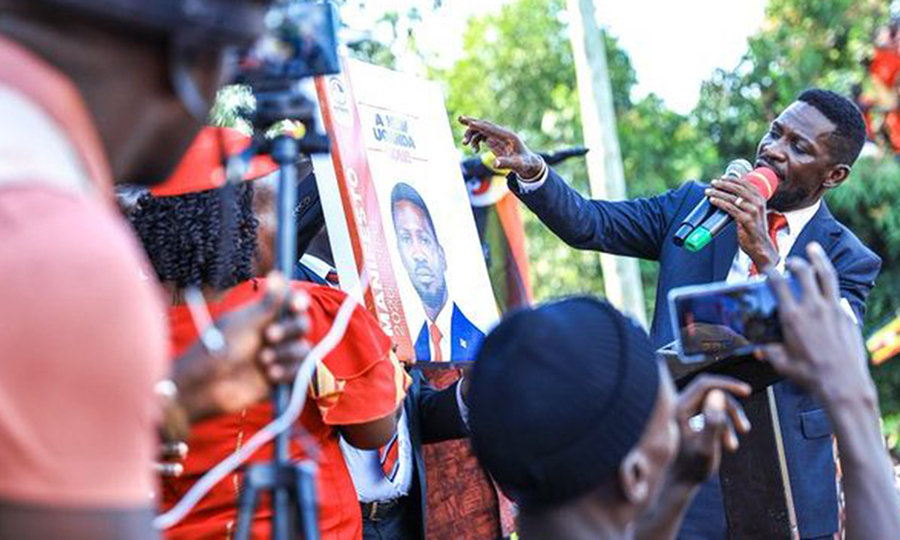
At the heart of the opposition National Unity Platform’s (NUP) 2026–2031 manifesto is a bold pledge: to rescue the economy from stagnation, corruption, and elite capture.
It is the promise that seeks to redirect the economy toward productivity, self-reliance, and prosperity for ordinary citizens.
NUP, founded in 2004 as the National Unity, Reconciliation and Development Party (NURP) and rebranded in 2019, is now Uganda’s largest opposition force.
It is led by Robert Kyagulanyi Ssentamu (Bobi Wine) as President, supported by Deputy Presidents John Baptist Nambeshe, Lina Zedriga Waru, Muhammad Muwanga Kivumbi, and Jolly Jacklyn Tukamushaba across the regions.
The party’s core team includes Secretary-General David Lewis Rubongoya, National Treasurer Benjamin Katana , and Spokesperson Joel Ssenyonyi.
While the ruling National Resistance Movement (NRM) highlights its record on infrastructure and stability, NUP argues that decades of mismanagement and mounting debt have left the economy fragile.
Their manifesto sets out an ambitious economic agenda covering agriculture, industrialization, taxation, jobs, tourism, and financial inclusion.
Stabilizing growth and debt
The manifesto acknowledges Uganda’s GDP has grown, but insists benefits have not reached most households. Poverty and inequality, it says, remain entrenched.
NUP promises to borrow only for productive investments and reduce the weight of debt servicing.
It pledges tax reforms to widen the base while shielding small businesses and low-income earners.
Though targets are not specified, the emphasis is on fairness and better revenue collection, supported by stronger anti-corruption measures.
Uganda’s untapped potential
With more than 70% of Ugandans working in agriculture, NUP identifies the sector as the key to economic transformation.
It promises subsidies for seeds, fertilizers, pesticides, and mechanization, while reviving cooperatives to improve farmers’ bargaining power.
The party highlights value addition, particularly in coffee, cotton, tea, maize, and dairy, and commits to restoring strategic grain reserves.
It argues Uganda cannot keep exporting raw products while importing finished goods at inflated prices, projecting that those revenues from agriculture could triple within five years if processing is prioritized.

Industrialization and trade
NUP presents industrialization as the path to self-reliance, with a pledge to promote import substitution in textiles and pharmaceuticals, while supporting MSMEs with tax relief, affordable credit, and training.
The manifesto points to Uganda’s persistent trade deficit, which it blames on structural weaknesses and overdependence on raw exports.
By 2031, the party promises to halve this deficit through industrial parks, agro-processing zones, and stronger regional trade ties in the East African Community and COMESA.
Jobs and Labour
Uganda’s youth bulge is at the center of NUP’s jobs plan. The party warns that millions of young people enter the labour market each year with few opportunities, risking a “demographic disaster.”
It pledges to create hundreds of thousands of jobs within five years by establishing regional industrial and ICT hubs.
Vocational training will be revamped, apprenticeships expanded, and a national minimum wage enforced.
The party targets reducing youth unemployment by at least 30% over the manifesto period.
Infrastructure and energy
 Africa Takes The Stage: From Raw Supply To Brand Ownership
NUP describes infrastructure as the backbone of growth, but criticizes corruption and inflated costs in delivery.
It pledges to complete road corridors, revive railways, and invest in water transport on Lake Victoria.
On energy, the goal is universal rural electrification by 2031, lower tariffs for manufacturers, and more renewable projects.
Reducing tariffs by even 20%, the manifesto argues, would greatly improve industrial competitiveness.
Finance and inclusion
Access to finance is another priority. NUP’s flagship proposal is a National Development Bank to provide affordable, long-term credit to farmers, SMEs, and youth-led enterprises.
The party also promises to lower mobile money transaction taxes, revive Saccos and cooperatives, and incentivize savings.
Its goal is to double the number of Ugandans with access to formal financial services by 2031.
Tourism and creative industries
Tourism, once Uganda’s top foreign exchange earner, has faltered. NUP pledges to restore it through upgraded airports, better roads, improved security, and global marketing. It sets a target of doubling tourist arrivals within five years.
The manifesto also highlights the creative economy- music, film, and art – as a source of jobs and GDP growth, promising investment in the sector to create tens of thousands of new opportunities.

The economic drain
Corruption is described as Uganda’s biggest economic wound, draining trillions annually.
NUP frames anti-corruption as an economic reform, pledging to strengthen oversight bodies, prosecute high-profile cases, and recover stolen assets.
It argues that cutting corruption could free resources equal to several percentage points of GDP, enough to fund education, health, and jobs without more borrowing.
Ambitious but uncertain
NUP’s economic manifesto is ambitious, promising to halve the trade deficit, reduce youth unemployment by 30%, double financial inclusion, and triple agricultural export revenues.
It positions the economy at the heart of the party’s case for power.
Yet questions linger. Can subsidies and cooperatives be sustainably revived? Will a National Development Bank avoid the fate of past state lenders?
And can corruption, so deeply entrenched, truly be uprooted in five years?
The manifesto outlines direction and ambition but offers fewer details on funding and execution. That leaves voters to weigh whether its promises are realistic or aspirational.
The economy at the ballot box
As 2026 approaches, the economy will dominate household and national conversations.
NUP’s manifesto aims to convince Ugandans that change is not only possible but necessary to deliver prosperity.
Whether or not the pledges are achievable, the manifesto has succeeded in reframing the central election issue: who can best deliver growth, jobs, and a fairer economy?
For NUP, the answer is transformation, moving from an economy that serves the few to one that serves the many. For voters, the ballot will be the ultimate test of which vision they trust.