Umeme Limited, once the crown jewel of Uganda’s stock market, has left shareholders bewildered and disappointed following a turbulent 2024 marked by a record loss, an unexpected dividend freeze, regulatory concerns, and ongoing arbitration over the terms of its buyout by the Government of Uganda.
In a sharply worded research note released on 23 June 2025 titled “From Kilowatts to What’s Happening?”, brokerage firm Crested Capital offered a sobering assessment of the power distributor’s current status, painting a picture of a firm struggling to manage investor expectations amidst uncertain post-concession transitions.
A dividend darling no more
For over a decade since its listing in 2012, Umeme had built a reputation as one of the Uganda Securities Exchange’s most consistent dividend payers.
The utility’s dividend yield consistently outperformed the USE average of 7.46%, peaking as high as 28.62% in 2021 and averaging above 10% between 2018 and 2023.
Yet in Financial Year (FY) 2024, that streak was abruptly broken. Despite receiving a substantial UGX 430.7 billion (USD 118 million) payout from the Government of Uganda in March 2025 as part of its buyout settlement, Umeme declared no final dividend—a move that caught investors off guard.
An investor call held by the company on 16 June 2025 did little to clarify the rationale behind the decision. Was it the loss reported in the FY 2024 balance sheet, driven by asset revaluation?
Was the company reserving funds to finance a legal battle in London over the unresolved buyout figures? Or was it a broader signal of liquidity pressures amid winding down operations?
Crested Capital notes that “the counter has been one of the best dividend-paying counters on the USE” and questions why no capital return was offered to shareholders this time around.
The firm warns that the absence of a clear dividend policy or capital return strategy risks damaging investor confidence further.
A record loss, no profit warning
In the same financial year, Umeme posted a massive UGX 510.57 billion loss (USD 139.88 million) after tax—its largest since inception.
But what concerned analysts and market participants even more was the company’s silence in the lead-up to the results.
Under Rule 38(3) of the Uganda Securities Exchange Listing Rules (2021), issuers are required to issue a profit warning when they are in possession of information indicating a significant decline in profit or a full-year loss.
Umeme, despite clearly knowing its performance trajectory, failed to issue such a warning.
“This omission raises serious concerns about transparency and compliance with continuing listing obligations,” the Crested Capital research note states.
The lapse could put Umeme at odds with regulators and also further erode investor trust in a time when clear communication is paramount.
Buyout battles and arbitration abroad
The heart of the controversy revolves around Umeme’s buyout process.
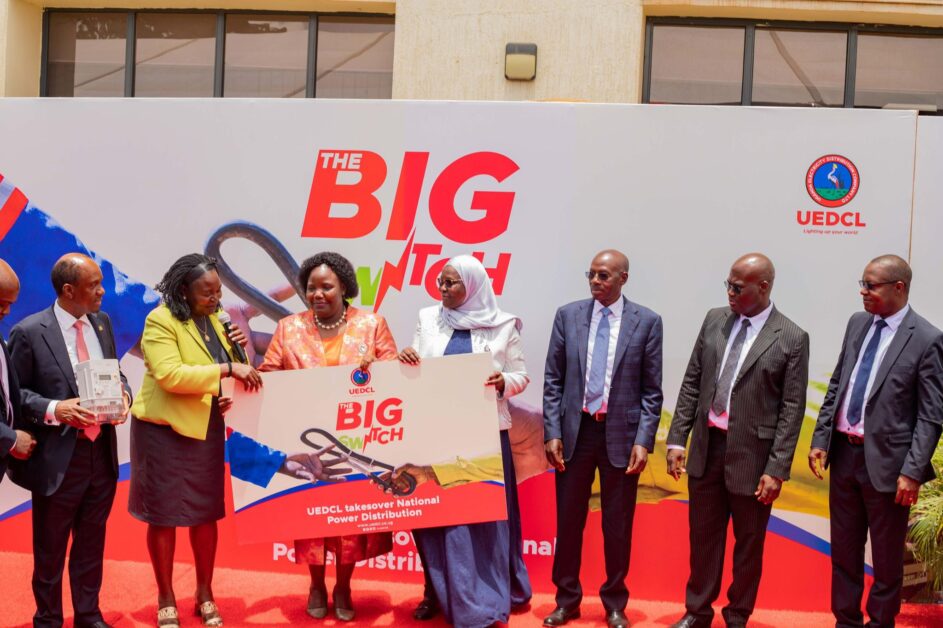
With its 20-year electricity distribution concession set to expire in March 2025, the company had been negotiating a termination settlement with the Government of Uganda.
The Auditor General’s report valued the compensation at USD 118 million, which was duly paid in March. However, Umeme had previously estimated its entitlement at USD 234 million (UGX 854.1 billion) and has since revised that claim upwards to USD 292 million (UGX 1.07 trillion).
Out of that, the company has taken USD 174 million (UGX 635.1 billion) to arbitration in London—a move Crested Capital describes as “casting a shadow over Uganda’s capital markets and sovereign credibility” in the eyes of prospective investors in the energy sector.
Arbitration Outcomes
Depending on the outcome of the arbitration:
Shareholders could receive only UGX 265 per share if no further amount is recovered.
 Ruparelia Group Wins Key Entebbe Land Case, Clearing Path for the New Mega Speke Resort and Convention Centre, Entebbe
A successful ruling awarding the original USD 234 million could translate into a UGX 525 per share capital return.
If Umeme secures the full USD 292 million claim, investors could get UGX 656 per share.
Yet all of this remains speculative. The lack of transparency around the arbitration timelines and payout schedule has left the market in suspense.
Following the lifting of a temporary trading suspension on Umeme shares, the counter resumed activity on the Uganda Securities Exchange. But there was a telling absence of interest: only sellers appeared, offering shares at UGX 415, and not a single buyer emerged.
This investor apathy is largely attributed to uncertainty over the company’s capital return outlook and arbitration timelines. For a company that once boasted healthy liquidity and robust demand on the exchange, this is a significant fall from grace.
What Next? Four Critical Actions for the Board
Crested Capital’s analysts offer a practical way forward for Umeme’s board, urging decisive action across four areas:
Capital Return Strategy
Umeme’s board must publicly articulate how it intends to return value to shareholders during this transitional period—whether through special dividends, share buybacks, or another mechanism. Without clarity, market confidence is likely to deteriorate further.
Transparent Communication
Investors deserve regular updates on the arbitration process, financial recovery strategies, and key milestones. “Silence is likely to cause speculation among shareholders and the investing public,” Crested warns.
Timely Announcements
While the company has stated that the Annual General Meeting (AGM) will be held by 15 August 2025, no specific date has been announced. With the FY2024 financials already released, the company should confirm the AGM date and share its agenda promptly.
Seek Expedited Settlement
Rather than dragging the matter through lengthy international arbitration, Umeme’s leadership is urged to push for a quick, negotiated settlement with government. Doing so could restore investor sentiment and reduce the reputational toll of offshore legal action.
A broader signal for Uganda’s capital markets?
While Umeme’s dilemma is undoubtedly specific to its unique concession-based model and the challenges of transitioning from a regulated monopoly, analysts suggest the broader implications for Uganda’s capital markets cannot be ignored.
The use of international arbitration may raise eyebrows among foreign investors considering long-term infrastructure investments.
Meanwhile, the apparent regulatory lapses—from missing profit warnings to unclear dividend policy—could prompt calls for better corporate governance enforcement at the USE.
With many of Uganda’s public companies already grappling with liquidity and perception challenges, how Umeme navigates this transition could either become a cautionary tale or a case study in responsive shareholder engagement.
Final Word
As Uganda’s energy sector prepares for a new phase, and Umeme prepares to exit the stage, the company has one final opportunity to define its legacy—not just as a power distributor, but as a listed entity trusted by thousands of local and foreign investors.
That opportunity lies in clear communication, swift resolution of disputes, and a deliberate capital return plan. Anything less may leave shareholders—and Uganda’s capital markets—in the dark.