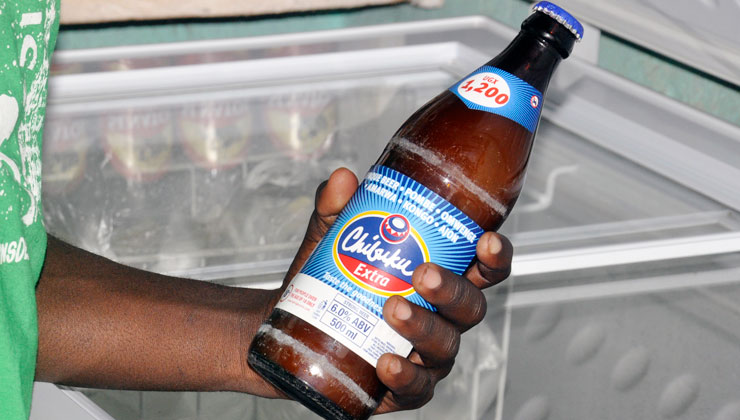
Is Chibuku a beer or local brew? To Uganda Revenue Authority (URA), there cannot be any other explanation for the drink not being a beer. The manufacturers must pay excise duty in excess of Shs1.9 billion on the drink.
But Nile Breweries Ltd is adamant Chibuku is just a local brew like Ajon, Malwa, Umkhomboti or Omwenge. For this, the brewery argues that Chibuku cannot be liable for the excise duty.
The tax collectors have dragged the brewers from the Source of the Nile to the Tax Appeals Tribunal, demanding excise duty arrears on Chibuku.
According to Section 2 of the Excise Duty Act, a beer should have a 2% spirit proof requirement to be conclusively determined as such. The exact alcohol content of Chibuku is not clear, but will be determined.
Background
Following its revision of Nile Breweries’ excise duty returns, URA established that no excise duty had been remitted in respect of Chibuku. The tax collectors demanded answers.
In a May 15, 2017 response, Nile Breweries said Chibuku falls under the category of traditional brews such as
Malwa, Ajon and umkhomboti. Which are not liable to excise duty.
But in the back and forth correspondence, URA wrote back on May 25, 2017, reiterating that Chibuku falls under the definition of beer under the Excise Duty Act and is liable to the local excise duty at a rate of 30%.
The tax collectors collectors insisted Nile Breweries had to pay arrears amounting to Shs1,955,792,769.
.@NBLUganda drags @URAuganda to court in contention that Chibuku `drink' is not a beer and is exempt from paying the 30% excise duty. #commercialjustice pic.twitter.com/ngfiKTRFlj
— CEO East Africa Magazine (@CEOEastAfrica) January 29, 2018
 Stanbic Accelerates Uganda’s Digital Future with “Kikole Ku Speedii” Campaign
Failing to reach an understanding, Nile Breweries, apparently, sought the intervention of the government to enable the brewers get around URA.
And on August 3, 2017, Finance minister Matia Kasaija wrote to URA imploring the tax collectors not to impose excise duty on Nile Breweries. The minister cited several reasons to convince the Authority.
Kasaija said there was a deliberate policy not to impose excise on Chibuku due to the need to develop a product that would eventually be productive for excise duty and other taxes.
The minister said there was need for the development of a lower cost, hygienic alcohol to encourage consumers of the informal and illicit alcohol to scale up their consumption into formal and hygienic alcohol.
“The exemption would shore up production, which directly boosts the livelihood of local farmers who will supply the breweries with raw materials used in the production of Chibuku,” the minister said and, as if to suggest that the excise duty should be imposed in future, asked that the two parties meet to have a taxing plan drawn up for the 2018/2019 financial year.
However, whilst appreciating the minister’s grounds, URA said the policy had not been translated into law, thus was not binding.
A similar scenario such as what Minister Kasaija rolled up on Chibuku issue was seen in the Tullow Oil case where the oil company claimed a tax holiday granted to them in a contract with the Ministry of Energy. In that case, court had stated that the contract was not translated into law and as such no tax exemption existed under the law.
URA insists that granting Nile Breweries’ wish would be tantamount to “blatant and unlawful contravention of the Excise Duty Act.”
The Tax Appeals Tribunal has advised that since this was a case based on facts and needed no interpretation as the Excise Duty Act is clear under section 2, as to what a beer is and calls for a 2% spirit proof requirement to conclusively call a drink a beer.
The tribunal advised the parties to get an analysis from a chemist and have a report ready by 20th March. The tribunal issued a Directive to the chief Government chemist to have the drink tested and analysed to determine whether its a beer or not.