Access Bank Plc has completed the acquisition of National Bank of Kenya (NBK) from KCB Group for USD 109.6 million (KShs 14.2 billion), closing a deal first announced in March 2024 and approved by Kenya’s regulators in recent weeks.
NBK, previously a wholly owned subsidiary of KCB, now becomes a wholly owned subsidiary of Access Bank.
In the interim, NBK and Access Bank Kenya will continue to operate separately while the buyer aligns systems, teams and product suites for integration.
The banks framed the transaction as a strategic reset of competition in East Africa’s largest economy.
KCB Group chief executive Paul Russo called the sale completion as a “significant milestone” in the group’s portfolio repositioning and promised a smooth handover under regulatory guidelines.
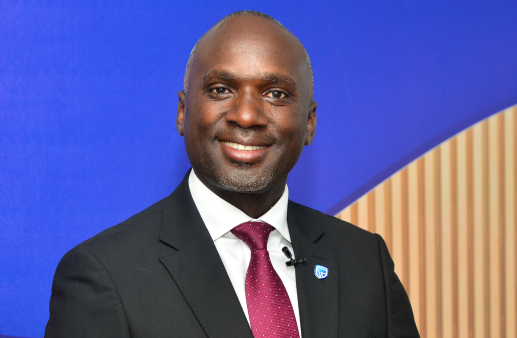
While Access Bank managing director Roosevelt Ogbonna said the deal materially strengthens the Nigerian lender’s corporate, retail and digital banking reach in Kenya, particularly with NBK’s long-standing public sector franchise.
NBK managing director George Odhiambo said the integration gives the bank scope to serve customers “more comprehensively” and extend its reach.
Access Bank Kenya
What changes now, and what doesn’t
For customers, the short-term message is continuity: both NBK and Access Bank Kenya will keep serving clients through their existing channels while integration work proceeds behind the scenes.
Over the coming months, the focus will be back-office heavy systems migration, operating-model alignment, and product harmonisation to enable a single, consolidated entity without disrupting day-to-day service.
The closing caps a sale process KCB targeted to finish within six to nine months of signing; it also streamlines KCB’s Kenyan portfolio after several years of regional expansion across the DRC, Tanzania, Rwanda, South Sudan, Uganda and Burundi.
The acquisition gives Access Bank immediate scale in Kenya, a market it entered in 2020 by buying Transnational Bank.
 Ruparelia Group Wins Key Entebbe Land Case, Clearing Path for the New Mega Speke Resort and Convention Centre, Entebbe
That earlier deal gave the Nigerian group a local foothold; NBK adds nationwide distribution, stronger government and corporate relationships, and a bigger deposit base to fund loan growth.
For Access Bank which describes itself as Africa’s largest lender by customer count, the move fits a deliberate multi-year plan to assemble a pan-African network of universal banking franchises in trade hubs and payments corridors.
A pattern of expansion across Africa
Access Bank’s push into Kenya is part of a broader M&A-led growth strategy across the continent and beyond.
In Nigeria, it created a national retail champion by merging with Diamond Bank in 2019, boosting low-cost deposits and digital scale.
In Southern Africa, it agreed in 2020 to acquire Zambia’s Cavmont Bank and later completed the transaction with fresh capital commitments to recapitalise the combined entity.
In Mozambique, it purchased BancABC Mozambique, propelling Access into the country’s top tier by assets after integration.
East Africa has become a priority theatre. Beyond Kenya, Access Bank signed a definitive agreement in January 2024 to acquire an 80% stake in Uganda’s Finance Trust Bank, subject to central bank approvals, signalling intent to deepen presence along the Northern Corridor trade route.
The parties positioned the deal as a partnership to expand financial inclusion and product diversity in Uganda, leveraging Access Bank’s 20-plus-country footprint.
On 14 July 2023, Access Bank and Standard Chartered entered into agreements where Access would acquire Standard Chartered’s shareholdings in its subsidiaries in Angola, Cameroon, The Gambia, and Sierra Leone, as well as its Consumer, Private & Business Banking (CPBB) business in Tanzania.
Access Bank’s NBK buyout tightens competitive pressure in Kenya’s already sophisticated market, where tier-one lenders jostle on pricing, digital channels and corporate relationships.