What began as one of the most closely watched cross border banking acquisition plans in East Africa has now officially fallen apart.
The proposed takeover of Uganda’s Finance Trust Bank by Nigeria’s Access Bank Plc has collapsed nearly two years after the parties signed a definitive agreement that would have handed Access Bank majority control of one of Uganda’s homegrown commercial lenders.
The deal, first announced in early 2024, was expected to strengthen Finance Trust Bank’s capital base and accelerate Access Bank’s strategic expansion into Uganda’s financial sector.
But despite initial optimism, regional competition clearance, and cooperation from Ugandan regulators, the transaction failed to secure all required approvals within the agreed timeframe.
The story started in January 2024 when Finance Trust Bank and Access Bank publicly disclosed that they had signed a definitive agreement for Access Bank to make an equity investment in Finance Trust Bank and, at the same time, buy out shares held by institutional investors seeking an exit.
The two banks framed the transaction as both a capital strengthening move for Finance Trust Bank and a strategic East African expansion for Access Bank, with an expected close in the first half of 2024 subject to regulatory approvals in Uganda and Nigeria.
Under the structure announced, Access Bank planned to acquire a significant controlling stake in Finance Trust Bank, positioning the Ugandan lender as part of Access Bank’s growing pan African footprint.
The transaction would also have involved Access Bank subscribing to new shares in Finance Trust Bank, effectively injecting fresh capital into the institution.
In the January 2024 press release, Access Bank’s Managing Director Roosevelt Ogbonna described the proposed acquisition as a strategic milestone in the bank’s ambition to become Africa’s gateway to the world.
He noted that Uganda was an attractive market and that Finance Trust Bank’s strong franchise among women customers aligned with Access Bank’s own focus on women-led businesses and inclusive banking.
Finance Trust Bank Managing Director Annet Nakawunde Mulindwa, for her part, portrayed the agreement as a transformative moment for Finance Trust Bank.
She said the partnership would enhance the bank’s ability to serve customers through stronger capital, improved product offerings, and deeper digital banking investments.
At the time, the transaction was presented as a win-win arrangement. Access Bank would expand its regional presence, while Finance Trust Bank would gain financial backing and strategic support to compete in Uganda’s increasingly demanding commercial banking environment.
However, Finance Trust Bank has now confirmed that the acquisition agreement has collapsed after the two year window provided in the definitive agreement elapsed without all regulatory approvals being secured.
Percy Paul Lubega, Finance Trust Head of Marketing and Corporate Affairs told the CEO East Africa Magazine that after signing a definitive agreement between Uganda’s Finance Trust Bank and Nigeria’s Access Bank which provided a window for all regulatory approvals and mobilising of capital within two years, there was a delay on the part of the Nigeria’s Central Bank to approve the the deal.
The Bank of Uganda was very cooperative with the approval but the delay came from the side of Access Bank failing to get all regulatory approvals on time.
He noted that the definitive agreement provided for a two year period to fulfil all necessary conditions for the deal to be actualised.
“Considering the new capital requirements that we had to comply with, we had to move fast and comply with the minimum capital requirements. The Board said our agreement had come to an end,” Lubega said.
“Right now, we’re the most capitalised bank at Tier II level to serve women, smes and other segments of the market and the overcapitalisation as a Tier II institution gives Finance Trust Bank the leeway and better leverage to invest in channels, products and customers,” he added.
As the transaction moved into the regulatory lane, the COMESA Competition Commission became a key regional gatekeeper because the deal involved cross border operations within the Common Market for Eastern and Southern Africa.
In a decision dated May 4, 2024 under Case File No. CCC/MER/02/09/2024, the Commission’s committee responsible for initial determinations approved the proposed acquisition, which was structured for Access Bank to acquire an initial stake of 69.67 percent and potentially increase it to 80.89 percent of Finance Trust Bank’s issued shares.
The COMESA decision provides additional insight into how the transaction was intended to unfold. It outlined a post acquisition ownership structure in which Access Bank would become the dominant shareholder, alongside Uganda Women’s Trust and other minority shareholders. The deal also included a planned capital injection through the subscription of new ordinary shares, reinforcing the original objective of strengthening Finance Trust Bank’s balance sheet.
COMESA’s assessment focused on whether the merger would materially reduce competition in Uganda’s banking services market.
The Commission concluded that the transaction was unlikely to substantially prevent or lessen competition or harm consumers across the Common Market, and therefore granted approval at the regional level.
Two years later, the centre of gravity has shifted from growth and expansion narratives to Uganda’s tougher prudential environment and the strategic recalibration banks have been forced to make in response to rising capital requirements.
Related
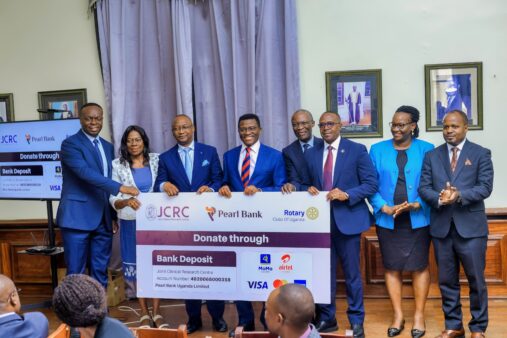
 Katikkiro Mayiga hails JCRC, Pearl Bank, Rotary over USD 4 million bone marrow facility drive
Uganda’s banking sector has undergone significant regulatory tightening since the Bank of Uganda raised the minimum paid up capital threshold for Tier I commercial banks from UGX25 billion to UGX150 billion under the Financial Institution (Revision of Minimum Capital Requirements) Instrument, 2022.
These new requirements have reshaped the sector. Several banks, including ABC Capital Bank, GTBank, Opportunity Bank Uganda, and now, Finance Trust Bank took strategic decisions to transition from Tier I commercial banking to Tier II credit institution status, reducing the number of licensed commercial banks from 25 to 22 effective July 1, 2024.
The Bank of Uganda Annual Supervision Report for June 2025 explains that Uganda’s financial system is structured into three tiers.
Tier I currently consists of 22 commercial banks, six of which are designated as domestic systemically important banks. Tier II includes seven credit institutions, among them one fully fledged Islamic credit institution.
These institutions do not offer current account facilities and are not members of the cheque clearing house, focusing mainly on savings and time deposits. Tier III comprises microfinance deposit taking institutions and large savings and credit cooperatives.
The supervision report further highlights how these transitions have affected the banking sector’s physical presence.
The shift of ABC Capital Bank, GTBank and Opportunity Bank into Tier II contributed to a decline in commercial bank branches and ATMs. Collectively, the three institutions operated 34 branches and 29 ATMs. As a result, total commercial bank branches fell from 621 in 2023 to 591 in 2024/2025, while ATMs declined from 907 to 888.
The report also notes that BoU’s surveillance of supervised financial institutions under the CAMELS framework identified key challenges, including non compliance with minimum capital requirements, weaknesses in asset quality, and pressures on earnings performance.
Nevertheless, banks overall remained profitable, supported by strong liquidity and capital buffers.
BoU is also preparing further reforms. Work is underway to amend the Financial Institutions (Capital Adequacy Requirements) Regulations 2018 to incorporate Basel II and Basel III standards.
These amendments will include revisions to the definition of capital, new approaches to credit risk computation using external credit ratings, the introduction of operational risk capital requirements, and the requirement for institutions to conduct internal capital adequacy assessment processes.
It is within this evolving regulatory environment that Finance Trust Bank has now announced a change in licence direction, signalling a decisive shift away from the original transaction’s premise of sustaining Tier I commercial banking status under new ownership.
In a more recent communication to customers and the public, Finance Trust Bank confirmed that it has been authorised by the Bank of Uganda to transition from a Tier I commercial bank licence to a Tier II credit institution licence, effective April 1, 2026.
The bank has been granted a three month transition period running from January 1 to March 31, 2026, to phase out products and processes that require a Tier I licence.
Finance Trust Bank reassured customers that all services will remain available across its nationwide branch network and service points during the transition process, emphasizing its commitment to seamless service delivery and compliance with all regulatory requirements.
Taken together, the sequence of events points to a deal that has effectively collapsed not because the early stage regional competition assessment failed, but because the broader regulatory and strategic environment shifted significantly during the approval period.
The January 2024 agreement was framed as a capital raising and expansion transaction designed to strengthen Finance Trust Bank’s position as a commercial bank while giving Access Bank a meaningful platform in Uganda.
The subsequent trajectory now confirms the parties did not reach the finish line under that structure.
Finance Trust Bank, founded from a financial inclusion mission that began as Uganda Women’s Finance Trust, has long been associated with serving mass market customers, especially women, and expanding access to credit and savings outside major urban centres. The bank was first registered as an NGO in 1984 under the name Uganda Women’s Finance and Credit Trust Limited, later changing to Uganda Women’s Finance Trust Limited in 1997.
In October 2005, it was licensed as a Microfinance Deposit taking Institution before being granted a Tier I commercial banking licence in November 2013, taking over the business of Uganda Finance Trust Limited.
Headquartered at TWED Plaza on Lumumba Avenue in Kampala, Finance Trust Bank today operates 35 branches, including one on the Kalangala Islands. About 70 percent of its outlets are located in rural areas. The bank serves more than 500,000 savers and over 29,000 borrowers, reflecting its deep reach among communities outside Uganda’s major urban centres.
The collapse of the deal underlines how quickly Africa’s banking sector can be reshaped by regulatory tightening, cross border approval complexity, and shifting strategic priorities, even after transactions secure high profile competition clearance.
As Uganda’s financial sector continues to adjust to higher capital thresholds and stronger prudential regulation, the Bank of Uganda has reiterated its commitment to maintaining stability while ensuring institutions remain appropriately structured to serve their customers under sustainable licence frameworks.