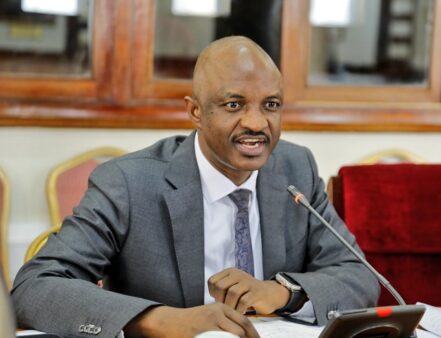
Finance Minister, Matia Kasaija yesterday unveiled the top four priority sectors in the 72 trillion Budget for the next Financial Year 2024/25 beginning July 1st.
Presenting the National Budget at Kololo Ceremonial Grounds on June 13th, Kasaija gave a glowing perspective of Uganda’s economic outlook as, “positive and optimistic.”
“The economy has remained resilient and has fully recovered from a myriad of internal and external shocks,” said the Minister Kasaija, adding that the economy is projected to grow between 6.4% & 7% next FY and double digit over the next 5 years.
The Budget is the fifth, and therefore the last to implement the Third National Development Plan (NDPIII). It will also set the foundation for implementing the Government’s strategy for expanding the size of the Gross Domestic Product (GDP) from about USD 50 billion in FY2022/23 to USD 500 billion by the year 2040.
Uganda’s growth strategy for next financial year and in the medium term is anchored on four key growth drivers: Agro-industrialisation; Tourism development; Mineral development including oil and gas; and Science, technology and innovation (STI).
These anchor sectors are meant to propel Uganda to a 500-billion-dollar economy in the next one-anda-half decades.
The CEO Magazine spotlights provides a detailed outlook on the four priority sectors, and some of the people and institutions that are set to benefit immensely under these sectors.
Agro- industrialisation
Government has allocated a total of UGX 1.8 trillion towards deepening agro-industrialisation with increased focus on commercialisation and value addition in agriculture.
The priority areas include, more investment in research and genetic development of selected value chains for animal, fish and crop varieties; Support for pest, vector and disease control and prevention.
Minister Kasaija noted that he has in particular allocated an additional Shs 427.21 billion to procure and distribute 44 million doses of vaccines against foot and mouth disease where farmers will access the vaccines through Government Stores by meeting 100 percent cost of the vaccine, while government will cover the cost of vaccine administration.
Government is also set de-risk agriculture through supporting increased production and productivity as well as value addition for all the priority value chains through more support for agricultural mechanisation; increased investment in small and large irrigations systems,
particularly solar-powered irrigation; support for seed multiplication through the Uganda Prisons to increase seed availability for Parish Development Model beneficiaries; and additional credit support to large-scale commercial farmers to ensure food security and increased exports.
This commitment towards commercialising agriculture is to enhance production and productivity and improve competitiveness of agricultural products in both regional and international markets.
The Ministry of Agriculture has so far established an afla-safe facility at Namulonge to help in the management of aflatoxins in cereals and nuts and has constructed a local anti-tick vaccine manufacturing facility, also at Namulonge, to produce vaccines against tick borne diseases.
It is expected that the facility will save the country USD1.1 billion which is lost annually due to tickborne diseases, and tap into the Shs 3 trillion regional market for meat and milk.
Tourism development
The Tourism sector is set for a boom as Uganda increasingly regains her global position among the top ten best tourism destinations in global tourism rankings with international tourism receipts reaching USD 1.03 billion in 2023 signalling a high return on investment.
In the year 2023, international tourist arrivals increased by 56 percent to 1.2 million tourists compared to 814,085 arrivals in 2022 and the peak of 1.52 million in 2019.
The Finance Ministry has provided UGX 289.6 billion to the tourism development programmes which will support international and domestic tourism marketing and promotion activities and modernise tourism products to make them more competitive.
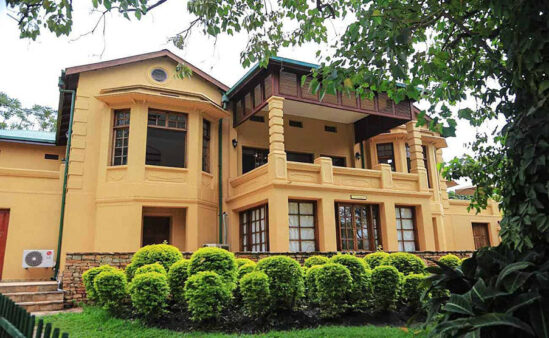
Among the key tourism development activities that government has earmarked include; the completion of the pier and related infrastructure at the Source of the Nile; upgrading the Uganda Museum; construction of 8,000 metres of climbing ladders and boardwalks on the Rwenzori Mountains to make hiking safer.
Minister Kasaija said, government will continue with the grading, supervision and classification of tourism facilities to enhance the quality of services and ensure adherence to the required global standards.
Plans are also underway to complete the upgrade of the Uganda Hotel and Tourism Training Institute infrastructure in an effort to make it an International Centre of Excellence for training and skills development in tourism and hospitality.
Enhancing the conservation of Uganda’s 22 Wildlife Protected Areas will be key, with a focus on the mitigation of human wildlife conflicts. Government intends to construct an additional 150 kms of electric fence and maintain the existing 106-km fence; carry out boundary surveillance through more than 13,904 patrols; uproot invasive species and construct four water dams in protected areas.
Minister Kasaija explained that, apart from the UGX 287.6 billion directly provided to the tourism sector, an additional UGX 1.6 trillion has been provided for several critical interventions associated with tourism including support to Uganda Wildlife Authority, construction of tourism roads, road rehabilitation and upgrade under Kampala Capital City Authority, support to AFCON‘27 and completion of key stadia, strengthening security, law and order in our tourism destinations, and extension of the internet to tourism destinations, among others.
In particular, Uganda Tourism Board has also secured an additional UGX 55 billion to Uganda’s Missions Abroad to support the Uganda Tourism Board (UTB) to market Uganda to potential tourists, market our exports and attract more investors.
Science, Technology and Innovation
The Science, Technology, and Innovation (STI) remains a key catalyst for the qualitative leap to achieve tenfold growth of our economy.
This financial year, government will build on investments made in recent years, the following are the key achievements such as Kiira Motors Corporation (KMC) supporte to construct and equip a magnificent 2,500 vehicles per year manufacturing plant in Jinja Industrial Park.
The facility will receive UGX 32.5 billion to complete the plant and access working capital. It is designed with capabilities for bus and truck body manufacture; vehicle painting; powertrain manufacture; electrical, electronic systems and trim integration; and production quality inspection and testing.
 Africa Takes The Stage: From Raw Supply To Brand Ownership
The complex has so far manufactured 39 buses of which 27 are electric and 12 are low-emission diesel with purchase orders for more than 100 buses from Tanzania, South Africa, Eswatini (formerly Swaziland), and Nigeria which demonstrates the huge market potential for the vehicles.
Kiira Motors Corporation (KMC) currently directly employs 168 people in engineering, production, marketing and sales, and finance and administration. This number will increase to 600 once the plant in Jinja is fully operational.
Kasaija also noted that the government will continue to capitalize the Presidential Initiative on Banana Industrial Development (PIBID) with UGX 50 billion to transition into a self-sustaining business.
So far a semi-automated plant exists in Bushenyi with a daily processing capacity of 14 metric tons of fresh matooke. The project, according to Kasaija, has shown potential for import substitution by replacing wheat, and also by providing gluten-free starch products with high global demand.
The company has started fulfilling international orders including from South Korea, the Royal Kingdom of Saudi Arabia, Qatar, and Italy. The project currently employs 150 staff and collaborates with 6,543 farmers.
The Pathogen Economy has continuously made tremendous progress in developing vaccines, therapeutics, diagnostics and other healthcare tools for our public health security and import substitution.
Government support under the pathogen economy has been directed towards special initiatives such as the recently launched Dei Biopharma Ltd established as Africa’s largest pharmaceutical and vaccine manufacturing facility in Uganda.
The facility will produce generic drugs, cancer drugs, and human vaccines is scheduled to start by November 2024, and it envisaged that it will create job opportunities for more than 10,000 science professionals and 30,000 others in the support ecosystem.
Government is in the process of finalising equity acquisition in exchange for its UGX 723 billion investment in the facility.
Jena Herbals of Prof Patrick Ogwang (known for COVIDEX) will receive an additional funding of UGX 2.07 billion to undertake clinical trials of his natural therapeutics and establish an internationally certified production facility to manufacture and commercialise them.
Prof Jennifer Serwanga Sempala, a Senior Scientist in Immunology at Uganda Virus Research Institute will receive over UGX 25.24 billion to advance her research in human vaccines and start producing the vaccine.
In the coffee value chain development, government is set to fast-track local value addition to coffee with the private sector with three apex centres for high value coffee processing under the Coffee Investment Consortium, Great Lakes Coffee, and Inspire Africa Coffee.
All are said to have acquired modern roastery, freeze-dry and spray-dry technologies to produce instant, roast and ground coffee products, coffee capsules, cold brew and instant coffee with a total capacity of 5,850 metric tons per year. One of the facilities is complete while the other is 62 percent complete.
The target is to support the completion and expansion of these facilities, their operationalisation and market penetration of the products on the local, regional and international markets with at least 1 million bags of medium-to-high quality green coffee beans by 2025 expected to earn Uganda USD 560 million from value added coffee in the next five years.
In the space science programme, UGX 3.3 billion has been earmarked for space technology development. Government has already rolled out rapid human capital development of the Aerospace Programme by training Ugandan engineers in Japan, China and Egypt.
There has also been refurbishment of the headquarters of the Space Programme, the Mpoma Satellite Earth Station to enhance weather prediction, and monitoring of landslides and the environment.
There will also be the establishment of a satellite development laboratory and a modern Geospatial Centre to be able to obtain data from a broad spectrum of satellites from partner nations.
Mineral development
Mineral development is another growth accelerator that has been earmarked by the government to expand Uganda’s economy by tenfold with an allocation of UGX 41.55 billion.
Some tremendous progress has been so far made with the incorporation of the the National Mining Company as a commercial vehicle for investment and trading in minerals on behalf of Government; development of the Wagagai gold mining in Busia, rare earth metals in Bugweri; a graphite project in Kitgum; a limestone mining project by Sunbird Resources Limited in Moroto; and Seven Gold Refineries in Kampala, and the establisment of M/s Woodcross Tin Smelting Company Ltd as a tin smelter in Western Uganda to produce tin ingots to 99.95 percent tin grade.
Next financial year, government intends to fast-track quantification and market studies for all minerals for the purpose of investor promotion; operationalise the National Mining Company; review and strengthen the fiscal regime for minerals, including regulation of artisanal and small-scale miners; and commence the construction of the Busia and Moroto beneficiation centres.
Oil and Gas
As Uganda is progressing steadily towards the first oil in 2025, the oil sub sector will receive UGX 920.86 billion for the oil and gas sector to prioritise the development of the East African Crude Oil Pipeline (EACOP) hub in Tanga; continued construction of the EACOP including the necessary infrastructure to facilitate adherence to high quality environmental standards; procurement and dissemination of the 57,000 Liquefied Petroleum Gas (LPG) cylinders to promote clean cooking; establishment of the Petroleum Geoscience Laboratory; and equity contribution for the Refinery Project.
Industrial Development and Manufacturing
Government’s tenfold growth strategy to accelerate diversification of the economy includes industrialisation efforts being undertaken mainly through the private sector, but with the State playing a de-risking role.
Government through the Uganda Development Corporation (UDC), is undertaking targeted investments to increase Uganda’s manufacturing capacity.
Kasaija noted that government is continuing to develop industrial parks to provide investors with the required infrastructure and utilities with work already progressing in the Namanve Park with 190 companies operating; Liao Shen Park in Kapeeka with 19 companies; Sino-Uganda Industrial Park in Mbale with 18 companies; Luzira Park with 11 companies; Bweyogerere Park with 8 companies; and MMP in Buikwe with 6 companies.
Other operational industrial parks include: Jinja, Soroti, Kasese, Mbarara, and Tian Tang-Mukono Industrial Parks. So far, over USD 3.5 billion have been invested in these parks in the form of Foreign Direct Investment. Over 266,812 direct and indirect jobs have so far been created.