Bank of Uganda has today, for the second time in three months, further eased down the Central Bank Rate for June 2020 to 7 per cent, setting another record low since the CBR was introduced as a Monetary Policy tool in July 2011.
In April 2020, at the onset of the Covid-19 pandemic, BoU fixed the benchmark rate at 8% and kept it at 8% for May as well.
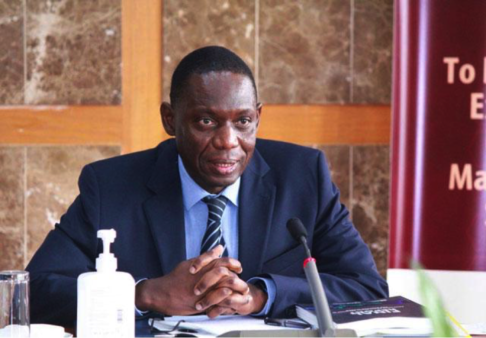
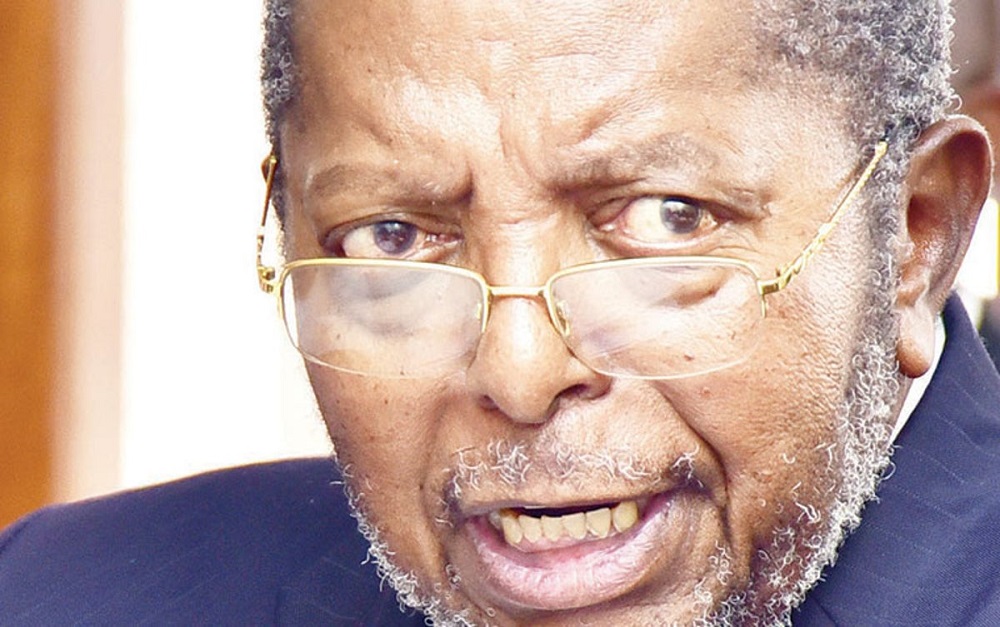
Announcing the policy rate cut today, Bank of Uganda Governor, Professor Emmanuel Tumusiime Mutebile said that given the fact that the impact of Covid-19 is likely to linger on much longer and in the process keep inflation low, it was necessary to stimulate the economy with a cut on the CBR.
“Although the measures taken by the BoU are yet to fully work to mitigate the adverse impact of the pandemic on the economy, it is necessary to ease financial conditions further since inflation outlook remains benign. Accordingly, BoU has decided to further ease monetary policy by reducing the CBR by 1 percentage point to 7 percent,” he said, adding that the Central Bank would also reduce the band on the CBR by 1 percentage point to +/-2 percentage points.
“The margin on the rediscount rate and bank rate have been also been set at 3 and 4 percentage points on the CBR, respectively. Consequently, the rediscount rate and the bank rate have been reduced to 10 percent and 11 percent, respectively,” announced Mutebile.
“As such, BoU expects financial institutions to further reduce their lending rates commensurate with the monetary policy stance,” Mutebile said, reiterating that BoU would “maintain an adequate supply of liquidity in domestic markets, to encourage lending by financial institutions to households and businesses.”
BoU revises growth rates further down; says Covid-19 effects to last through to 2022
 Deal Makers: Meet Deloitte Advisors Behind Absa’s Acquisition of StanChart’s Wealth and Retail Business in Uganda
Mutebile said that the decision to cut interest rates had been informed cooling economic growth as evidenced by BoU’s Composite Index of Economic Activity that had contracted by 4.0 percent month-on-month in April 2020, indicating continuous shrinkage of economic activity heading into May 2020. Similarly, the Purchasing Managers’ Index (PMI) remained below the 50 mark for the third consecutive month in May 2020.
The Governor, also said that although Uganda is gradually easing the lockdown measures instituted to contain the spread of the pandemic, the adverse consequences of the global and domestic supply chain disruptions were likely to persist through the remaining part of 2020.
“While the economic slowdown will be severe in the second quarter of 2020, a gradual recovery is expected to set in during the third and fourth quarters. On the whole, household expenditure, investment, exports and imports are projected to decline in 2020. Accordingly, BoU has revised down its projection of economic growth to a range of 2.5 to 3.5 percent in 2020 from the April 2020 forecast of 3 to 4 percent,” he warned, adding that the strength of the economic recovery will depend in part on how Uganda will be able to open up for economic activity safely, and in particular how effectively the public will comply with social distancing rules.
“Resumption of pre-pandemic levels of economic activity will be gradual, partly due to dampened external demand amidst the deterioration in global economic sentiment. Although the risks to the outlook are currently extreme and tilted towards lower economic growth, economic growth is projected to recover to between 4 to 5 percent in 2021, rising further to between 6 and 6.5 percent in 2022. The output gap will thus remain negative over the entire forecast horizon and will close only gradually. The combination of the COVID-19 pandemic, extreme weather, and volatility in the global financial markets, could weigh-down Uganda’s balance of payments, potentially destabilizing the domestic foreign exchange market and dampen economic growth,” further observed Mutebile.
On the positive side, Mutebile said that BoU’s decisive easing of liquidity conditions in the banking system influenced the decline of average lending rates to 17.7 per cent in April 2020 from 19.9 per cent in January 2020. He was also optimistic that the “forthcoming fiscal stimulus together with accommodative monetary policy might offset the negative impact the COVID-19 pandemic has on the economy in a manner that is stronger than currently envisaged.”