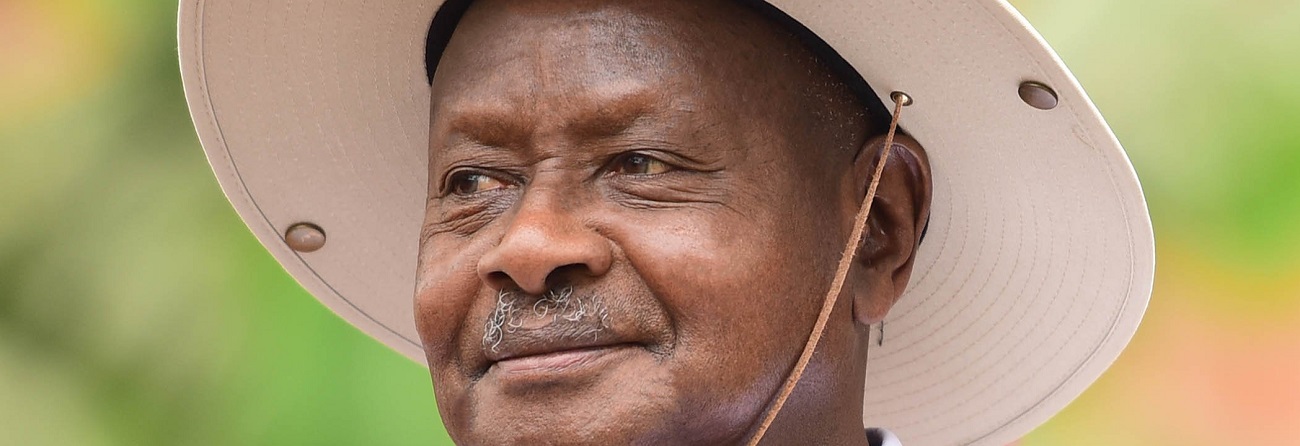
By H.E Yoweri Kaguta Museveni, the president of the Republic of Uganda
As we celebrate 34 years of liberation, it is important that we retain an awareness of what it is we are celebrating. It is 34 years since NRM liberated this great nation, and today is a commemoration of that struggle, victory and the progress we have achieved in the wake of that hard-won freedom. Only the strongest beliefs can compel you to fight wars for your country, and only the most dedicated of convictions can sustain you through governing it. The NRM’s patriotism and dedication to Uganda drives us to habitually surpass even the aspirations we conceived at the beginning.
Our aspiration is to see a prosperous and modernized Uganda; transforming Uganda from a predominantly low income into a competitive middle-income country in order to ensure a peaceful and safe nation for all our citizens. That initial desire evolved into the Uganda 2040 Vision of “taking Uganda into modernity through job creation and inclusive development,” and one that we determined would be observed across all sectors, including Agriculture, Health, Infrastructure, Education, and ICT.
We have found, with increasing regularity that each sector is dependent on several others, and that fostering a communal spirit of aspiration and achievement is no longer a matter of patriotism, but a necessary component in achieving sustainable, long-term growth.
Agriculture is the backbone of our economy, and we have focused on nurturing all aspects that contribute to bettering our agricultural output, on a micro and macro level. Agriculture is one sector that affects everyone; 68% of our population are employed in agriculture-related jobs. We have invested in improving upon the provision of farming tools, equipping farmers with skills in pre- and post-production, expanding farming markets beyond immediate regions, and overcoming situational and raw material issues: such as weather and addressing the constraints it brings – in order to enable better production and output for farmers growing both commercially and for food security.
My Poverty Alleviation Department was specifically implemented to empower homesteads to fight poverty by ensuring every household is earning the minimum income. By improving our road network, we are further able to facilitate the movement of our produce to markets that were hitherto inaccessible to farmers in their respective regions. Indeed, our improved total road networks have greatly improved upon market accessibility.
Our total road network has increased from 7900km in 1986 to 129,469km now, with our total paved network at 6,348km-348km more than our National Development Plan II target goal of 6000km. Our national roads that are in good condition have likewise surpassed our target aspirations, with 93% paved roads and 75% unpaved roads in adequate condition (compared to our envisioned 85% and 72% respectively). Improving the infrastructure of our roads is crucial as they are the tributaries that foster inclusive economic growth, job creation and the betterment of our people’s livelihoods: trade routes between ourselves and vital ports such as Mombasa, Rwanda, Burundi, DRC and other key regions in Central Africa have vastly improved in the aftermath of the construction of Nile Bridge, and the growing investment in Hoima has necessitated the accelerated expansion of Hoima into a thriving metropolitan and the construction of a second international airport.
The renovation of Entebbe International Airport, meanwhile, will serve to further improve our tourism prospects, most especially after the successful revival of Uganda Airlines and the eased flow of traffic facilitated by the Entebbe-Kampala Expressway.
Determined to create opportunities for all Ugandans
 She Walks: Purposeful Strides, Scaling Hills in Heels—and Why Women’s Progress Matters for Africa’s Future
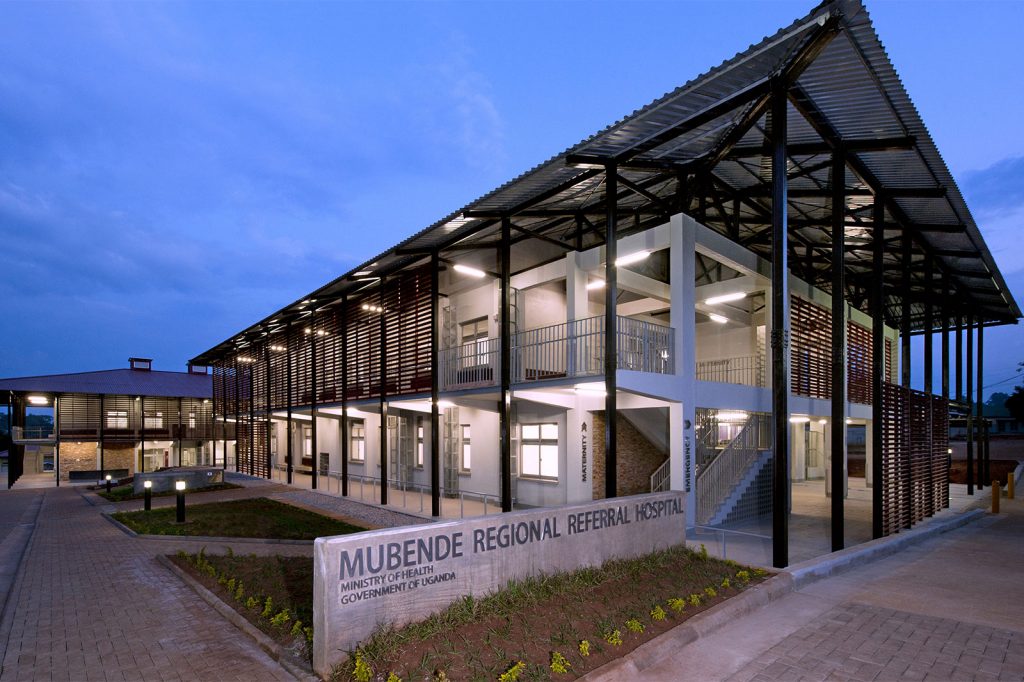
Whilst improving the national infrastructure and conditions of Uganda is important, its significance is tied to the wellbeing of our citizens: their safety and health remains our paramount concern. Our desire to obtain universal health coverage remains unchanged, and we have focused on infrastructural development, staffing and financing to that effect. As of 2020, we have 5 national referral health facilities, 14 regional facilities, 5 non-profit hospitals and 190 health centres, and the rehabilitation of Mulago National Hospital – the largest public hospital – is almost complete.
We continue to lead the effort to end the AIDS epidemic by 2030, and are advancing considerably towards the global 90-90-90 2020 target: my Presidential Fast Track Initiative has focused on designing and implementing interventions that enable families and communities to receive consistent treatment and prevention services that have expedited our substantial progress in eradicating HIV/ AIDS.
Furthermore, we are determined to create opportunity for all Ugandans; our Universal Primary Education and Universal Secondary Education of which Uganda was the first in Sub-Saharan Africa to adopt, ensures that our overwhelmingly youthful population are entering adulthood without limitations, and regardless of their gender. We have prioritized establishment of regional institutions of excellence in business, technical and vocational education and training: equipping them with the skills and knowledge that will ensure employment after they graduate to add to our growing list of institutions that offer further education.
Our youthful population, indeed, is one of our greatest strengths, as an increasing number are employed in the ICT sector; a sector which is primed to answer the youth unemployment problem. We have already registered 14,000 graduates, trained a further 4,000 in computer, technology and social skills and begun placing those graduates in suitable professions using the Job Matching Database tool. This is a crucial move, as to a greater extent we have need of online solutions to our technology related problems. We can now offer local solutions to national obstacles.
By investing in our people, we have created a generation of creative minds that will work with us to nurture and develop our nation for our collective benefit. This symbiosis between people and government is the surest way to achieve monumental and sustainable transformation. We can go even further, together.
I thank you.
This article was adopted from NRM@34, a publication of the Ministry of ICT and National Guidance to celebrate the achievements of the NRM Government over the last 24 years.