Members of Parliament, sitting on the Legal and Parliamentary Affairs Committee have insisted the Governor and Deputy Governor of Bank of Uganda cannot also coccupy the offices of Chairman and Deputy Chairman of the central Bank’s board.
The MPs, despite, contrary views from the Central Bank itself, have stuck to their guns, saying that maintaining the statusquo, would make the governor and deputy governor accountable to only themselves, which is a flaw in corporate governance.
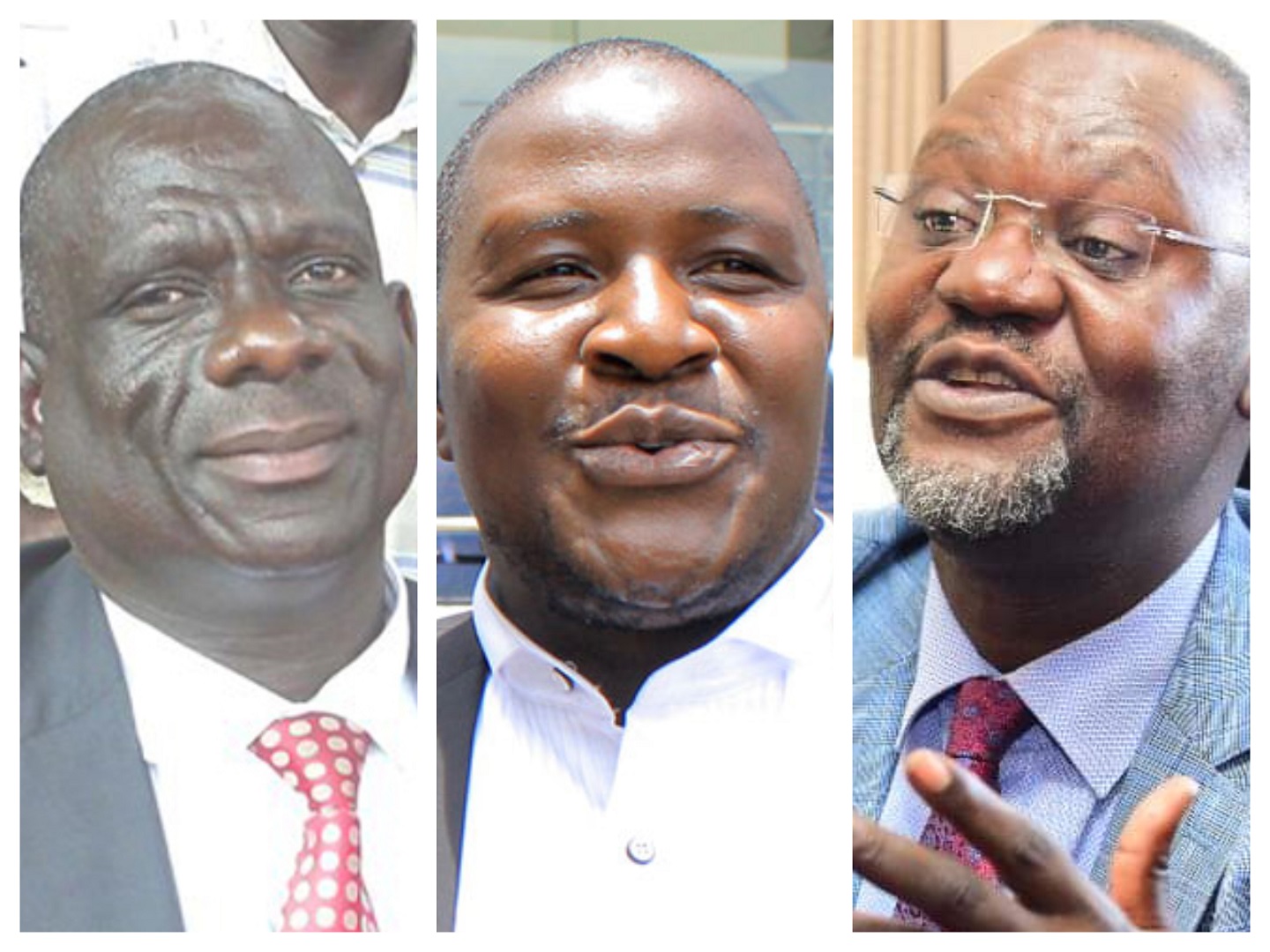
The MPs, who include, Hon. Abdu Katuntu, who chaired the 2018/19 probe into the Central Bank by the Parliament’s Committee on Commissions, Statutory Authorities and State Enterprises (COSASE) said that it is important that in light of previous governance issues at the Central Bank, it was important that the affairs of the Central Bank, be brought under control.
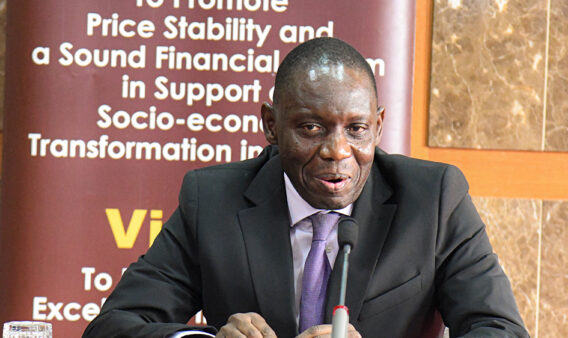
The MPs were responding to a submission by the Deputy Governor, Mr Michael Atingi-ego who submitted that separating the Chief Executive and Board Chairman roles would be tantamount to “diverting the governor from his/her core mandate of delivering price and financial sector stability.”
“We need to maintain the status quo to support the stability in business continuity and to ensure adequate representation of executive management on the board,” Atingi-ego said, adding: “We need somebody who is involved at the management level to be able to present their (management) position to the board.”
The Committee is hearing views from stakeholders, in regard to The Constitution (Amendment) Bill, 2020, tabled by Igara County East, MP, Hon. Mawanda Michael Maranga. The Bill seeks to amend certain parts of Article 161 of the Constitution. Hon Mawanda wants the role of the Governor and his deputy separated from that of BoU Chairman and Deputy Chairman respectively.

Under the proposed changes, although the president shall still appoint the Governor, his Deputy and other board members, with the approval of Parliament; the Board Chair and his deputy shall be selected from other board members, other than the Governor and Deputy Governor.
“Who supervises the governor and the deputy governor in the execution of their duties? None. We don’t have any institution that supervises the governor and the deputy governor, in this country. None,” Hon Katuntu submitted.
Giving an example of Kenya, where the two roles have been separated, an austere Hon. Isala Eragu Veronica Bichetero, the MP for Kaberamaido County asked the Deputy Governor, “What do you take your board for?”
The MPs also rejected a proposal by the Central Bank that the approval of their budgets should be left to the board instead of Parliament.
An exasperated Hon Asuman Basalarirwa, wondered why the same Parliament that approves money to the Bank of Uganda, cannot approve the Budget of the Bank.
“Is it because you don’t trust parliament?” he retorted.
Katuntu insisted that it was important that the Central Bank be brought under the control of Parliament, which is the overall watchdog of government business.
“Public money is accounted for to parliament. But how do you account to us, when we don’t even know what were your priorities?” he asked the Central Bank delegation.
Related
 MTN vs Airtel: Balance Sheet Strength Meets Earnings Momentum in the Race to Win the Telecom Market
It shall be remembered that the Katuntu-led COSASE report, blamed many other governance issues discovered during the parliament probe on poor governance and laxity of the board, thus the recommendations to separate the powers fo the office of the governor and his deputy, from that of the board chairman.
“The Constitution of Uganda, in article 161 (4), provides that the Governor and Deputy Governor shall be Chairperson and Vice-Chairperson of the Board respectively, good corporate governance principles would require that the position of Chairperson and Vice-Chairperson of the Board is separated from the position of Chief Executive Officer and his Deputy,” the MPs said in their February 2019 report.
“In line with G20/OECD Principles of Corporate Governance 2015 it is observed that in countries with single Tier Board systems, objectivity of the Board and its independence from management may be strengthened by the separation of the role of the Chief Executive and Chair. Separation of these two positions is generally regarded as good practice, as it can help to achieve an appropriate balance of power, increase accountability and improve the Board’s capacity for decision making independent of management. It is the recommendation of this committee, therefore, that article 161 (4) be reviewed to separate the offices of the leadership of the Board and top management of BoU,” further recommended the COSASE probe committee.
Abdu Katuntu also wants the creation of a second office of the Deputy Governor for purposes of administration.
“You have overloaded this office of the Governor,” Katuntu said.
Previous calls on Central Bank reforms
The recommendation to separate the two offices as well as create a second office of the Deputy Governor in charge of Administration was also made by a committee appointed by President Yoweri Museveni to study several complaints made to the Inspectorate of Government and Parliament about the Bank of Uganda. The Presidential Tripartite Committee, which was also chaired by Katuntu, recommended an “urgent and comprehensive review of the legal regime governing the Bank of Uganda.”
The committee also said that that the laws which run the Central Bank, namely, the Bank of Uganda Act Cap 51, “was last amended in 1993, two years before the promulgation of the 1995 Constitution of Uganda.”
“The Committee recommends the possible splitting or separation of the functions of the Governor and the Chairperson of the Board especially with regard to administrative matters,” noted the committing adding that their recommendation was mindful of the rationale for the Governor being both Chairperson of the Board and CEO in terms of the constitutional functions of the Bank especially with regard to sound monetary policy.
“It is actually possible functionally speaking to have a situation akin to that of the Central Bank of Kenya whereby the Governor remains the functional head of a Monetary Policy Committee to avoid hampering the decision-making process in terms of monetary policy and currency. The idea is to ensure that the Governor does not get into a situation where he makes administrative decisions over which there is no effective oversight in terms of checks and balances,” noted the committee.
The Tripartite Committee also recommended that a new additional position of Deputy Governor be created to unburden the governor, who they said was “too overloaded in terms of responsibilities” some of which risked “exposing the position of Governor to unnecessary controversies.”
“It may therefore be prudent to consider the creation of an additional post of Deputy Governor, which Deputy shall largely be responsible for the general administration of the Bank while the Governor and the other Deputy are free to concentrate on the core functions of the Bank as stipulated in the Constitution,” recommended the committee.
The committee further recommended that there should be periodic individual-focused appraisals of the performance of all the Board members including the Governor.