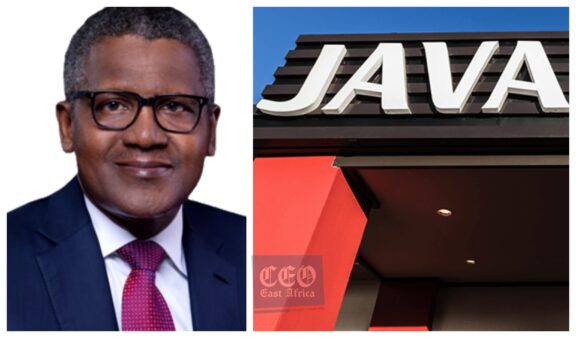
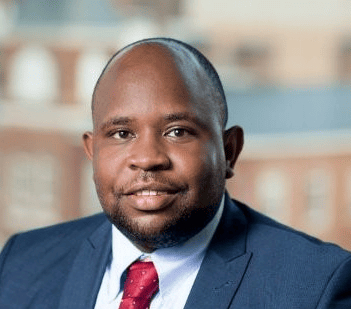
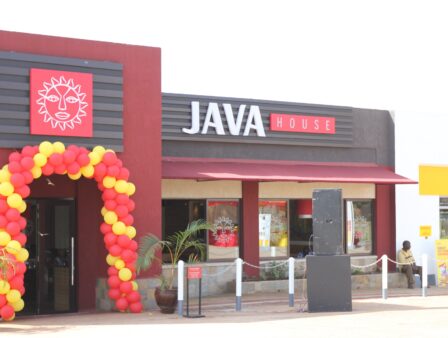
In a significant development for the East African food and beverage sector, private equity firms Alterra Capital and Phatisa Group have announced their agreement to acquire Nairobi-based coffee and casual dining group Java House from London-based Actis.
This acquisition marks a pivotal moment for Java House as it transitions into new ownership. It aims to leverage the expertise of its new partners to further enhance its growth trajectory.
Under the terms of the deal, Alterra Capital Partners will secure a majority stake in Java House, while Phatisa will hold a minority share with control rights.
The transaction is poised to support Java House’s expansion plans across the region, although specific financial details of the acquisition have not been disclosed.
Java House, initially founded in 1999 by American entrepreneurs Kevin Ashley and Jon Wagner, has undergone several ownership changes over the years.
Initially starting as a single café in Nairobi, it quickly gained popularity for serving high-quality Kenyan coffee.
The brand expanded rapidly and was acquired by Emerging Capital Partners (ECP) in 2012, which further propelled its growth by adding 47 outlets across Kenya, Uganda, and Rwanda.
In 2017, Dubai-based Abraaj Group acquired Java House for over $100 million. Following Abraaj’s liquidation, UK-based Actis took control of the brand in 2019.
Java House operates 73 branches across East Africa and has diversified its offerings to include brands like Planet Yogurt and Sixty Degrees Pizza.
A Closer Look at the New Owners
In this section, we will provide an in-depth analysis of Java House’s new owners, focusing on Alterra Capital and Phatisa. We will explore their backgrounds, investment strategies, and contributions to Africa’s food and beverage sector.
Alterra Capital Partners.
Alterra Capital Partners is an Africa-focused private equity firm that has rapidly established itself as a significant player in the continent’s investment landscape since its inception in 2020.
Founded by seasoned professionals from the Carlyle Group’s Africa team, including Genevieve Sangudi, Eric Kump, Idris Mohammed, and Bruce Steen, Alterra aims to partner with exceptional entrepreneurs and management teams to foster growth in domestic-facing companies that address essential consumer and business needs.

The formation of Alterra Capital Partners was a strategic move following Carlyle Group’s exit from the African market. The firm emerged from Carlyle’s sub-Saharan Africa team, which had previously raised a $700 million Africa-focused fund in 2014 but quit the African market in 2020.
The decision to spin out allowed the new firm to operate independently while leveraging its founding members’ extensive experience and networks. Collectively, the Alterra team boasts over 100 years of private equity experience and has successfully invested $1.9 billion across 20 companies throughout Africa.
Alterra has garnered support from a diverse array of investors, including prominent figures such as Aliko Dangote, David Rubenstein, and Bill Conway, alongside institutions like Norfund AS, Standard Bank Group Ltd., International Finance Corporation (IFC), Deutsche Investitions- und Entwicklungsgesellschaft GmbH, and Allianz SE’s AfricaGrow fund.
In 2023, Alterra announced the first close of its Africa-focused fund, raising $140 million towards a target of $500 million, aimed at sectors such as telecommunications, technology, logistics, healthcare, consumer goods, and retail.
Alterra Capital Partners employs a multifaceted investment strategy designed to achieve significant capital appreciation through investments in high-growth companies.
Alterra Capital Partners’ investment strategy is built on several key principles that guide its approach to fostering growth and sustainability in the African food value chain.
The firm focuses on identifying exceptional domestic-facing companies that cater to basic consumer needs, ensuring that their investments address fundamental market demands.
Alterra Capital Partners aims to transform business models and enhance scalability by leveraging technology, allowing portfolio companies to thrive in a competitive landscape.
Additionally, the firm is committed to creating market leaders by accelerating growth in companies with scalable business models while engaging in active portfolio management to drive performance and maximise returns.
 Stanbic Accelerates Uganda’s Digital Future with “Kikole Ku Speedii” Campaign
Central to Alterra’s philosophy is a strong focus on sustainability. It integrates Environmental, Social, and Governance (ESG) considerations throughout the investment lifecycle to ensure that financial success aligns with positive social impact.
The firm is particularly attuned to macroeconomic trends that present African investment opportunities. For instance, Genevieve Sangudi noted that challenges such as power shortages could lead to investments in distributed power solutions while technology continues to drive digital transformation across various sectors when announcing the $140 m raise.
Sustainability is integral to Alterra’s investment philosophy. The firm aims for financial returns and positive social impact within the communities where its portfolio companies operate.
This commitment is encapsulated in their ESG and Impact Policy, which emphasizes risk identification and management based on international standards set by the International Finance Corporation.
Alterra’s impact focus areas include job creation and skills development, women’s empowerment and climate change mitigation and adaptation
In recent months, Alterra has made notable strides in deploying capital from its newly established fund. For example, it led a consortium that acquired a majority stake in Chill Beverages, a South African beverage innovator known for its premium mixer brand Fitch & Leedes. This investment is part of Alterra’s strategy to capitalise on high-growth sectors within Africa’s dynamic market.
Alterra’s strong portfolio also includes Wakanow, West Africa’s online travel company that was founded by Nigerian-American former NBA Player Obinna Ekezie.
Other portfolio companies include Access Bank, a commercial bank in Nigeria that announced plans to acquire Uganda’s Finance Trust Bank in January 2024. Another portfolio company is Abacus, Uganda’s manufacturer and distributor of pharmaceuticals.
As the African continent continues to evolve with a rapidly growing population and expanding middle class, Alterra Capital Partners is well-positioned to harness these trends. With its experienced team and robust investment strategy focused on sustainability and community impact, Alterra aims not only to generate attractive returns for its investors but also to play a pivotal role in shaping the future of African business.
Phatisa
Phatisa is also an African private equity fund manager, established in 2005 with a clear mission: to invest across the African food value chain while balancing commercial returns with impactful social objectives. The firm embodies the principle of “and” rather than “or,” emphasising that financial performance and societal impact can coexist and enhance one another.
Phatisa’s investment strategy is rooted in the belief that achieving financial success does not come at the expense of social responsibility. Instead, the firm aims to create inclusive businesses that address critical societal and environmental challenges such as poverty, hunger, inequality, and climate change. By focusing on sectors like food production and affordable housing, Phatisa endeavours to influence the lives and livelihoods of African communities positively.
The firm operates hands-on, collaborating closely with management teams to foster long-term sustainable value. This commitment extends beyond mere capital provision; Phatisa actively engages in finding flexible capital solutions that align with its stakeholders’ goals.
In a move to strengthen its position in the speciality chemicals market across Africa, Phatisa, alongside partners Masimong and Sabvest, recently sold their collective 100% interest in Rolfes Holdings (Pty) Ltd to Solevo MEA B.V. This transaction underscores Phatisa’s strategic focus on sectors that can yield both commercial returns and meaningful impact.
Additionally, Phatisa has invested in International Facilities Services (IFS), a leading African facilities management group. This acquisition aims to enhance IFS’s operations across the continent while maintaining its commitment to sustainable development.
Phatisa is powered by a diverse and experienced team that embodies the firm’s commitment to African development. With over 150 years of combined experience in the continent, the team consists of sector specialists who possess deep local insights, regional relationships, and global reach.
The leadership includes notable figures such as Valentine Chitalu, the Group & Investment Committee Chairman, who has a strong background in finance; Martin Kromat, a Senior Partner with extensive experience in multinational FMCG businesses; and Stuart Bradley, the Managing Partner who brings a wealth of expertise in private equity.
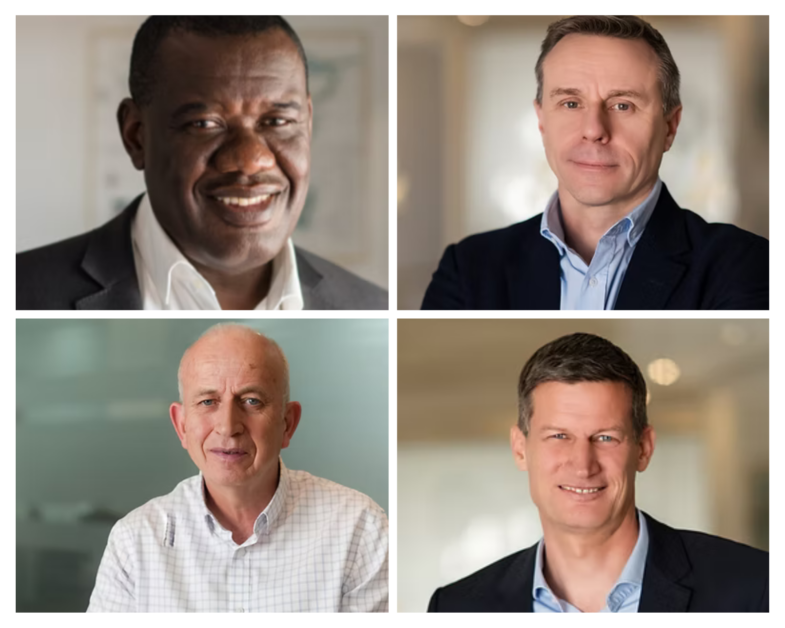
Together, they are dedicated to partnering with ambitious management teams to grow inclusive businesses that address sustainable development challenges while delivering financial returns. This hands-on approach ensures that Phatisa not only invests capital but also actively contributes to the long-term success of its portfolio companies and the communities they serve.
Phatisa’s commitment to impact is evident through its alignment with the United Nations Sustainable Development Goals (SDGs). The firm integrates impact considerations throughout its investment process—from origination to value creation and eventual exit.
Phatisa’s impact on the African food value chain is significant, with over 9,434 permanent jobs sustained through Food Fund 1 and an additional 2,536 jobs created by Food Fund 2. The firm has delivered a total of 3.8 million tonnes of food and related products through Food Fund 1, positively impacting over 108,716 smallholders and micro-entrepreneurs through targeted initiatives.
Furthermore, Phatisa has demonstrated its commitment to gender equality by creating 944 permanent jobs for women, reinforcing its dedication to fostering inclusive economic growth across the continent.
Phatisa’s funds have collectively raised over $216 million, focusing on sectors that are crucial for Africa’s growth and sustainability.