April 1st, 2020, marked nineteen years since the power reforms that unbundled Uganda Electricity Board (UEB) was completed. Five agencies, namely Uganda Electricity Generation Company Limited (UEGCL), Uganda Electricity Transmission Company Limited (UETCL), Uganda Electricity Distribution Company Limited (UEDCL), Rural Electrification Agency (REA) and the regulator, the Electricity Regulatory Authority (ERA).
One can argue that to a great extent the objectives of the unbundling as contained in the Electricity Act, 1999 that went into operation on 1st April 2001, have been achieved. This is especially if you consider the fact that as at 1999, a 51-year old UEB, had only managed to connect less than 5% of the population and was severely indebted and financially incapacitated to manage the power needs of a fast-growing Uganda.
Today, in just 19 years alone, electricity coverage has grown from a paltry under 5% of the population to 28%, as at June 2019; underpinned by a 596% growth from 180MW in 2001 to 1252 MW at the end of 2019- with another 600MW from Karuma Hydro Power dam in the offing.
Of the 1252 MW, Uganda Electricity Generation Company Limited (UEGCL), whose core responsibility is to sustainably establish, acquire, maintain and operate electricity generation facilities, accounts for 563 MW (45% of the market share). The rest is produced by Independent Power Producers.
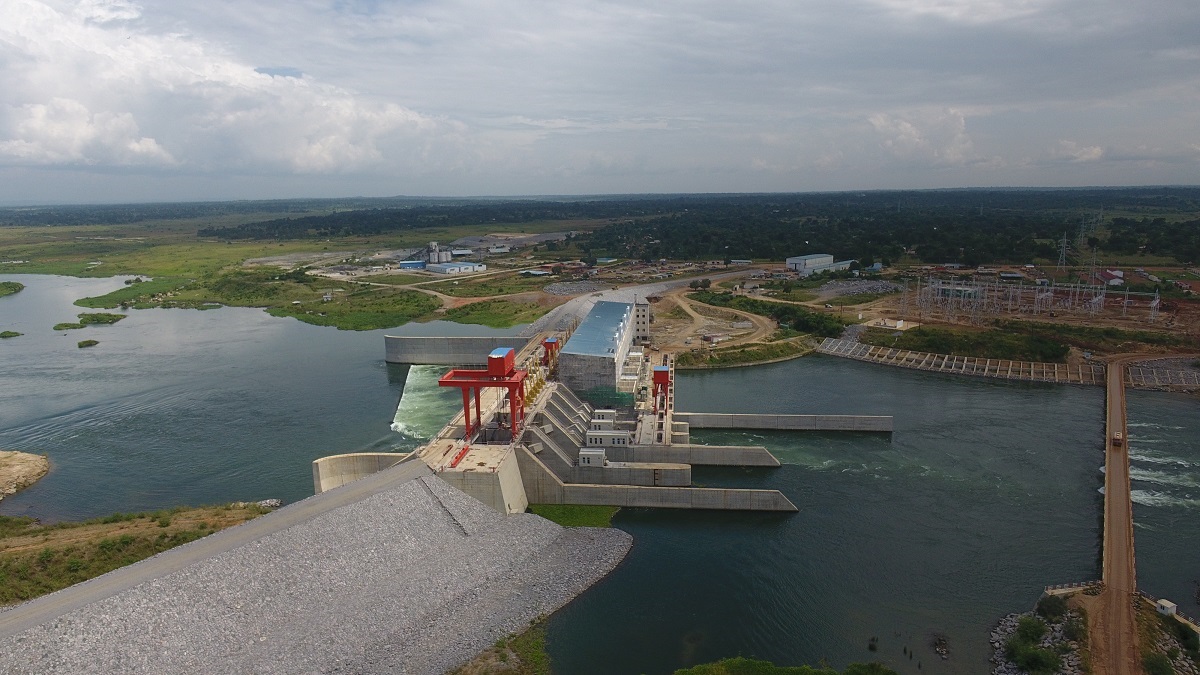
The 563 MW is produced from the 380MW Nalubaale-Kiira Hydro Power complex composed of Nalubaale Hydro Power Dam (180MW) and Kiira Hydro Power Dam (200MW) and most recently, the 183MW Isimba Hydropower Station- officially switched on, on 21st March 2019 by President Yoweri .K. Museveni.

By end of 2020, the 600 MW Karuma dam, whose construction started on 16th December 2013 will also be complete, boosting UEGCL’s contribution to the energy pool to 1163 MW.
Roadmap 1300
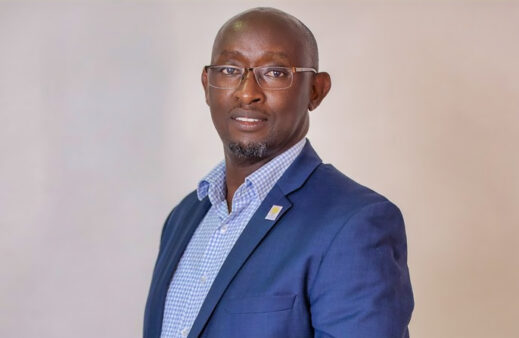
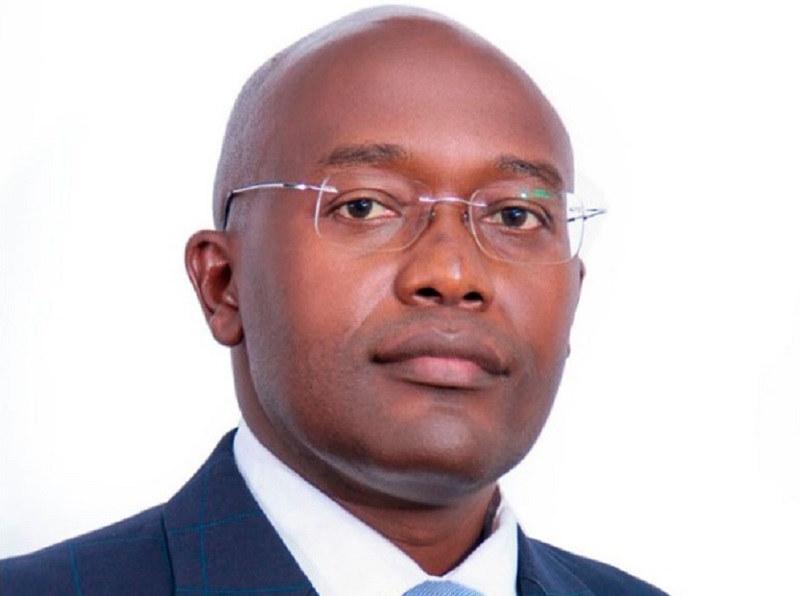
Although even with Karuma yet to come on-board, Uganda enjoys roughly 528.9 MW of surplus power supply- Uganda’s peak system demand was 723.76 MW as of 31st December 2019, versus installed generation capacity of 1252MW, Dr. Eng. Harrison Mutikanga, the UEGCL Chief Executive Officer knows it’s not time to rest.
He knows very well the country’s ambitious growth agenda that targets to achieve 51% national coverage by 2030, and 100% by 2040. This will require 300,000 new connections to be made every year and for this to happen, Uganda’s generation must be ramped up to 3,500 MW by 2025, and 41,000 MW by 2040. This will require maximum harnessing of Uganda’s hydroelectric power potential, estimated at 4,000 MW, largely along the Nile River as well as other potential energy sources, namely: geothermal (450 MW), solar (1000 MW), and nuclear (30000 MW).
Dr. Mutikanga is not a stranger to utilities management and wields over 20 years of experience in practical engineering works; 15 of those at a senior management level. He joined UEGCL from National Water and Sewerage Corporation (NWSC)- one of Uganda’s best run and most profitable utilities, where he worked in various capacities, including General Manager, Water Loss Control Manager and Head of Performance and Asset Management.
A Makerere University-trained Civil Engineer, Mutikanga also holds a Master’s Degree in Sanitary Engineering from the IHE Delft Institute for Water Education, formerly, the UNESCO-IHE Institute for Water Education- the largest international graduate water education facility in the world, based in Delft, Netherlands. He also obtained a Ph.D. in Water Loss Management from the Delft University of Technology, also in the Netherlands.
He is a registered Engineer, and a Board member of the Engineers Registration Board, Uganda. He is also a Council member of the Uganda Institution of Professional Engineers.
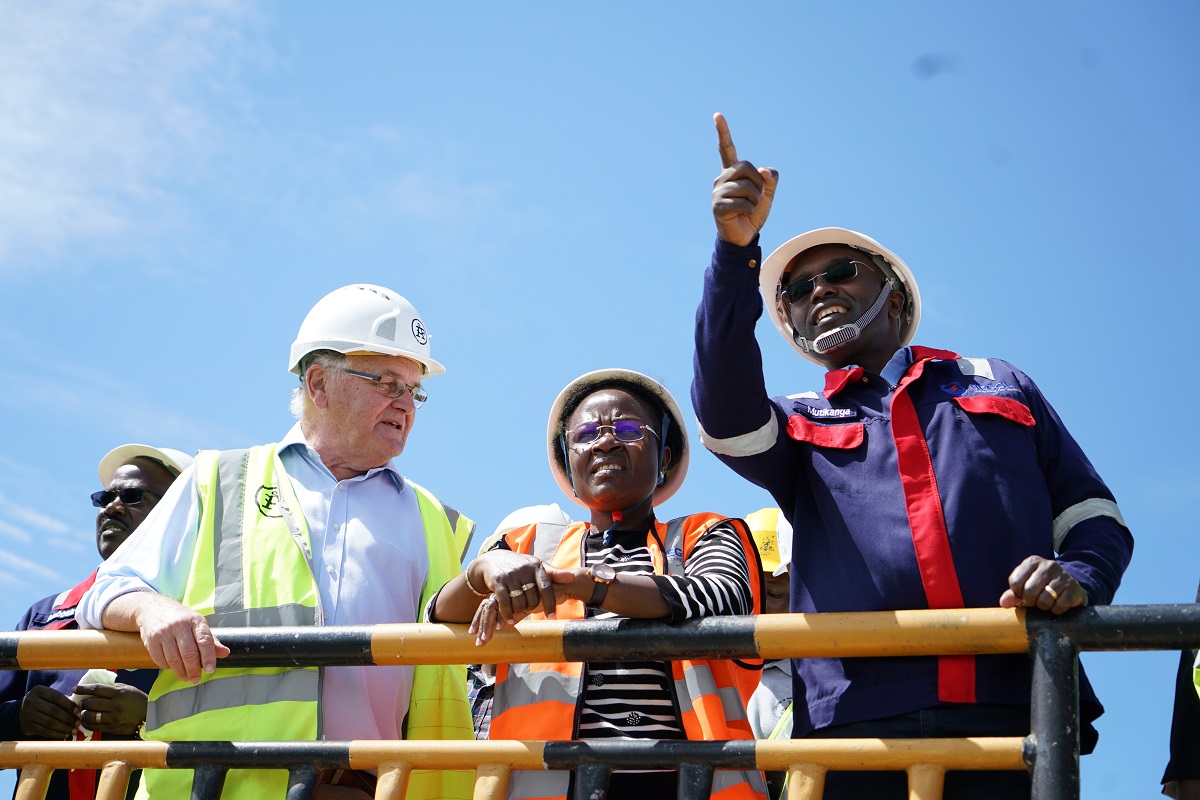
This is why, following a successful first 3-year Strategic Direction 2015 -2017 in which he managed to rebrand and reposition the company as well as diversify the business portfolio with two new sizeable hydropower projects, thus putting the company on course to profitability, Eng. Mutikanga in 2018 initiated a fresh 5-year strategic direction codenamed Roadmap 1300.
The cardinal pillars of Roadmap 1300 are to ensure; availability, reliability, affordability and the delivery of quality electricity services to the people of Uganda. The key driver of this strategy is to increase UEGCL’s installed capacity to 1300 MW by 2023. He, therefore, must complete the 600MW Karuma by the end of 2020 and ensure that the 48MW Muzizi Hydropower and the 6.6MW Nyagak III Small Hydro Power Project are on course. He must also ensure that Okulacere dam (6.3 MW), Agbinika dam (2 MW) and Maziba dam (1 MW) are also on track.
That’s not all- Roadmap 1300 also includes the takeover and integration into the business of UEGCL, the (50 MW) Namanve Thermal Power Plant, largely as a backup, in case of failure from the base power plants.
 Tanzanian Executive Justin Mollel Named Incoming EABL Group Chief Financial Officer
It also involves plans to improve the operational efficiency of all the generation assets- achieving at least 97% plant availability and 99% plant reliability. For this to happen, UEGCL must also achieve well-engaged stakeholders, especially staff, and above all must remain profitable so as to sustain the above targets.
The making of one of the leading power producers in the Great Lakes Region
One year, into project Roadmap 1300, Dr. Mutikanga is steering everything into place- bit by bit.
Perhaps one of the biggest milestones for UEGCL, is its becoming profitable in FY2018/19, thanks to the successful supervision of the Isimba Dam construction and finally, its commissioning in March 2019 and subsequently the starting of commercial production of electricity- add done under Mutikanga. Isimba, in just 6 months to June 2019, dispatched 320 Gwh of electricity, earning UEGCL, a decent UGX49.4 billion. As a result, revenues increased from UGX8.2 billion in 2018 to UGX 61.6 billion in 2019.
“Net profit increased from a loss of UGX10.8 billion in 2018 to a profit of UGX 24.8 billion in 2019. The asset base of the company increased from UGX 5.7 trillion in 2018 to UGX 6.7 trillion as at 30th June 2019- a growth of 19%,” reads an extract from the company’s Fy2018/19 report.
In Dr. Mutikanga’s words: “This financial position is a milestone as it marks a turning point for UEGCL towards the financial and operational sustainability. This is cardinal to UEGCL as our intention is to ensure that the generation assets are run efficiently, and their posterity guaranteed, and furthermore, UEGCL can effectively finance or co-fund future generation assets.”
Mutikanga also told stakeholders in the 2018/19 report that the operations of Isimba are particularly significant given that UEGCL is now managed solely by UEGCL staff through an indigenous business model- in his words, “a major step towards the quest for affordable electricity, the engine for social-economic development.”
This has been a result of a purposive human resource capacity development in plant safety, leadership development, contract and project management, dam safety, asset management, among other critical programs. This has been supported by partners such as the USAID (Power Africa), and the Norwegian Government through NORAD and International Centre for Hydropower (ICH) – Norway; all of which have created learning opportunities for UEGCL staff and the company at large.
Through UEGCL, Uganda also became a member of the International Commission on Large Dams (ICOLD) at the 87th ICOLD meeting that was held in Ottawa, Canada June 2019. ICOLD- a leader in setting standards and guidelines to ensure that dams are built and operated safely, efficiently and economically, and are environmentally sustainable and socially equitable; provides a forum for the exchange of knowledge and experience in dam engineering. The power generation company is also in advanced plans to establish a Hydropower Resource Centre to act as a centre of excellence for coordinated research, innovation, training, and benchmarking and best practice sharing among Generation Utilities- the first of its kind in the country.
Regarding the smaller dams, the procurement for an Engineering, Procurement, and Construction (EPC) contractor for the Muzizi (48 MW) hydropower plant has been finalised and is awaiting a no-objection from KfW for the contract to be awarded. Works on the Nyagak III (6.6 MW) project have already commenced and included the construction of access roads, workers camps, and site offices. Nyagak III is being developed as a Public-Private Partnership by a Special Purpose Vehicle (SPV) formed between UEGCL and a strategic partner (a consortium of Hydromax Ltd and Dott Services Ltd). The strategic partner shall be in charge of the design, construction, and operation of the power plant for a period of 20 years after which the plant shall be transferred back to UEGCL. To ensure that UEGCL’s interests in the SPV and the Nyagak III SHPP are protected and that the SPV meets its obligations with respect to the project, UEGCL has hired GOPA International Energy Consults GmbH in association with Zollet Ingegneria as the Owners’ Engineer.
With assistance from the French Government, UEGCL has also embarked on the feasibility study of Okulacere (6.3 MW), Agbinika (2 MW) and Maziba (1 MW). These are due to be completed in the first quarter of 2020.
UEGLC has also procured the services of Tractebel Engie, a Belgian company to undertake feasibility studies on increasing the life of Nalubaale HPP (180MW) by 40 years as well as optimize and increase the plant factor of Kiira HPP from 40% to a value greater than 60%.
In Mutikanga’s words, the years ahead will be focused on creating “sustainability”.
“UEGCL will concentrate her efforts in ensuring sustainability across its value chain, commencing with the generation of power to its bottom line of financial sustainability. Key facets of sustainability will include adaptive strategies to climate change and catchment management, given that hydropower is largely dependent upon adequate water flows,” he says in UEGCL’s annual report.