Four years into this term of office, the National Resistance Movement (NRM) Government is on course to achieve the targets it promised to the people of Uganda, Rt Hon. Dr. Ruhakana Rugunda, the Prime Minister has said.
NRM is the ruling party in Uganda and is serving a third straight term since the return to multiparty politics in 2005. Tuesday 12th May 2020 marked four years since HE President Yoweri Museveni and his National Resistance Movement started a five-year mandate of leading the country following the 18th February 2016 General elections.
Rugunda who on 15th May 2020 was launching the NRM Manifesto Week 2020, at the Office of the President Conference Hall, said that during the 2016 campaigns, NRM promised to take the country to modernity through job creation and inclusive development and to date most of the promises had been achieved.
First of all, Rugunda thanked Ugandans for their resilience in the collective fight against the Covid -19 pandemic as well as President Yoweri Museveni and the Ministry of Health.

“The gains we are making are largely due to heeding the guidelines given by the Ministry of Health and HE President Museveni. The pandemic has affected and continues to pose serious challenges to lives, livelihoods, businesses, and our whole way of life. But we are confident that we will defeat it,” he said, adding: “As part of the duty of the NRM Government under the leadership of HE President Museveni when this pandemic broke out, the President promptly led from the front and made the right decisions at the right time.”
Rugunda, who was flanked by the Rt Hon Secretary-General of the NRM party, Justine Lumumba Kasule; the Hon Minister for the Presidency, Hon. Esther Mbayo; Hon Minister for ICT and National Guidance, Hon Judith Nabakooba, and the Director of the Manifesto Implementation Unit, Mr. Willis Bashaasha said that by waging war against the Covid-19 pandemic, the NRM government was fulfilling its first promise to the people of Uganda- protecting the lives and property of Ugandans.
“Overall, our assessment of the implementation of the manifesto commitments to date stands at about 80 percent. As we stand, we are on course to achieve most of the targets we set out in the Manifesto,” Rugunda said.
Rugunda said that most of the achievements are underpinned by reforming several policies, laws and regulations and among them was the amendment of the Public Procurement and Disposal of Assets (PPDA) Law; free connection to the national grid; improved planning, budgeting, monitoring and reporting; and continuous implementation of affirmative action programmes in selected regions to promote inclusive growth and development.
Major highlights and achievements
Rugunda said that in the energy sector, the government had “completed and commissioned Isimba Dam which has added 183 MW of electricity on the grid and that Karuma Dam will be completed by the end of the year, adding an extra 600 MW on the national grid and bringing Uganda’s generation capacity to around 1839 MW.
“Generation of reliable energy is critical to attracting investments and driving industrialisation,” he said, adding that thanks to the increased availability of power, all District headquarters were now connected to power, save for the newly created districts. He also told the country that money had been mobilised to connect all sub-counties by close of 2020.
In the health sector, Rugunda said that the NRM government completed and commissioned the Specialised Women hospital at Mulago and that the rehabilitation of Mulago National Referral Hospital was at 95 Percent completion.

“This is a sign of NRM’s continued commitment to the health of our mothers, daughters, and the newborn babies.”
On industrialisation, Dr Rugunda said that several factories that produce goods ranging from food products to agricultural inputs and other essentials.
“Besides producing goods and services, these industries employ many Ugandans, utilise local raw materials, and pay taxes into our national treasury,” he said.
 Standard Chartered Kenya Targets Nakumatt Properties in $14.3 Million Debt Recovery Battle
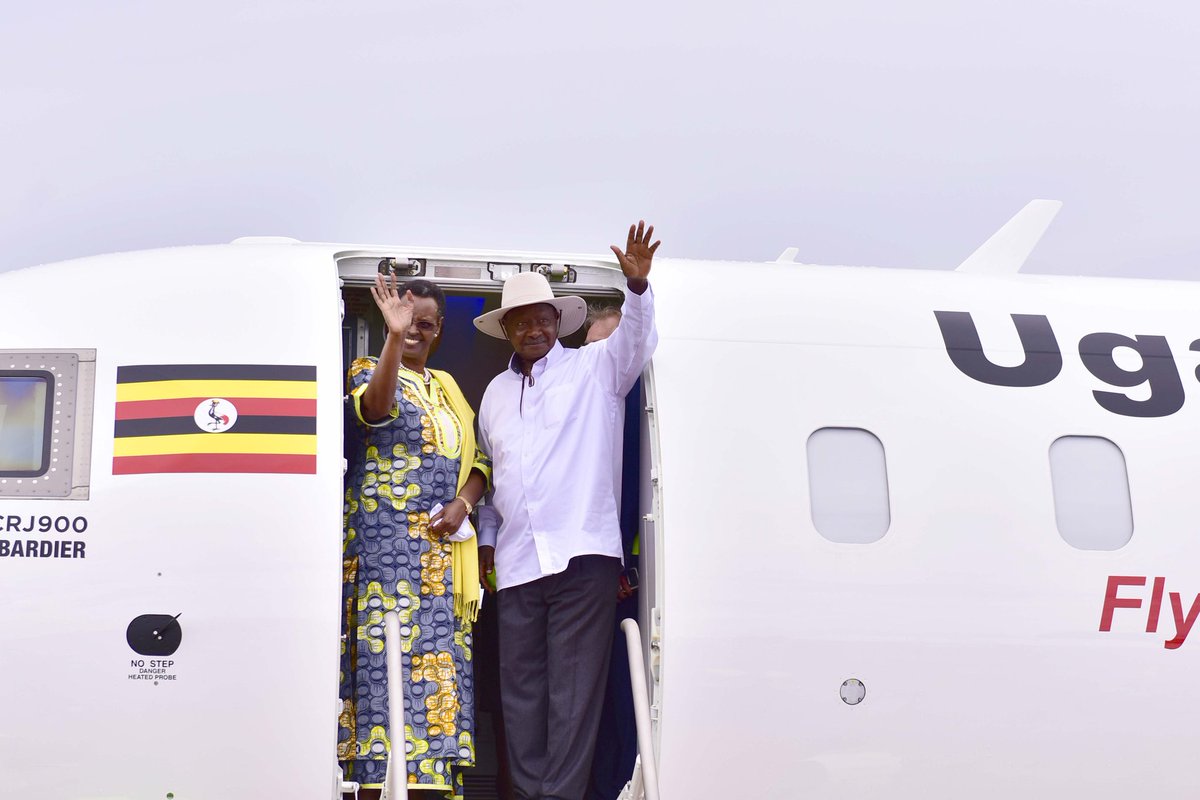
In the transport sector, Rugunda said that the revival of Uganda Airlines and several road infrastructure projects were oncourse.
“We promised the country that we would revive Uganda Airlines during this term of office. I am pleased to note, as you already know, that four aircrafts were received in the country. This will open Uganda to many opportunities, boost tourism, raise our flag and brand our country,” he said, adding: “The Entebbe-Kampala Expressway was completed and was commissioned by the President. The Nile Bridge was completed and commissioned.”
He also said that work on expansion and modernisation of Entebbe International Airport to accommodate the volume of increasing traffic was also nearing completion.
“We have also completed the construction of the one border stop points in the main exit/ entry points to facilitate faster cross border trade. These have been operationalised,” a jovial Rugunda said.
To support commercialisation of Agriculture, he said that the government has started the process of constructing irrigation schemes to support commercialisation of agriculture
“We have continued to prioritise investments in agriculture as the backbone of our economy with provision of pesticides, seedlings and extension services to farmers. The recruitment of extension workers in particular has provided farmers with the knowledge and skills to handle their activities professionally and with a business mind. Through Operation Wealth Creation, seedlings of cocoa, citrus, tea, mangoes, oranges and apples have been distributed,” he said.
He noted that for example, as a result of this increased investment in Agriculture, there had been increased coffee production.
“Coffee production has grown from 4.8 million bags last year to 5.63 million (60 kg) valued at USD 492 million which represented a 40% increase in value from the previous year,” he said.

To facilitate increased investments and the creation of jobs, Rugunda said that the government is working to improve the investment climate and reducing the cost of doing business and attract investors.
In the Education Sector, he said that money had been mobilised and the Government policy of establishing a seed secondary school for each sub-county commenced with the construction of 129 schools in sub-counties where there are no secondary schools.
Key stumbling blocks
Rugunda, pointed out some key challenges such as corruption and delays in the acquisition of land for flagship projects across sectors that were frustrating the NRM Government plans.
“Compensation remains expensive and sometimes delays project executions,” he said, adding: “Besides, there is corruption. This undermines the different efforts invested to achieve our targets. However, the Government has strengthened anti-corruption efforts, including by establishing the State House unit led by Lt. Col. Edith Nakalema to fight corruption.”
“The fundamentals of the economy that are responsible for rapid economic growth are being systematically dealt with. It is not surprising that our GDP growth rate that had declined due to severe drought among other factors has regained pace at 6 percent. We know that Covid-19 will have negative impacts on growth, but we are confident that we will bounce back,” concluded an optimistic Rugunda.