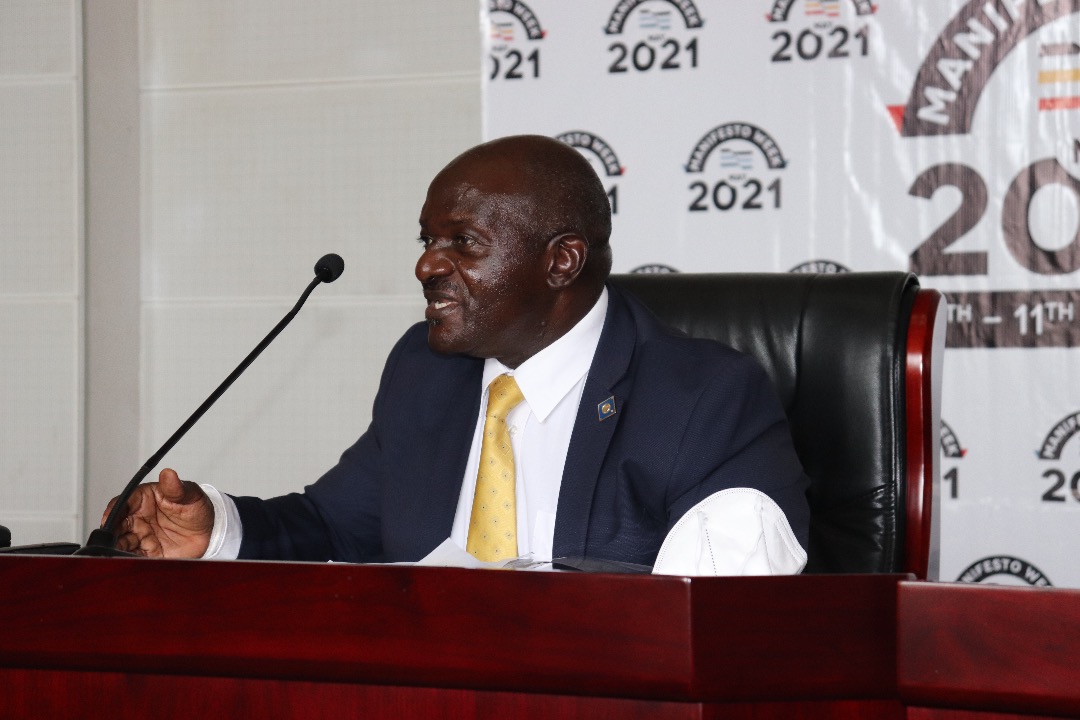
The Works and Transport Ministry has, in the last 5 years, has made great strides to improve Uganda’s transport sector despite the immense hurdles. According to the line Minister, Gen Katumba Wamala, the ministry has to a great extent achieved its manifesto commitments despite the many challenges.
“In our estimation, we have achieved 80% of the manifesto commitments and presidential directives as regards to the Works and Transport sector,” said Gen. Katumba.
Ministry of Works and Transport is set up to deliver a better transport experience to Ugandans, through the ministry’s efforts being made in the road, water, railway, and air transport systems.
According to Minister of Works and Transport, Gen. Edward Katumba Wamala, the sector achieved 80% of the NRM manifesto commitments and strategic presidential directives and guidelines.
Gen. Katumba said this on May 7 while giving accountability of what the works and transport sector did between 2016 and 2021 elective term of office.
Over the last five years, the ministry has achieved a lot especially in the maintenance and construction of roads across the country. This is evidenced by the fact that one can travel from major border points on from Kampala all through on the tarmac roads. In the manifesto, the total cost of the commitments to the Works and Transport sector amounted to UGX37 trillion for the five years starting from 2016 to 2021. However, the Sector MTEF for the period 2016/17-2020/21 is UGX25.172 trillion, thus, there is a funding gap of UGX11.841 trillion.
By the end of five years at least 1,548km of newly paved roads were added to the national road network against the target of 2,025km. Better still, over 15 road construction projects totaling 1000km are currently underway.
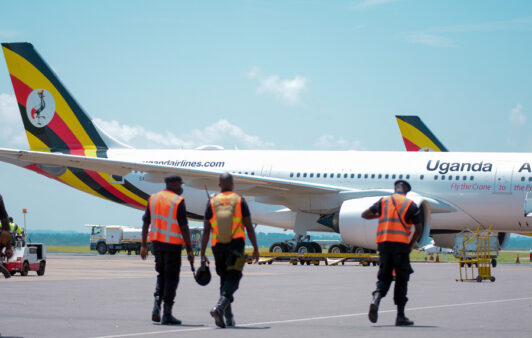
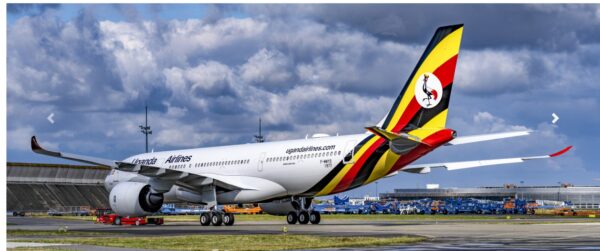
A major milestone was achieved in air transport, with the revival of Uganda Airlines which Gen Katumba referred to as a pride of this country.
“The negative talk about Uganda will not stop us from moving ahead. The ministry is ready to support Uganda Airlines and it will continue to hover the skies. We will continue to support traders who want to trade across the world,” said Gen. Katumba.
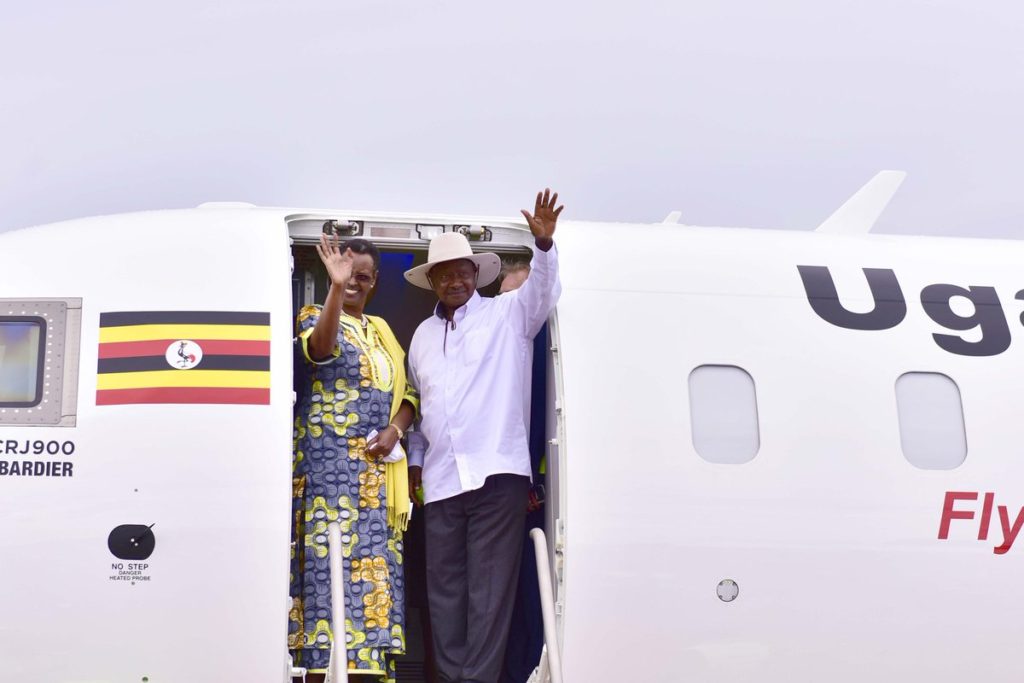
In the air transport industry, there is an ongoing development of Kabaale International Airport which will be used to support the nascent oil and gas sector. Similarly, there is ongoing expansion and rehabilitation of Entebbe International Airport.
Other airfields like Arua, Kasese, Kisoro, Gulu are being rehabilitated.
In the railway sub-sector, the government is working to ensure the Standard Gauge Railway is constructed. The key target on this project is securing the right of way. “We shall construct the standard gauge railway no matter what. We want to start when all dots have been cleared. We are ensuring that we have full control of the right of way. We are paying the project affected persons. Unlike road construction where the engineers can jump some patch of land as they wait for compensating the land owners, this is not the case with the railway construction. We need to have the line clear right from the start. We are ensuring we get the best cost, we doing the training of the people to construct the railway. We still discussing the financing arrangement from Exim bank,” says Gen. Katumba.
 Could Museveni’s Election as EAC Chair Renew Push for Accelerated East African Integration?
The ministry has plans to do the greater Kampala mass railway which will connect to Entebbe so that even those traveling to airport so that they are not delayed by road traffic.
In the meantime, the minister says the government is rehabilitating the meter gauge railway line all the way from Kampala to Malaba. Port Bell Kampala route 9km is rehabilitated. Traders can now use this Southern route to connect to Mwanza port. Rail and water transport are the cheapest and good for trade.
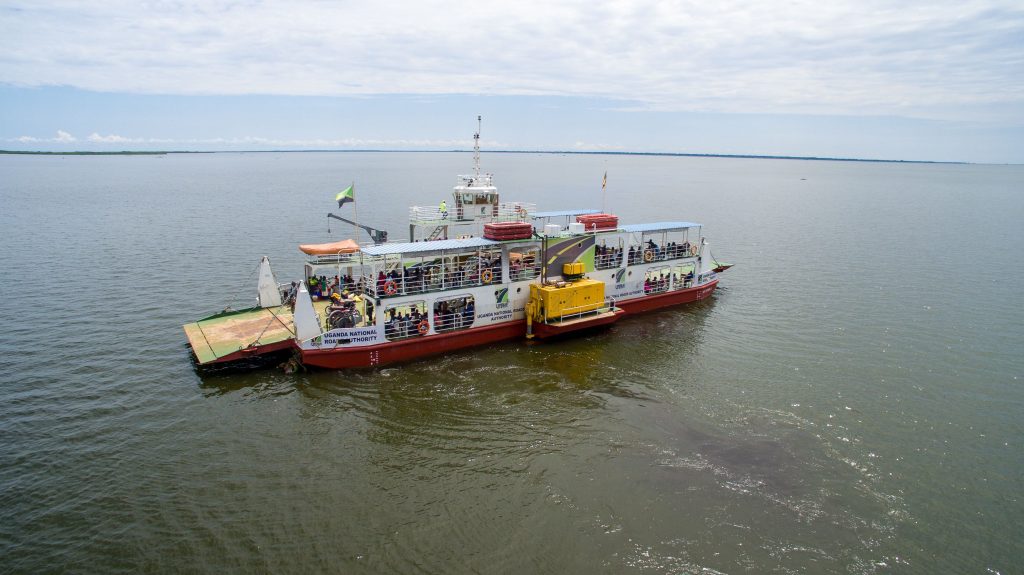
In the water mode of transport, the ministry is constructing the new port at Bukasa. Land and road access have been acquired. The project affected persons (PAPs) of Bukasa have been compensated.
The minister also reported that MV pamba is being rehabilitated at Jinja and by July this year it will be up and running. Sukulu ferry has been commissioned.
The ministry is working with the International Maritime to ensure safety on water transport. “We don’t want to get another MV Templar experience,” said Gen. Katumba.
Regarding, policy and legal framework development, the government has enacted the tolling policy and this will start with the Kampala-Entebbe expressway. Also, the Roads Act was enacted as well as the revision of the Traffic and Road Safety Act whereby new driving licenses are now being issued by the Government of Uganda.
“I call upon all Ugandan drivers to get the new driving licenses as this process is faster. You can get driving licenses within 45 minutes if you have all the requirements,” said Gen Katumba.
Major setbacks for the transport sector
Contracts of road construction are not fair in aspects of local content development especially in a country that with high levels of unemployment. Much as the contracts are won by foreigners there should be clauses and implementation of ensuring Ugandans benefit from them directly like supplying sand and labour. However, to support local content, projects of lower than UGX 40 billion are ring-fenced for the local Ugandan construction companies.
There was an estimation of the UGX37 trillion in the last 5 years but only UGX25 trillion was released. This was meant to cater for the entire transport and works sector which was not enough. Other challenges include: erratic weather changes especially rains that have always been leaving a trail of destruction on Uganda’s roads, Covid-19 pandemic lockdown which greatly affected the air transport industry.
Land acquisition is still challenging as well as the running costs and maintaining road construction equipment is inadequate which places the acquired equipment at a disadvantage. Prolonged procurement delays often result in administrative reviews, whistle blowers, and court orders also tend to hinder and delay the project implantation.