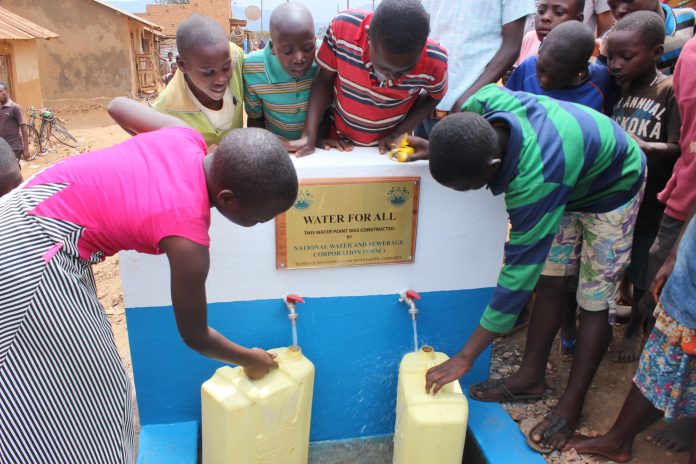
Since 2016, the government through the Ministry of Water and Environment has increased access to water in the country whereby clean and affordable water access in rural areas is at 68% while in urban areas it is at 75%.
“Overall a total of 38,517 villages representing 66% out of the total 57,974 villages in the country have been served with clean water. So far 35 districts have their water coverage above 80%. My sector has managed to construct 132,341 domestic water points countrywide of which 41,112 (deep boreholes), 21,590 (shallow wells), 29,097 (protected spring), 20,306 (PSP/taps) and 20,236 (rainwater harvesting tanks) serving 27, 797,316 people. Additional delivery of water to 23,910 wards within towns and municipal councils were served by NWSC under the SCAP-100 and MWE projects.”
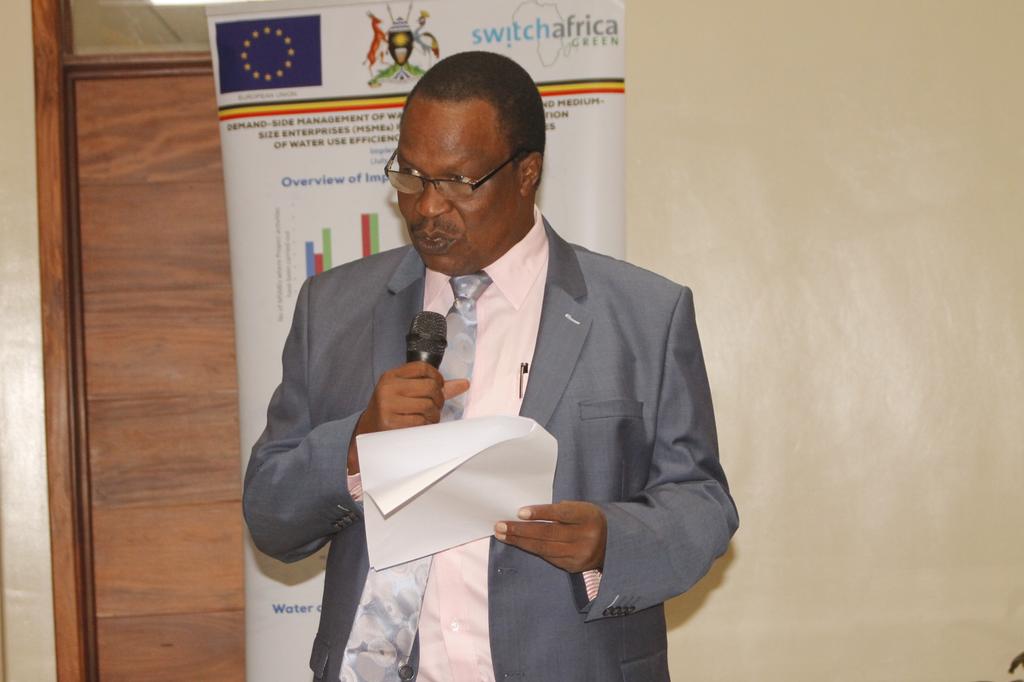
The Water and Environment Minister, Sam Cheptoris made this revelation during an annual cabinet presentation to highlight the ministry’s performance report during the NRM Manifesto Week at the Office of the Prime Minister in Kampala on Monday, 10th May 2021.
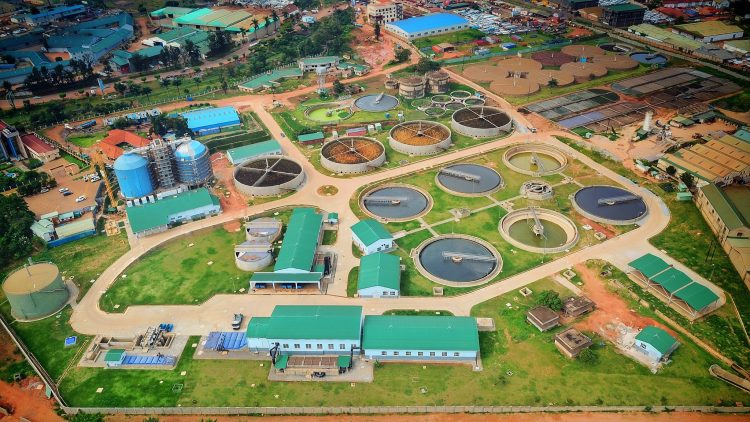
National Water and Sewerage Corporation increased Sewerage (NWSC) connections to 23,796. The total sewer network is 670kms countrywide representing 30%. Improvements are attributed to the completion of Nakivubo-Kinawataka sewer lines, Nakivubo Waste water treatment plant, Arua and Gulu projects, and Fort Portal and Kisoro package sewage plants.
The current NRM manifesto pledged an annual target of drilling 5,000 boreholes in 5 years at a rate of 1,000 boreholes per year and fitted with handpumps based on their yield. To date, the sector managed to drill 846 boreholes per year translating into 84.6% performance. These boreholes have helped serve an extra 253,800 people across the country.
In the last 5 years, at least 7 new towns in Kasagama, Kinuuka, Namagera, Nyahuka, Iziru, Busede-Bugobya, and Kaperabyong, Kayunga including Kamuli FSM were completed. While 4 new towns of Mpara Nakasongola, Nakapiripirit and Kyamuhunga are under design phase.
Uganda’s average sanitation coverage in rural areas has increased from 77 % to 79%. While sanitation in urban areas has increased to 87.4%, with 5 fecal sludge management plants being constructed in Pallisa, Apac Kiboga Nakasongola, and Kamuli while 101 public waterborne toilets have been constructed across the country and 4 cesspool emptiers procured.
The government through the line ministry of water has increased storage and invest in construction of multipurpose water reservoirs to boost production and productivity in the key sectors of the economy, as well as managing and protecting water and environmental resources through the restoration of water catchments and associated ecosystems country-wide.
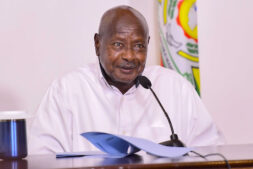 Could Museveni’s Election as EAC Chair Renew Push for Accelerated East African Integration?
Minister Cheptoris reported that although the target was to increase wetlands coverage from 10% to 12% by 2021, the coverage has stagnated to less than 8.9%. “As the sector restores and improve on coverage, degradation on the hand has not stopped due to increasing pressure for human settlements, agriculture use and industrial development in wetlands.”
The cancellation of land titles in wetlands will continue all in an intention to conserve wetlands.

Some of the setbacks that the water ministry has faced thus far include; land conflicts and high compensation requests resulting in time lost and delays in execution and encroachment on public forests. Despite these challenges, the line Minister pledged that his ministry will continue to protect and conserve the environment for posterity and continue striving for adequate nationwide water distribution of water.
In a bid to protect Uganda’s forests and wetlands, the Ministry of Water and Environment is contemplating to form its own armed force similar that of Uganda Wildlife Authority (UWA) to promote environmental conservation.
Sam Cheptoris, the Minister of Water and Environment says this will help protect the dwindling forests better since the environmental police are thin on the ground. “National forests are disappearing at a higher rate in Uganda and action has to be taken early to arrest the situation.” he asserted.
A tree-planting campaigns fund has been included in the annual budget to increase tree coverage within the country as well as to help protect the environment for future generations.
The Water Minister, Sam Cheptoris also assured Ugandans that uniform water tariffs will soon be implemented in the country once the policy is ratified. Currently, the tariff policy is being prepared and once in place it will help harmonize water charges nationwide.