The Ministry of Agriculture Animal Industry and Fisheries (MAAIF) on Monday, 1oth May presented their 5-year accountability report during the ongoing annual 7-day series dubbed the Manifesto Week. A cabinet presentation by MAAIF’s line Minister, Vincent Ssempijja revealed that over the last four years, the ministry has distributed 7,086,504kg of bean seed to smallholder farmers.
The ruling National Resistance Movement (NRM) government in 2016 stated its aspirations to transform Uganda from a low-income society to a competitive middle-income country in the near future. The Agricultural Minister in his last-mile annual report also pointed out his ministry’s other achievements during this tenure.
MAAIF has supported specifically strategic commodities to ensure a greater impact on household incomes and national export earnings. Several interventions were made to focus on the provision of planting materials for the key enterprises like; maize, beans, coffee, tea, and fruits (citrus, mangoes, pineapples and apples) through the distribution of improved seeds and breeding materials under the Operation Wealth Creation (OWC).

Beans
Over the last 4 years, the ministry has distributed 7,086,504kg of bean seed to smallholder farmers.
Cassava
A total of 793,223 bags of cassava cuttings was distributed to 60 district local governments that prioritized cassava. As a result, Cassava production has subsequently increased from 3 million Metric Tonnes in 2016 to 7 million in 2019.
Coffee
At the start of this out-going political term in 2016, coffee production stood at 4.46 million (60kg) bags and the volume of coffee exports was 3.56 million (60kg) bags valued at $351m. Over 582,995,184 coffee seedlings were distributed to coffee farming households. This has increased coffee production by 56%. The volume of coffee exported also increased by 17%.
Fruits
A total of 41,426,303 citrus seedlings; 28,706,281 mango seedlings, 2,439,155 apple seedlings and 36,446,670 pineapple suckers were distributed. The NRM government is also setting up fruit factories across the country, including the Soroti fruit factory, a mango processing factory in Yumbe district, a multi-fruit factory in Nwoya district, in partnership with Alvan Blanch, a UK Company. Support companies, individuals in livestock breeding to meet the demand for dairy cows, poultry and pigs
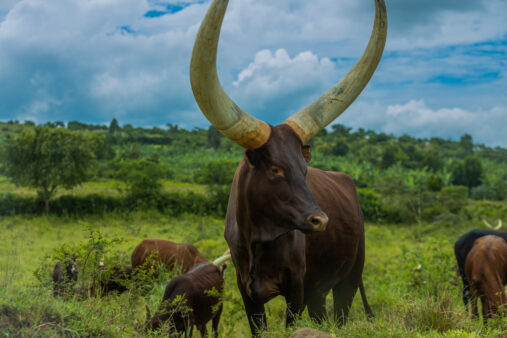
The Government, through NAGRC&DB, is promoting the crossing of local animals, to
F1-50% and F 2-75%, which can produce 12 and 18 liters of milk per day.
As a result, NAGRC has improved the beef animal’s average daily weight gain to 250gm per day with F1- 50% and this has reduced the market age tremendously from 3-4 years to 1- 1- 1.5 years. Goats have been improved to reach an average daily weight gain (ADG) to 145g/ day, compared to 25–30 g/day for the local goats, which is an increase in household income by 67% per goat from sales.
 Could Museveni’s Election as EAC Chair Renew Push for Accelerated East African Integration?
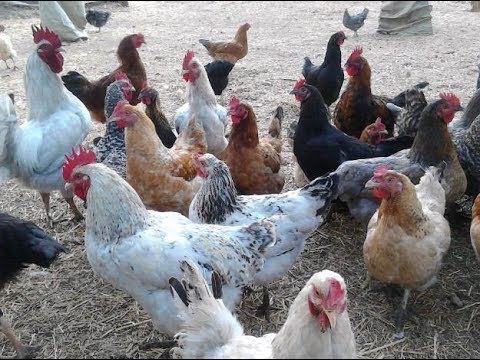
Kuroiler chickens which are disease-resistant and grow faster have been introduced. A kuroiler hen lays 150-200 eggs in a year, compared to the 40 eggs produced by an indigenous birds. Cocks weigh between 3-4kg within four months.
Early-maturing pigs have been introduced, which can produce at 10 months at an estimated weight of 80-90kg live weight compared to the local breed aged 14 months at an average weight of 40-60kg.
Cabinet has also approved the National Seed Policy and regulations were gazetted to provide a regulatory framework for the private sector to invest in the seed sub-sector.
National Agricultural Research Organization, (NARO) has strengthened its capacity to produce breeder and foundation seed to key strategic food security and income-generating commodities.
MAAIF has also disseminated the National Strategies for Youth Employment in Agriculture and that of knowledge management and communication.
To improve the youth post-harvest handling and storage management skills, 7 youth groups from Masindi, Kiryandongo, Iganga and Jinja were trained in sustainable market linkages along the rice and maize value chains.
In a bid to enhance value addition in the dairy subsector, 216 dairy stakeholders were skilled in value addition. There has also been a deliberate effort to target youths and women while distributing inputs, planting and breeding materials Ensure self-sufficiency in rice production, as well as promoting the growing of upland rice to avoid destruction of wetlands.
In the past 5 years, NARO has released and promoted 14 upland rice early-maturing and drought-tolerant varieties which are resistant to rice yellow mottle.
During this period, the line ministry has released and promoted 3 coffee wilt disease-resistant and high up quality clones. The Government is also supporting an Integrated Cassava Industry Development Project for Northern Uganda (ICIDP) to invest in research in disease and pests control.