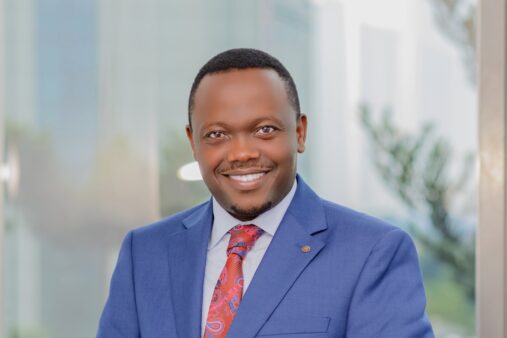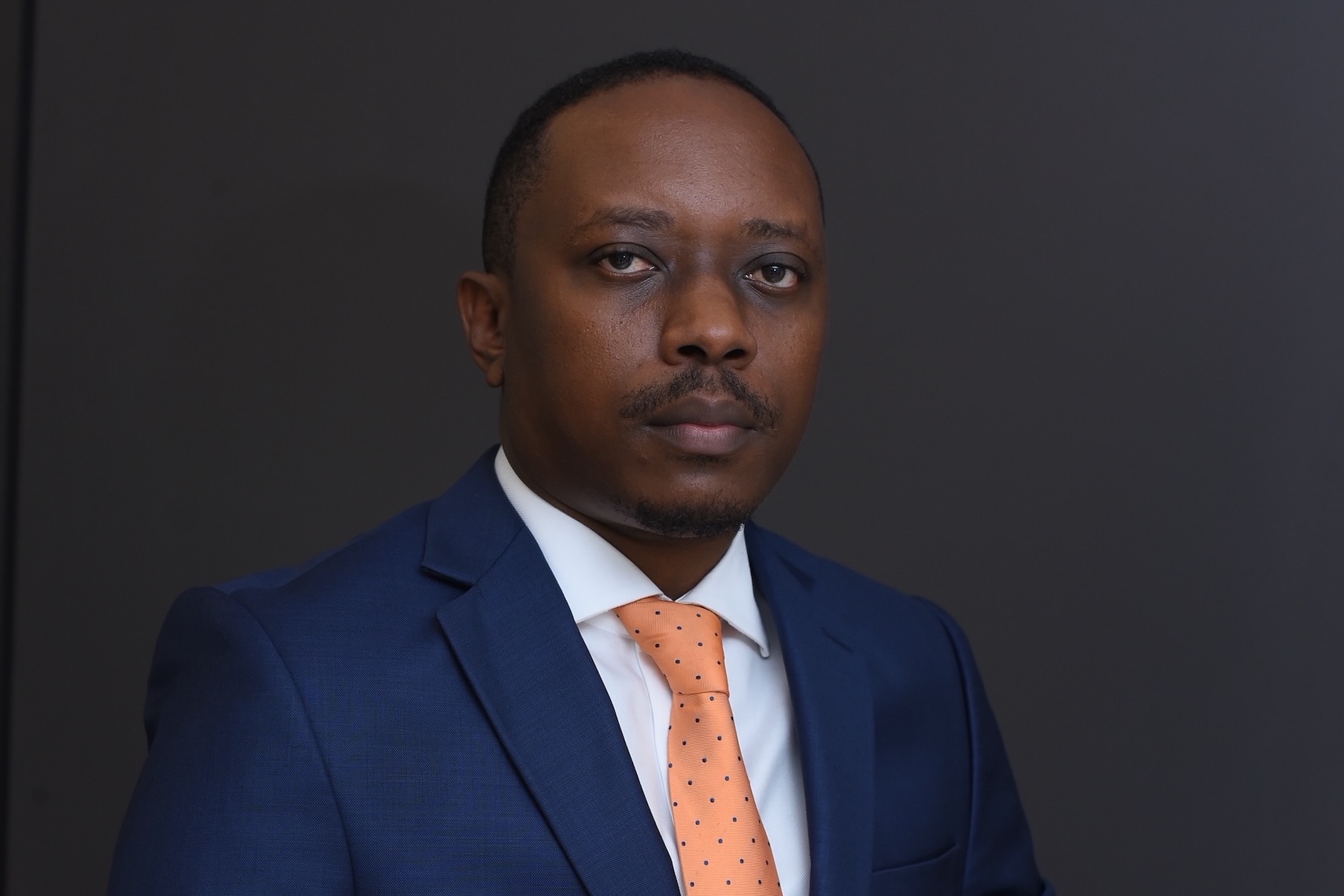
When we finally confirmed a date, I arrived at Meritas Advocates’ offices at UEDCL Towers on one of those uncertain December afternoons when time itself seems suspended. The space radiated corporate calm — concrete and glass framed by generous windows pouring in sunlight. The receptionist, efficient and unfazed, called him while still typing with her free hand.
Henry soon strode in — brisk, apologetic (though he wasn’t actually late), and impeccably dressed in a beige suit despite the punishing heat. He looked both sharp and slightly worn out, but he sounded cheerful.
“Let’s do this,” he said, leading me into the boardroom where we settled in and finally got down to business.
I imagine your caseload as you wind down the year is insane.
That would be putting it lightly.
Nice digs, these…
Par for the course.
That’s actually true. Three professions where appearances are everything: banking, legal and insurance. And these three interact vigorously with each other, so it probably rubs off. Tells us a bit about the firm…Meritas Advocates.
We are a commercial law firm. Our core objectives are to facilitate our clients’ business investment, financing, and offer tax solutions…basically everything to do with commerce and commercial litigation defines what we do.
And with regards to you, specifically? What’s your area of specialisation?
I head litigation for the firm; I litigate a lot, but I also do a bit of advisory. Each of the partners heads a niche within the different sectors of commerce. We have a partner specialising in taxation (mostly advisory and compliance); he is an Advocate, Certified Public Accountant and a fraud examiner. He has more than one discipline, as do the rest of the Partners. Our current managing partner is an Advocate and an Engineer, doing a lot of construction law and energy law.

Our other Partner has a background in IT and Law, and I’m an Environmentalist and a Lawyer. Another Partner, Francis, has a niche in Oil and Gas, in which he is trained, and this year we recruited another Partner, Robert Apenya, with vast experience in commercial transactions.
How many partners does the firm have?
The firm has six partners.
You are a named partner…?
Yes.
(Laughing) For lay people, being a named partner…one of the names on the door or at the reception, is a pretty big deal.
You know, the partnership model has evolved over time. The partnership model used to be built around equity – what your investment in the firm was. Today, it is largely built around performance.
The amount of business you bring in, the amount of work you execute, your billables, that sort of thing…
I am not surprised – this particular model was increasingly obvious within legal frameworks as depicted in popular media like television series depicting law firms in the United States and the United Kingdom…
We had somewhat lagged behind, but we are evolving in that regard, as a sector… and I think it’s very good as it rewards talent, hard work, and also creates a quick opportunity for young lawyers who are good to make Partner in an already established firm.
Yes. The conventional, equity-based structure was somewhat unfair, especially in a field like ours, where the capital is expertise, intellectual property, so to speak, quite difficult to quantify in terms of equity. It was built around a share capital akin to the same model companies use. And whereas your stake or equity in the partnership is still important, increasingly it is not the only requirement; performance and billables play a huge role these days. The law firms in the West and Australia have long embraced performance-based partnerships, and in Uganda, we are also slowly adopting the same approach.
Has the business development model for the legal sector changed drastically over the last 20 – 30 years within the legal sector? Are there specialised people within the firm for whom that definition fits their docket?
Yes, that’s what most law firms do, because they have evolved to be talent-based. So, usually the Partners identify the Partner with a talent in business development, and he takes the lead on business development and client retention.
I have noticed that tendency for focusing on talent and skill sets within law firms. In fact, a number of them don’t even have HR managers – the portfolio is now Talent Manager, or something like that.
It is also a relatively new introduction. Within our own firm, we have a practice manager and a software platform which encompasses accounts, HR, KPIs, performance appraisals, etc. Ordinarily, the management role falls under the docket of the managing partner, but administrative roles can be tedious, require skill which the managing partner may not possess, and the managing partner, as a lawyer, too, has technical work to focus on, so firms like ours will hire a Practice Manager to deal with the administration of the firm. The Practice Manager is then able to focus on managing the human resources and administrative aspects.

Let’s examine the question of burnout. I often feel like it is almost inevitable – the amount of detail required for a case can be overwhelming. I know that from experience, even for cases I am involved in myself and I am familiar with, you find the lawyer has to get intensely intimate with the case itself. And I feel like burnout is inevitable, somewhat.
 Ruparelia Group Wins Key Entebbe Land Case, Clearing Path for the New Mega Speke Resort and Convention Centre, Entebbe
The burnout does occur, but we manage that by employing staff to allow us to satisfy the load. We also specialise, as I told you. In our firm, for example, the Partners litigate in the higher courts, that is, the High Court onwards, and the Associates handle all cases in Magistrates courts and some in the High Court but under the supervision of a Partner.
But that notwithstanding, there is still burnout. I have noticed that as lawyers in practice get older, they reduce their workload and even equally reduce their daily presence; they take on something similar to consultancy roles within their own firms. The fire and aggression needed for regular cases just isn’t there anymore, especially as you get over 50. I imagine it’s natural; the vigour is low. It is surely a natural thing, this fatigue thing – they say a lawyer reaches his peak between the ages of 40 and 50, so I think after 50, the vigour naturally goes down, considering the long schedules of a practising lawyer.
My next query is somewhat contentious: what are your thoughts on case backlog in our courts?
(Sighs) It has gotten worse, for various reasons, of course – increased litigation because the public is better informed about the judicial process, the population too has grown, and so has the economy. But it is also a deeply inefficient system, both at an individual and institutional level; the work ethic in public offices is deplorable.
How are you as a firm responding to this backlog?
We advise our clients to only treat the court as a last resort. The process of litigation can be protracted, and there are litigants who take advantage of both this and the backlog. And of course, there’s the unending appeals process; you can’t believe how much you would have to wait to receive judgment in an appeal in the Court of Appeal or the Supreme Court. So we advise our clients to treat the court as a last resort, especially our commercial clients. Your money will be buried in court registries for ages. As a result of the court backlog, most commercial law firms are doing more solicitor work than litigation.
There have been a couple of suggestions about how to deal with this backlog in our courts. The topic always comes up, of course. One of the more dramatic ones I have heard is the setting up of a 3 – year project involving retired judges, at least 100, brought in to deal with the backlog. But before we even examine these proposals, we need to understand what has caused this backlog. An increased population, increased economic activity, and increased awareness of the legal process all contribute to increased instances of litigation within the legal sector. What’s your take on the proposed solution? Would it help?
Before examining the solution, let us look at why the original processes are not working. In football, before a coach brings on a substitute player, they first examine why the player currently on the pitch is failing and why he was opted for in the first place.
You lean more towards fixing the current system?
Yes, because whatever is plaguing this system would also damage whatever solutions you tried to effect. There’s a culture of laxity within our judiciary. For example, recently I’ve heard colleagues in the fraternity talk about how many times the Supreme Court has convened: it’s worrying! Of course, they will say backlog this and backlog that, but people are not working, or at least they are not working the way they should. It is possible lawyers have been accomplices in the backlog, but only to a very small extent.
Can you tell us about your early childhood? Where were you born and raised?
I am a city boy – I was born in Nsambya Hospital and raised in Kibuli, but hail from Rukungiri. I was born to civil servant parents, who, however, departed quite early. I went to Shimoni Demonstration School for my primary school; I went to Muntuyera High School for my O Levels and Katikamu SDA for my A Levels, and then on to Makerere University. My first discipline was Environmental Management, and thereafter, I immediately joined law school, then LDC.
Were there strong influences from your parents or extended family regarding education or career aspirations?
Orphaned at 3 years and 13 years and not exactly talented at sports or any other extracurricular activity one could use to progress, I was made aware that the one way out for me was education, and I laboured at it. However, my family, both nuclear and extended, has been very instrumental in my life journey. While I was studying Environment Management, I did clerical work for a lawyer called Hassan Kamba, who worked with another young lawyer, then called Hussein Hilal – both astute, but it was Hilal who inspired me. We did not have a lawyer in my family, but Hilal inspired me and continuously encouraged me.

What was it like handling your first case?
I was in recoveries – I did a lot of recoveries in the beginning, it was a good experience; there is always excitement as a young lawyer. My first case was a recovery case for a bad debt for a SACCO, a church-founded cooperative society called P-Save. I used to do recoveries for them.
What was it like practising law in Uganda back then?
(Enthusiastic) It was very interesting then; you had to prepare and be up to the game. Lately, courts have abandoned oral submissions and made written submissions the norm, which I think eats into the time needed to solve the backlog; even for a simple application, courts will direct lawyers to go and exchange written submissions, which process alone takes weeks! Also, I think the old precedents in our judicial system were extremely good; the quality has gone down. You can not find the quality of cases we were first introduced to in law school; the Judges and Justices then were brilliant, or perhaps they worked to exhibit their brilliance.
Are there particular landmark cases or transactions you look back on with pride?
I handled a case, Meseret Getnet Teshale vs Amen Investment Group Limited, whose subject matter was in excess of $20Million and involved a dispute over transmitting shares in a company worth that much. It was a landmark case for me not only because it involved huge sums of money, but it also presented to me an interesting scenario: the corporate personality of an Ethiopian business offshored in Uganda, thriving in the civil construction industry with huge projects executed around the region, but threatened with liquidation because of succession shareholding which was disinterested in continuity of a sound company. Being trusted with a big case like this in a subject of the law that I’m fond of was quite fulfilling.
What advice would you give to a young lawyer today who is dreaming of becoming a great corporate lawyer?
They ought to be patient while they strive to be technically good. Unlike tech, success in a law career comes with time. Even if you are lucky to hit a big deal, it’s not an everyday thing. But even then, that sort of deal, if it is legitimate, typically finds its way to an experienced good lawyer, so there are little or no shortcuts. The beauty about most professional careers is that you age like fine wine – time is therefore key, but you have to invest time in it and have passion.
Finally, what message do you have for Uganda’s business community about the importance of sound legal practice and governance in national development?
Very often, businesses and entrepreneurs turn to lawyers when there is a problem or crisis of some sort, and they expect a lawyer who is human to be a magician. I recently watched one of the most accomplished entrepreneurs in this country, Charles Mbire, talking about the need to be your first lawyer for yourself before you sign any agreement. A lawyer is the first insurance policy any businessman should take out, to avoid disputes, mitigate loss and avert risk. I would advise that just like the way a business requires an accountant to manage finances and the resultant tax obligations, so does a business require a lawyer from the outset to give counsel on business decisions. Any business needs a lawyer for advisory, either in-house or an external lawyer and that way it is even cheaper than requiring a lawyer at the litigation stage. (Dryly) You need a lawyer before a problem presents itself!