By Aggie Konde & George Lugalambi
On 15 August in Kampala, more than 20 editors and media leaders from various Ugandan news organisations participated in a listening session to share insights about the coverage of agriculture by the news media.
The Alliance for a Green Revolution in Africa (AGRA) and the African Centre for Media Excellence (ACME) cohosted the session.
Whereas agriculture contributed 26.2% to Uganda’s gross domestic product in the financial year 2024/2025 and employs about 68% of the working population, the media’s attention to the sector falls far short of its impact on the economy and livelihoods. In 2021, ACME’s research on media coverage of public affairs found that agriculture accounted for just 3.9% of newspaper coverage and a mere 2.6% of television coverage.
Against the backdrop of such disappointing numbers, we began our interaction with the editors and news leaders by posing some basic questions: What role do newsrooms and media platforms play in the agrifood sector? How does your work connect to the lives of farmers, consumers, and the policies that shape food systems?
The answers were candid, sometimes uncomfortable, and ultimately illuminating. Taken together, they revealed why agriculture remains under-covered and misunderstood, and how communications and advocacy could be the missing link to more inclusive transformation of food systems.
During the deliberations, we noticed a mindset problem — agriculture is “not sexy enough.” One refrain cut through many responses, pointing to a newsroom culture that treats agriculture as unglamorous, slow, and unrewarding. Reporters told us that agriculture “doesn’t make headlines,” is “too technical,” and won’t get a reporter visibility. “Covering the sector is not rewarding,” one editor said bluntly. Another argued that it takes passion to stick with agricultural reporting.
That perception feeds a vicious cycle. If editors prioritise political scandals, celebrity stories, and fastbreaking urban beats, rural transformation — the bread and butter of food security, livelihoods, and national stability — stays invisible. When agriculture is framed as “for the poor” or “small scale,” it is stripped of its nuance and its centrality to national economic development.
Capacity gaps and practical barriers persist. Editors described practical constraints such as shrinking newsroom resources after consolidation, limited time and budgets to travel to rural areas, and lack of access to credible experts who can explain complex issues.
Moreover, business owners are reluctant to fund the extensive field trips necessary to effectively cover and share agricultural stories. New themes such as climate and soil health often get a headline here and there and then disappear without follow-up.
The result: reporting that focuses on events rather than systems. Journalists want to move beyond anecdotes, but many lack the networks, technical briefing materials, data or time to explain why a farmer’s loss is not an isolated tragedy but a symptom of systemic failures that may include absence of extension services, low investment in research and development, weak input markets, and poor policy implementation.
During the session, editors warmed to a systems approach. They could see that a dramatic story — a failed irrigation project, a disappointing harvest, or an unsuccessful investment — becomes more powerful when linked to the policy or institutional fault lines behind it. Is it about large dams versus small-scale irrigation? Is it about governments signing continental agreements like the Comprehensive African Agriculture Development Programme or soil health initiatives but failing to follow through? Is it about the missing extension worker who never reached a village?
These are not dry, technocratic details. They are the explanation of why yields stagnate, why investments fail, and why lives are vulnerable. Framed rightly, they make agriculture one of the most political stories a newsroom can tell about priorities, budgets, power and the promise (or failure) of policy to reach people.
Who champions the story? Editors pointed to a striking truth: some agricultural narratives grow only when influential public figures champion them. In Uganda, for example, an influential voice like the Katikkiro (Prime Minister of the Buganda Kingdom) helped elevate coffee growing into the national conscience.
But too often, food and nutrition security lack visible champions in political and public spheres. That absence makes it easier for the rest of the media to ignore the deeper causes of rural underdevelopment.
Communications and advocacy have the potential to bridge the gap. If agriculture struggles for coverage because of newsroom mindsets, capacity gaps and a lack of champions, then what can break this impasse?
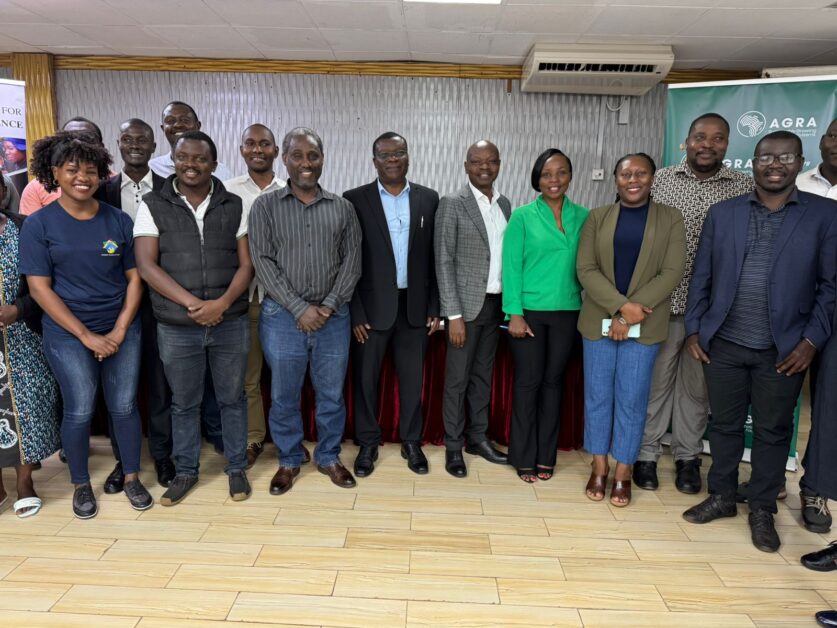
Our listening session with editors and media leaders convinced us that communications and advocacy must be the connective tissue — not as mere amplification of success stories, but as strategic, evidence-led interventions that make systemic problems visible and politically salient.
Communications is not propaganda. It is translation: turning complex agronomic research, policy commitments and programme outcomes into clear, credible narratives that journalists can use; equipping editors with experts, data and human stories that show the stakes; and building relationships among newsrooms, civil society, and public institutions to enable follow-up reporting.
Concrete steps that AGRA and ACME have committed to:
- Building media-friendly expert rosters and briefing packs that explain systems issues in plain language, with local case studies and contacts. Editors told us that the lack of access to reliable experts is a real barrier which, if removed, could unlock the media’s interest in agriculture.
- Supporting media field trips and fellowships focused on systems reporting, financed by partnerships among non-governmental organisations, development partners, and media houses, with editorial independence safeguarded.
- Creating follow-up story pipelines: One investigative or systems piece should be followed by accountability reporting, policy tracking, and human-interest reporting.
- Identifying and working with champions: Community leaders, parliamentarians, and trusted public figures who can keep stories alive and pressure institutions to act.
- Measuring and reporting impact: Show how a well-told story led to policy debate, budget scrutiny or programme changes. Make the return on investment for agriculture journalism clear.
A challenge to editors, NGOs and donors: We asked the room how decisions on coverage are made. The answers suggested an opportunity. If editors decide what matters in a newsroom, then we should make it easier for them to decide that agriculture matters.
We challenged the group with a final thought: Food is the single biggest political story. It determines how families eat, who prospers, and whether nations meet their development promises. If we care about governance, accountability, health, or the economy, we must care about agriculture.
To our peers in NGOs and development partners: invest in the intermediaries — the communicators and the journalists — who translate complex systems into public debate. To editors and producers: be bolder in reframing agriculture from “a poor person’s story” into a national story about power, policy and justice.
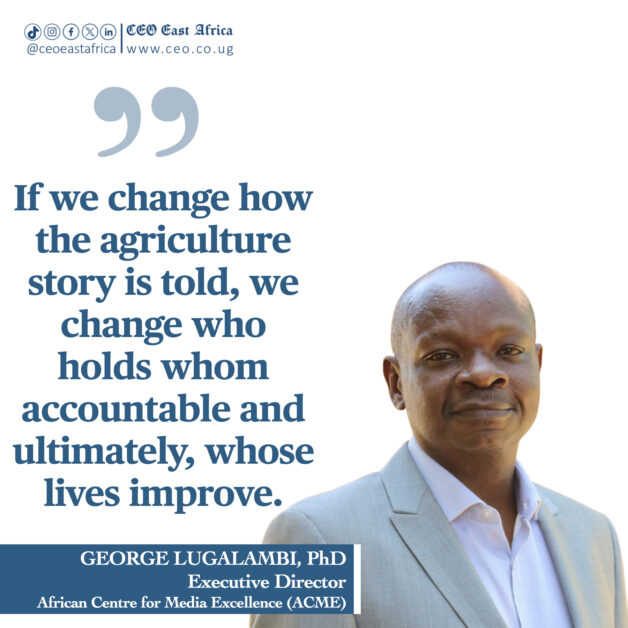
Listen. Reflect. Amplify. Those three words drove our session and must drive what comes next. If we change how the story is told, we change who holds whom accountable and, ultimately, whose lives improve.
About the authors: Aggie Konde is Director of Communications, Innovations and Advocacy at Alliance for a Green Revolution in Africa (AGRA) and George Lugalambi, PhD, is Executive Director at African Centre for Media Excellence (ACME).