Government has issued a default notice of dozens mining companies and licence holders after unpaid mineral rent arrears climbed to UGX 3.75 billion.
Woodcross Mining Company Limited and Kilembe Mines Limited are listed as the largest defaulters, according to a public notice by the Ministry of Energy and Mineral Development.
In the notice, the Ministry reminded mineral rights and licence holders that under the law, all licence holders have a legal obligation to pay annual mineral rent and royalties to government.
The Ministry said the notice serves as the last and final demand, giving defaulters 14 days to clear outstanding amounts before further legal action is taken.
The accompanying Annual Mineral Rent Fees Defaulters register shows that, after consolidating entities that appear multiple times due to holding more than one mineral licence, 70 unique defaulters remain in breach of their statutory obligations.
Mineral rent is a mandatory annual fee paid by holders of mineral rights for the exclusive use of Uganda’s non-renewable mineral resources, regardless of whether production is ongoing.
It is distinct from royalties, which are tied to output and sales, and forms a key part of non-tax revenue intended to fund regulation, environmental oversight, and administration of the mining sector.
At the top of the list is Woodcross Mining Company Limited, which appears three times on the register with unpaid mineral rent of UGX 400 million per licence, bringing its consolidated arrears to UGX 1.2 billion, the highest amount owed by any single operator.
Woodcross Resources operates across several segments of Uganda’s mining value chain. The company’s mining division focuses on the exploration, development and operation of mineral licences, with its current activities concentrated in Ntungamo and Isingiro districts.
It owns and operates the Ruhama mine, a 40-square-kilometre mining licence in Ntungamo, supported by a JORC-compliant scoping study that estimates 26,680 tonnes of tin metal at an average grade of 0.23 percent.
Woodcross has also assembled and commissioned a 15-tonne-per-hour processing plant at the site.
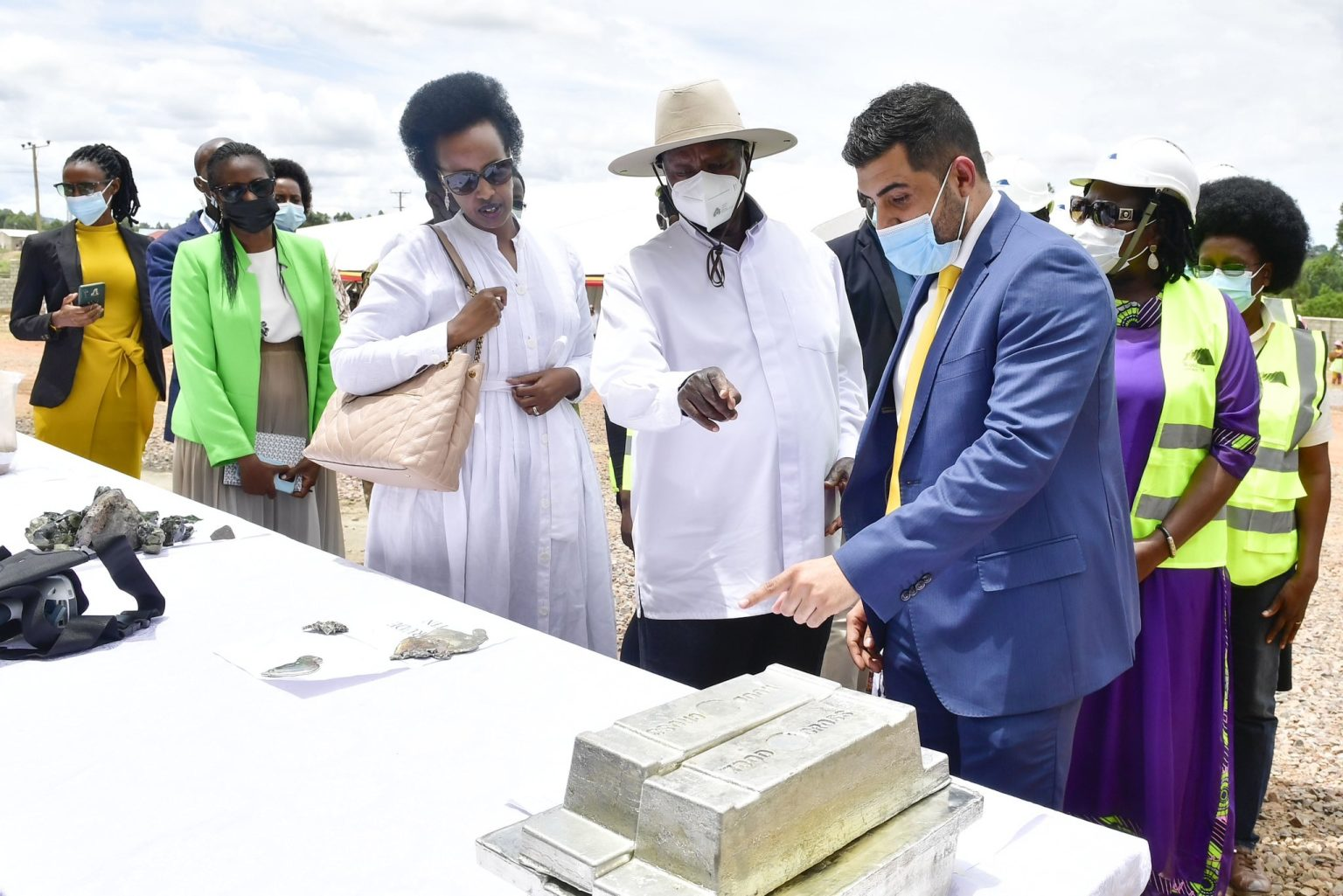
In addition to mining, Woodcross operates a commercial-scale tin refinery in Mbarara, with a production capacity exceeding 1,000 tonnes of London Metal Exchange Grade A tin metal annually.
The company also runs a mineral trading division that purchases concentrates from audited mining sites across the Great Lakes region of East Africa, positioning it as a vertically integrated player in the tin value chain.
Kilembe Mines follows Woodcross on the defaulters’ list, also appearing three times, with each entry reflecting unpaid mineral rent of UGX 325 million, resulting in consolidated arrears of UGX 975 million. Together, the two companies account for nearly 60% of the total unpaid mineral rent.
The appearance of Kilembe Mines on the defaulters’ list comes at a pivotal moment for the historic copper operation in Kasese District, which is on the cusp of redevelopment after decades of decline.
Government, in march, signed a Mineral Production Sharing Agreement with Sarrai Group, represented by Energy Minister Ruth Nankabirwa and Finance Minister Matia Kasaija, paving the way for the mine’s revival.
Sarrai Group, alongside Nile Fibreboard, emerged as the preferred bidders out of 14 firms that had expressed interest in redeveloping Kilembe Mines.
Sarrai Group is also the investor behind Hima Cement, which it acquired last year in a $120 million transaction, further strengthening its industrial footprint in Kasese District.
According to Minister Nankabirwa, the Kilembe redevelopment is expected to produce copper cathodes and cobalt metal, minerals that are critical for the global transition to clean energy technologies, while also driving industrialisation, job creation and support to local mining operations.
However, the Auditor General’s 2024 report highlights the depth of the challenges facing Kilembe Mines.
 Ruparelia Group Wins Key Entebbe Land Case, Clearing Path for the New Mega Speke Resort and Convention Centre, Entebbe
The report shows that unpaid dues rose by 5%, from UGX 2.2 billion in the 2022/23 financial year to UGX 2.3 billion in 2023/24, with UGX 1.52 billion, or 65%, classified as doubtful for recovery.
The Auditor General attributed the company’s financial distress to historical issues including unresolved legal disputes, asset damage from natural calamities and prolonged underinvestment.
Core mining operations ceased in 1982, leaving Kilembe Mines largely responsible for maintaining ageing infrastructure reliant on 1950s-era technology prone to breakdowns.
The mine’s power generation facility was shut down early in the previous financial year due to safety concerns linked to its 70-year-old infrastructure, while governance challenges persist, including unpaid board retainer fees amounting to UGX 417 million.
The company’s operating margin fell to minus 112%, and accumulated losses stood at UGX 46 billion as of June 30, 2024.
Beyond Kilembe and Woodcross, the defaulters’ register includes a broad cross-section of Uganda’s mining sector, ranging from large industrial operators, medium-scale firms and smaller licence holders.
Other large corporate defaulters include Ascort Mining, which owes UGX 232.8 million, and Sun and Sand Mines and Minerals, listed with arrears of UGX 200 million.
Sunbird Resources has accumulated unpaid mineral rent totalling UGX 129.24 million, while Great Lakes Iron and Steel Company owes UGX 90.6 million.
Kisita Mining Company is in default of UGX 87.2 million, and Shiye Mining, which appears multiple times, owes a consolidated UGX 59.4 million.
Companies with arrears in the tens of millions include Summit Group at UGX 44.78 million, Li Kuang Mining (UGX 47.18 million), Guangzhou Dong Song Energy Group (UGX 47.15 million), African Panther Resource (UGX 40.2 million) and Kigezi Steel Company at UGX 30.7 million.
Others are View Mining Uganda at UGX 30 million, Standby Security Uganda (UGX 23.9 million), Nasasira Hillary (UGX 23.55 million), Musenze Establishments (UGX 22.88 million), and Sarah Nambozo Wekomba at UGX 21.6 million.
Further down the register, Shining Mines owes UGX 18.08 million, Gecko Minerals Uganda ( UGX 18.3 million), Frams Mining (UGX 18.75 million), Krone Uganda (UGX 17.7 million), Jin Qi Uganda (UGX 16.65 million), Ore Sources EST Uganda (UGX 15.23 million), Steam Investments (UGX 13.8 million), GAMEPLAY Kampala (UGX 13.95 million), Mt. Sabinyo Investment Uganda (UGX 12.6 million), Emmanuel Kyoyeta (UGX 12.23 million), Solarum East Africa (UGX 11.18 million), and Gems International (UGX 11 million).
Smaller but still non-compliant operators include Gids Consults with arrears of UGX 9.15 million, BNT Mining at UGX 8.4 million, M.M. Mining Uganda at UGX 8.43 million, Grace Ayugi at UGX 7.99 million, Jupiter Minerals and Mining UGX 7.6 million, Pal Verma Sharan at UGX 10.65 million, Fred Sight at UGX 6.3 million, Ben Waliggo at UGX 6.5 million, China-Uganda Ranchun Investment at UGX 5.75 million, Despen Enterprises Uganda at UGX 5.03 million, Royal Transit at UGX 5.4 million, Nama Mining Company – SMC at UGX 3.6 million, Terra Rara Uganda at UGX 4.2 million, and V.E.K Global Mining at UGX 4.8 million.
The list also includes micro-scale operators and individual licence holders such as 3T Mining, which owes UGX 700,000, Deed Ore Partners Investment (UGX 750,000), Hillmarks (UGX 300,000), Katuugo Gold Company (UGX 2.38 million), Kazi Flakes (UGX 550,000), Khan Yousaf (UGX 1.1 million), Jowas Enterprises (UGX 250,000), Joseph Amukun Aburek (UGX 800,000) and Jimde (UGX 1 million).
Others are Mulago Hill Diagnostics, which owes UGX 900,000, Mulin Mines and Minerals (UGX 125,000), Native Mining Company (UGX 600,000), Nyonga Bibanja and Land Owners Association (UGX 375,000), Edna Byanjeru (UGX 75,000), and Mota-Engil Engenharia Construção Africa S.A (UGX 50,000).
In its notice, the Ministry of Energy and Mineral Development warned that failure to clear outstanding mineral rent could result in legal penalties raising expectations of tougher enforcement as government seeks to strengthen revenue mobilisation from the extractives sector.
With arrears now standing at UGX 3.75 billion, the consolidated list highlights persistent compliance weaknesses across Uganda’s mining industry and is likely to intensify scrutiny of how mineral rights are issued, monitored, and enforced.
This is a developing story…