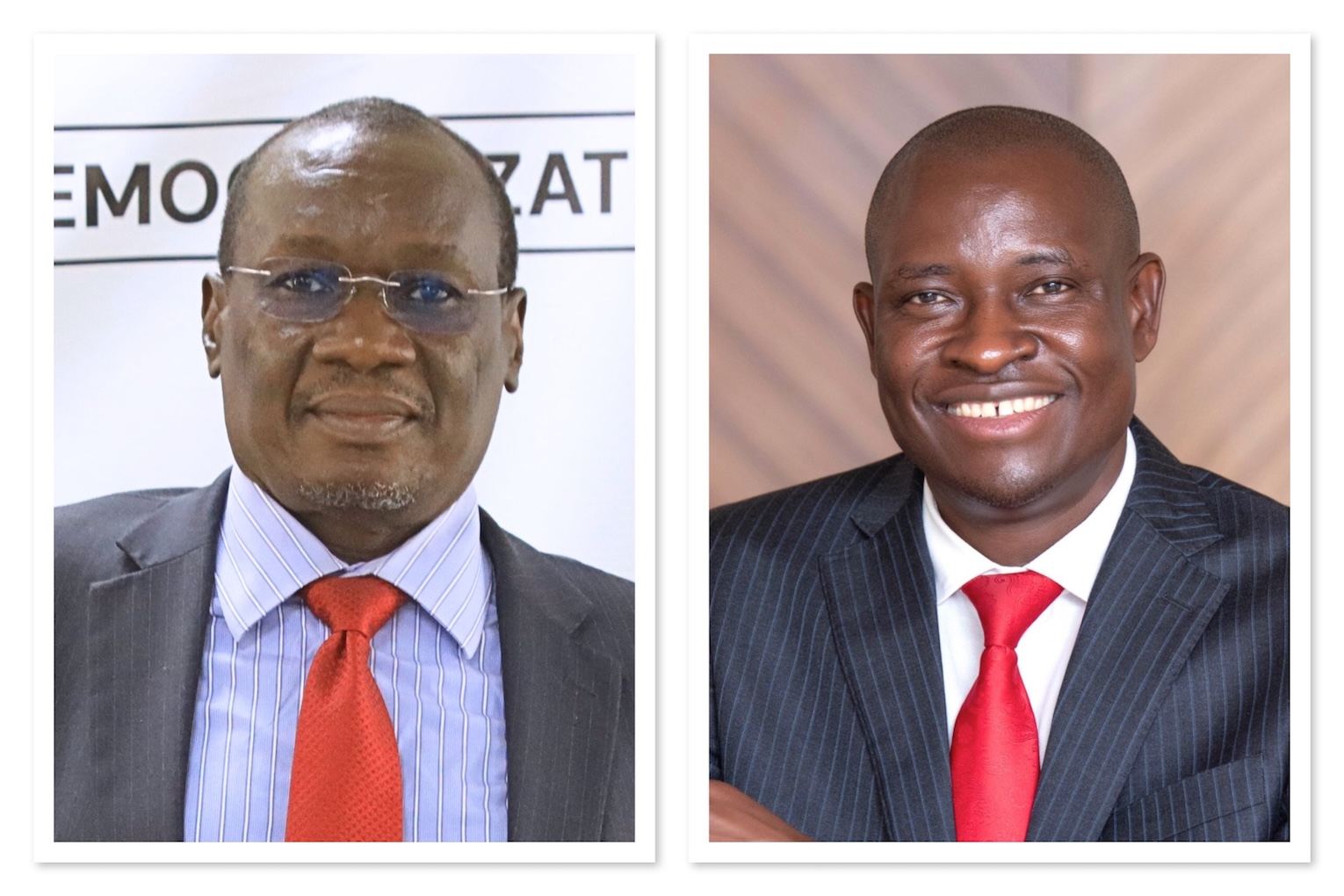
Retired Justice Dr. Henry Peter Adonyo has been appointed mediator in High Court matter HCT-00-CC-ME-0348-2025, pitting Dei Industries International Ltd against Equity Bank Uganda Ltd.
The case, filed in 2024, had been allocated to Lady Justice Susan Abinyo of the Commercial Division, but on September 9, 2025, it went into mediation, with Justice Adonyo taking charge of the process. The next sitting is scheduled for September 24, 2025.
Mediation is intended to resolve disputes amicably without going through the adversarial system. If the parties reach an agreement, it is adopted by the court. If it fails, the case reverts to trial before Justice Abinyo.
Dei Industries and its sister company Dei BioPharma Ltd, owned by businessman Dr. Mathias Magoola, accuse Equity Bank Uganda and Equity Bank Kenya of predatory lending.
Their claims include inflated loan balances, unlawful debits, fraudulent accounting, irregular restructures, and breaches of fiduciary duty.
The companies say the banks are demanding UGX 82.2 billion and USD 43.2 million in inflated and unconscionable balances. They also allege unlawful debits amounting to UGX 47.6 billion.
Equity Bank has not commented publicly, but sector analysts say Magoola is using litigation and mediation to delay or avoid meeting his loan obligations.
The businessman had earlier received a UGX 578.4 billion government bailout for his Matugga-based pharmaceutical plant, part of which was meant to settle debts with the banks.
Adonyo, who retired in June 2024 at the mandatory age of 65, is not new to financial disputes. He concluded a judicial career that began in 1989 when he joined the Uganda Judiciary as a Magistrate Grade One, after leaving a government parastatal.
Over the years, he rose through the ranks as Chief Magistrate, Deputy Registrar in various departments, Registrar Research and Training, Registrar High Court, Chief Registrar and finally Judge of the High Court of Uganda, a position he held from 2013 until his retirement.
Between 2015 and 2019 he was Executive Director of the Judicial Training Institute (JTI), where he spearheaded professional training for judicial officers, and from 2019 to 2021 he headed both the International Crimes and Commercial Divisions of the High Court.
In 2015, he chaired the first-ever Uganda Judiciary National Court Case Census, which exposed the extent of case backlog in the courts.
Academically, he holds a Doctorate of Science in Legal Studies, majoring in judicial administration, judicial reforms and strategic planning, a Master of Business Administration, a Post Graduate Diploma in Legal Practice, a Bachelor of Laws and several other diplomas and certificates.
His background and qualifications give context to his reputation as a reformist jurist with a strong interest in judicial efficiency and training.
His judicial career was, however, marked by one of the most controversial rulings in Uganda’s commercial law history — the 2020 Hamis Kiggundu vs Diamond Trust Bank (DTB) case.
The DTB–Ham Precedent
As head of the Commercial Division of the High Court, Justice Adonyo shocked the banking industry when he declared that DTB Kenya’s syndicated loan to Hamis Kiggundu was illegal because it had not been cleared by the Bank of Uganda.
His ruling ordered DTB to refund billions, discharged securities, and threatened to upend the syndicated lending model widely used across East Africa.
The decision drew sharp criticism from regulators and bankers, who warned it could destabilise financial markets.
The Court of Appeal and later the Supreme Court overturned his ruling, clarifying that such cross-border loan syndications were not inherently illegal. Still, Adonyo’s name became synonymous with judicial boldness — or overreach, depending on perspective.
The Dei vs Equity Bank Dispute
Five years later, the parallels are striking. At the center again is an industrialist — this time, Dr. Mathias Magoola of Dei Industries and Dei BioPharma Ltd — who accuses Equity Bank Uganda and Equity Bank Kenya of predatory lending practices.
The claims mirror themes from the DTB saga: inflated loan balances, fraudulent accounting, irregular restructures, and breaches of fiduciary duty.
 World Bank bans PwC Africa, Rwanda and Kenya affiliates from Bank Group-financed projects over fraudulent practices
Dei argues that Equity’s demands are inflated and unconscionable, insisting the banks unlawfully debited UGX 47.6 billion from its accounts.
Yet this dispute comes despite the government’s UGX 578.4 billion equity injection into Dei BioPharma in 2024, a bailout that was meant to settle outstanding debts and complete the pharmaceutical plant at Matugga.
Rather than paying off the loans in full, Magoola offered a partial settlement at a discount, which Equity Bank rejected, before ultimately suing the banks.
This sequence has fueled criticism that the lawsuit is more about avoiding repayment than addressing genuine banking malpractice.
Equity, however, insists Dei has simply defaulted on legitimate facilities. Banking experts argue that Magoola is leveraging the courts to stall repayment, despite the government bailout intended to settle part of these obligations.
Adonyo Returns — But as Mediator

On September 9, 2025, Retired Justice Adonyo formally assumed the role of mediator in the Dei vs Equity case.
Unlike in Ham vs DTB, he will not issue binding rulings. Instead, he will guide the parties toward an amicable settlement. Should mediation fail, the matter will revert to Justice Abinyo for a full trial.
Adonyo’s selection as mediator is likely to spark murmurs in the corridors and ignite debate behind closed doors across the legal and banking community, as well as draw mixed reactions from different stakeholders.
His supporters are likely to point to his wealth of experience, noting that few jurists understand commercial banking disputes as deeply as he does.
During his tenure as head of the Commercial Division, he was credited with modernising court systems and reducing backlogs, achievements that underscore his credibility as a manager of complex financial cases, for which he was repeatedly recognised and awarded.
At the same time, questions of perception linger. Some bankers privately worry that his controversial ruling in the Ham vs DTB case revealed a predisposition toward borrowers, raising concerns about how impartial he might appear in mediation.
On the other hand, borrowers and business owners may feel reassured that someone who once challenged banking orthodoxy is guiding the process, seeing in him a figure willing to question established practices.
Beyond individual perceptions, there is a broader public interest dimension. Dei BioPharma’s Matugga pharmaceutical plant has been cast as a strategic national project, backed by significant government investment.
A successful mediation could help protect this facility from foreclosure, ensure continuity of operations, and safeguard Uganda’s wider credit market stability.
In this sense, Adonyo’s role is not only about resolving a dispute between borrower and lender, but also about balancing private conflict with national economic interests.
Between Redemption and Repeat
For Justice Adonyo, this mediation is more than a routine assignment. It is a chance to recast his legacy.
Where his 2020 decision was faulted for shaking the banking sector, his 2025 role offers an opportunity to stabilize it — by helping one of Uganda’s most contentious borrower–lender disputes find common ground.
Whether he is seen as the right man at the right time, or as a symbol of judicial controversy returning to familiar territory, the proceedings will be closely watched.
If Adonyo can broker peace between Dei and Equity Bank, it may cement his reputation not just as a judge of bold rulings, but as a mediator capable of guiding adversaries to resolution. If not, the case may head back to the adversarial arena — and history may once again echo uncomfortably.