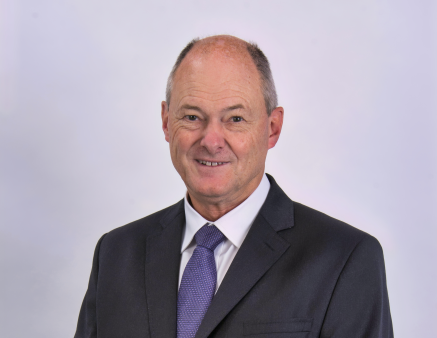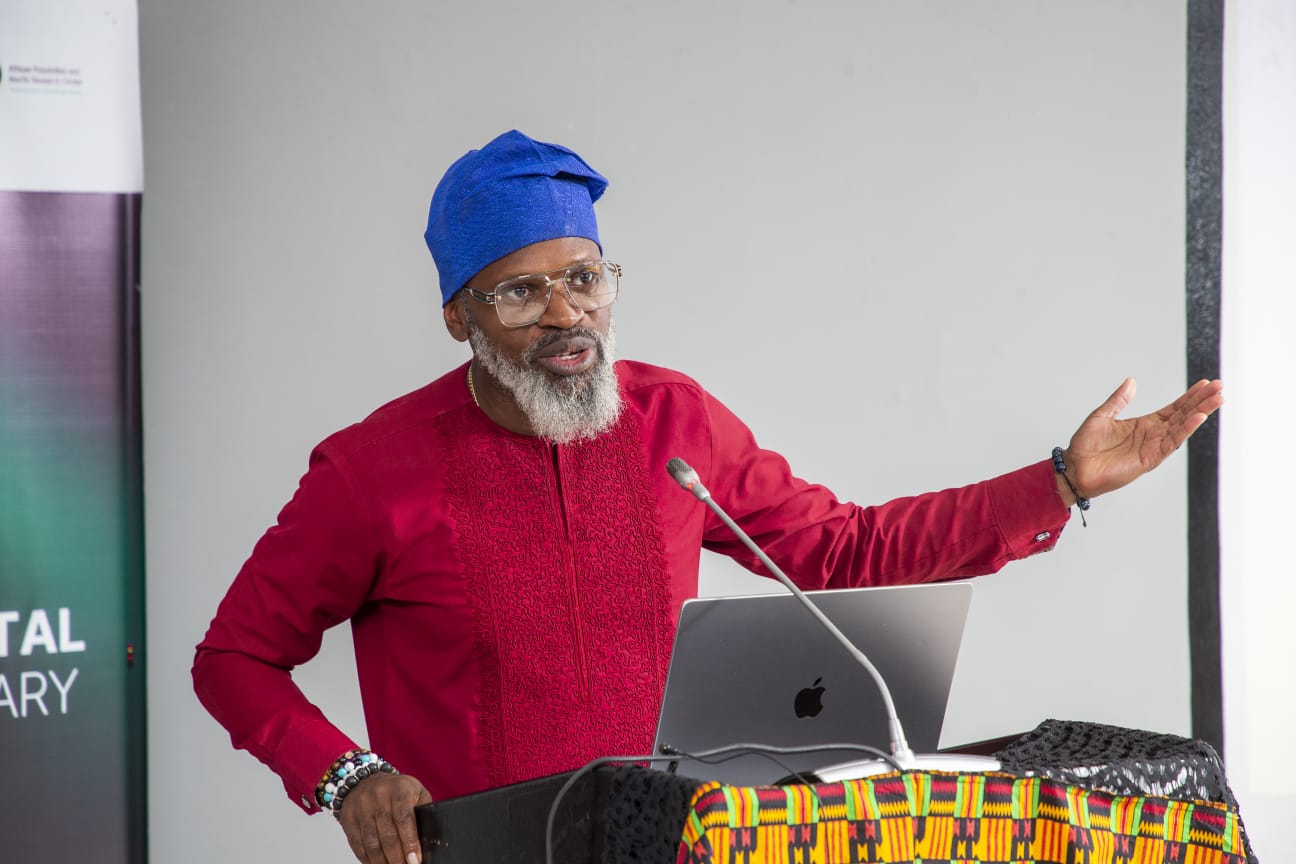
The first time you meet John Kamara, he passes off more like a storyteller than a tech executive. He doesn’t speak of algorithms or coding.
Instead, his words come off with urgency, stitched together by the conviction that Africa’s destiny can be rewritten, not by oil or minerals, but by artificial intelligence.
“Our biggest problem is not money or infrastructure,” Kamara insists.
“It’s our mentality as human beings. What are we willing to do with the little we have, when no one is watching, when there’s no crowd to clap?” This, perhaps, is the paradox that defines him.
For over 20 years, across Europe, the Americas, Asia, and Africa, he has made a career of opening new markets and translating frontier technologies into competitive advantage.
Today, Kamara stands out as one of Africa’s clearest voices on how AI paired with IoT, blockchain, and new funding rails can move industries from pilot projects to productivity.
In 2020, while the world was gripped by uncertainty, Kamara and his team at the Artificial Intelligence Center of Excellence Africa (AICE Africa) were quietly laying the foundations of a movement.
Their ambition was audacious: to democratize AI knowledge across Africa while helping enterprises unlock its commercial and social power.
They began with training, more hands-on, rigorous, unapologetically practical.
By 2025, over 1,500 young Africans had been transformed into data scientists and AI engineers.
Many of them are now stepping into jobs that didn’t exist a decade ago. The plan now is to scale this to 100,000 within the next few years.
But Kamara doesn’t stop at classrooms. He steps into boardrooms and government ministries, helping leaders unlearn the myth that AI is just a tool.
He has run the growing Enterprise AI for leaders workshop and knowledge sessions with over 80 C-level executives and 40 companies across Africa since he started in 2023.
Instead, he reframes it as an economic philosophy. “AI is not about the tools you use,” he says,
“it’s about reimagining your organization’s structure and the value it can deliver tomorrow.”
A journey of Impact
His impact reads like classics of transformation, not consultancy reports.
In Nigeria, AICE Africa worked with state health insurance agencies to rethink their data strategy.
What began as training for a handful of leaders blossomed into a three-phase national programme with hundreds of officials across states reimagining how data could transform healthcare.
By the end, they were piloting dynamic pricing platforms for insurance and designing fraud detection systems that spanned state borders.
It wasn’t just technology; it was a cultural shift. Senior leaders who once struggled to articulate the value of data were suddenly debating machine learning models and real time extraction tools.
And perhaps that’s Kamara’s true genius, not in building AI systems, but in building believers.
The workforce revolution
Kamara’s passion for youth talent borders on obsession. He knows Africa’s strength lies not in its resources but in its people; young, restless, hungry.
Through partnerships with Family Bank Foundation, KCB Foundation, and UNCDF, FSDK, AICE Africa’s Proof of Work programme has become one of the continent’s most ambitious AI workforce pipelines.
Unlike traditional training programmes, Kamara designed it as a marketplace.
Before cohorts even begin, industry partners are invited to articulate their pain points. The result? A 60% job placement success rate, far above industry averages.
But the ambition doesn’t end there. Kamara is working on launching a flagship AI-powered digital jobs platform.
It is designed to unlock thousands of jobs for African youth, linking AI talent with global opportunities.
To complement this, specialized AI bootcamps now equip university lecturers and students with practical tools to teach, build, and deploy AI systems in real world contexts.
But Kamara dreams bigger. Why stop at data scientists? He imagines more AI- savvy farmers predicting weather shifts, plumbers using AI-powered diagnostics, creatives deploying generative AI to monetise their art.
His voice sharpens as he puts it: “AI is not just for engineers, it’s for anyone with a problem to solve.”
Between money and mission
Funding, of course, is the lifeblood of such ambitions. Kamara has courted the likes of the EU, UNIDO, Mastercard Foundation, and USAID, weaving together grants and partnerships.
It’s not rhetoric but philosophy that guides every project. Even when working with international donors, Kamara insists on designing programmes with sustainability baked in and balancing social impact with commercial viability.
 6 Ugandans Arrested in Connection to USD 3.4 Mn Equity Bank Rwanda Digital Heist
The ecosystem: Adanian Labs and its arms
What makes Kamara’s story remarkable is that AICE is one of Africa top AI tech house building solutions for clients across the world and Africa.
It competes with global AI houses and hubs such as India and various in Eastern Europe countries.
AICE is also part of a broader ecosystem. At the heart of it lies Adanian Labs, the venture-building powerhouse Kamara co-founded to nurture African tech startups.
Operating as a smart venture studio, Adanian Labs supports startups across sectors, giving them capital, mentorship, and structure while allowing them to innovate independently.
Its portfolio reads like a blueprint for Africa’s AI-driven future.
AICE Africa is its AI think tank and training hub, building talent and enterprise strategy.
Afya Rekod, the healthcare arm, is a digital health platform that empowers patients to own and manage their medical records while enabling real time access for doctors.
In regions where hospitals are fragmented, Afya Rekod is bridging gaps in healthcare data with AI-driven predictive models.
Ecobba, the financial arm, is reimagining community banking and savings groups (chamas) by digitizing them through AI and blockchain, bringing financial inclusion to millions of unbanked Africans.
Alongside these sits the Africa Blockchain Center, advancing blockchain development and training across the continent.
Each operates at a semi-autonomous level but under a common governance board at Adanian Labs, creating a symbiotic ecosystem where healthcare, finance, and AI talent pipelines reinforce one another.
As CIO Africa reported when Adanian Labs launched its venture building programme, Kamara’s vision is to create not just companies, but industries that can sustain Africa’s tech renaissance.
The three horsemen: health, agriculture, climate
Ask Kamara where AI matters most, and his answer is immediate: healthcare, agriculture, climate. He calls them the “three horsemen” of Africa’s survival.
Healthcare, he argues, is ripe for disruption with AI-powered diagnostics in rural clinics, predictive analytics for epidemics, and personalized care models in resource-poor environments.
Agriculture, meanwhile, is at the mercy of climate change. Here, AI’s role is nothing less than existential: from modeling rainfall patterns to empowering farmers with real-time insights.
And climate itself, Kamara warns, is the invisible enemy. “Climate change will happen; you can’t stop it. But AI can help us predict, prepare, and protect the most vulnerable.”
In his hands, AI is not a luxury for the privileged few. It’s a shield for the many.
Despite his global reputation, he’s quoted in healthcare and climate circles from Lagos to Geneva, Kamara shuns the tag of “thought leader.”
“Achievement doesn’t interest me. Progress does. What conversations are we sparking? What actions are shifting? That’s the measure.”
Still, his fingerprints are undeniable. He was among the first to advocate for data-driven healthcare in Africa back in 2020.
Today, the phrase has become a buzzword. The same is true for AI’s role in climate resilience. Where others saw silos, Kamara saw interconnections.
For all his talk of systems and strategies, Kamara often circles back to the fragility of human will.
He believes Africa’s AI revolution will not be won in labs or ministries, but in the hearts and minds of its people.
“What is it that I can do with the little I have, when no one is watching, when no one is clapping but I keep doing it because it’s the right thing to do?” he asks, almost to himself.
It’s the kind of question that lingers, the kind that keeps boardrooms silent long after he has left the floor.
The future unfolding
In the next five years, Kamara envisions AICE Africa active in South Africa, Nigeria, Mozambique, Lesotho, and Uganda.
He imagines a continent where AI is no longer imported but invented, where African engineers design not only solutions but new paradigms of AI itself.
Where Africa leads in green and human centred AI that creates jobs and drives fundamental economic growth but with a clear democratization for its people.
The suspense, of course, lies in whether Africa will rise to the challenge or whether Kamara will remain one of the few carrying the torch.
But as he often reminds his audiences, the work will continue, with or without applause.