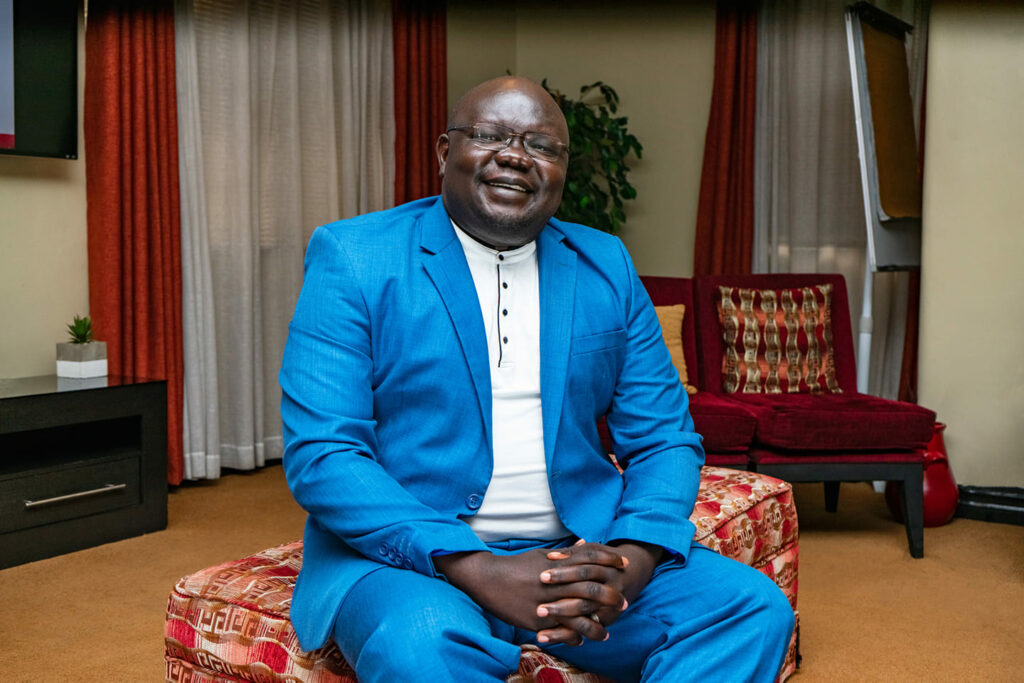
In this interview, I sit with him and probe more into who he is and what he is up to.
Tell us a bit about yourself, Joel – where are you at, at this point in your life?
I am the Chairman of Joadah Group, a holding company that lists Joadah Consult, Development Infrastructure and the sports conglomerate that birthed Arua Hill Sports Club.
Please give us some context, please, of the three entities that make up Joadah Group. From the onset, like most people, I was familiar with Joadah Consult…
Joadah Consult focuses on Infrastructure Planning, Infrastructure Design, and Projects in all fields of Engineering, as its core capabilities. The company is often tapped for water projects, road projects and hospital projects. Joadah Consult is currently executing projects in 5 countries. In Malawi, the company is winding up a project for the Ministry of Education, involving the construction of up to 5 universities; in Rwanda, the company recently completed and handed over some water projects; they have also completed some projects over the three sectors in the Democratic Republic of Congo. Joadah Consult is also currently at the design stage, preparing to execute in Mozambique, Ghana and Liberia.
In Uganda, Joadah Consult recently completed the refurbishment and infrastructure rehabilitation of Mulago National Referral Hospital (a project funded by the African Development Bank for Ministry of Health and the Government of Uganda), and are currently working on Namanve Industrial Park for the Government of Uganda. Other projects ongoing in Uganda include Kayunga Hospital, Yumbe Hospital, Arua Market and some World Bank road projects in different locations in cities in Uganda.

Let’s hear about Development Infrastructure, which I understand is a contractor, unlike Joadah Consult which is a consultancy.
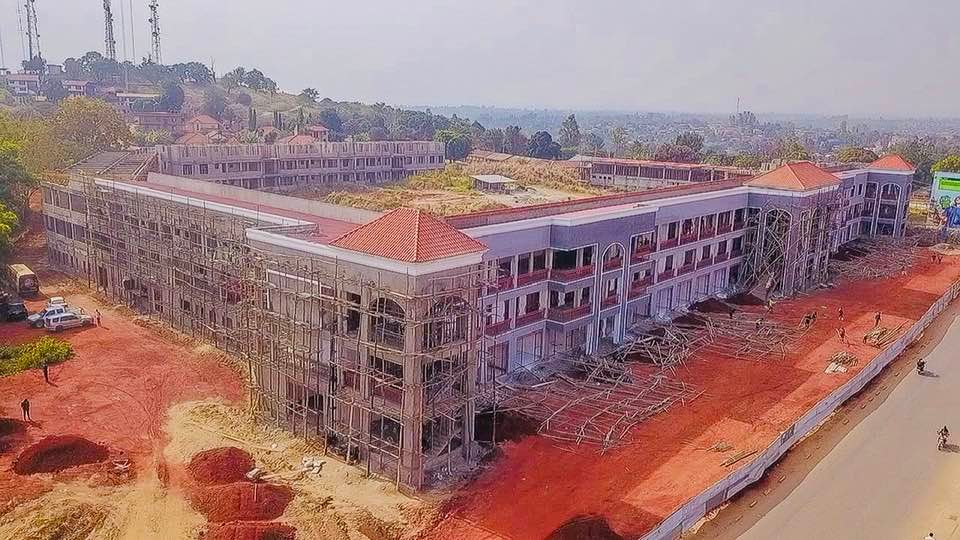
Development Infrastructure is a company we set up to execute design-finance-build-and-operate projects. I can give you an example of a project that fits this definition – Arua City Stadium, which we are carrying out on behalf of Arua City Authority.

In these sorts of projects, Development Infrastructure also sources the financing, while leveraging the capital investments and equity offered by the project and the client. Development Infrastructure is also involved in real estate, with projects like The Stone Soup Estate and Kongolo Sports City in West Nile.

Development Infrastructure is also doing designs for the UN City, which is going to be in Kasanje, Wakiso district. Development Infrastructure also works across the continent, executing real estate projects in cities in Mozambique, and in Ghana, in partnership with private organizations in the two countries.
And then you have a sports entity, which is somewhat…unexpected.
(Laughs) Sports has evolved to become a staple of society, affecting lifestyle, offering entertainment, and proving to be a useful investment. Arua Hill Sports Club is a company is 100% owned by Development Infrastructure. We are in various areas of sports but our core focus is within football. Development Infrastructure purchased an already existing football club called Doves All Stars, which was in the second division and took the club to the first division, before ascending to the top flight of football in the Uganda Premier League. Along the way, the club underwent a major overhaul, rebranding, changing uniform and even its name.
The jewel in the crown of Joadah Group of course, is Joadah Consult…
It is where everything started. I founded Joadah Consult in 2007 with my wife, Adah.
So that’s where that name came from – you combined both your names – Joel and Adah. When did your journey as an engineer begin?
My engineering journey started at Makerere University, where I studied Civil Engineering and graduated in 2004. But I cannot tell my story without telling you when my entrepreneurship story began.

When did your entrepreneurship story begin? What did you start out doing?
My entrepreneurship journey started way back, in my P7 vacation, with sand mining in Arua. I put together a team of people to mine sand from a nearby river which I would sell to building sites of people I seen in town and spoken to. I would then pay the labourers. In my S4 vacation, I got my savings and invested in a sewing machine that could make sweaters, and hired a girl to make them. I sold them for a small, tidy profit. By the time I completed my university studies, I didn’t only have an engineering degree, but I had also had a good idea of the art of business.
By the time I graduated, employment was the last thing on my mind. I had seen what I could do with the sand mining and sweater making businesses – they had opened my eyes to the exciting opportunities out there. In fact, by my third year at university, I was thinking of starting either a consulting company or a contracting company. I figured that to be able to pull this off, I would need to learn the ropes of the industry by working for a year with a contracting company and for another year with a consulting company, after graduating from university.
It worked – in 2004, upon graduation, I got a job with a construction company in Jinja, which was working on the Jinja-Bugiri Road, where I was in charge of the lab. I worked there for a year. In 2005, I joined a German Consulting firm called Bella Consult, and worked with them for two years.
That period is the only time I have been employed.
What was your take away from this period of employment?
During this period, I realized that of the two types of companies that I wished to start, a consulting firm would be easiest. I realized all I would need would be my brain and a computer.
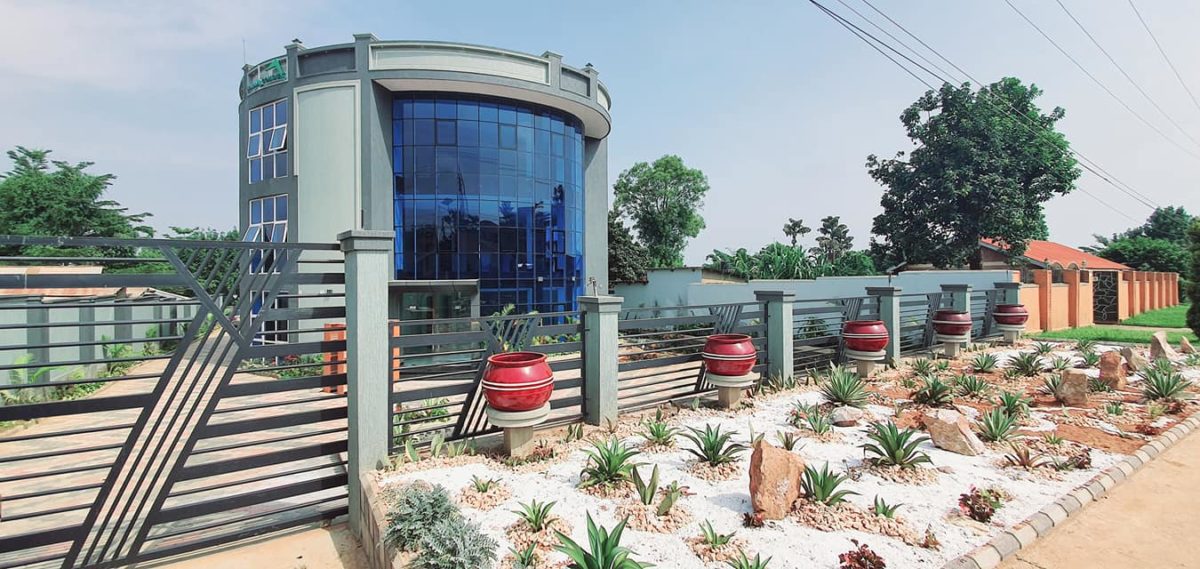
In 2007, I left Bella Consult and set up JJoadah Consult, which I was running from Entebbe. Joadah Consult started out doing designs for people’s houses, before taking on district projects like gravity flow schemes, and slowly, Joadah Consult’s portfolio grew. Before long, the company was tackling projects for regional referral hospital hospitals after developing one for Lira Hospital – against this backdrop, the consultancy was able to earn central government projects like Mulago National Referral Hospital (Master Plan and refurbishment) and Butabika National Referral Hospital. But even then, I was not ready to rest on his laurels.
But you didn’t stop there…
No. In 2012, we started examining the possibility of getting projects beyond Uganda’s borders, and discovered that it was a worthwhile endeavor. We got projects in Rwanda (water engineering projects), Congo, and Malawi, and became recognized as a regional consultancy, which the current profile of JJoadah Consult.
Did you ever get around to setting up a contractor company?
Yes, I did – Development Infrastructure. The experience in consultancy revealed to him the importance of having a construction company with the profile of Development Infrastructure, and it has proven a worthwhile investment in a dream I had all those years back at university.
What part of your dreams does Arua Hill Sports Club represent?
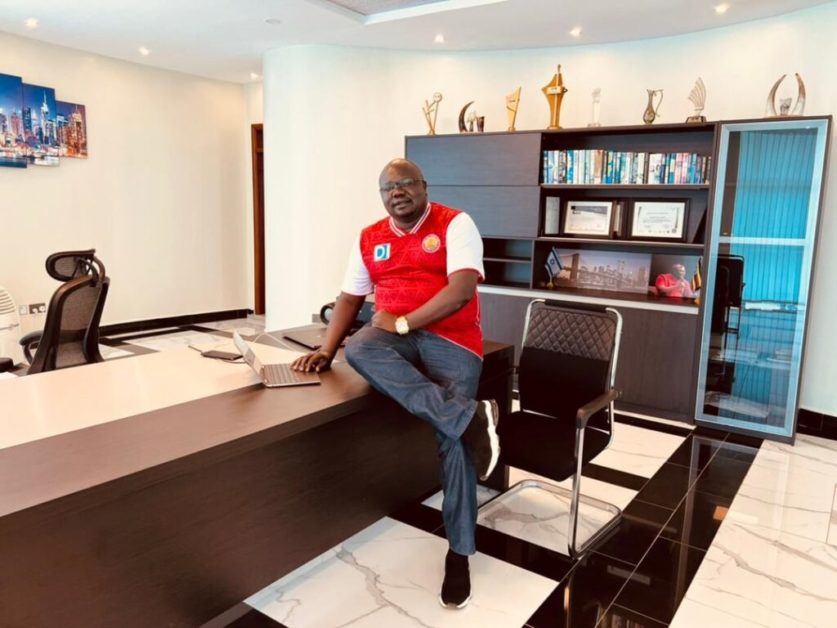
I am glad you asked that – it represents the most exciting thing about entrepreneurship – the part where you have an idea, a vision, and see it out. I have always been a fan of football, and so to acquire a club, built it, lift it, and turn it into a functional business entity, and a brand, and a sporting force – you have no idea how exciting, how fulfilling it is. I think it’s the most entrepreneurial thing I have ever done.

What was your most impactful learning experience over the years?
I was doing some work for Jomayi Housing Estate in Seguku. National Water Sewerage Corporation was to set up a supply system for the estate and that small project needed a consultant to handle design. Jomayi found the bigger consultants pricey (they were quoting 200M) and National Water recommended us because I had done some work for them when I was working with the German firm. So were referred, as a reputable consultant who could do the work at 60M. For us of course, 60M was something viable – we were still very small at the time. I even took a taxi to Seguku stage, hopped off, and got a boda boda. Meanwhile, Jomayi was waiting for the consultant, and kept calling me because I was running late. Now, at the time, the road was still a marram road, and to make things even more interesting, the boda boda run out of fuel halfway – I had to walk. I arrived at the meeting with Jomayi a sweaty, dusty, skinny kid on foot. It was the total opposite of the picture Jomayi had been expecting: an older, heftier gentleman, probably in a sleek car. After all, I had been recommended by National Water and Sewerage Corporation as a consultant who had worked with a German firm for them.
And I was late. He looked at me and asked in disbelief, “Are you the consultant?”
I said, “Yes sir.”
 dfcu Bank Deepens 11-Year Partnership to Transform Lives as Best Farmers Awards 2025 Celebrate Uganda’s Agricultural Champions
And he added, “So what do you do with your money?”
You have to remember this was our first project as Joadah Consult – there was no money. I couldn’t say much – I couldn’t tell him the boda boda fuel got finished. He started to lecture me: “Young man, you have to think of yourself as a brand. You need presentation – if you can present yourself adequately, you will go far.” He continued to lecture me for about 30 minutes; I was silent, waiting for my 60M deal, so I swallowed my saliva and let him lecture me. After he was done with his lecture, he fined me 20M – for my lateness and for his advice. I had to adjust my invoice before he could give me the work.
Eventually, of course, I did the work – we gave them an excellent design, and they were happy. In fact, it is what National Water used to deliver water to his estate.
That lecture was memorable, of course – you don’t forget a lecture that costs you UGX20 Million. And I took his advice, and while it might seem simplistic, I think it has helped. Soon as I was paid, I bought a car and styled up how I arrived at a client’s place. And since then, I have been very conscious about how I present myself and my companies.
Ouch!
That Jomayi project opened a lot of doors, for us, especially at the district level, especially since they were a reputable real estate project at the time. And those district projects were critical to the development of Joadah Consult, especially in the area of water projects.
What is it about Joadah Consult that enabled it to become a force so quickly?
Well, we were small, and we were fast, and delivered quality work. For instance, district water projects are often time bound, and the bigger companies would take months submitting a design – we took a week, or ten days at most. And so word got around that if you wanted quality work done fast, JJoadah Consult were the people to talk to.
Alongside this, we took on a CSR approach to our business development. We noticed that a lot of district engineers were not familiar with design software, so we announced pro bono training sessions for them in the use of this software, which certainly opened more doors for us.

If you were to take into account the entire group, what is the largest project Joadah Group has worked on?
Well, to give you some context, the smallest one we started on was a 10M project as Joadah Consult in 2007, which was a house design and the largest one we have taken on is a $20 Million project, which was Namanve Industrial Park in 2020.
How many people do you employ, as a business? The group, I mean?
Joadah Group employs over 500 people.
How is Arua Hill Soccer Club doing?
Our aggressive approach has worked – we are currently fifth in the Uganda Premier League, and targeting fourth at the very least, especially for our first season in the Premier League. I gave the CEO of the club some basic targets – avoiding relegation, and then fourth. Our strength has been how we recruited – we recruited well, and this has sustained our push. And we are on course to achieve our target of a self-sustaining club, targeting continental involvement at the very least.
I know Development Infrastructure is also into Farming…?
Yeas we are, with a focus on livestock farming – cattle, rabbits, piggery, goats, and local chicken. The turn-around and reduced need for value addition make it a more attractive prospect.
You have a book on entrepreneurship coming out soon…what is the title? And give us some insights into the book and how you approached it.
The book is called The Entrepreneur’s Mind. It is a book which examines my journey over the last 15 years, from how we started, the lessons we learnt along the way and the challenges we faced. I tried to structure it in a step-by-step manner.
You genuinely seem to have your fingers in multiple pies – how do you manage to keep everything in order, and ticking along nicely, and neatly? For instance, you often have multiple projects running…
I delegate. A LOT. And when I delegate, I delegate fully. I also monitor. A LOT. I will pass by a project, and point out where the project manager is veering off course. And finally, I hire talented, passionate, committed people to execute these projects.
But none of this would be possible if I did not delegate.
This is the one question that has been intriguing me for a while – who do you look up to?
Oh, that one’s easy. A couple of names come to mind…Strive Masiyiwa…Zimbabwe’s richest man…the south African business speaker, Vusi Thembekwayo…and then the next name on my list is not an African…Elon Musk…I like his ideas, and his companies.
What do you do for your downtime? How do you take time off, to prevent the inevitable stress from building up?
For the last 8 years, I have always given myself an additional day off in the week – I take Wednesdays off. I use that ‘mid – week weekend’ to spend time with my family, after all, I am a married man with 4 kids and one more on the way.
I love live music, so when I get the time, I like to watch a live band or two.
I also find the time for sports – football of course. So sometimes I play a weekend game of 5-a-side. Now that I am invested in football and at the helm of a sports club, this comes naturally. It also helps me keep fit.
I also love to travel, so I get away from everything when I can.
My downtime is important to me – it keeps me energized.
What is your most important lesson as an entrepreneur and as an engineer?
Consistency and persistence – two attributes that I have learnt to value. These two attributes will get you places.
The second lesson I have learnt is that originality is everything. I treasure originality and creativity.
Finally, I think you MUST enter any endeavor with a bang. It does not pay to do so quietly, or in a subdued manner. It simply doesn’t. And this approach has been particularly effective for Arua Hill Soccer Club.