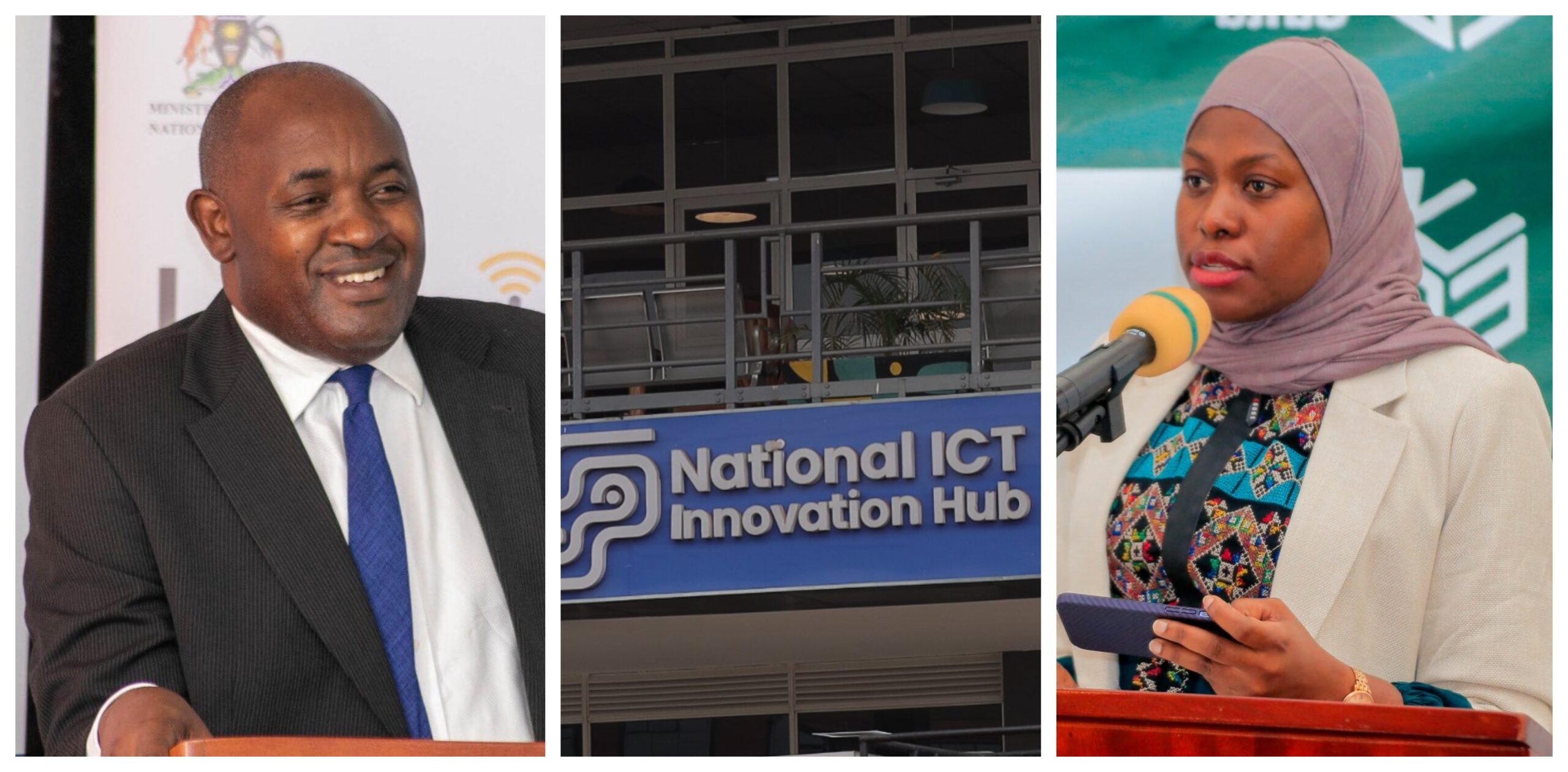
An Auditor General’s investigation has exposed the Ministry of ICT and National Guidance for mishandling over UGX 13.8 billion, which was meant to support Ugandan innovators in developing their ideas and innovations from prototypes into finished products.
Details show that in 2017, the government, through the Ministry of ICT and National Guidance, embarked on a National ICT Initiatives Support Program (NIISP) to create an ICT ecosystem that could provide local innovators with the necessary financial, technical, and infrastructure resources to incubate, develop, and market their products in Uganda, the East African Region, and beyond.
However, a Value for Money Audit shows that whereas the ICT Ministry had a target of supporting 500 local innovators during the five financial years of the ICT Support Program between 2017/2018 and 2021/2022, only 115 innovators (23 per cent) were selected to benefit under the ICT Support Program out of the total 1,902 qualifying innovators who applied for financial support.
The Auditor General, Mr Edward Akol sampled at least 50 innovators through interactions and discovered that only 45 reached the development stages of their products. However, out of the 45 completed products, only 24 (53 percent) were deployed and used during the audit. Despite the time lag after receipt of funds, various products were still under incubation.
“There is thus no value for money obtained from those products. This is attributed to the ICT Ministry’s inability to connect innovators to the respective Ministries, Departments and Agencies and private players whose input and funding were crucial to the completion and deployment of their innovations,” a statement from the Auditor reads in part.
The cost implication is that despite the government’s emphasis on local ICT Innovation and commercialisation, Uganda still heavily relies on importing ICT solutions. This reliance is not only financially costly but has also deprived local innovators of the opportunity to provide locally developed ICT solutions to participate in the country’s economic development.
The Auditor, Mr Akol, also faulted the ICT Ministry for failing to offer customised training and research support to innovators through the innovation hubs, which was contrary to implementation guidelines.
Mr Akol noted that, given each innovation’s unique nature, the absence of customised support undermined the effectiveness of the research and training interventions.
Additionally, the ICT Ministry had been expected to establish two ICT parks under the program for a combined sum of UGX13.8 billion. However, the two parks were not established. Instead, the money was diverted to establishing an innovation hub in Nakawa at UGX 11.15 billion, with fewer benefits like facilities and technical support for innovators.
Three other regional innovation hubs were equipped under the Kabale, Muni, and Soroti Universities programs at a combined cost of UGX 750 million. The ICT Ministry attributed the cash diversion to innovation hubs to unrealistic cost estimations, which led to under-budgeting for the two parks.
The Audit also established that the planned promotion of local electronics manufacturing and assembly was not implemented at all. In addition, the program had an ambitious target to create 2.3 million jobs and improve Uganda’s global innovation index ranking from 99th /128 in 2017 to 75th /128 in 2022. However, by 2023, Uganda’s Global ICT index had declined to 121st/132 countries. Only 570 out of the targeted 2.3 million new jobs were created.
Other governance structure issues that choked the ICT program were that one selection committee was formed out of the eight program implementation support committees, which included management, finance and audit, procurement and contracts, publicity and branding, legal and intellectual property rights, monitoring and evaluation, and innovation technical support.
The Program also lacked the requisite legal framework, as the ICT innovation and manufacturing policy and Program implementation guidelines, among other key policy tools, were not developed. This was because the development of the required legislative instruments and review of existing laws to foster effective program implementation were not prioritised.
A CEO Magazine independent analysis shows whereas the ICT Support program was set to end in 2022, a dedicated website to document the program’s successes was last updated in 2019, which partly showed the former ICT Minister Frank Tumwebaze awarding 60 innovators with grants of up to UGX 100 million per innovator to mature their products, build enterprises and penetrate the market.
The Ministry also set aside over UGX 300 million to support innovators through the Innovation hubs it established.
The website also shows that out of the 12 startups supported in the first call of applications, which attracted over 349 applications, only five could develop mature ICT products. These include AIMS (Academic Information Management System), the Wulira App used to assess hearing loss, PRISMS for newborn care, M-Farmer to enhance farm management, and the Xente payments gateway. Xente used the support it received to widen product depth. It now has 12 product categories from 4 product categories.
The CEO Magazine was unable to verify from National ICT Hub officials whether all these startups are still operational, except for Xente, which now operates as a Financial Technology company.
 Five Years of Ambition: MTN Caps Strategy Cycle With Strong Growth
Achievements
However, not all is doom and gloom; the Auditor noted some achievements, such as the setting up of an online system for managing innovators’ applications and assessing their applications, which was developed to enhance the accountability and transparency of the innovator selection process.
The ICT Ministry engaged seven local innovation hubs, Innovation Village, Outbox, Makerere Innovation and Incubation Centre (MIIC), Techbuzz, Resilient Africa Network, Hive Colab, and CAMTech, as the implementation partners of the ICT Support Program to support innovators.
Eight locally developed ICT systems, namely EMIS, E-poster, Electronic Document Management System, Academic Information Management System (AIMS), Caucus, Online Business Registration System, Electronic Government Procurement System and Integrated Health Management Information System, were deployed for use by different MDAs to solve problems related to digitisation of procurement processes, document management, online business registration, online learning plus student experience management by universities.
Despite the achievements above, the Auditor identified areas of improvement that need to be addressed, such as providing systematic and sustainable support to national ICT innovators, establishing and operationalising ICT innovation parks, promoting ICT products and solutions using digital marketplaces as part of a wider digital ecosystem, and local electronics manufacturing and assembly.
“Despite commendable efforts and achievements registered under the NIISP, there is still
insignificant progress towards creating a systematic and sustainable enabling
environment for: nurturing, promoting and uptake of locally developed ICT innovation
for socio-economic development,” the Auditor’s concluding statement reads in the assessment of the program.
The CEO Magazine’s attempts to get a comment from the ICT Ministry were futile after our calls and texts went unanswered by ICT Minister Dr. Chris Baryomunsi and even the Permanent Secretary, Dr Aminah Zawedde.
However, Dr Hatwib Mugasa, the Executive Director of the National Information Technology Authority, responded that the government needs to provide adequate funds for ICT Parks because they will significantly boost economic growth by fostering innovation, entrepreneurship, and job creation, especially for the youth.
Dr Mugasa referred this publication to the ICT Ministry for any further questions on The National ICT Initiatives Support Programme (NIISP).
Worthy to note is that current ICT Minister, Chris Baryomunsi and his counterpart, ICT Permanent Secretary Dr. Aminah Zawedde picked up the ICT Support Program with only a year left to wind it up in 2022. Most of the program work had been conducted between 2017 and 2021 under the former ICT Minister, Frank Tumwebaze (now at the Ministry of Agriculture) , and his counterpart, former ICT Permanent Secretary Vincent Bagire Waiswa (now at the Foreign Affairs Ministry).
However, when this publication contacted Mr Bagire on the matter, he referred us to the current ICT Permanent Secretary, Dr Zawedde.
“The current PS is in a better position to respond to your questions. Unless you’re suggesting that the audit report specifically names me as being responsible for the underperformance which would be inaccurate,” Mr Bagire said.