
First of all, tell us about DTS and why it became necessary for URA to implement?
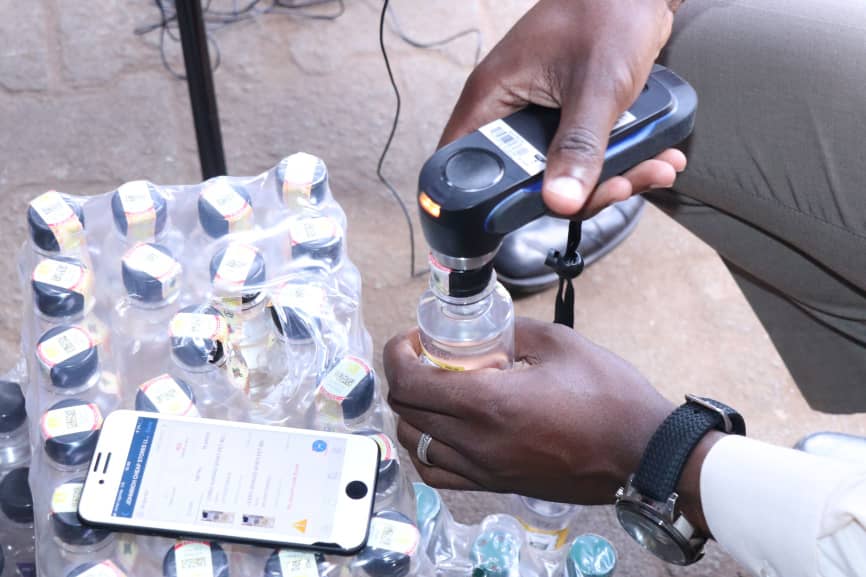
DTS stands for Digital Tracking Solution, which provides for affixing of Digital Tax stamps on goods using both automated and manual processes.
Digital Tax Stamps are markings or labels with security features to avoid counterfeiting, affixed to goods to enable their monitoring. The tax stamps were introduced to monitor the production and importation of select goods liable to Excise Duty, as prescribed by the Ministry of Finance, Planning and Economic Development. This is in line with the NDPIII’s revenue strategy of improving compliance and efficiency in tax revenue collections through implementation of the Domestic Revenue Mobilization Strategy (DRMS).
The goods currently prescribed include Water, Soda, Beer, Wine, Spirits and Tobacco with effect from November 2019, as well as Cement and Sugar with effect from April 2021.
It is now slightly over a year since DTS was rolled out. Please share some key highlights since rollout.
When we started out in November 2019, we faced a lot of resistance from the affected taxpayers, a challenge we addressed with sensitization and leveraging on the benefit of the solution for them, that is, the enhancement of fair market competition by curbing any non-compliant players that ride on the cost-advantage of non-payment of Excise Duty.
Today manufacturers and importers walk in asking for stamps. It has become a self-policing solution.
What impact has it had so far on URA’s revenue collections?
Excise Duty collections from goods prescribed for tax stamps grew by 11.6% this FY to May2021. This is in spite of the business interruptions from Covid-19 containment measures.
Since implementation, what has been the compliance level to the DTS? How has it been embraced?
Our observation from the market shows that most of the prescribed goods bear a digital tax stamp. All non-compliance cases are handled with enforcement measures including the imposition of penalties under Sec 19B of the Tax Procedures Act.
 Africa Takes The Stage: From Raw Supply To Brand Ownership
There were fears on one part that DTS would increase cost of doing business to especially the already compliant payers on what part- while URA on the other insisted, that the compliant payers need not worry, since DTS would create a fair operating ground by bringing on board their non-compliant competitors. What has been the experience in the field?
This Financial Year, we have recorded the highest number of additions to the Excise Duty register, 172 by May 2021, majority being producers of goods prescribed for tax stamps. The wider tax base reflects a fairer operating ground for compliant taxpayers.
As mentioned above, URA has promoted DTS on one part as a solution meant to ease doing business. Have the taxpayers benefited? How so?
Taxpayers are able to monitor their production and distributions channels both within their facilities and in the market. They can ably account for their tax declarations with ease of reference.
What are the next stages for DTS? Where else are we seeing it rolled?
Cement and Sugar were added to the list of prescribed goods effective April 2021, with enforcement slated to commence in July 2021. Similarly, the Minister of Finance, Planning and Economic Development may prescribe other goods for tax stamps in accordance with Sec19A (3) of the Tax Procedures Code Act.
Lastly what key lessons have you learnt from DTS that you think are key for your stakeholders to know? What didn’t you know then that you know now?
Stakeholders are very crucial. It is important to continuously engage and sensitize your stakeholders to attain user buy in.
There different types of stakeholders, there those that are willing and those that are not willing. Always have a strategy to bring harmony.