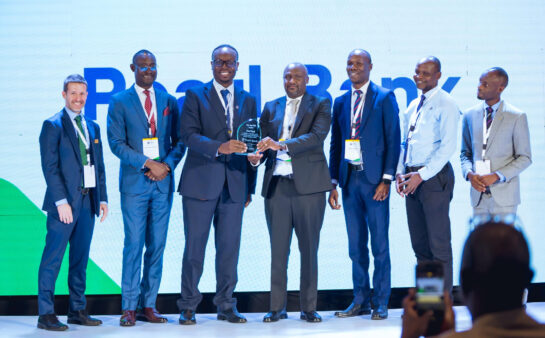
When Tavaziva Madzinga, Group CEO of Santam, took the stage at the B20 Summit in South Africa, he did not speak like a man representing a single industry.
He spoke like someone who understands the gravity of this moment, a moment where global risks are multiplying, societies feel more fragile, and traditional planning methods can no longer keep pace with the volatility that defines our age.
He reminded delegates that five years ago, the devastating pandemic that brought the world to its knees was not even on most organisational risk registers.
Yet even as the world continues to grapple with that aftermath, we now face extreme weather events that have tripled in frequency since the 1980s, widening geopolitical fractures previously thought consigned to history, and waves of technological disruption redefining every economy.
In this environment, Madzinga argued, insurance is not just a financial product. It is the quiet, indispensable infrastructure that enables societies to function.
It is the institution that allows governments to plan, businesses to invest in the future, and families to rebuild after a disaster. Without insurance, he said, economies remain vulnerable, timid, and unable to take the bold steps needed for growth.
Turning to South Africa, the host of the summit, Madzinga painted a picture of a country of deep contrasts. It remains one of Africa’s most industrialised and diversified economies, with a top nominal GDP ranking of $410.34 million and growth expected to reach 1.2 per cent in 2025.
This growth is projected to climb to 1.8 per cent annually between 2026 and 2028 as policy reforms take hold.
Yet despite these strong economic fundamentals, South Africa remains one of the world’s most unequal countries, marked by persistent income inequality and chronically high unemployment.
The challenge, he stressed, is not merely generating growth but translating that growth into shared prosperity and inclusivity.
This tension mirrors what is happening globally. Subdued expansion, supply chain disruptions, and policy uncertainty continue to weigh on economic prospects. And yet Africa, for all its vulnerabilities, remains a continent of enormous promise.
Its economy is projected to grow by nearly 4 per cent in both 2025 and 2026, outperforming much of the world. Its population is the world’s youngest and fastest growing, expected to increase by 60 per cent by 2050. This demographic boom presents unprecedented potential for innovation and economic diversification if the right structures are in place to support it.
Madzing then posed the defining question of our era. How do we manage in a world defined by what he called “certain uncertainty”?
His answer was unequivocal. Insurance must sit at the centre of Africa’s development strategy.
Insurance, he said, is the stabiliser that smooths out economic peaks and troughs. No infrastructure project, whether public, private, or structured as a public-private partnership, can proceed without insurers providing comfort and risk guarantees to lenders.
Insurance helps transform uncertainty into confidence by offering businesses, governments, and households the resilience they need to recover from geopolitical shocks, climate disasters, and technological disruptions.
He illustrated this with compelling real-world examples. Consider a mid-sized manufacturer in Gauteng, eager to expand into new export markets.
Without Trade Credit Insurance, offering payment terms to unfamiliar international buyers could risk the company’s survival.
With insurance, that same firm can confidently enter new territories, extend credit safely, and grow without betting the entire business on a single unpaid invoice.
Another example came from SASRIA, the South African Special Risks Insurance Association, whose riot and civil commotion cover proved indispensable during the July 2021 unrest in KwaZulu-Natal and Gauteng.
Retail giants such as Shoprite were able to reopen rapidly because SASRIA absorbed the impact of the unrest, restoring damaged premises, safeguarding jobs, and helping communities regain stability. This, Madzinga argued, is what resilience looks like in practice.
He acknowledged a persistent and often unfair cynicism toward insurance. Much of the mistrust stems from isolated cases rather than systemic failures.
But in the African context, where infrastructure gaps are large, climate shocks are frequent, and financial vulnerability is widespread, insurance must be seen for what it truly is. It must be recognised as a partner in development rather than a reluctant payer of claims.
To reach its full potential, the sector must significantly scale up. Madzinga stressed that millions of Africans, particularly those in underrepresented communities and small businesses, remain unprotected from everyday risks.
 Standard Chartered Kenya Targets Nakumatt Properties in $14.3 Million Debt Recovery Battle
Expanding access to affordable and relevant insurance products is therefore essential to achieving meaningful financial inclusion.
This expansion hinges on two critical enablers. Technology and trust.
The insurance sector is being transformed by AI, mobile platforms, digital onboarding, and improved data analytics.
These technologies are revolutionising the entire policy lifecycle, from underwriting and risk modelling to claims processing and fraud detection.
They are also unlocking new ways to serve previously unreachable communities in remote or informal markets.
But technological transformation is impossible without trust. Madzinga emphasised the need for strong privacy protections, encryption, multifactor authentication, and regulatory compliance, especially given new AI governance frameworks emerging globally.
Digital transformation, he said, must move hand in hand with transparency, accountability, and customer confidence.
He underscored that no single actor can build resilient growth alone. Deep partnerships between government, business, and communities are essential.
Regional entities such as the African Trade Insurance Agency already demonstrate the power of risk pooling by issuing guarantees to independent power producers and supporting renewable energy, transport, and climate adaptation projects.
These instruments protect investors from political risk and payment uncertainty, two of the most significant deterrents to large-scale capital on the continent.
Madzing also highlighted Santam’s own Partnership for Risk and Resilience, established in 2012 to answer a government call for strengthened municipal capabilities.
To date, the partnership has supported 80 municipalities, invested over R100 million, and reached 12 million people through enhanced early warning systems and emergency response frameworks.
This is insurance acting not as a backstop but as a proactive builder of public safety and societal resilience.
He called for Africa to embrace new financing mechanisms, including blended finance, risk pools, catastrophe bonds, and sustainability-linked insurance products.
These tools allow countries to build infrastructure without sinking into unsustainable debt. The success of South Africa’s National Energy Crisis Committee, which brought stakeholders together to rapidly address energy infrastructure barriers, exemplifies what coordinated partnership can achieve.
For Madzinga, this is what leadership looks like. Collaboration rather than silos, shared responsibility rather than isolated mandates.
By the end of his speech, Madzinga had reframed the role of insurance entirely. This sector, he insisted, is the anchor of transformation.
It is a stabilising force that mobilises institutional capital, fortifies economies against climate and geopolitical shocks, and narrows inequalities by providing the security individuals and businesses need to participate in economic life.
He closed with an evocative reminder of what insurance actually does. It rebuilds the home after the flood.
It keeps the farm alive after the drought. It gives the entrepreneur the courage to hire fifty more people. It takes societies from fragility to confidence.
Insurance, he said, is not the supporting act.
It is central to Africa’s growth story, and the sector is ready, willing, and more than able to step into that role. Not someday. Not eventually. Now.