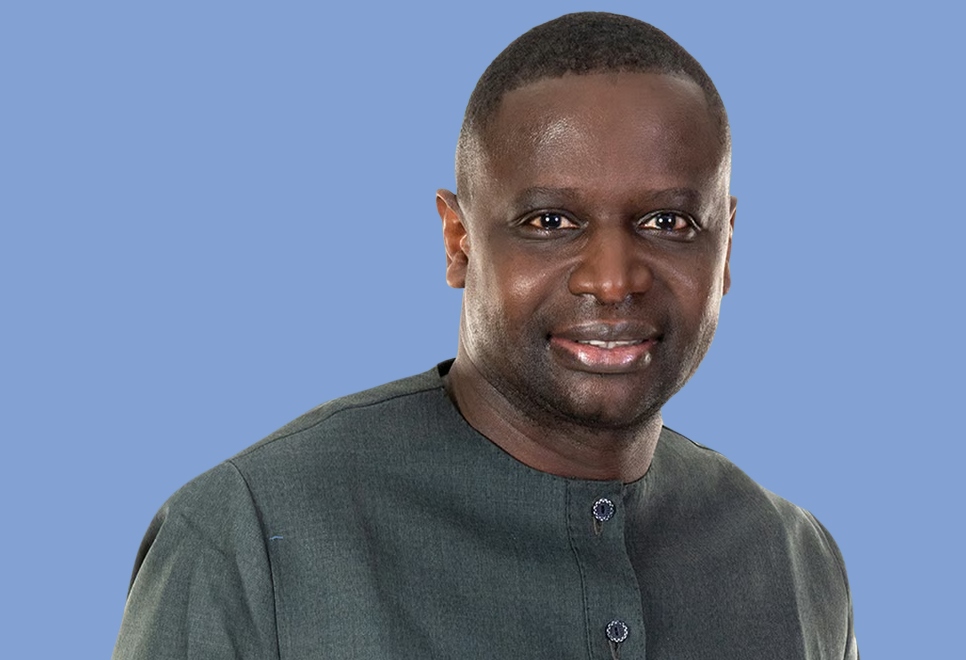
When I sit down with Moses Lutalo, the Managing Director of Broll Uganda, the conversation quickly settles on the forces reshaping Uganda’s real estate landscape: financing pressures, currency volatility, talent flight, and the urgent need to reinvent business models across the region.
Broll operates from a distinctly different vantage point. It is not a developer, not a landlord, not a builder of malls or apartments. It is a real estate services company, an identity that gives it a panoramic view of the industry’s strengths and stress fractures.
“We don’t own property,” Lutalo says. “We manage. We are consultants. If we owned property, we would be competing with our clients, and we don’t want that.”
Instead, Broll’s work runs across the entire value chain: valuation, property management, facilities management, occupier representation, sales, and broking.
From that service-driven position, one step removed from development but deeply embedded in operations, Lutalo sees the full spectrum of pressures facing Uganda’s property sector.
And he doesn’t describe them in abstraction. He encounters them daily: the demands of global capital, the fragility of local financing structures, heavy tax and regulatory burdens, cracks in land governance, and the ongoing struggle to attract and retain talent in a fast-growing, high-stress industry.
Capital, cycles, currency, and tax
Real estate, in Lutalo’s view, rises and falls with the broader economy. When Uganda’s macro indicators move in the right direction, stable central bank rates, controlled inflation, and GDP per capita improving from about $800 to roughly $1,300, as Bank of Uganda data suggests, capital grows more confident and begins flowing into property.
A growing population increases the need for homes. Higher disposable incomes support consumption, strengthening demand for both housing and retail space.
“The relationship between macro stability and housing is almost in sync,” he says. “If the central bank raises its policy rate, every borrowing cost, from commercial loans to mortgages, shoots up. But for most of the year, rates have been held steady, creating a window where development becomes more feasible.”
Then there is currency, the second force that complicates everything. Many of the clients Broll advises invest in US dollars, build in dollars, and expect returns in dollars. The moment those dollar investments start producing shilling income, risk creeps in.
“They’re going to put up a property, invest in dollars, and expect a return in dollars,” he says. “So the moment they put in dollars and then they’re getting shillings, currency challenges.”
Leases try to manage this by indexing to the dollar, “Pay me $20 per square meter or its shilling equivalent at today’s rate”, but foreign exchange volatility still eats into returns.
Hovering above all of this is the global interest-rate cycle. When the US Fed hikes, capital retreats to safer American assets. When it cuts, investors scan Africa for higher yields. Uganda’s real estate returns sit inside this global seesaw.
On the ground, Broll tracks how these pressures translate into business reality. Every tenant in the shopping centres it manages submits monthly turnover data.
Before URA’s enforcement push, under-reporting was common. Today, certified sales figures give Broll a clear, month-by-month view of consumer behaviour: what campaigns worked, whether footfall translated into spending, and which tenants remain resilient in sectors like food, fashion, and services.
Still, Lutalo says the deepest structural problems begin with tax. On residential housing, Uganda exempts VAT on the sale of homes. That sounds investor-friendly, but he argues it backfires. Developers pay VAT on materials but cannot reclaim it, pushing up costs.
“If they only zero-rated it, not exempted it,” he says, “the house is 18% cheaper,” because input VAT could be refunded.
Then there is IFRIS e-invoicing, which demands VAT filings every 15 days, even if tenants won’t pay for months. He explains the mismatch.
“I bill a tenant in January for a quarter ending in March. They’ll pay me at the end of the quarter. But I’m expected to file VAT for the January invoice by the 15th of February, so I’m funding URA with money that I haven’t received.”
In Nairobi, real estate companies file VAT quarterly, a structure far better aligned to industry cash flows.
Behind taxation lies another structural flaw: short-term deposits funding long-term projects. Uganda’s savings rate is low, so banks rely on deposits that can walk out tomorrow. Yet those same funds finance 10–20 year developments.
The result is high interest rates, high-risk pricing, and limited appetite for long-term lending. Lutalo sees hope in emerging long-term capital pools, unit trusts, pension schemes, and, especially, mortgage refinancing, a reform he believes could finally match financing to the real estate life cycle.
Layer on top of this the slow pace of planning approvals, recurring land disputes, multiple titles on the same plot, and periodic land fraud, and a stark picture emerges.
“Uganda’s real estate challenges are not about market demand,” he says. “They are about the structural systems surrounding the sector.”
Transparency, blockchain, and a pan-African ledger
Lutalo’s energy lifts when the conversation turns to technology and transparency. I tell him about an Africa Fintech conference in Ghana and a startup I followed called Buy Land in Africa, founded by a young man and woman with an ambitious plan to link property markets across the continent, allowing someone in Uganda to buy real estate in South Africa, Zambia, or Ghana through a single platform.
He finds the idea exciting, but immediately points to the weakness: verification.
“The challenge we have in Africa is security of title,” he says. “In Uganda, you can buy land and later find multiple titles.”
Any continental platform, he argues, cannot work unless anchored in technology that validates every listing. For Lutalo, that technology is blockchain.
“When I hear the Ministry of Lands talking about registration and blockchain, I get happy,” he says.
“A blockchain-based system would create a single, tamper-proof register, locked and known by everyone. A parcel of land in Mukono priced at $2 million would be uploaded, logged, verified, and checked. You can’t tamper with it.”
Buy Land in Africa plans to build trust through reputation ratings, giving agents and developers scores based on past transactions. Lutalo thinks ratings help track behaviour, but they don’t guarantee truth. Blockchain, in his view, does.
In the future he imagines, if a developer in Lusaka sends him “an opportunity in Zambia,” he won’t rely on PDFs or someone’s word. He would open a continental ledger and instantly see transaction history, comparables, price trends, and verified ownership. Transparency, he insists, is the key.
“The transparency is what is going to unlock Africa’s real estate potential,” he says. “For as long as we remain opaque—land registration unclear, construction costs hidden, returns not visible—capital goes elsewhere.”
He contrasts this with South Africa, where clarity fuels scale. He recalls a client who acquired a million square meters of shopping-centre space in a single deal.
Pension Towers, one of Kampala’s largest buildings, is about 50,000 square meters. “Imagine: one deal, a million square meters,” he says. “That only happens in markets where data and rules are clear.”
Investment grade, equity fear, and “dying slowly”

When the conversation shifts to financing, Lutalo doesn’t sugarcoat it.
“Real capital only follows investment-grade properties,” he says.
Uganda has only a small handful of such assets: Arena Mall, Acacia Mall, the redeveloped Metroplex (now owned by a Mauritius-based, London-listed fund), and master-planned precincts like Palm.
These are the kinds of buildings global investors understand: strong long-term tenants, hard-currency leases, solid governance, and clear master plans.
The problem is that most local developers don’t build to that standard.
“… our developers want to cut corners,” he says. Buildings may be occupied or popular, but still fall short of what institutional investors consider investable.
He points to the former Pioneer Mall as an example: it trades, yes, but structurally it isn’t an asset you can take to a foreign fund. “You can’t attract foreign capital into it.”
For Lutalo, investment grade means everything has been done properly before funding is sought: design, feasibility, research, tenant strategy, risk modelling, and lease structuring. Nothing is improvised halfway.
Even when the right assets exist, they rarely reach the market. Fully tenanted hard-currency office towers or mature retail centres rarely come up for sale.
“People are looking for projects,” he says, “we just don’t have well-packaged projects.”
He acknowledges that some developments have been delayed in recent years, but often the issue isn’t volatility; it’s equity. Developers struggle to raise the equity portion required to unlock debt.
“Many developers do the math and realise they’d be borrowing 70% of $20 million,” he says. “They do the math and say, ‘No, I can’t do this,’ because they’re individuals.”
Behind that lies a deeper cultural issue: fear of equity partnerships.
“A lot of our people, the first thing they think about in real estate is debt,” he says. “They don’t think about equity. They fear working with others. It’s my thing. I own it 100%. So they die slowly; always.”
For Lutalo, the future of large-scale real estate depends not just on rates or currency stability, but on a mindset shift from individual ownership to collaborative, properly structured, investment-grade development.
Millennials, Gen Z, and the “rocket ship”
 World Bank bans PwC Africa, Rwanda and Kenya affiliates from Bank Group-financed projects over fraudulent practices
If capital is one battlefield, talent is the other. At Broll, the workforce skews young.
“I’m about 43 years old,” Lutalo says with a small laugh. “One of the oldest people here.”
With a team dominated by millennials and Gen Z, the culture has shifted accordingly. “You’ll find me in jeans on a Monday,” he says. The rigid 8-to-5, in-office routine is gone. If someone has a laptop, they work from wherever they are. His finance manager is in Singapore, still closing books and joining calls.
The unspoken rule is that nobody is left on the battlefield. “If any of them has a problem, we’ll stand in their way,” he says. Status symbols are discouraged. Even the founders give up their offices when space is tight. Titles exist, but not as walls.
Training is constant, both internal and through an online academy Broll runs with the University of Pretoria. Retention, he believes, hinges less on technical skill than on character and culture.
“I grew from down up,” he says. “I know what a property manager is going through. I know what a cleaner is going through.”
Those early years trained him to read people. If someone looks drained, he quietly suggests a week off before burnout hits.
Empathy runs both ways. One of his direct reports once messaged him late at night: “You don’t look fine. You look a bit stressed. Is everything okay?”
That kind of care is encouraged. “We are each other’s keeper,” he says; not “family” in the artificial HR sense, but more than workmates.
He doesn’t police presence. “I won’t call anyone and ask, ‘Why are you not in the office?’ But work gets done.”
Since 2017, Broll has averaged 30% compound annual growth. When new staff join, he jokes, “Welcome to the rocket ship.” But growth, he insists, should never erode humanity.
Every EXCO meeting begins with people: are teams okay, are there vulnerabilities, are people happy? He knows some staff come to the office hungry, especially those working in the buildings they manage. Even small interventions around food make a difference.
Outside Broll, he sees a harsher industry. Colleagues message him saying they’ve moved to London or Canada. Others resign with nothing lined up.
“What do you think they are looking for? It’s management,” he says. “It’s not the money.”
The industry is stressful by nature—landlords demanding results, tenants complaining, service providers pushing back. “The last thing you need is stress from your line manager.”
He is openly critical of leaders who threaten staff with replaceability. “Why do you keep having 40–50% turnover? Is something wrong with you as a leader?” he asks.
He knows companies where people “resign to stealth,” simply disappearing rather than enduring pressure. Some retreat home or to farming. Many of his current colleagues, he says, were picked up from exactly that place; disillusioned but capable. He called them back in.
What keeps Broll’s best people? “We pay better in the industry,” he says. “We’re better structured. When you promise this, it is that. We offer benefits. But we are human. That’s why we’re doing this business—the humility, the empathy.”
A major influence on his leadership is Jim Collins’ Good to Great and its idea of “Level 5 leadership”: humility paired with fierce resolve, and the belief that great companies start with the right people on the bus.
“Once you bring the right people on board, then you know where to go,” he says. Strategy can change; character can’t. “It all comes back to leadership.”
He models the simplicity he preaches. He doesn’t chase status. “You find me on the boda boda—it is okay.”
When he goes home to his small house and kids, he is the same person. At work, staff call him Moses. “When I’m here, I run the business, but I separate that very well.”
He is even at peace with being replaceable. “Even if today I walked out of this office, Broll will go on like I was never here,” he says. “And that gives me comfort.”
PropTech and reinvention
When the conversation turns to reinvention, Lutalo doesn’t hesitate. The future, he says, belongs to PropTech.
Valuations in Uganda can take up to three days. In places like Dubai, they take hours. The bottleneck isn’t skill, he says; it’s data.
“We spend a lot of time looking for comparables.” In his vision, that work becomes automated: an inspector inputs location and property attributes, and a full valuation report is produced the same day.
Sales are shifting too, from physical showrooms to virtual reality tours and digital marketplaces. Property management is moving toward integrated facilities platforms that track faults, jobs, assets, and contractors in real time.
“PropTech is going to change everything in our business,” he says. Uganda is only beginning to see the wave, but he’s encouraged by startups building tools for issues as specific as managing security deposits.
Inside Broll, the technological backbone is BHash, its end-to-end property management system. “Everything to do with properties goes into one system,” he explains; leases, contracts, rent schedules, amortisation details.
The system automates operational triggers: rent due, demand notes required, and reminders scheduled, all prompted by preloaded parameters.
BHash has evolved for decades and is now commercialised through a subsidiary that licenses it to clients, including GRIT, the listed property group that used it for years before Broll took over management.
Innovation also extends to strategy. Broll has acquired capabilities it wants to deepen, including Fernridge, a South African research firm known for demographic and location intelligence, and facilities management companies to strengthen integrated FM services.
If a capability can be built efficiently in-house, they build it; if it requires specialisation, they buy it.
Client demand for insight keeps rising. Investors want dashboards showing occupancy, debtors, leasing pipelines, lease expiries, and risk at a glance.
Broll teams now collect operational data in real time. On any day, Lutalo can pull up a dashboard and see what faults occurred at Crystal Towers, which ones were resolved, what remains pending, and how long each fix took.
“That’s what technology now offers,” he says. “Information you can act on in real time.”
Sustainability, for him, is both environmental and economic. On some assets, such as those managed for the World Bank, Broll reports on power, water, and recycling.
UDB Towers is green-rated with solar integrated into its design. Broll nudges other landlords toward retrofits to improve energy and water efficiency.
“Effectively using resources so that you don’t mess up the environment for future generations,” he says. But it’s also practical: water and power are the highest operating costs, so saving them improves returns.
Covid, reserves, and leadership as character
Ask Lutalo about his toughest crisis, and he answers instantly: Covid,-19.
The pandemic forced Broll to pivot business lines and slash expenses. Group-wide, everyone took a 25% pay cut. Lutalo took the largest reduction personally, over 20%, while his team absorbed about 7%.
“I’m earning the big bucks. I should be the guy most affected,” he says. He rejects the model of leaders demanding sacrifice while exempting themselves. Ironically, Broll grew the most during that period.
The experience hardened his view on preparation. “You should be able, at any one moment, to have working capital for a year if you can. Reserves.”
It also forced a rethink of risk and force majeure. Clauses once treated as boilerplate are now central. What happens if a retail tenant doesn’t trade for six months due to lockdown?
What happens to the lease? To project viability? He now builds such shocks, lost rents for six months, into sensitivity analyses alongside fluctuating construction costs.
On a personal level, Covid was an equaliser. He lost family members and watched “bodies dropping” without knowing who would be next. “It was a reality check,” he says.
“God is saying you need to check this.” He believes any leader who behaves the same way after Covid as before missed the lesson.
The crisis drew him closer to people and partners. Contractors and staff called, saying they were stuck, couldn’t survive, and needed help. It became less about contracts and more about community survival.
He extends that logic beyond business. “The more people we have doing work, the better for society,” he says.
“Then you’re not worried about who is going to rob your car light, because everyone has something they’re doing. If I can do something within my small office beyond that, I’ll do everything for it.”
For a man who prefers to stay low-key, Moses Lutalo is quietly reshaping how Uganda’s real estate sector thinks about capital, technology, people, and resilience; not with slogans, but with structure, systems, and a stubborn insistence on staying human.