With barely three months left before Petroleum Authority of Uganda (PAU) Executive Director Ernest Rubondo reaches the end of his second and final term, a fierce undercurrent is now bubbling beneath Uganda’s most strategic regulator, threatening to spill into public view just as the country edges toward first oil.
What should have been a carefully managed leadership transition at the institution overseeing Uganda’s multi-billion-dollar petroleum sector has instead evolved into an increasingly bitter succession contest marked by accusations, counter-accusations, internal lobbying claims, competing interpretations of the petroleum law, and growing questions about governance, institutional continuity, and who ultimately controls Uganda’s oil future.
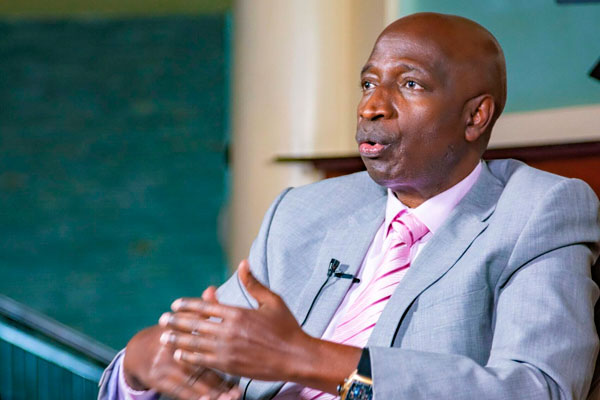
At the centre of the storm is Rubondo himself, the founding Executive Director of PAU, long regarded as one of the architects of Uganda’s petroleum governance framework and one of the country’s most influential technocrats in the energy sector.
Rubondo was first appointed as the first Executive Director of the Petroleum Authority of Uganda (PAU) in August 2016, with his appointment taking effect in September 2016. Accordingly, his term is set to end at the end of August 2026.
But as the succession race intensifies, competing camps are now telling radically different stories about what is really happening inside the regulator.
One side alleges that technically experienced petroleum professionals within PAU were unfairly eliminated during the recruitment process, forcing concern among insiders who fear the institution could lose its deeply technical orientation just as Uganda enters production.
Another faction, however, accuses Rubondo and his allies of attempting to interfere with, or reshape the recruitment process after preferred outcomes allegedly failed to materialise.
The battle is no longer merely about who becomes the next Executive Director. It is increasingly about what kind of institution PAU will become in Uganda’s production era.
The succession fault lines beneath Uganda’s oil future
The recruitment for the next Executive Director of PAU was publicly advertised in December 2025 under the supervision of the PAU Board, in accordance with Sections 27 and 29 of the Petroleum (Exploration, Development and Production) Act.
However, according to multiple sources familiar with the process, tensions began emerging after the shortlisting and internal evaluation stages, triggering competing complaints, lobbying, and counter-accusations from different camps both inside and outside the Authority.
One faction reportedly argues that the process unfairly sidelined technically experienced insiders with years of petroleum regulatory experience in favour of external or allegedly less technically grounded candidates.
Several insiders are said to have raised concerns after several long-serving technical staff were reportedly eliminated during the preliminary stages of the recruitment exercise.
According to sources familiar with the process, only a handful of senior insiders, including Director Legal and Corporate Affairs Ali Ssekatawa and Director Economic and National Content Monitoring Peninah Aheebwa, advanced significantly into the final stages, alongside several candidates from outside PAU.
Sources further allege that from the final stages of the process, Ssekatawa and Abdul Bazaara Byakagaba, a seasoned petroleum geoscientist and General Manager of Oranto Petroleum, emerged among the leading candidates, and that their names were subsequently recommended by the Board to the Minister.
While the Petroleum Act formally vests the recruitment mandate in the PAU Board, the petroleum sector remains one of Uganda’s most strategic and politically sensitive industries, meaning the Minister and Presidency can still wield significant informal or indirect influence within the broader public sector governance structure.
It is at this point that the succession process is alleged to have become even more contentious.
According to multiple sources, a group mainly comprising senior PAU executives who believed they had been unfairly eliminated from the process subsequently petitioned outgoing Executive Director Rubondo over the matter.
Sources further allege that Rubondo later raised concerns with President Museveni regarding the recruitment process, after which the President is said to have written to Energy and Mineral Development Minister Ruth Nankabirwa, directing that the process be restarted under the supervision of the outgoing Executive Director himself.
It is upon this that the process is now reportedly being redone.
Sources aligned to this camp argue that PAU, entering a production era, requires a deeply technical leader with a strong grounding in petroleum geosciences, engineering, or reservoir management.
They warn that placing a largely administrative, legal, or governance-oriented figure at the helm of the regulator during production could create institutional and operational risks.
Without explicitly naming him as the target of these concerns, much of the criticism appears directed at Ssekatawa, who emerged as one of the leading internal contenders in the succession race.
Ssekatawa, who joined PAU in 2017, is a lawyer and oil and gas policy specialist with a background in tax litigation and petroleum law, having previously served at Uganda Revenue Authority (URA), where he rose through the ranks to become Head of Litigation and a public tax prosecutor.
He holds an MBA from ESAMI and an LLM in Oil and Gas Law and Policy from the University of Dundee, and has represented Uganda in international arbitration and tax transparency forums.
However, unlike several other long-serving PAU executives who transitioned into the Authority from the Ministry of Energy during the formative years of Uganda’s petroleum sector governance framework, Ssekatawa is viewed by some insiders as a comparatively newer entrant into the institution’s technical petroleum establishment.
That distinction now appears to sit at the centre of the increasingly sensitive debate over whether PAU’s next phase requires a technocratic petroleum specialist, a governance-oriented administrator, or a broader hybrid leader capable of navigating both worlds as Uganda transitions into production.
However, another group strongly disputes claims that the process unfairly targeted technically experienced internal staff. Instead, this camp insists the recruitment exercise has remained lawful, competitive, and procedurally sound, arguing that the outcomes were legitimately arrived at and that some internal hopefuls simply failed to satisfy the minimum statutory thresholds relating to leadership experience, management exposure, and years of work within the oil and gas sector.
This group further argues that some dissatisfied insiders, including individuals aligned to Rubondo, are now attempting to introduce or reinterpret “technical” eligibility standards in ways that favour certain categories of candidates after the recruitment process had already significantly progressed.
Some sources within this camp further allege that Rubondo himself may have an interest in influencing the succession process, including claims that there have been informal efforts to explore continuation arrangements or retain influence beyond the legally prescribed two-term limit.
The disagreement has since evolved into a much deeper debate over what qualifications truly matter for the head of Uganda’s petroleum regulator as the country transitions into production.
Sources aligned to this counter-camp strongly contest the argument that the law prioritises “technical” candidates over others. They argue that the Petroleum (Exploration, Development and Production) Act does not explicitly distinguish between “technical” and “non-technical” candidates for purposes of eligibility for the Executive Director position, and accuse the Rubondo-aligned camp of attempting to introduce or elevate technical qualification thresholds and interpretations that are not expressly provided for within the law itself.
These sources further argue that the qualification framework currently being debated is substantially similar to the one under which Rubondo himself emerged as Executive Director in 2016, raising questions about why the interpretation of the criteria now appears to be shifting at such a late stage in the succession process.
According to these sources, the current succession dispute mirrors aspects of the process that eventually led to Rubondo’s own appointment in 2016. They allege that after the initial shortlisting exercise at the time, several candidates had emerged, including Rubondo himself, Martin Muhangi, and Abdul Bazaara Byakagaba, before additional scrutiny and evaluation stages reportedly eliminated the other contenders, ultimately leaving Rubondo as the sole candidate interviewed for the position.
This camp argues that the qualification criteria and statutory framework governing the Executive Director role have not materially changed since then, and therefore questions why some actors are now seeking to place heightened emphasis on “technical” credentials or petroleum science backgrounds as a decisive requirement for the office.
To these sources, the current controversy is therefore less about safeguarding technical integrity within PAU and more about a broader succession struggle involving influence, institutional control, and competing interests over who will shape the Authority’s next leadership phase as Uganda transitions into oil production.
Some within this camp further allege that the debate over “technical” versus “non-technical” leadership is increasingly being used as a proxy battleground in a much deeper contest over succession, legacy, and continued influence within Uganda’s petroleum governance architecture.
Officials respond, but key questions remain unanswered
We put these questions to Rubondo, including allegations that he may have attempted to influence or revisit the recruitment process, claims regarding reinterpretation of qualification requirements, concerns around “technical” versus “non-technical” eligibility standards, allegations that dissatisfied insiders had petitioned him over the process, and speculation about possible continuation arrangements beyond his second and final term.
Rubondo, however, declined to engage substantively on the allegations. In a WhatsApp response to CEO East Africa Magazine, he stated: “Recruitment of an ED for PAU is a responsibility of the Board. It would therefore be unprofessional for me to talk to the press about it. I recommend you get in touch with the Board Chair on the matter.”
He subsequently referred all further inquiries to the PAU Board Chairperson, Lynda Biribonwa, who similarly declined to engage directly on the detailed allegations, referring all media inquiries to PAU’s Corporate Affairs department.
In a WhatsApp response to CEO East Africa Magazine, she said: “PAU has a dedicated Communications team that serves as the designated point of contact for all media inquiries and official statements on behalf of the Authority, regardless of the circumstances or framing of the request.”
“To ensure your queries are addressed accurately and through the appropriate channel, I kindly ask that you direct your correspondence to them. This process exists to uphold the integrity of the information shared with the public and media, and we trust you will appreciate the importance of that structure,” she added.
Meanwhile, PAU’s official institutional response remains carefully procedural. In a statement sent by Manager Corporate Affairs Gloria Sebikari, the Authority stated that “the recruitment process for the Executive Director of PAU is undertaken and overseen by the Board” and that the process “is ongoing in accordance with the law.”
“… the process, as advertised on 2nd December 2025, is ongoing in accordance with the law. PAU remains fully operational and committed to ensuring stability, transparency, and continuity as Uganda advances toward first oil and beyond.”
The Authority further emphasised that PAU remains committed to “stability, transparency, and continuity” as Uganda advances toward first oil.
Notably, neither the Board nor PAU Management directly addressed the more detailed allegations regarding presidential intervention, restarting of the process, claims of internal lobbying, or disputes over qualification interpretation.
When CEO East Africa Magazine reached out to the Ministry of Energy Permanent Secretary Eng Irene Batebe, she said that the recruitment process was being concluded in line with clearly established rules and guidelines, with the Ministry’s role limited to oversight and guidance.
However, she referred this publication to the PAU Executive Director Rubondo for a more detailed and conclusive response, noting that he was better placed to address matters relating to the Authority’s day-to-day operations and the ongoing recruitment process.

A succession battle at the worst possible time
The timing could hardly be more delicate, or more consequential, for Uganda’s petroleum sector.
Uganda expects its first oil in the second half of 2026, almost exactly around the same period when Rubondo’s second and final term is expected to expire on August 31. That alone would make the transition sensitive.
But what makes the situation even more unsettling is that the succession turbulence at PAU is emerging at precisely the same moment another leadership transition debate is unfolding inside Uganda National Oil Company (UNOC), the State’s commercial oil vehicle.
Just a week ago, CEO East Africa Magazine reported growing internal tensions at UNOC over possible attempts to extend the contracts of some founding senior executives approaching the end of the company’s internally established ten-year management cycle.
The controversy exposed wider concerns around succession planning, institutional continuity, governance credibility, and whether Uganda’s oil sector has adequately prepared its next generation of leadership for the country’s most critical petroleum phase.
Now, similar anxieties appear to be surfacing at the regulator itself.
Together, the parallel succession questions at both PAU and UNOC are creating an uncomfortable picture: that just as Uganda inches closer to commercial oil production after nearly two decades of preparation, some of the sector’s most strategic institutions are simultaneously confronting leadership transition uncertainties at the top.
The stakes at PAU are enormous. The regulator, among others, oversees the Tilenga and Kingfisher upstream oil developments, the East African Crude Oil Pipeline (EACOP), production regulation and field supervision, local content enforcement, environmental and social compliance, cost recovery audits and petroleum accounting, licensing and operational approvals, and broader petroleum revenue governance.
This is arguably the most consequential implementation phase in Uganda’s petroleum journey since commercially viable oil reserves were confirmed in the Albertine Graben nearly twenty years ago.
Unlike the earlier years that focused largely on exploration, negotiations, and legal frameworks, Uganda is now transitioning into actual production, infrastructure commissioning, operational monitoring, and eventual oil exportation.
Any instability, prolonged internal contestation, or leadership vacuum within the sector’s core institutions, therefore, carries significantly higher national, financial, and geopolitical implications.
That is why the succession process at PAU has quietly evolved into one of the most sensitive governance contests within Uganda’s energy sector.
A deeper governance question
Beneath the succession drama lies a deeper institutional struggle over the future identity of PAU itself.
Should Uganda’s petroleum regulator remain primarily technocrat-led, deeply rooted in petroleum science and engineering expertise?
Or should the institution evolve into a broader governance and strategic oversight body led by executives with stronger public administration, legal, or commercial backgrounds?
That debate is not unique to Uganda.
Globally, petroleum regulators often wrestle with balancing technical oversight and broader governance capability as sectors mature from exploration into production.
But in Uganda’s case, the stakes are unusually high because first oil will fundamentally transform the country’s economic and political landscape.
Investors, government officials, oil companies, and development partners are all watching closely. Leadership uncertainty at the regulator during such a transition is unlikely to inspire confidence.
For now, the official position remains that the process is lawful, ongoing, and under the Board’s mandate.
But behind the carefully worded statements, competing narratives continue to swirl through Uganda’s petroleum establishment.
And with the clock ticking toward August 31 and first oil drawing closer, the succession battle at PAU is increasingly shaping up to be one of the most consequential governance contests in the history of Uganda’s energy sector.