

“Charity begins at home,” goes the proverb — and for the Babirukamu family, leadership does too. In a house that opened its doors to cousins, neighbours and strangers, where Bible study at six a.m. was non-negotiable, and the sitting room doubled as a dormitory, the habits of generosity, presence and service were not taught as theory but lived out in daily ritual.
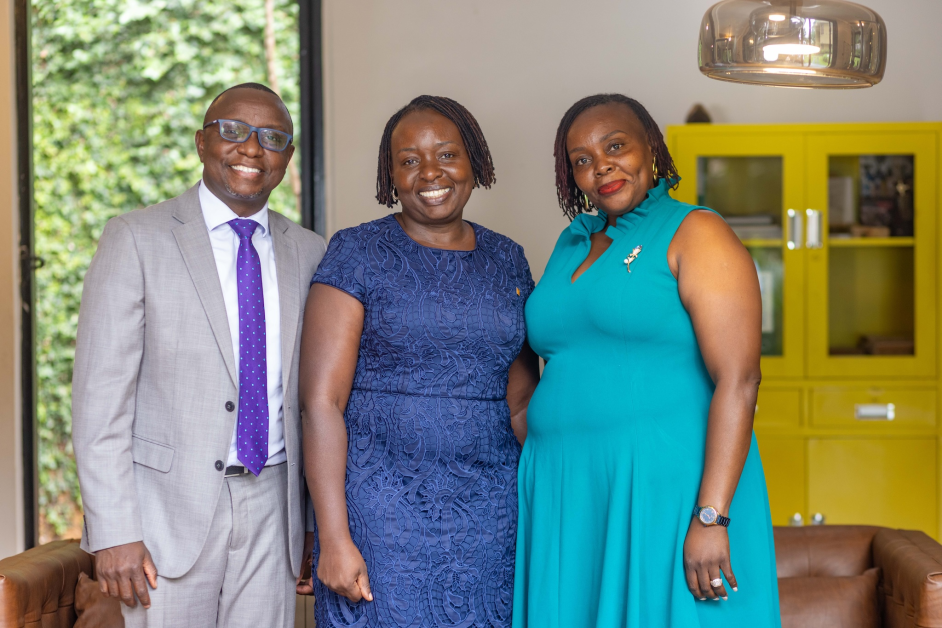
Those habits, the siblings say, became the quiet curriculum that shaped careers and character: Emma Ahumuza Mugisha is today Head, Retail and Digital Banking (African subsidiaries) at Access Bank Plc after previously serving as Executive Director and Head of Business Banking at Stanbic Bank; Collin Babirukamu is Executive Director, IT at the Bank of Uganda (and earlier Director, e-Government Services at NITA-U); Pamela Babirukamu is the founder of Evolving Woman — an adversity-quotient coach and author who helps women translate pain into purpose.
In their story, charity at home becomes the first school of leadership.
Family portrait: the household that made them
The Babirukamu house read like a living classroom — prayerful, full and insistently practical. “Prayer was non-negotiable,” Pamela says, and the household organised itself around that rhythm: Bible study at six each morning, church as a non-negotiable appointment and a sitting room that “routinely became a dormitory” whenever cousins and visitors overflowed the rooms. Emma remembers the squeeze of bodies and beds with a proverb their mother would repeat: “emitima niyo efunda!” — a Runyankore/Rukiga admonition that, as she explains, means roughly “it is hearts that fail to fit in spaces, with the right attitude, we made it work.” Those small rituals — waking, praying, rearranging the house — became the family’s moral grammar.
Parents set the pattern in contrasting yet complementary ways. “Daddy was the calm one. I think I inherited a bit of his calmness,” Emma observes: a steady presence whose arrival could hush the house. Their mother was the social engine — a teacher who became a Luwum Street entrepreneur, a church leader who “gave away everything — literally everything. She would even give away some of my father’s clothes, shoes, and anything she felt someone needed,” Pamela recalls. That everyday generosity was more than charity; it was training. Collin puts it plainly: their parents “gave of what I call the three T’s: Time… Treasure… Talent,” — time for counsel, material help without hesitation, and the daily use of gifts in service.
Concrete scenes linger: the mother boarding a bus to Ntare with a birthday cake every July 25th for six straight years; Shell-pick-up drives to Rukungiri, where their father narrated towns like maps; holiday shifts at the fabric shop on Luwum Street, where children learned targets, salesmanship and resilience.
“When I say present, I mean truly present,” Collin reflects on their parents’ style — presence that modelled values more powerfully than any lecture. In a home where faith, hustle and hospitality were daily practice, the habits of leadership were quietly — and indelibly — sown.
The first leadership school: church, chores and the soft skills
The Babirukamu home doubled as a quiet academy for real-world leadership. Long before any of the siblings entered boardrooms or bank branches, they practised habits that later became core leadership skills: waking for Bible study, standing before church congregations, bargaining at the Luwum Street shop, and learning to share cramped rooms so everyone could sleep and rise on time. “Prayer was non-negotiable,” Pamela insists, and the ritual of morning devotions — and the discipline required to keep them — taught accountability: you turned up, you knew your part, you did not opt out.
The church was the family’s first public stage. Collin remembers youth roles that forced him to prepare, to speak and to defend ideas before the congregation’s elders: “At the time, we didn’t realise it — but that was boardroom training. That’s where public speaking, articulation, confidence, and strategic thinking were born.” Those Sunday responsibilities were a literal rehearsal for later professional life: how to command a room, how to marshal arguments, how to represent a group with authority. As Collin later wryly puts it about his career path, he was “an accidental technologist” — but the confidence to lead an IT directorate or chair committees was planted in those pulpit and pew moments.
The chores and the shop taught a different set of soft skills: persuasion, negotiation and resilience. Emma recalls being given sales targets during school holidays and learning to sell not by cutting price but by explaining the fabric — “the texture, the material, the colours, the durability, the story behind it.” Those customer conversations taught empathy and persuasion; rejection taught poise: bring your stock down, explain, and politely move on. Emma also remembers childhood domestic duties that were small leadership drills: “I was an assistant mother very early, which meant leadership was part of my personality from the beginning.” Early caregiving gave her organisational discipline and the emotional labour of tending others.
Pamela sums the home curriculum in three actions that read like a manifesto for emerging leaders: “Show up. Stand up. Speak up. But do it all from a place of love.” Across Bible study, youth mobilising, market stalls and cramped bedrooms, the siblings learned to show up reliably, argue and persuade carefully, and hold one another accountable. Those informal routines produced practical competencies — negotiation, public presence, emotional regulation and teamwork — that school exams never taught but which have carried them from church halls and Luwum Street into boardrooms, government agencies and social enterprises.
Luwum Street: a market classroom
The Luwum Street shop was the Babirukamus’ market classroom — a place where fabric, story and salesmanship taught lessons no textbook could. Their mother ran the stall like a small enterprise, and the children learned its rhythms the hard way: “From about Primary Seven onwards, every school holiday meant working in the shop on Luwum Street. It wasn’t optional — you went to the shop, you sold, and you were given targets,” Emma remembers. That instruction came with a practical test: price was not always the lever. In her first Citibank interview, Emma was asked, “If price is not a lever, what else would you use to convince a customer to buy?” — and the answer, practised a thousand times at the shop, came naturally: speak to the fabric’s texture, durability and story.
Holiday work was structured like real business: Mom set monthly targets, “and at the end of the month, she paid us.” Children learned to manage a cash flow of their own — to reinvest, to save or to spend — and to treat customers with patience. Emma recalls the toughness of the classroom: “In sales, you face rejection. You speak to a customer, explain everything, and sometimes bring down all the stock to try and get a sale. They say, ‘I will come back,’ and they never appear again. So you learn to shake it off, remain polite, and move to the next customer.” Those cycles taught emotional regulation, persistence and the risk calculus of small-scale retail.
The shop also seeded entrepreneurial empathy. Pamela sold earrings in Gayaza at a young age; Collin hawked towels. Watching their mother — whose business “has had nine lives. It has died, resurrected, died again, and bounced back” — taught them how to survive shocks, pivot offerings and rebuild customer trust. The market’s lessons translated later into careers and callings: the persuasion and customer literacy that made Emma a banker, the resilience and people-skills behind Collin’s public-service leadership, and the ability to package value and sell oneself that underpins Pamela’s coaching and authorship. Luwum Street, in short, was a training ground for market-facing leadership.
Sibling laboratory: roles, rivalry, and mutual formation
The Babirukamu siblings like to call themselves a family orchestra — each player with a distinct part that, when combined, produces a surprisingly well-tuned ensemble. “Everyone has their strength, and everyone takes their place,” Pamela says, and the metaphor fits: some siblings were the Marizas — the movers and organisers — others the mobilisers, some the quiet backbone and others the comic relief. That natural division of labour became an informal curriculum in leadership, with each role offering repeated practice in responsibility, delegation and mutual accountability.
Emma was the steady centre: the calm peacemaker whose composure the rest of the house relied on. Collin remembers how, in chaotic sibling rows, “we would all look to Emma. Her natural response was always calm. Sometimes she would literally be sitting quietly in the middle of the chaos, reading a novel as if nothing was happening, while objects were flying across the room!” Pamela’s affectionate riff on a hospital scare — “Drama queen, drama queen… calm down, drama queen” — shows how that calmness came to be both an expectation and a gentle discipline. Emma’s early domestic duties also mattered: “I was an assistant mother very early, which meant leadership was part of my personality from the beginning.” Those caregiving drills taught organisation, patience and the emotional labour of steadying others.
Collin occupies the connector role — the sibling whose friendships and networks span generations. Pamela puts it plainly: “Collin is a people person — in a very special way. I’m a people person too, but Collin is on another level. He has a very unique and diverse range of friendships. His social capital is formidable.” Those webs of relationships became operational leadership capital: introductions, counsel, influence and presence in public life. Collin himself distilled the family legacy in practical terms — the “three T’s: Time… Treasure… Talent” — describing how his parents modelled giving and service in ways that became templates for civic leadership.

Central to this laboratory story, however, is Andrew — the sibling whose presence anchored much of the family’s confidence. Collin’s portrait is vivid and unvarnished: “Andrew was brilliant, energetic, expressive — he would probably have become one of Uganda’s great technologists. He was one of the early pioneers at MTN.” He was the natural exemplar, the master of ceremonies at family events, “the boy whose school results were exceptional enough that ‘his results were read on the radio’.”
Professionally, Andrew fulfilled that promise: “He became one of the brightest telecom engineers of his generation: worked at MTN, consulted for UTL, worked with Airtel and lived and worked in Nigeria and Belgium.” When Andrew died at 33, his absence left a practical and psychological vacuum: “Growing up as the fourth-born, my life had always been ‘covered.’ … But when Andrew died, suddenly the family started looking at me: ‘Collin, what do we do?’ And I remember thinking, ‘Why are you asking me? I thought Andrew would always be here.’ That loss forced me into leadership before I felt ready.” Collin’s catching of breath, finding his voice, and leading while grieving became a painful yet formative episode in the family’s leadership training.
Pamela’s mobilising energy — the one who rallies, organises and speaks up — completes the trio. Her family credo, “Show up. Stand up. Speak up. But do it all from a place of love,” captures how the siblings translated internal roles into outward practice. Between Emma’s steadiness, Collin’s relational reach (sharpened by a crucible loss) and Pamela’s capacity to mobilise, the siblings learned negotiation, diplomacy and accountability by doing: disputes became workshops in conflict resolution; chores became lessons in delegation; sales and shared space became rehearsals in persuasion and compromise. Birth-order rules such as Emma’s declaration — “kakuru takurirwa” (the firstborn is the firstborn) — taught early lessons about responsibility and earned authority, not theatrical command. Together, the everyday collisions of a crowded, prayerful home produced leaders who knew how to steady rooms, mobilise people and broker solutions — the very skills effective leaders rely on.
Professional lives: continuity and divergence
 World Bank bans PwC Africa, Rwanda and Kenya affiliates from Bank Group-financed projects over fraudulent practices
The Babirukamu siblings did not all step into the same kind of leadership; they invented different vocabularies for influence. What remains constant is the pedigree: the household rehearsals of presence, responsibility and service show up across vastly different scales — boardrooms, national systems and social movements — but they arrive dressed for the work at hand.
Emma’s leadership lives in scale and governance. As Head, Retail and Digital Banking (African subsidiaries) at Access Bank — and previously Executive Director and Head, Business Banking at Stanbic — she runs products, people and risk across multiple markets. That requires a discipline beyond persuasion: designing governance, managing compliance, harmonising culture across jurisdictions and holding leadership teams to measurable targets. Her Luwum Street lessons reappear here as stewardship at scale — the patience to listen to customers, the discipline to set targets and the moral obligation to protect a reputation. She also chairs a board (FSDU), translating family stewardship into institutional governance where “being present” means governing well, not merely showing up.
Collin’s signature is systems leadership. His work as Executive Director, IT at the Bank of Uganda and earlier as Director, e-Government Services at NITA-U places him on the fault lines between policy, technology and public trust. This is leadership that designs durable platforms rather than single transactions: national systems, cyber-resilience, vendor coordination and the slow, strategic work of interoperability. Collin’s church days were “boardroom training,” he says, but the public-service version demands stakeholder convening, consensus building and the capacity to lead multidisciplinary teams during crises — skills he had to convert into household stewardship when tragedy forced him into family leadership overnight.
Pamela leads by convening and catalysing. Evolving Woman, her books and coaching work scale influence differently: through narrative, programme design and direct mentoring. Her leadership is generative — packaging value, mobilising communities and designing learning journeys that multiply other people’s agency. Her life story — including hard resets such as divorce — supplies credibility: she coaches from lived experience and teaches leaders how to stay resilient, ethical and expressive under pressure. Her command is not hierarchical but catalytic: she makes leaders of others.
Together, the three show how one family can seed multiple modes of leadership: Emma governs organisations, Collin builds public systems, Pamela amplifies personal and communal transformation. The throughline is the same home code — presence, generosity and duty — but each sibling translated it into the mode the public sphere required: operational stewardship, systemic design and catalytic movement building.
Loss, resilience and the hard lessons
Loss has been one of the family’s deepest teachers — a sequence of griefs that read like a curriculum in endurance, humility and renewed purpose. The first rupture came not as a single event but as a season: the HIV epidemic, which stripped whole branches from extended families and turned the Babirukamu home into a refuge. Emma remembers that era bluntly: the house expanded from five children to thirteen because “the influx of relatives came because people were suffering, and our home became their refuge.” That sudden enlargement of obligation, she says, taught a communal way of life — sharing beds, food and burdens — that later became the family’s moral infrastructure for surviving loss.
The first intimate blow was Andrew’s illness and death. Emma recalls the terrible arc: “He went through chemotherapy for a year, got a bone marrow transplant, and was declared cancer-free. We moved from hopelessness to celebration. We held a big Thanksgiving. He went back to work. And then — three months later — he relapsed. The first chemo of the relapse is what took him.” Andrew, whose school results were read on the radio and who became a telecoms pioneer, left a vacuum not only of talent but of psychological shelter. For Collin, this loss, “forced me into leadership before I felt ready.” The grief forced roles to be re-wired overnight — protection receding and responsibility rushing in.
Their father’s later illness and death taught a different set of lessons. Emma describes the family’s slower walk toward farewell: their father travelled for treatment, and when doctors told him nothing more could be done, “Dad — being who he was — made peace with that. He said, ‘If this is what the doctors have said, then I am at peace.’” That period allowed the family to grieve with intention: counselling, hospice conversations, and a last birthday they treated as a farewell. The steadier end of that loss contrasted with what came next.
John Birungi Babirukamu’s death on 31 May 2024 shattered the family in a different register. A well-known figure in Uganda’s marketing and digital-media fraternity — a pioneering digital marketer with more than 14 years’ experience, a generous mentor and a vibrant public presence — John died by suicide after reportedly jumping from the top floor of Tagore Apartments in Kamwokya, Kampala. Police confirmed investigations were underway, and the family revealed that, despite an outward appearance of success, he had been quietly battling depression. In the hours before he died, he sent a sombre WhatsApp message to relatives expressing exhaustion, emptiness and asking for forgiveness; his passing shocked colleagues across marketing, PR and digital media and helped spark a national conversation about mental health and the hidden pressures faced by high-achieving professionals.
The loss landed differently from other bereavements. Emma recalls how a single intervention reframed their grief: Bishop Zach Niringiye told her, “Emma, I know what your mind is telling you. But this boy was unwell. Just like Andrew died of cancer, John has died of depression.” Hearing that — that depression is an illness, not a moral failure — changed the family’s framework for understanding what had happened. As Emma put it, “But once we understood depression as a disease, something lifted. It didn’t remove the pain, but it removed the shame.” Those words mark a hard pivot: public confession of vulnerability, and a movement from private guilt to a posture of learning and care.
The aftermath was candid and raw. Collin describes how the family was overtaken by heavy emotions: “I battled guilt. I battled anger. I battled confusion.” That honesty — the admission that faith and prayer were not automatic insulation against despair — opened the siblings to new kinds of help.
Counselling became a turning point. Emma says they “sought counselling. For weeks, we met deliberately as a family — checking on each other, holding space, making sure our minds were framing things correctly.” They instituted practices that were both pastoral and practical: weekly online Sunday meetings (“We meet every Sunday online. We pray. We talk. We listen.”), follow-ups after prayer requests, and an insistence on professional help rather than private silence.

Matthew’s later liver illness and subsequent death reopened old wounds, but it also forged a new pastoral muscle in the family. They learned, deliberately and painfully, how to shepherd one another through ongoing bereavement: normalising professional help, holding intentional check-ins and refusing to let private grief calcify into silence. In time, those practices translated private sorrow into public compassion, transforming trauma into a form of leadership rooted in tenderness, humility and a determined commitment to keep each other seen.
Pamela, who has lived through “more life-altering adversities,” describes the payoff and the peril of endurance: “Resilience has never been a deliberate choice for me; it has been the default.” Yet she warns of a cost: “One thing I constantly check myself on, though, is the thin line between resilience and hardness of heart… I find myself asking God to keep my heart soft — even after everything.” Those words sum the family’s lesson: survival need not become numbness. Instead, their response — weekly ritual, counselling, candid conversation and a willingness to travel together for joy — reframed suffering as a fuel for compassion. Collin captures the deeper insight: “Resilience is not toughness — it is tenderness held by faith. Hope is not loud — sometimes it’s a whisper. And love is not just what you feel — it’s what you give, even while hurting.” In the end, trauma tested and refined their leadership: it taught them how to lead not from strategy alone but from the hard-won vulnerabilities of shared sorrow.
Lessons and leadership takeaways
The Babirukamu siblings distilled their story into a handful of concrete lessons that read like a practical brief for families and leaders. They anchor these lessons in faith — Pamela closes with the reminder that “His divine power has given us everything we need for life and for godliness,” a scripture that both consoles and equips a family for the work of raising leaders.
In all their losses and their life story, the family says they have learn some core lessons, namely:
- The three T’s — Time, Treasure, Talent. Give time generously, share material resources without hesitation and deploy your gifts in service. This is how parents model stewardship and social duty.
- Presence over presents. Being physically and emotionally present — not merely buying consolation — is the primary gift parents give. Presence becomes the yardstick of trust and moral authority.
- Show up. Stand up. Speak up. Pamela’s exhortation is a leadership mantra: be reliably present, take responsibility and use your voice — always from a posture of love.
- Protect, but do not overprotect. Teach principles and then give children space to fail and learn; this balance builds resilience and agency.
- Mental-health vigilance. Recognise that illness is real — as Emma said, understanding “depression as a disease” removed shame and opened the door to help. Normalising professional care is essential.

On mental health vigilance, especially of loved ones, the Babirukamu siblings have some practical advice on what families and leaders can do.
- Hold regular family check-ins (a weekly short meeting or prayer-check that asks, “How are you really?”).
- Treat chores and small responsibilities as leadership training — give children targets, accountability and small budgets.
- Normalise counselling: make professional help a routine response to strain, not a last resort.
- Model generosity and presence publicly: let your organisational life mirror the family ethic of giving time, treasure and talent.
Taken together, these lessons convert private family habits into public leadership habits: presence, generosity, accountability and the courage to care for one another in grief and in growth.
The Quiet Architect: A Mother’s Moral Blueprint for Leadership
The Babirukamu story is at once intimate and expansively civic: a house that taught courtesy and courage, and a home whose quiet habits have multiplied outward into churches, markets, banks and public life. If the family’s work has a catalyst, it is their mother — not for a single spectacular act but for the steady moral architecture she supplied. As Pamela remembers, she was “an open book, extremely straightforward. In our home, there was no grey — it was either black or white.” That insistence on plain speech, clear accountability and principled action became the standard the children carried into every room they later led. Collin put the point plainly when he asked that the story celebrate her: “We thank God for our mother… the single greatest influence in my life.”
Those home-formed disciplines—clarity of purpose, moral courage and a refusal to tolerate half-truths—did more than shape character. They became civic tools. Collin’s compact credo — “I love the Lord, I love technology, and I love family. Those are the core pillars of my life” — reads as a public manifesto: faith, craft and kin stitched into service. Loss taught the family another public lesson. John’s death forced private grief into national conversation, and Pamela’s hard-won motto — “If you’re not going to die, then what are you going to do? … If you’re going to live, then you might as well live well.” — rings as a call to convert pain into practice and social action.
So charity begins at home — and from that soil the home becomes a seed: of steady governance at boardroom tables, of pastoral care in parish halls, of compassionate policy in public offices, and of coaching rooms where wounded people learn to stand. Their mother supplied the template; their grief supplied the urgency; their faith supplied the mandate to serve beyond the threshold. Pamela’s closing summons — “God has equipped you. Fully.” — is therefore not only a benediction for this family but a civic summons: take the ordinary work of home, multiply it publicly, and steward the world the way you learned to steward your own.
