You took over as Managing Director in 2019, just before the global disruption of COVID-19. What were your immediate priorities stepping into the role, and how did you steer Kansai Plascon through those uncertain times?
Our priority when COVID-19 cases were recorded in Uganda and SOPs were issued was to protect our staff, because they are the drivers of the Plascon engine.
We implemented strict health and safety measures across all our operations. We also ensured job security by paying full salaries to all staff throughout the lockdown period to maintain morale.
The next priority was to keep operations running smoothly. To manage stock-outs and avoid supply disruptions, we negotiated larger deliveries of raw materials and mobilised our teams to increase production efficiencies.
This allowed us to service all orders received, even with shorter working hours and stricter movement conditions. Our focus was to ensure production continued and that customers were served seamlessly.
During those first few months, what were the most significant challenges in balancing performance expectations with the need to build trust and cultural cohesion across a diverse team?
Over the past 23 years, I have had the privilege of serving this company in a variety of roles, which has given me a deep understanding of both its operations and culture.
Stepping into the role of Managing Director after serving as Commercial Director presented unique challenges, particularly as we launched the new Plascon brand amid numerous variables in the construction industry.
My responsibilities ranged from engaging global stakeholders to driving sales growth and improving profitability, all while facing mounting competition. Leading a team of people from diverse backgrounds required sensitivity to cultural differences and a commitment to fostering unity.
I am grateful for the resilience and adaptability that my Indian heritage has instilled in me, qualities that proved invaluable in navigating Uganda’s distinct business environment. Early in my tenure, I recognised the importance of bridging cultural gaps and building trust within the team.
This approach was instrumental in developing a collaborative, innovative workplace. The support provided by regional leadership in both Africa and Japan was exceptional, helping create an environment that encouraged innovation, teamwork, and trust.
This spirit enabled us to achieve major milestones, including the launch of East and Central Africa’s first Anti-Mosquito Paint. That success came through close cooperation with multiple stakeholders and partners in government and the private sector.
Today, Plascon is Uganda’s biggest paint brand, and I am extremely proud of what we’ve accomplished, even though the journey has only just begun.

Operational efficiency is a key pillar in leadership. How has Plascon optimised its production and distribution systems to remain competitive?
Operational efficiency at Plascon is deeply rooted in a people-driven approach, where empowerment and trust form the backbone of progress. We’ve ensured that Plascon navigates infrastructure challenges, currency fluctuations, and supply-chain uncertainties by fostering a culture of autonomy and accountability.
Employees are encouraged to own decisions, challenge norms, and stretch beyond their roles, supported through mentorship and psychological safety. Our commitment to operational excellence is reinforced by transparent communication and regular engagement across departments.
We hold monthly meetings to review quality standards, business performance, and customer feedback. This creates a conveyor belt for innovation and continuous improvement in products and services.
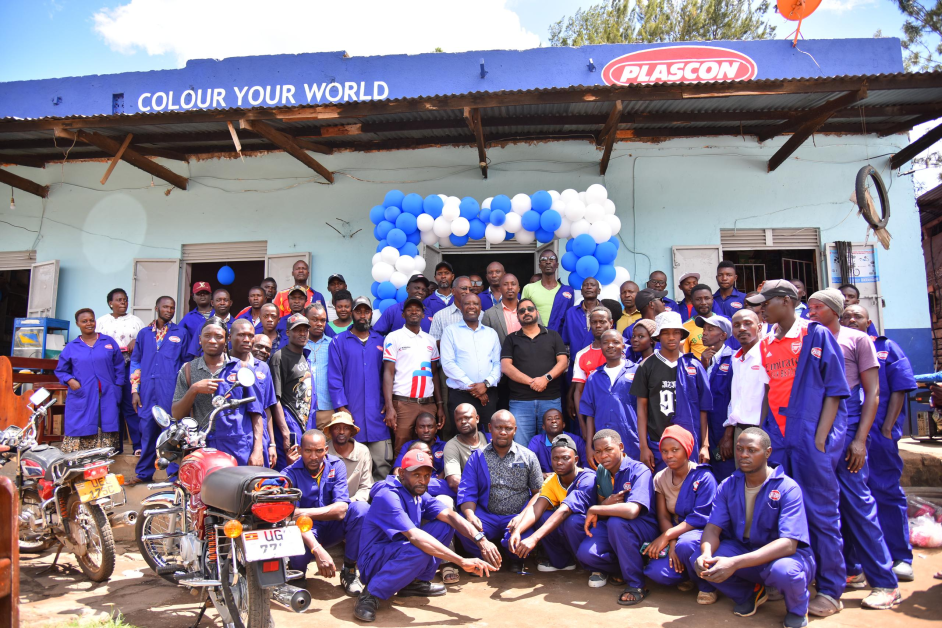
Distribution efficiency is amplified by our investment in community empowerment and industry partnerships. We’ve invested in painters’ training programmes, set up regional painters’ association offices and SACCOs, and trained hardware store owners and staff.
In addition, we work with the Society of Architects in Uganda and other professional bodies in the construction sector to provide continuous training for architects and interior designers, elevating industry standards and opening new dimensions for professional growth.
What innovations have emerged from your Ugandan teams that you’re particularly proud of? Could you share examples of how technological or digital transformation has improved productivity or customer engagement?
Every year, we set targets for innovations in packaging, product ranges, formulation improvements, and support services such as colour selection.
Working with our local and regional R&D teams, we developed Plascon Anti-Mosquito Paint, a product that kills mosquitoes on contact, helping protect families from malaria-transmitting parasites.
We also launched the Archi-Texture range of textured products for both exterior and interior walls, a waterproofing line including Plascon Dampseal and Plascon Wallseal for plaster, natural stone, and bricks.
Most recently, we introduced a first-of-its-kind portable colour detector: the Plascon Nix Colour Sensor. It allows professionals and homeowners to identify colours from any surface with 99.3% accuracy and match them to colours in the Plascon database.
We’ve also innovated to increase tamper-proofing on our buckets, protecting customers from harmful counterfeit products.
Speaking of counterfeits, a recent raid closed an illegal paint factory in Kampala. How can customers protect themselves, and what are you doing to fight this vice?
At Plascon, we prioritise quality and meet all local and international manufacturing standards. Unfortunately, some unscrupulous individuals manufacture fake paint and misuse established, trademarked brands, including ours, to sell substandard products.
Counterfeits not only deprive the government of tax revenue, but also expose painters and end users to dangerous chemicals and poor painting outcomes. They damage the environment through unsafe waste disposal and the absence of treatment facilities.
We are investing heavily in quality production systems and in compliance with UNBS, NEMA, and ISO standards for manufacturing and handling paint. We encourage customers to buy Plascon only from authorised dealer stores, which are clearly branded and identifiable.
Our packaging includes multiple security features: tamper-proof seals and security locks that visibly indicate when a bucket has been opened. All products also carry original UNBS seals, which customers should always look out for.
We also have a complaints-resolution process that allows us to retrieve suspicious buckets, test the contents in our labs, and compare them with retained samples to confirm quality.
Finally, we continue working with UNBS, NEMA, the Uganda Police, and Interpol to track counterfeiters and prosecute them in courts of law.
The Ugandan paint market has become increasingly competitive. How do you stay ahead of rivals while controlling costs, navigating currency fluctuations, and maintaining brand integrity?
 Standard Chartered Kenya Targets Nakumatt Properties in $14.3 Million Debt Recovery Battle
At Plascon, we never compromise on quality. Our strength lies in the trust customers have in our durability, colour accuracy, finish, and consistency. We maintain strict quality-control systems at every stage of production.
We invest in communication and advertising throughout the year to remain top-of-mind. We also stay relevant by supporting the communities where we operate—sponsoring sports disciplines, health initiatives, and collaborations with cultural institutions. These reinforce what the brand stands for and inspire trust.

What do you see as the key differentiators that make Plascon stand out in this crowded industry?
First, our value proposition is based on superior quality. All batches must pass rigorous laboratory tests before being released to the market.
Beyond that, we continuously invest in R&D to develop advanced formulations such as UV-resistant, washable, and low-VOC paints.
Second, Plascon is a highly recognised brand with strong trust and equity built over many years. The market associates it with reliability.
Third, we invest heavily in painter engagement and training. Even the best paint can fail if applied incorrectly. We train over 15,000 painters annually, positioning Plascon as a brand that cares about the end user.
Have there been significant export or regional expansion efforts beyond Uganda, and what impact have they had on performance?
Yes. We currently export to four African countries: DRC, South Sudan, Burundi, and Rwanda (where we recently relaunched operations).
This has increased sales volumes significantly. In December 2024, we sold five million litres of paint in a single month, a record we expect to surpass this year.
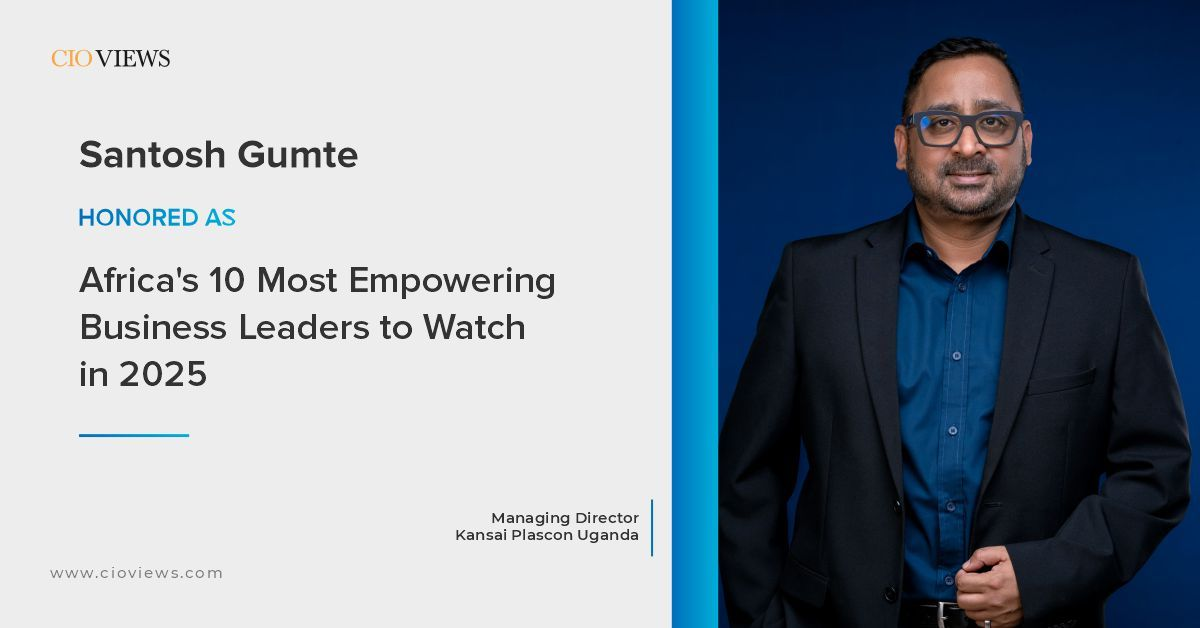
You’re recognised among Africa’s “10 Most Empowering Business Leaders to Watch in 2025.” What does empowerment mean to you in practical terms?
Empowerment is the foundation of a sustainable, progressive business culture. It means creating an environment where team members feel trusted and capable of driving success.
When people have ownership, they are motivated to think outside the box, innovate, and perform at their best. Practically, this requires open communication and the free flow of ideas across all levels of the company.
Environmental sustainability has become a key performance driver. What innovations has Plascon introduced to reduce environmental impact?
One of the harmful components historically associated with paint is lead. Over the years, we have worked to make our paints lead-free. All our products are also free of volatile organic compounds (VOCs). In the past, freshly painted houses had a strong pungent smell; that is no longer the case.
We also ensure most of our paints are water-based. We sell significant volumes of water-based products and are investing heavily in R&D to convert previously solvent-based products into water-based ones, such as gloss paints and woodcare varnishes.
Plascon has maintained water-treatment policies and facilities for more than 25 years and continues upgrading them. Both our Namanve plant and Second Street Industrial Area plant treat water in-house to ensure zero contamination of groundwater and soil.
NEMA recently awarded Plascon the National Sustainable Environment Award in the paint factories sector for outstanding wastewater and chemical-waste management.
We also participate in broader conservation initiatives. As we shift from traditional CSR to a more integrated ESG approach, we are focusing on long-term sustainability actions such as tree planting. This year, for World Environment Day, we donated 1,000 trees for planting in Mabira Forest as part of a wider target of planting 10,000 trees.

What’s Plascon’s level of engagement in community programmes, and how do you ensure they deliver lasting social value?
Social and economic empowerment is a fundamental pillar of our business. Each year, we invest up to UGX 2 billion in charity and community projects.
We train up to 10,000 painters annually in Uganda and extend these trainings to Eastern DRC, South Sudan, Burundi, and Rwanda, equipping young people with employable skills.
In partnership with nonprofit organisations, we donate paint and painting services to schools, hospitals, health centres, churches, mosques, and police stations. These efforts help ensure that communities operate in clean, dignified spaces.
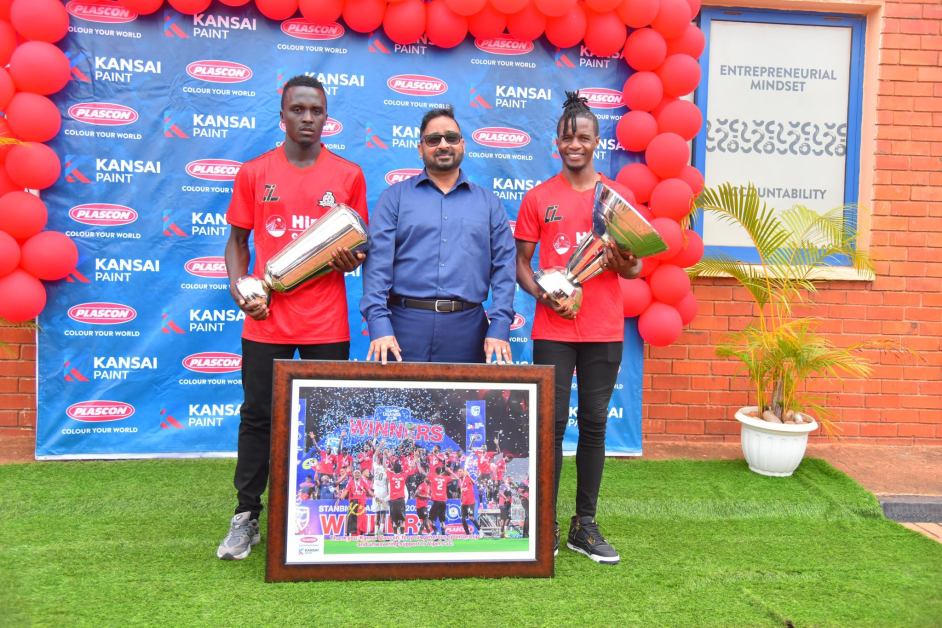
We also support talent development through sports sponsorships across football, rugby, tennis, cricket, netball, badminton, swimming, motorsports, and athletics. Most recently, Plascon partnered with the Uganda Olympic Committee to support athletes at the 2024 Paris Olympics.
Culture and heritage matter deeply to us. We partner with Buganda, Tooro, Busoga, and Bunyoro Kingdoms on projects ranging from joint tree-planting to health camps and maintenance of cultural sites. We believe culture is central to building a tolerant, civilised society.
Looking ahead, where do you see the biggest growth opportunities in Uganda and the region?
Uganda is one of Africa’s—and the world’s—fastest-growing economies. With large-scale infrastructure investment, the real-estate sector is expanding rapidly.
Oil projects are taking off soon, which will bring an influx of expatriates and migration into oil districts. This will create demand for housing, schools, hospitals, and supporting infrastructure—opportunities that naturally extend to Plascon.
AFCON 2027 will also drive construction and renovation activity. I am proud to say Plascon is the paint provider for the National Stadium in Hoima, positioning us well for upcoming demand.
Finally, what advice would you give to emerging African business leaders who want to blend profit with purpose?
Profit and purpose are not opposing forces. African business leaders should learn to merge commercial success with meaningful impact.
The goal should be to build a better Africa, growing profits while prioritising people: staff, customers, suppliers, and communities. And we must also do our part in preserving the planet.