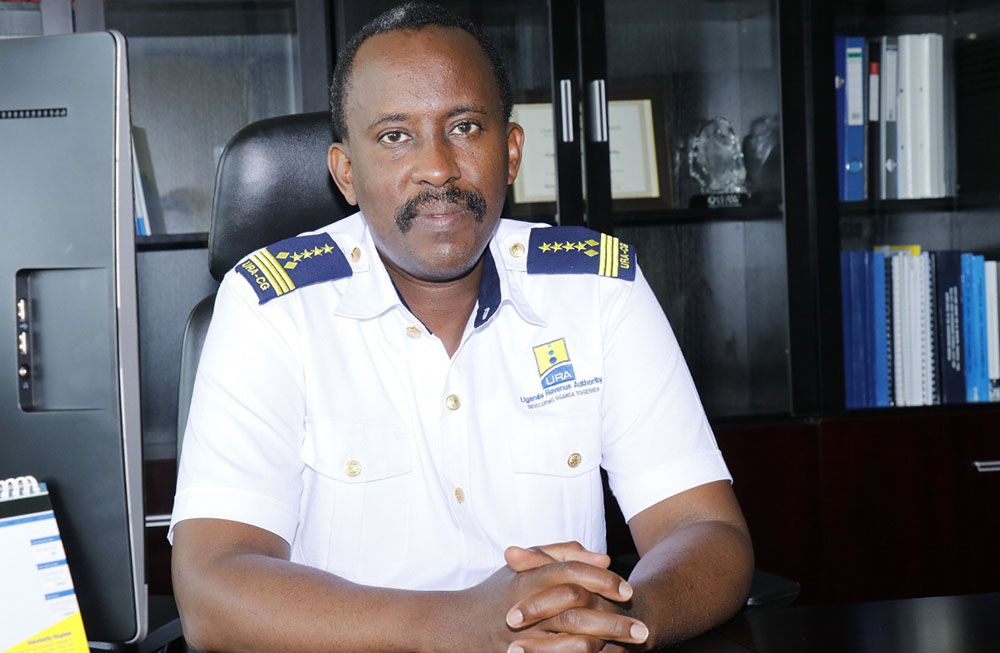
By John Rujoki Musinguzi
The Budget speech for FY 2021/22 presented on 10th June 2021, highlighted the fiscal strategy for Financial Year 2021/22 and the medium-term which aims to create resources to finance priority interventions, while maintaining fiscal and debt sustainability. It is premised on mobilizing a higher level of domestic revenue and enhancing returns from public investment.
The Resource Envelope required for Financial Year 2021/22 is UGX 44,778.8 billion and of this domestic revenue required amounts to UGX 22,425 billion of which UGX. 20,837 billion will be tax revenue and UGX 1,588 billion will be Non-Tax Revenue.
This is still only 13.8% of GDP an increase of 0.7% of the current GDP.
The increase in tax collections will be realized from an improvement in the level of economic activity, increased efficiency in tax collection by Uganda Revenue Authority (URA) through strengthening compliance and enforcement, as well as new tax measures and administration reforms.
How URA has re-positioned to deliver on her Mandate
In order to deliver on the expectations from Government in the medium and long term, URA has re-positioned herself by redefining her Mission, Vision and Core values, while placing special attention to the integrity of our staff, processes and systems.
We believe that it’s through this that we shall be able to improve service offering to our esteemed Clients, re-build URA’s Credibility, improve Compliance levels and ultimately deliver Uganda from Economic dependency.
New Vision: “A Transformational Revenue Service for Uganda’s Economic Independence”
 She Walks: Purposeful Strides, Scaling Hills in Heels—and Why Women’s Progress Matters for Africa’s Future
New Mission: “Mobilize Revenue for National Development in a Transparent and Efficient Manner”
New Values:
- Patriotism – Our actions shall be driven by a sense of devotion to our organization and motherland and a willingness to sacrificially serve.
- Integrity – URA’s people, processes and systems serving as promised. Every task, conversation, encounter and learning opportunity shall be met with honesty and the desire to do what is right.
- Professionalism – URA shall develop competent, dependable, responsive, productive, innovative, agile and collaborative staff that delivers excellent services.
Measures to be implemented:
In order to meet and exceed Clients and Stakeholder expectations, align with Government frameworks like the NDP111 and the Domestic Revenue Mobilisation Strategy (DRMS), URA has prioritised the following interventions to be implemented both in the short and medium term:
- Process Management Enhancement – As an organization, we are continuously re-engineering our business processes so as to ensure consistency, simplicity, reduced compliance costs, improved efficiency and improved service delivery. This will enable our clients to meet their tax obligations and also enable us to increase the taxpayer register, specifically we aim to;
- Strengthen tax arrears management and recovery, (enhanced reconciliation of taxpayer’s ledgers to make it easy to pay the right tax due)
- Enhance data analysis through interfaces with other Government information systems to enhance taxpayer compliance; (New TIN registration process is now interfaced with NIRA and URSB).
- Continue to implement key smart Information Technology business solutions such as the Digital Tax Stamps (DTS), Electronic Fiscal Receipting and Invoicing Solution (EFRIS) and also roll out others like the Bonded Warehousing Management System, the Electronic Single Window (ESW), Debt Management System and many more.
- Enforce enhanced licensing requirements for clearing and tax agents and bond operators, (support taxpayers identify quack agents that may affect their respective businesses or defraud them while causing hemorrhage to Government revenue)
- Improve detection of smugglers using non-intrusive inspection equipment (we are increasing the number of scanners to over 44 in the medium term as well as Boats and other electronic surveillance systems).
- Leverage the use of Technology and Data analytics – We are purposing to improve Information Technology (IT) reliability, security and integration to improve operational practices, allow information to be obtained faster and more efficiently and support new value added offerings. We have also purposed to utilize data analytics to enhance our efficiency in evidence-based decision making. Included among others is;
- Integrated Services Enhancement program(ISSP); Through this program we will improve Quality of Service by improving service availability, responsiveness, accessibility, transparency, predictability and ambience. The first phase which is a modernized contact center, has been rolled out and will ensure that all clients who can call the URA toll free are handled and call backs for any dropped calls addressed. There is a self-help option for Tin Reset or unlock account as well as an option for inquiries and whistle blowing. This has been initially implemented in two languages but will be enhanced to include other languages soon.
- Integrated Solution for Tax Administration (ISTA); Set out to transform domestic taxes business processes (integrated URA), by providing a suitable solution and working environment that meets the ever-changing client needs and optimizes revenue yields while being cost efficient in tax administration. It will lead to raising of additional revenues to support the government’s Budgetary position while encouraging a healthy flow of investment; addressing issues of fairness and transparency in the tax system
- Geo Spatial Intelligence tools for revenue mobilization from all tax heads.
- Enhanced capacity at the Science and Forensics Laboratories for better service delivery and improved compliance actions. URA purposes to conduct laboratory tests to establish constitution of taxable imported items and carry out scientific derivations of manufacturing input output ratios for tax purposes.
- Improvement in Tax Education – Review the scope of Tax Education, simplification and institution of mobile taxpayer services. This will include among others;
- Mobile tax Offices (Tujenge Uganda Tax Education and Services Buses – 2 buses have so far been procured) for registration, education and compliance.
- E-learning portal for clients to deliver and administer self-paced hands on training that can be accesses electronically by the public.
- Investment in URA TV to increase the virtual reach to our clients, through TV talk shows, webinars, debates etc.
- Secondary School Tax curriculum
- Work with Civil Society and other Government MDAs to efficiently and effectively deliver tax education to the population.
- Use of social media platforms to reach out and educate the public on taxation.
- Optimize Stakeholder engagement and participation in revenue mobilization: Our mission is an enormous task that URA cannot manage alone and therefore needs to work with different partners/stakeholders. These stakeholders are very crucial during taxpayer education, revenue mobilisation, tax policy formulation process among others. URA has purposed to map and profile stakeholders leveraging from both local, national and International leaders; civil society; International Sister Agencies etc. Specifically, URA seeks to;
- Leverage and create synergies with Political leaders, Influential leaders, academia, Development Partners, cultural leaders, umbrella associations, law enforcement arms and Security agencies among others. With these synergies URA hopes to address the social contract, citizenry responsibility and change management in terms of tax compliance.
- Leverage the Government Parish Model.
- Encouraging taxpayers to embrace the voluntary disclosure avenue by doing a tax health check and cleaning their tax accounts with us without being penalized.
- Faster and softer prosecution of non-compliant taxpayers especially with the adoption of the Alternative Dispute Resolution (ADR) as an alternative mechanism to settle tax disputes amicably. (in appreciation of Covid19 impact).
- Automatic exchange of Information; through the support of Government, URA has purposed work with the Global economy participants to put an end to bank secrecy and tax evasion through global tax cooperation.
- Deepen Research to support Tax Base Expansion and Maintenance Researchespecially in areas of new revenue streams and policies. Such as Green taxes, Digital economy – Digitax, land, mining, oil & gas, property, environment etc.
- Facilitate trade through Customs modernisation: Set out to harmonize customs procedures and systems to improve cross border trade, collaboration between government agencies, clearance time, reduce cost of doing business, build a robust international trade risk management system that will leverage on reengineered and automated processes making the international supply chain more secure by managing risks, rewarding compliance, facilitating trade and enhancing revenue generation. Some of the projects under this are;
- Uganda Electronic Single Window (UESW) – Phase 2
- Authorized Economic Operator- Enterprise Risk Management (AEO-ERM).
- Active participative role in the World Customs Organisation guiding frameworks.
- Improve our people and Governance – This will entail among others;
- Developing the desired URA staff culture,
- Integrity enhancement programme implementation,
- Structural review and functional alignment, (increase in staff numbers by 600 and above to improve on URAs footprint)
- Enhanced Institutional Memory and Knowledge Retention, introducing multi-dimensional selection and recruitment assessment for the different levels.
Ultimate Goal is to Maximize Revenue:
The outcome objective of URA is to raise enough revenue to fund government expenditure and eliminate donor dependence. We shall strengthen timely revenue reconciliation and reporting. We shall strive to put our scarce resources to optimal use by ensuring financial prudence at all times so as to derive maximum outputs. Our desire is to raise at least 1% of GDP from Domestic resources on an annual basis. We call upon all Ugandans to join us on this journey to economic independency.
John Rujoki Musinguzi is Commissioner General – Uganda Revenue Authority