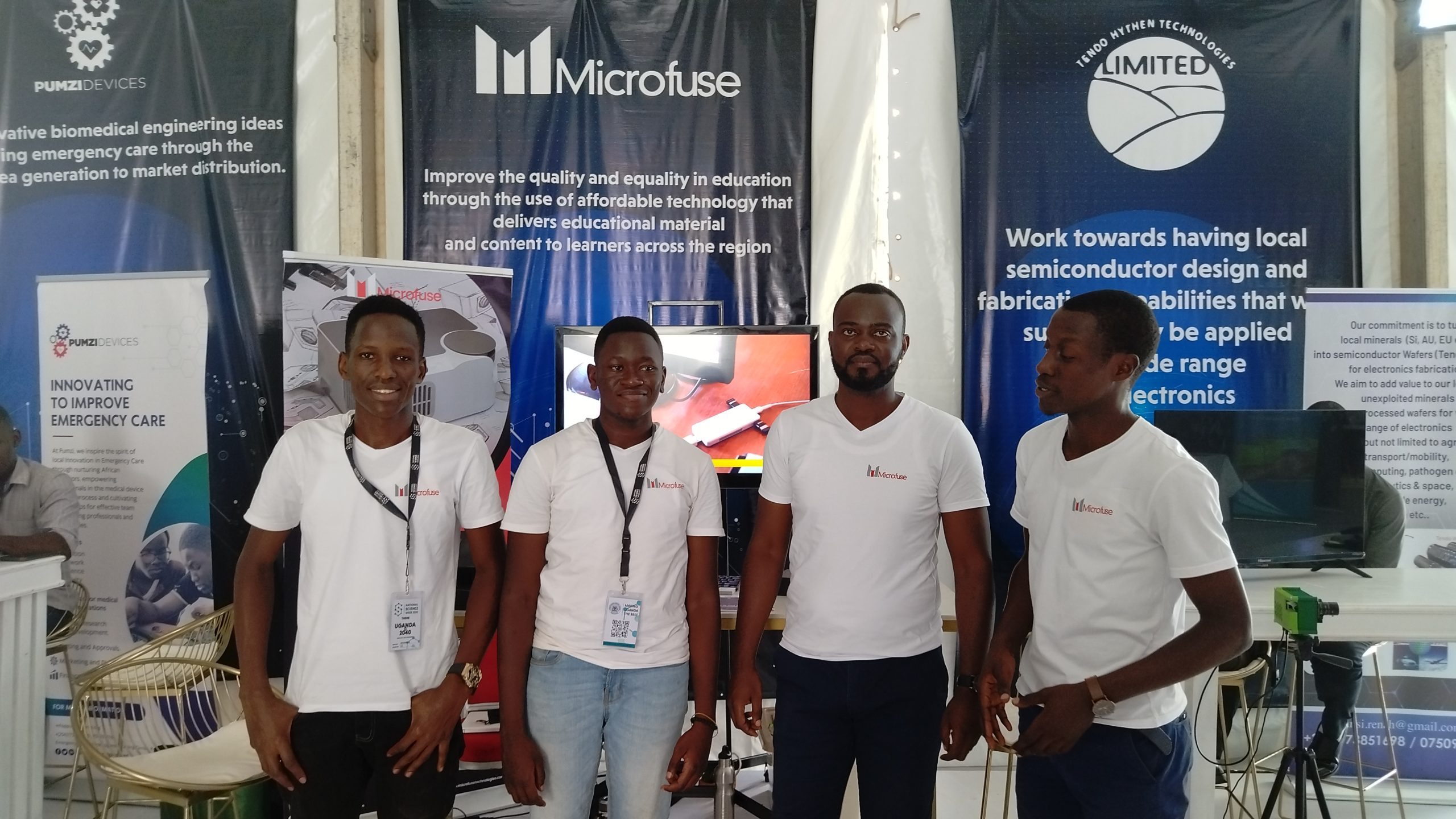
Ivan Karugaba will forever remember 12th April 2023. He was resting at his home in the evening and just like so many people that are into business, resting doesn’t mean not checking your email. He whipped out his phone and opened his Gmail app. He was ecstatic to find out that his startup, Microfuse, had gotten into Qualcomm’s inaugural Make in Africa mentorship program. “The first person I shared the news with, was my wife!” Ivan tells me.
Ivan had got to know of the program while scrolling through his LinkedIn. He decided to apply immediately and didn’t think much of it after that. But his startup made it to the next round where they had to impress a committee of experienced judges that Microfuse, had what they were looking for in a one-on-one interview.
“I was under pressure for the one-on-one. On that same day, we were hosting the Science, Technology and Innovation Minister Hon Monica Musenero at our new design facility. She took a long time to arrive and I was nervous her arrival would collide with the one-on-one. When she came, I took her around the facility and then ran off. I didn’t even get a chance to take the group photo.” says Ivan.
Ivan, a mechanical engineer started Microfuse in 2015. The startup designs hardware devices for both internal use and third-party clients. The startup has worked with clients both in Uganda and across the borders. For most of the designs, they have been manufacturing them from China just like Apple does, but they hope to bring the manufacturing home.

Qualcomm, established in 1985, is one of the world’s biggest technology companies with a valuation of $118 billion. It owns critical patents for technologies like 4G and 5G. The company’s products are used in a wide range of devices, including smartphones, tablets, laptops, and wireless infrastructure. Qualcomm also provides software and services to help its customers develop and deploy wireless products.
It launched the Make in Africa program, an equity-free mentorship program that identified 10 promising early-stage startups in Africa that are “applying advanced connectivity and processing technologies to innovative end-to-end systems solutions, including hardware,” Qualcomm will provide these companies with business coaching, access to engineering consultation for product development, and guidance on protecting intellectual property.
 The Tide is Turning: Kampala Women Step Boldly Into Leadership at 2026 Dominate Conference
Ivan is expecting a lot of benefits from attending the program. “We expect our products to become better. When you learn from someone that is better than you, you will become as good as they are or even better. Also, our brand will be known because Qualcomm is a global company and thus, we could collaborate with other companies across the globe. Qualcomm will be the platform we need.”
Microfuse will be joined by another Ugandan startup, Kaara. Kaara was founded by Geoffrey Mutabazi, and they have carved out a niche for themselves in the market, building e-bikes. “Karaa is building electric bicycles for last-mile transportation in Africa,” Geoffrey tells me in a phone conversation. “ Our bicycles are smart and efficient by leveraging a dynamic pedal assist system that delivers the right amount of power to the rider according to their weight and the terrain. This enables our bicycles to cover 60-100 km on one charge and can be recharged using a Type C charger. I believe the fact that we are already making our products smart and connected helped us stand out.”

Geoffrey got to know about the program from one of his mentors, Geoffrey Kiboneka who is based in San Francisco. “He, (Geoffrey Kiboneka) told me about how the program would improve our tech and develop the e-bike even further. So I went into the application and interview with this in mind, and I’m glad it’s finally coming to life” Geoffrey added.
He is also excited to join the program because of possible synergies between Kaara and Qualcomm in regard to their connected vehicle solutions. Qualcomm is building the Snapdragon Digital Chassis, which is a comprehensive set of cloud-connected automotive platforms for vehicles. Mutabazi believes, as a micro-mobility startup, they will benefit a lot and hopes to use the knowledge acquired to make Kaara products “smarter” and also to scale them to more countries.