Fuel supply is working better than it used to, but only just, according to data from the Office of the Auditor General.
The numbers suggest progress, yet they also reveal how thin the margin for error remains.
In just less than a year, Uganda National Oil Company (UNOC) has strengthened its role in the downstream petroleum supply chain, particularly in the importation of high-demand fuels.
This is evident from the fact that “the Company exceeded the target import volume for Automotive Gas Oil (AGO) and Premium Motor Spirit (PMS) by 84,232 cubic meters and 97,623 cubic meters respectively.” AGO is essentially diesel fuel, and PMS is petrol (gasoline).
The overperformance points to improved planning, procurement, and execution capacity in products that directly affect transport costs, inflation, and overall economic activity.
However, this progress has not been uniform across all petroleum products.
The company “only achieved 154,432 cubic meters out of the planned 213,591 cubic meters of industrial kerosene and aviation fuel, leading to a variance of 59,159 cubic meters”.
The shortfall “was attributed to delayed importation of JET A1(aviation fuel).”
This disparity reveals a structural weakness in handling specialized and time-sensitive fuels, particularly aviation fuel, where supply reliability is critical for trade, tourism, and logistics.
It suggests that while UNOC is increasingly effective in mainstream fuel supply, its systems remain vulnerable in segments that require tighter coordination, sufficient buffers, and logistical flexibility.
And that’s why Auditor General Edward Akol emphasizes in his 2025 audit that “these operational outcomes must be assessed against UNOC’s statutory mandate.”
Objective three of the Petroleum Supplies Act, Cap 163, is to “facilitate UNOC to import all petroleum products, destined for the Ugandan market, to guarantee security of supply of petroleum products in the country.”
This goes beyond the physical act of importation. It assumes the presence of adequate storage, logistical flexibility, and the ability to respond quickly to disruptions along the supply chain.
Structural and operational constraints
Yet, structural and operational constraints continue to undermine this mandate.
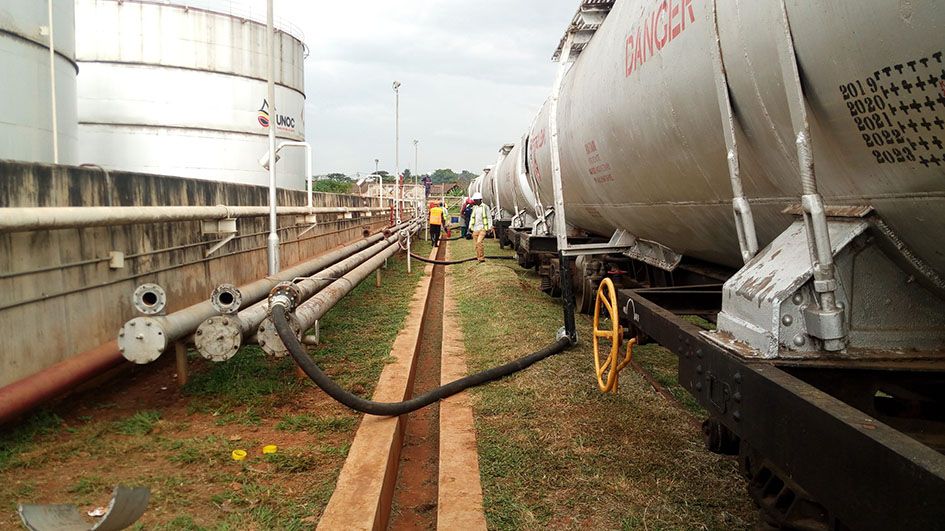
One of the most binding constraints relates to storage capacity. UNOC’s storage capacity at Jinja Storage Terminal (JST) is limited to 30 million litres, while the country’s average daily petroleum demand is approximately 6.5 million litres.
In effect, JST can “serve the country for approximately 4 days.” Such a narrow buffer leaves little margin for error in a fuel supply system exposed to shipping delays, regional supply interruptions, and global price volatility.
The risk is compounded by how JST is currently utilised. UNOC has “converted the JST facilities into a commercial hub to supply other marketing companies, with trade stocks averaging 5.2 to 7.5 million litres per month.”
These volumes are essentially equivalent to daily national consumption, meaning that operational trade stocks are substituting what should otherwise be strategic reserves.
As a result, “this leaves no room for strategic buffer stocks.” The data reveals a critical contradiction: a facility central to national energy security is being used primarily for commercial throughput, significantly weakening its function as a shock absorber.
Storage constraints are further exacerbated by logistical limitations upstream. From the review of management reports, it was noted that Uganda faced restrictions on delivery vessel sizes for PMS, capped at 58,000 metric tonnes with a maximum 5% tolerance.
Whereas UNOC would typically prefer larger vessels to meet market demand efficiently and enhance supply security, this restriction constrains its ability to leverage the operational and economic advantages of larger shipments.
Smaller vessels mean more frequent deliveries, tighter scheduling, and greater exposure to delays, pressure that ultimately spills over into already limited storage facilities.
UNOC explained to the Auditor General that it continues to engage relevant stakeholders to lift vessel capacity restrictions, especially for PMS deliveries.
As a result, “in November 2025, UNOC was allowed to deliver an additional 25,000 metric tonne vessel of PMS.”
 Ruparelia Group Wins Key Entebbe Land Case, Clearing Path for the New Mega Speke Resort and Convention Centre, Entebbe
In addition, interventions by Kenyan counterpart stakeholders are under way to allow UNOC to bring in the preferred vessel size of 85,000 MT, up from the current 58,000 MT.
These include increasing pumping rates from Mombasa to Nairobi and Western Kenya depots to improve evacuation of fuel from Mombasa terminals, and enhancing PMS storage capacity in Western Kenya.
If implemented, these measures would ease logistical bottlenecks and reduce pressure on Uganda’s limited storage infrastructure.
The implications of the current system are significant. As observed by Akol, “the limited storage capacity exposes the country to high risk from both external supply shocks and internal operational disruptions, potentially threatening national energy security.”
In such a tightly balanced system, even short-term disruptions; whether from vessel delays, pipeline constraints, or regional logistics, can quickly translate into shortages or price instability.
UNOC acknowledges these risks and plans to expand storage capacity by constructing “an additional storage tank for PMS to bring the total capacity of the terminal to 40 million litres,” which would still cover “only five days’ stock of the country’s demand.”
More significantly, plans are underway to construct the Kampala Storage Terminal (KST) with a capacity of 240 million litres.
Once completed, the combined capacity of JST and KST would reach 280 million litres, sufficient to cover “up to 40 days’ worth of the country’s daily consumption.”
This would mark a decisive shift from a just-in-time supply system toward one anchored in strategic reserves.
The financing problem
Yet infrastructure alone will not solve the problem. “The only challenge that will remain will be on how to finance the stockholding for the 40 days estimated at UGX 1.3 trillion,” Akol notes.
This financing requirement underscores the scale of capital needed not just to build storage facilities, but to fill them and maintain meaningful national reserves over time.
These storage and logistics challenges are closely linked to broader financial constraints facing the company.
The Auditor General’s report notes that “UNOC’s strategic plan for the 2019/2020 financial year to the 2023/2024 financial year was underfunded by UGX 358.65 billion (17.82%) from the required funding of UGX 2,012.45 billion.”
This underfunding directly affected the implementation of key projects, as “this affected the implementation of the company’s key projects such as developing, operationalizing, and managing the Kabalega (Kabaale) Industrial Park and refurbishment of Jinja Storage Terminal.”
Delays in capital projects have reinforced the same structural weaknesses that now constrain storage and supply resilience.
Execution outcomes reflect these pressures. During the 2024/2025 financial year, “out of the 64 strategic initiatives planned, 28 (44%) were fully achieved, 23 (36%) were partially achieved, and 13 (20%) were not achieved.”
Budget and revenue performance further tightened fiscal space. “Out of the total board-approved budget of UGX 744.26 billion … only UGX 578.18 billion (77.8%) was funded,” while internally generated revenue fell short, and absorption remained limited at 63%, largely due to delays in recruitment and unrealised anticipated business growth.
Despite these constraints, UNOC recorded a strong financial turnaround, “recording a profit of UGX 359.7 billion, a turnaround from a loss of UGX 3.7 billion reported in the previous period.”
The improvement was “attributed to the company acquiring the relevant licenses for the importation,” demonstrating it potential once regulatory and operational barriers are addressed.
UNOC’s recent gains show a company strengthening its operational and commercial footing, but storage and logistics gaps remain critical in the energy security architecture.
Strong import performance and profitability cannot substitute adequate reserves, flexible logistics, and resilient infrastructure.
“UNOC should fast-track the development of additional storage facilities and continue engaging the relevant stakeholders to provide funding for the national strategic reserves,” and to lift vessel size restrictions.
Without decisive progress on these fronts, fuel supply system is feared to remain operationally improved, yet structurally fragile.