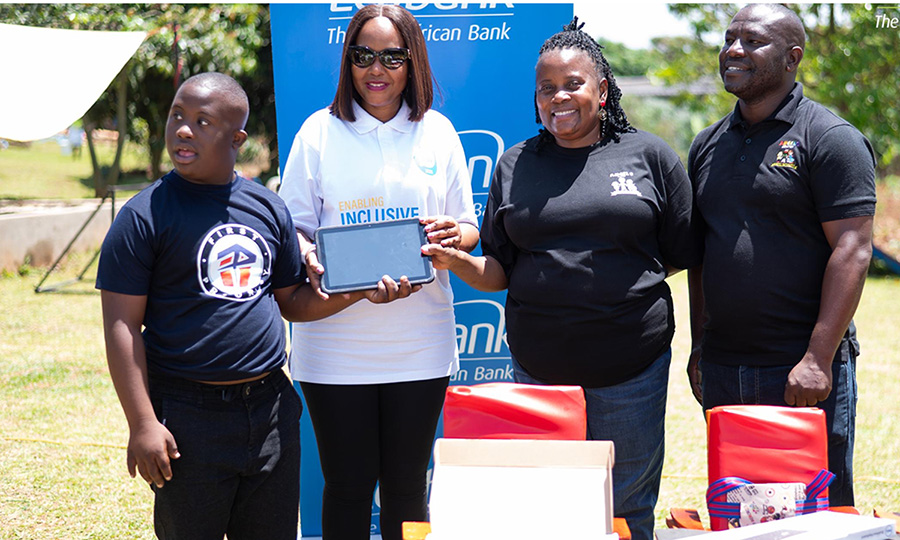
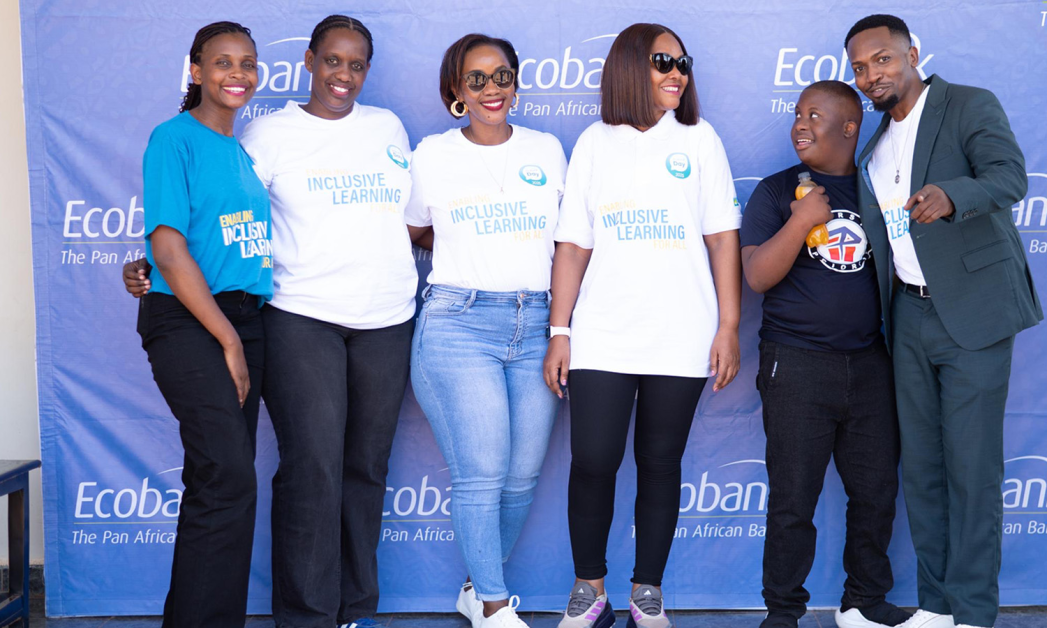
On a bright October week that also marked four decades of Ecobank’s presence in Africa, Ecobank Uganda chose to celebrate not with ceremony for its own sake, but with an investment in children often left at the margins of education systems.
At the heart of the bank’s 13th Ecobank Day activities was a simple proposition: that inclusive, quality learning isn’t a charitable add-on, it is a development necessity, and technology can help make it real.
A CSR tradition that has grown into a movement
Since launching Ecobank Day in 2013, the Ecobank Group has turned a single day of corporate social responsibility into an annual, cross-border act of social partnership.
Employees, the Ecobank Foundation, and local partners mobilize around a theme that speaks to urgent community needs: health, education, youth empowerment, and then translate it into tangible support at the country level.
This year’s edition landed with added meaning. It was not only the 13th Ecobank Day; it also coincided with Ecobank’s 40th anniversary, a milestone that frames the bank’s social agenda as part of a longer African story of growth, resilience, reinvention, and responsibility.
Enabling inclusive learning for all
This year’s theme: “Enabling inclusive learning for all”, places children with disabilities at the center of the conversation. For Ecobank Uganda, it was a deliberate continuation of the Group’s ongoing campaign,
“Transforming Africa through Education.” The logic is rooted in equity: if a child has a right to education, then disability must not be a barrier to accessing it.
Grace Muliisa, Managing Director of Ecobank Uganda, positioned the theme not as an aspiration but as a responsibility shaped by real experience.
Over the past two years, the bank has supported inclusive education projects with a strong digital angle, providing digital equipment used in blind football and facilitating annual internet connectivity for children with disabilities.
These aren’t symbolic gestures. They are infrastructure support in spaces where resources are scarce, and needs are specific.
Technology and AI as learning enablers
For the final year of the Transforming Africa through Education campaign, Ecobank Uganda is widening its ambition through a partnership with Simplifi Networks. Together, they aim to reach more than 100 beneficiaries at the Angels Centre in Wakiso District, a school supporting children with Down Syndrome and other developmental disabilities.
What made this partnership notable was its intent: not merely to donate, but to demonstrate how technology, including artificial intelligence, can expand the learning possibilities for children who experience traditional classrooms as exclusionary.
In an education ecosystem where many inclusive schools still struggle for basic tools, the bank is signaling that digital access for children with disabilities is not optional. It is foundational.
The donation: practical tools for real classrooms
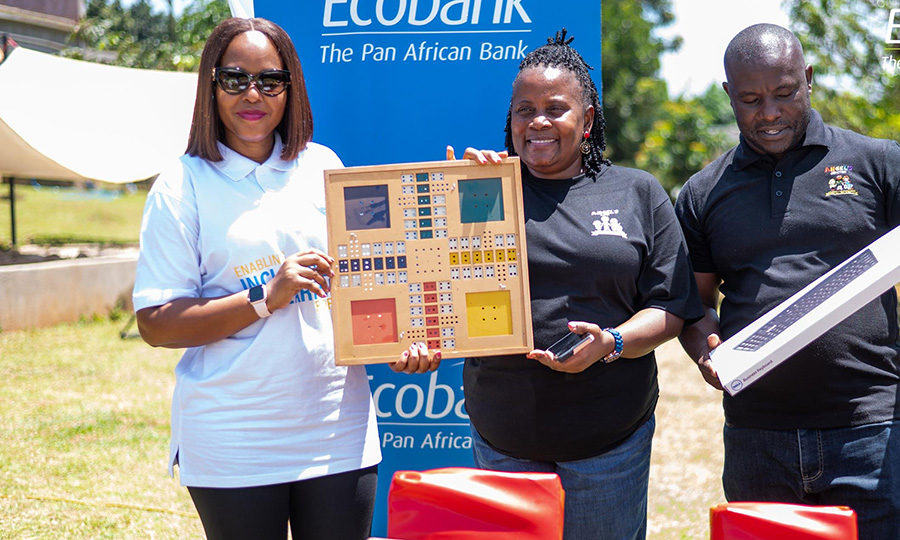
The Ecobank Day 2025 in Uganda culminated in a donation package designed to improve both learning and everyday classroom participation.
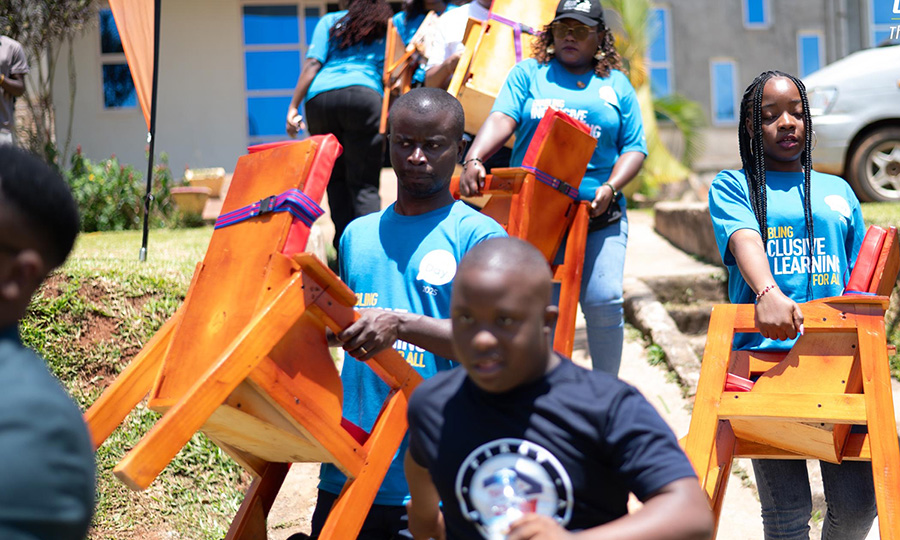
The bank, working with Simplifi, delivered 25 tablets to support digital learning, assistive tools tailored for learners with disabilities, specialised chairs and other support items to improve comfort and accessibility, and essential materials to strengthen the overall learning environment at the Angels Centre.
The choice of items reflected a realistic view of inclusion: a tablet alone does not solve learning barriers if the child cannot sit comfortably, cannot access adapted tools, or lacks a supported environment.
By bundling technology with assistive and physical supports, the intervention recognizes that inclusive education is a system, not a single product.
 Stanbic Accelerates Uganda’s Digital Future with “Kikole Ku Speedii” Campaign
A conversation bigger than one school
Ecobank Day is a local action inside a continental framework. Ahead of the donations, Ecobank hosted a pan-African webinar on 9 October 2025 with the Global Partnership for Education titled “Can Technology Break Down Barriers to Inclusive Education?”
The session convened experts, teachers, NGOs, and parents to explore how assistive technologies and community support can create a more equitable education system.
This is where the bigger story sits: the bank isn’t only resourcing a school; it is trying to shift the narrative about disability, learning, and digital equity across Africa.
The webinar acknowledges hard questions about affordability, training, local relevance of tools, and the gap between innovation and classroom realities, and invites the people closest to the problem to shape solutions.
Why inclusive learning is a national and regional priority
Uganda’s education progress is often told through enrollment numbers and infrastructure expansion. Yet children with disabilities remain disproportionately underserved due to stigma, limited specialist teachers, inaccessible facilities, and weak digital reach. Ecobank Uganda’s Ecobank Day focuses on the intersection of all these challenges.
The bet on technology is especially significant in an era when education tools are shifting quickly, from physical textbooks to online content, adaptive learning apps, and AI-supported instruction.
Without intentional inclusion, that shift risks widening inequality: children already left behind could be left further behind in digital systems not designed for them.
Ecobank is essentially arguing that inclusive education must evolve alongside educational technology, not after it.
The human face of corporate citizenship
CSR initiatives can sometimes feel distant; polished, periodic and detached from daily life. Ecobank Day tries to counter that by making staff participation central.
“All local Ecobankers are proud to give back to the community,” Muliisa noted, framing employee involvement as part of the bank’s culture rather than a PR schedule.
The narrative here is one of proximity: bankers stepping into classrooms, listening to teachers, meeting learners, and seeing inclusion not as a policy document but as a lived reality.
It is a reminder that successful corporate responsibility work is not only about money, but it is also about relationships, presence, and continuity.
A 40-year milestone with a forward message
As Ecobank marks 40 years across Africa, Ecobank Day 2025 quietly pointed to the next 40: a continent where growth is measured not just by capital flows but by who benefits from social progress.
Supporting inclusive education is an investment in the future workforce, future innovators, and future citizens. And by emphasizing digital tools, AI, and assistive technology, Ecobank is aligning inclusion with the practical direction of modern learning.
Ecobank Day 2025 in Uganda delivered two intertwined messages. First, inclusion is a development duty, not charity. Second, technology can either close gaps or widen them; it depends on how intentionally we deploy it.
In choosing Angels Centre, in bundling tablets with assistive tools, and in bringing the conversation to a continental forum, Ecobank Uganda is staking out a clear position: the future of education must be accessible to every child, and the digital future must be inclusive by design.