In Uganda’s evolving entrepreneurial landscape, where the promise of economic independence often fades at the gates of gender inequality, dfcu Bank is quietly building a different gateway.
One designed not just for access, but for ascent. Through its Women in Business (WiB) programme, the bank demonstrates a conviction that unlocking the potential of women entrepreneurs is not just good ethics but smart economics.
As the country grapples with a tight credit environment, structural bottlenecks, market informality and generational financial exclusion, dfcu’s approach is both timely and catalytic.
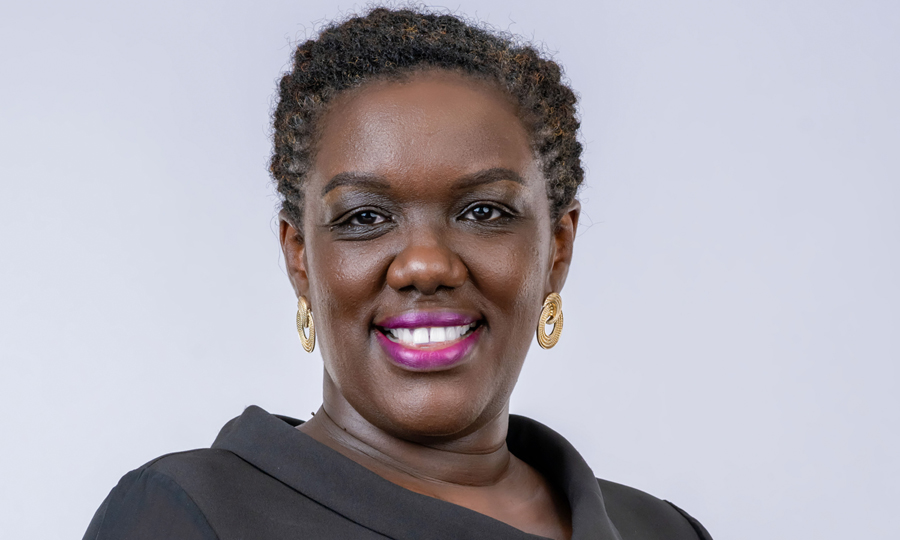
Steering this vision is Doreen Atuheire Kabachelor, the quietly forceful Head of Women in Business at dfcu Bank.
She leads with a simple belief: women do not need new ambitions—they need new systems.
“We launched in April. After launching, we started training in five regions. We went to the west, the northeast, and ended up here in Kampala,” she says.
The Rising Woman initiative, now in its seventh season, is rooted in the WiB programme that began in 2007, making dfcu the first bank in Uganda to introduce a women-focused banking proposition.
Cheaper loans for real businesses
A cornerstone of the programme is access to affordable credit. Atuheire says dfcu is deliberately designing financial products that reflect the realities of women-led businesses, small shops, agribusiness enterprises, early-stage manufacturers, and household-based production units that often fail traditional bank assessments.
Women who have operated their businesses for at least two years can access financing at 17% per annum, with repayment periods of two to five years.
Loan amounts range from UGX 10 million to UGX 1 billion, tailored to working capital, asset acquisition, or capital expenditure.
Eligibility covers sole proprietors, companies with at least 50% women shareholders or leadership, enterprises with predominantly female workforces, agribusiness ventures, and investment clubs.
“The next 10 years for Women in Business are about transformation at scale,” Atuheire says.
“We envision a Uganda where women entrepreneurs are not just participants in the economy but leaders of resilient, innovative businesses that create jobs and catalyse inclusive growth.”
Since 2007, the WiB programme has impacted more than 70,000 women entrepreneurs, offering tailored financial solutions including business loans, agricultural financing, and trade finance.
An ecosystem beyond credit
dfcu’s model recognises what traditional banking often ignores: capacity, confidence, connection, and continuity.
Through the WiB Advisory Centre, women access hands-on support in legal compliance, bid preparation, investment readiness, financial management, digital adoption, and export preparedness.
The bank also provides no-fee personal and enterprise accounts, investment club packages, unsecured contract financing, overdrafts, and asset finance, forming an ecosystem designed to strengthen both the business and the entrepreneur.
“Women also need mentorship, market access, and communities of practice,” Atuheire notes. “That’s why we invest just as much in non-financial services.”
This holistic strategy responds to a long-standing challenge: access to credit without capacity often traps entrepreneurs in cycles of borrowing without growth.
dfcu’s answer is an integrated ecosystem where women receive the capital and capability needed to build resilient businesses.
The GROW project, developed with the Government of Uganda and other partners, is an example of this approach, offering low-interest loans and enterprise support to women across the country.
 I&M Bank Katogo Golf Series returns with Shs 796m boost and an exciting new format
Given that many women operate informally, dfcu has redesigned credit appraisal models to reflect real-world trading patterns, including mobile-based transactions, market trading and home-based operations.
Tools such as QuickBanking and the SME Mobi Loan allow women to access up to UGX 5 million instantly, without collateral or paperwork.
These innovations address structural barriers highlighted in the Bank of Uganda Financial Inclusion Strategy Progress Review (2023), which notes that women face higher exclusion due to limited collateral, low financial literacy and socio-cultural constraints.
Breaking barriers through collaboration
Partnerships are central to dfcu’s strategy. Through collaborations with legal firms, business accelerators, exporter networks and investment specialists, the bank is bridging gaps that have historically locked women out of high-value opportunities.
“Our short-term unsecured loan solutions directly address the collateral gap,” Atuheire says. “And through collaborations with ecosystem players, we ensure women get access to everything from legal advice to export support.”
A platform for transformation
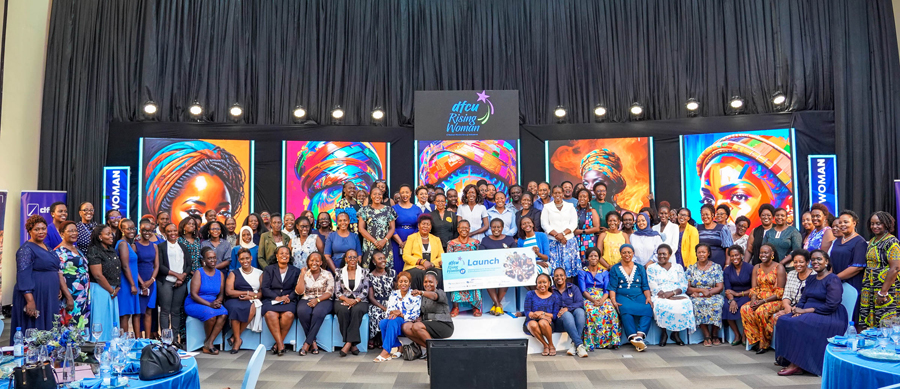
Perhaps the most vivid expression of dfcu’s philosophy is the Rising Woman initiative.
“What’s powerful is the mindset shift,” Atuheire says. “We’ve seen women who came in unsure of themselves walk out confident, capable of scaling, hiring and exporting. Some now run multi-branch businesses employing dozens.”
The initiative combines regional boot camps, proposal-writing competitions, exhibitions, mentorship networks, media visibility, prize funding and an international study tour for the top 10 finalists.
Since 2018, Rising Woman has trained over 35,000 women, directly engaged more than 60,000, and reached over one million virtually.
Vision 2030
dfcu’s long-term ambition is to embed women’s entrepreneurship into Uganda’s economic DNA.
“We want to embed women’s entrepreneurship into Uganda’s economic DNA,” Atuheire says. “That means more bank products designed for women, more investment clubs, and more women in export, manufacturing and tech.”
By aligning with national objectives, job creation, inclusive growth and enterprise formalisation, dfcu is shaping the WiB programme and Rising Woman initiative into key pillars of Uganda’s economic transformation.
To date, the WiB programme has reached over 80,000 women entrepreneurs and is recognised as a critical driver in reducing the gender gap in business.
The economy she deserves
dfcu’s Women in Business programme is redefining what banking can mean in Africa.
It is not simply moving money; it is reshaping systems that once excluded women and replacing them with ecosystems designed for their rise.
By designing for the whole entrepreneur, not just her balance sheet, the bank is creating pathways for women to build lasting wealth, lead boldly and redefine Uganda’s economic future on their own terms.
If Uganda’s next chapter is to be genuinely inclusive, it will require not only policies and products but platforms like Rising Woman, where capital meets courage, and support meets scale.
In short, it will require institutions willing not just to bank women, but to back them.