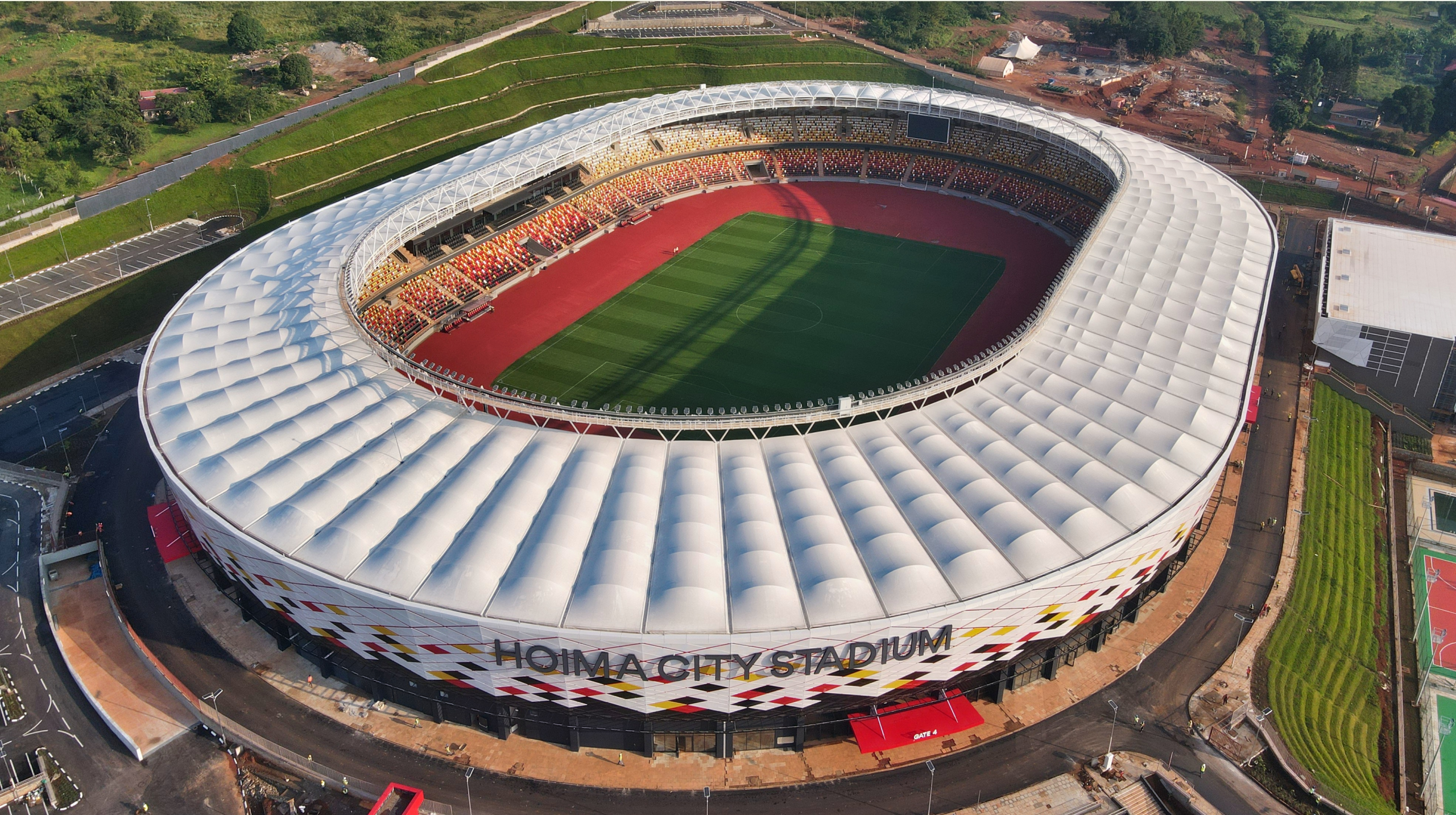
The $130 million (UGX 354 billion) Hoima City Stadium has ignited a national debate: will it be a transformative investment for Uganda’s sports and tourism landscape, or another white elephant project?
Built to host AFCON 2027, the 20,000-seat stadium stands on the outskirts of Hoima City, in Uganda’s oil-rich western region. While it symbolizes national ambition, critics question its remote location and long-term viability.
Some sceptics argue that the stadium risks becoming a “white elephant,” a massive structure underutilised due to its distance from major urban centres.
However, some proponents see it as a bold statement of Uganda’s growing petroleum wealth, turning oil reserves into an economic asset, blending national prestige with local development.
Financed through Uganda’s petroleum reserves, the stadium meets international standards and is designed for multipurpose use.
According to Ambrose Tashobya, chairperson of the National Council of Sports, the facility’s sustainability model hinges on diversified revenue streams, from sports and hospitality to corporate events and tourism.
“The indoor stadium can host multiple functions. The 12 skyboxes, for example, can each be leased at $100,000 per year, generating about $1.2 million annually,” Tashobya explains.
He adds that spaces such as restaurants, gyms, and outdoor courts will serve local and corporate users, while all revenue will flow directly to government coffers through a cashless URA system, ensuring transparency and financial sustainability.
While primarily built for football, its outdoor facilities can host rugby, basketball, volleyball, swimming, and other sports.
Beyond football
Hoima City Stadium’s revenue potential is further amplified by sports tourism.
Tashobya envisions Hoima Stadium as more than a sports venue—it’s a regional hub for tourism and corporate activity.
By attracting rugby, basketball, and swimming tournaments, Uganda could tap into sports tourism and boost local hospitality and business.
“We earn through tourism but also market the country through sport,” he notes.
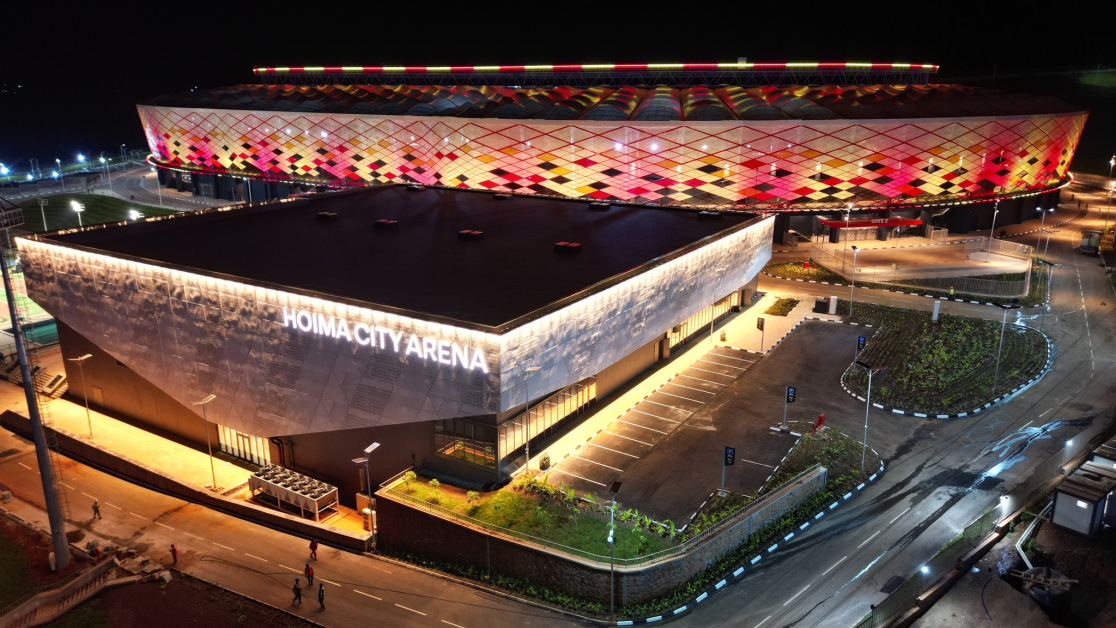
While exact revenue projections are still being calculated, government aims to recoup the $130 million investment within 10 years, demonstrating that large-scale sports infrastructure can be both economically viable and socially impactful.
Senior sports journalist Andrew Mwanguhya argues that the project’s justification rests heavily on Uganda’s successful bid to co-host AFCON 2027.
“If Uganda hadn’t secured the hosting rights, this facility would not exist,” he notes, emphasising that the tournament was the primary catalyst behind the development.
With a 20,000-seat capacity and strong government backing, the Hoima facility is seen as a strategic move to position the oil-rich region as a new sports and economic hub.
Mwanguhya argues that beyond the tournament, the stadium offers long-term promise from hosting national teams and regional camps to stimulating tourism and local employment.
However, he cautions that the real challenge lies in sustainability.
“For the project to pay off, authorities must ensure consistent use beyond AFCON,” Mwanguhya says.
He points to the need for regular league matches, concerts, and community events, supported by improved infrastructure.
The stadium’s prospects are further enhanced by the economic profile of the Bunyoro region.
 Ruparelia Group Wins Key Entebbe Land Case, Clearing Path for the New Mega Speke Resort and Convention Centre, Entebbe
Being oil-rich, the area has a growing population with substantial spending capacity, supporting potential revenue streams from restaurants, gyms, event spaces, and sports facilities.
However, one challenge that could limit the stadium’s full potential is the relative shortage of standard hotels in the region.
To fully capitalise on sports tourism, corporate events, and international tournaments, investment in hospitality infrastructure remains critical to accommodate visitors and ensure they can enjoy a seamless experience.
Lessons from South Africa’s post-World Cup stadiums
Fifteen years after hosting the first World Cup on African soil, South Africa’s stadiums stand as striking monuments to both national pride and misplaced optimism.
The country built or revamped ten world-class arenas to deliver a flawless tournament, but the afterlife of those structures has been mixed, a demonstration of how ambition collides with economics.
A March article published by Express, a UK-based news site, shows how some of South Africa’s stadiums have evolved smartly.
Soccer City in Johannesburg, the tournament’s crown jewel, remains a national symbol and a thriving business.
It hosts Kaizer Chiefs matches, Bafana Bafana national team fixtures, international rugby tests and vast religious gatherings that draw more than thousands of worshippers.
Durban’s Moses Mabhida Stadium turned reinvention into survival with part sports venue, part theme park, complete with a sky car and bungee-jump platform, sustaining tourism and AmaZulu FC matches.
Loftus Versfeld and Ellis Park stadiums avoided the “white-elephant” trap thanks to entrenched rugby and football traditions that guarantee regular crowds.
Elsewhere, the glow dimmed. Free State Stadium mostly serves rugby; its football days are long past.
Mbombela Stadium’s safari-inspired masterpiece lies half-dormant, occasionally hosting internationals but never finding a permanent tenant.
Peter Mokaba Stadium, shaped like a baobab, sits idle for much of the year.
The Royal Bafokeng Sports Palace lost its key tenant when Platinum Stars folded in 2018 and now depends on concerts and athletics meets.
Even Nelson Mandela Bay Stadium in Port Elizabeth, though busier than most, still struggles with maintenance costs despite hosting rugby and football tournaments.
The Express article captures an unexpected twist: faith has become the new filler. Stadiums built for football have morphed into sanctuaries of worship.
The broader takeaway is stark. South Africa’s World Cup delivered global prestige and modern infrastructure, but post-event planning lagged behind construction.
Cities with pre-existing fan bases and diverse event markets weathered the transition; smaller municipalities are saddled with maintenance bills and empty stands.