
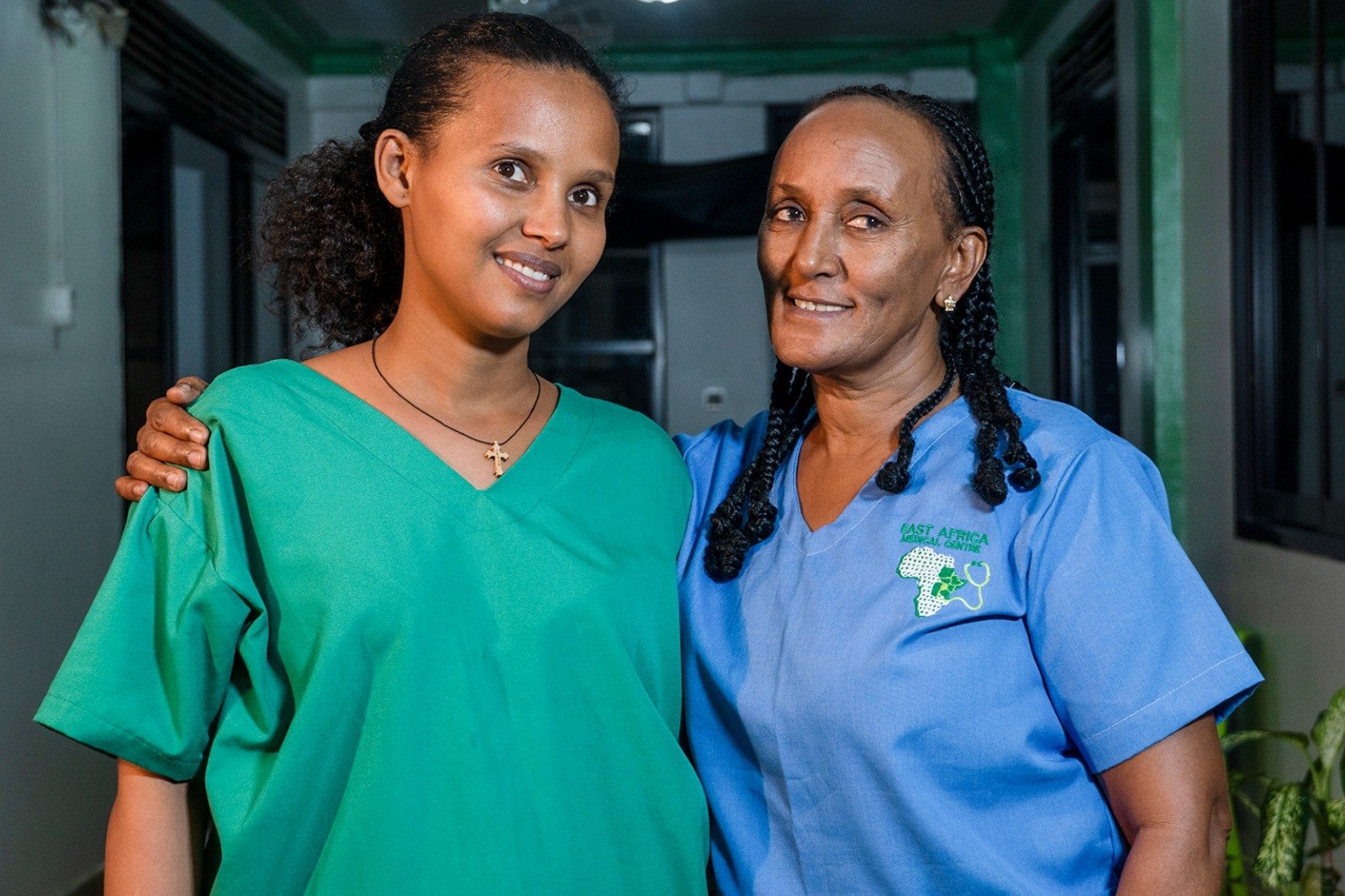
Helen Habteslasie Keleta is the Founder and CEO of East Africa Hafeshawi Medical Center, a well-established health centre that was started in January 2018 in Kampala.
She is a mother of four, and an Eritrean Refugee living in Kampala since 2016. By profession she is an engineer and up until 2016 has been working with different family construction companies.
After she came to Uganda she started living among the refugees in Kampala and noticed there is a language barrier amongst them and Ugandans.
Keleta established her business, East Africa Hafeshawi Medical Center in 2018 in Kampala, with a 5 bed capacity medical centre and expanded up to 25 bed capacity and opened two branches in different areas in order to reach all the refugees to reduce transport costs.
Her company’s vision is: To be the healthcare ‘’Provider of Choice’’ in terms of giving safe, quality, affordable high level health service and health awareness in East Africa. The company’s mission is to continually put the ‘’care’’ and to provide respect, comprehensive, trusted, compassionate and integrated healthcare services that exceeds costumer’s expectations. Today, the business employs 40 people.
“I am a refugee living in Kampala since 2016. During this time I noticed that my fellow refugee mothers were having troublesome times seeking medical care, and all this was as a result of a language barrier but also financial constraints. On many occasions, these mothers, either pregnant or with their children requested me to escort them to local medical clinics as a translator while they sought medical care. Those scenarios triggered me to think of how best I would invest in medical service delivery to lessen this growing burden which not only affects us as refugees but also the bigger local community,” she says.
She says a major problem of the refugee society is the language barrier. And when it comes to health it makes it worse.
After finding out what was the main problem, East Africa Hafeshawi Medical Center was established.
“We hired doctors and nurses who are Eritreans and Ugandans and Somalians and this has opened much-needed job opportunities. Our business delivers essential information from government health centers and gives them a space to use it freely for services such as vaccination and health awareness,” Keleta says.
The East Africa Hafeshawi Medical Center provides different types of health education and awareness through social media and through different religious centers.
She says unlike their competitors, their charges are very low because they manage communities which are constrained financially.
“We minimize their transport costs and time since we have branches at the places which there are no hospitals. We only refer critical patients. We provide all basic services at fair and affordable prices,” she says.
 Allan Chekwech Steps into Daniel Kalinaki's Big Shoes at NMG Uganda
They also attract clients through outreach programs and free medical checks. This gives them an advantage.
The company operates on a B2C model.
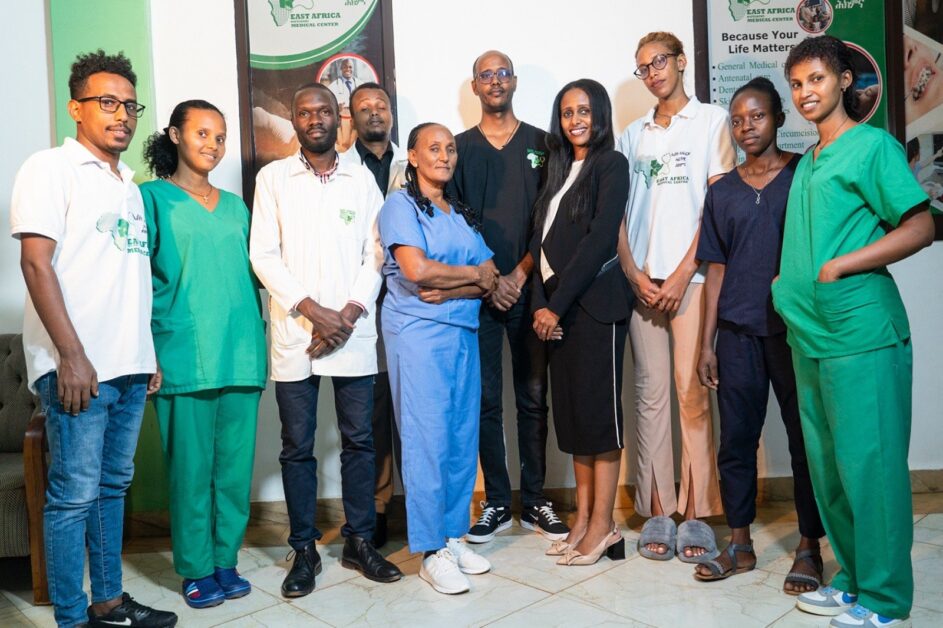
“We hire professional doctors, nurses, cashier, accountant medical and company supervisors, medical director and cleaners. Our teams are Ugandans, Eritreans, and Somalian. The company has different departments with different groups of teams, but they are all integrated. We have a lovely strong team, encouraging, cooperating, skillful, trustful, and visionary. Most of them are professionals within their specific field,” she says.
Her major challenges with business include; sudden health change of patients from normal to critical, shortage of medical instruments and drugs of their preferences and lack of technology and computer systems.
She says she has tried to overcome some of these challenges by partnering with hospitals and other diagnostic centers and delegating staff according to their talent.
“Encourage them to see the problems, decide and get new ideas under approval of medical director,” she says.
Yet her entrepreneurial journey did not start with the medical firm.
“I have never been an entrepreneur before 2018 (before this company). But I have been working as an engineer with different companies and I have worked as a construction manager with my family business for around four years. After I came to Kampala in Uganda, the experience of working at the family business encouraged me to be an entrepreneur easily,” she says.
Her future plans are to expand/open more branches by improving the capital, expand the pharmacy, work with insurance companies to attract regular clients and to introduce more medical services like imaging (x-ray, MRI and CT scans), ambulance services and home care services.
Her advice to women longing to start a business is to just start the business with any amount of capital.
“Always depend on others and always learn from your own failure and victories. Never stop enjoying whatever happens in life,” she says.