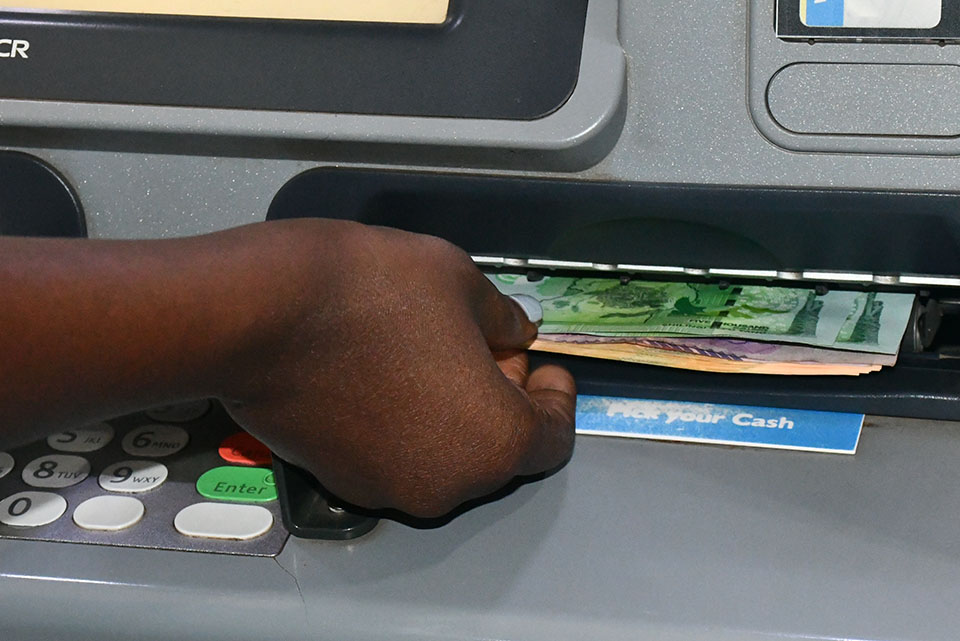
Government has abandoned a proposed 0.25% excise duty on cash withdrawals from the financial system.
The proposal, initially fronted under the 2026/27 Revenue Enhancement and Compliance Measures, was part of government’s larger plan to widen the tax base and promote a transition toward a cashless economy.
It aimed to extend taxation beyond mobile money to include bank counters, ATMs, and agent banking channels, creating what policymakers described as a “neutral” and balanced financial ecosystem.
However, following consultations with financial sector players, economists, and the public, the Ministry of Finance has excluded the measure from the Excise Duty Bill 2026 that is soon expected to be tabled in Parliament.
Permanent Secretary and Secretary to the Treasury, Ramathan Ggoobi, while reacting to our earlier story last week, confirmed the tax was not among the approved revenue measures for the coming financial year, though government may revisit the idea in the future.
“Government will undertake further analysis … on how to incentivize a gradual shift away from excessive cash transactions toward more transparent and formal financial channels,” he wrote in a comment on X (formerly Twitter).
Not a new idea
This is not the first time government has explored taxing cash withdrawals.
A February 9, 2021, letter from the Ministry of Finance to Bank of Uganda shows that similar proposals have been under consideration for years.
In its letter, the Ministry of Finance proposed that “we explore taxation of cash withdrawals from commercial banks” because “currently, mobile money withdrawals are subjected to 0.5% excise duty, but on the counter, agency banking and ATM withdrawals in commercial banks are not subjected to the same tax”.
The rationale then mirrors today’s policy thinking in which the Ministry of Finance, under the 2026/27 Revenue Enhancement and Compliance Measures, said: “This would encourage cashless transactions, promote e-commerce, improve tax compliance in addition to raising revenue.”
This historical continuity underscores that the current proposal is part of a long-running policy direction, rather than a new fiscal idea.
Why government backed down
Related
 World Bank Ready to Fund Standard Gauge Railway Project Following Talks with President Museveni
Despite its projected UGX 250 billion revenue potential, the proposal faced strong resistance on multiple fronts.
Concerns were raised about the broader economic impact, with analysts arguing that removing such liquidity from the economy could be counterproductive.
There were also fears that the introduction of a tax on all cash withdrawals would bring back experiences of the introduction of a 0.5% tax on mobile money withdrawals in 2018, which caused a decline in usage of digital financial services.
Policy contradiction
While the tax was intended to promote a cashless economy, some experts argue it risks producing the opposite effect.
Although government framed the reform as promoting fairness by aligning taxation across mobile money and banking channels, analysts maintain that taxing access to money would discourage formal financial usage, noting that sustainable digital adoption is better achieved through incentives rather than penalties.
Experts have consistently recommended that government focus on broadening the tax base instead of taxing transactions by emphasizing income and profit taxes, which are more sustainable and less distortionary, alongside strengthening compliance mechanisms.
While the tax has been shelved for now, government has signaled it is not entirely off the table. The broader objective remains to reduce reliance on cash, improve tax compliance, and formalize economic activity.
However, future policy direction is likely to emphasize gradual incentives for digital adoption, deeper analysis of economic trade-offs, and less disruptive revenue measures.
The withdrawal of the proposal highlights a recurring tension in fiscal policy between revenue generation and economic growth, as well as between formalization and financial inclusion.
As the 2021 letter illustrates, Uganda has been grappling with this balance for years, suggesting that while the proposal has been paused, the debate is far from over.