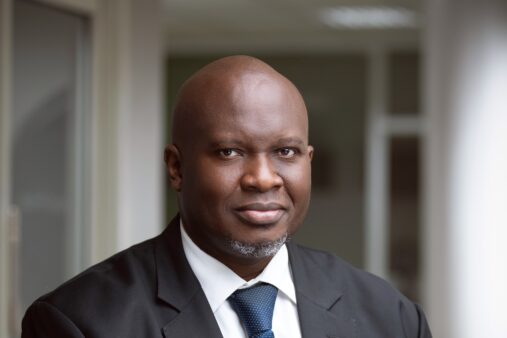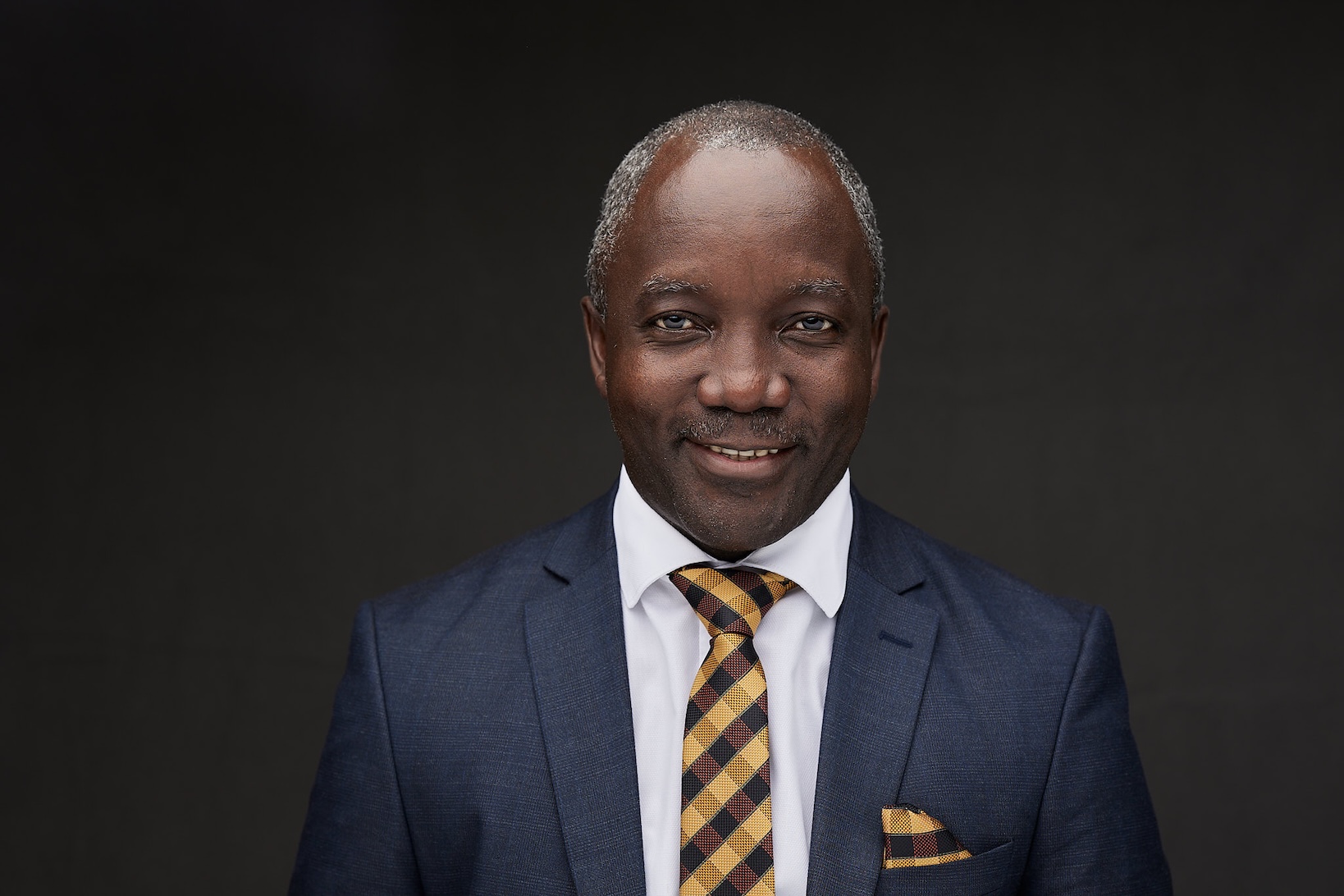
But beyond the accolades lies a multidimensional journey—rooted in a deeply academic household, forged in the crucible of litigation, and refined through global engagements and policy advocacy. In this wide-ranging conversation with CEO East Africa Magazine’s Dennis Asiimwe, Dr. Kakooza reflects on his early influences, the balancing act between law practice and teaching, and the evolution of Uganda’s legal ecosystem. The interview also offers intimate glimpses into his values, leadership lessons, and the driving philosophy that has enabled him to mentor a generation of legal minds while building a legacy at the intersection of knowledge and justice.
Dennis Asiimwe (DA): Good morning Dr. Anthony. Congratulations…this is a significant milestone, the World Trademark Review reiterating a point it made five years ago. Let’s try and give this some context and start at the beginning…
Anthony Kakooza (AK): My name is Anthony Conrad Kakooza. I am the last born of five children of the late Professor Joseph Kakooza and Margaret Nalubega Kakooza.My dad was a pioneer on many fronts…first Ugandan to study at Harvard Law School, he started what we now call The School of Law at Makerere University…back then it was The Faculty of Law. So, on his account, I grew up surrounded by books at home. Law books, of course, and then ordinary books, some of them books for children, such as the Peter and Jane series, the Famous Five series, that sort of thing. It helped considerably with my English; I was fascinated with them and used to read them from an early age. As early as the age of about 6, it was obvious my English was good. As I advanced through my primary education, by then I knew nothing about law or anything of the sort, I asked my older sister what somebody with good English grades studies in secondary school. She said such a person does a subject like literature. I thought about it and then asked, well, what does that person then become? She said, well, they then study to become a lawyer. And I decided then, that was what I wanted to be.
DA: You decided early…
AK: I did. I am pretty sure I was about 6 or 7. We were a career-driven household…
DA (Laughing): Sounds like it…
AK: …and I had decided that it was either that or I was going to join the priesthood. But that was for different reasons. Eventually, the lawyer thing stuck. As I got older, I realised my dad was a lawyer. And that he was teaching at Makerere and indeed, had started the law school there. That drove it home even further. In fact, by the time I got to Makerere University, I was pretty revved up. My heart was pounding on the first day I got to the faculty, and of course, everyone knew this was Professor Kakooza’s son…
DA: Great expectations and all that…
AK: Of course. I was determined not to let my dad down. And of course, my old man gave me a speech to that effect. It must have been for the sake of it, because he was aware of my diligence. I sat at the front of the class, and made sure the contributions I put forward would be out of merit, and not to make people think that my dad was spoon feeding me or something like that. I took full advantage of the law books that were at home. Apparently, our home collection was even better than the Faculty of Law’s library at the time. Indeed, plenty of students often dropped by to borrow a book or two. This was easy for them because we lived on the university campus behind the Guest House.
DA: I imagine you put in a lot of effort…
AK: I gave it everything. I would take notes in class, go home and re-do those notes while referring to the texts we had in the home library. By my third year, I had progressed to the point where I was often the one leading discussion groups. Typically, no one wants to lead discussion groups but the advantage with this is that you end up having a firmer grasp of the subject at hand. That development got me thinking about becoming a lecturer: the ability to guide and influence discussion groups.
DA: You started leaning towards academia…
AK: I did. But more importantly, I also began to recognise the need to balance my passion for academia with the practical, financial benefits of private practice. This would come about when there was a situation like an academic strike on campus, where lecturers would lay down their tools, and the government would respond by freezing salaries and allowances for lecturers, and this was something my father would, of course, struggle with. I realised there would be a need to diversify between academia and private practice to insulate myself from this sort of thing.
DA: You were still passionate about academia…
AK: I was, very. But what I witnessed my father going through helped me decide that I was going to need something of a balancing act that would prevent me from being overly reliant on academia. I made this decision as I finished my fourth year and went through the Law Development Centre. During my fourth year of Law School, I was working with my dad at Kayondo and Company Advocates. This odd little arrangement came about because Henry Kayondo, a leading criminal lawyer at the time had received a cancer diagnosis and knew he was dying. He and my dad were related (I think my dad was his nephew – he called him Jjajja) and he asked my dad to take over his firm, which my dad did. My dad asked me to join him during my final year of Law School, and because the workload between academia and practising law was insane for him, I did. My dad later on negotiated a merger with Shonubi, Musoke & Company advocates, which absorbed Kayondo and Company advocates, and he joined the Shonubi law firm as a consultant. It enabled him to have the time to chair the Uganda Law Reform Commission.
I too joined Shonubi Musoke & Co. Advocates after completing the bar course at the Law Development Council and started practising there. I carried along my love for teaching, and the opportunity came when I was called to join Uganda Christian University, where I started in January of 2003. So yes, you could say I was still passionate about academia…
DA: What was the teaching experience like for you, the first time, at Uganda Christian University? What were you teaching?
AK: I was teaching basic subjects, Introduction to Law, Contract Law, and Jurisprudence. I think the thing that struck me the most about my early teaching experience was how useful the notes I made as a student were for teaching. (Chuckles) They were that good, I guess.
DA: What was your next move?
AK: I went on to the United Kingdom that same year (2003) to do my masters at Warwick University in Coventry. I was looking at focusing on Finance Law at that time, examining anti-money laundering. In fact, I was going to do my dissertation in that area, and build up a career as a Finance Law expert.
DA: There was something deliberate, intentional about how you approached your career…
AK: (Chuckling ruefully) We plan, God laughs. My dad, as I mentioned, was the Chairman of the Law Reform Commission. He pointed out to me, midway during my Masters studies, that there was a category of laws being developed covering Intellectual Property Law and that it would be a new area with significant potential. So, I shifted my focus: my dissertation was then on the enforcement of Intellectual Property Law in Uganda, and that is why my passion for this area really flared. This was about 2004.
DA: You returned to Uganda then?
AK: I graduated, returned, got into teaching again at Uganda Christian University and Nkumba University, as well as doing some work with a newly established Non-Governmental Organisation called Ugandan Christian Lawyers’ Fraternity. A friend of mine, Paul Asiimwe, who had built up a small firm called SipiLaw Associates, called me up and invited me to work with him, suggesting we focus on Intellectual Property. I joined Sipi Law Associates in 2006, and in fact, Paul ended up being an important mentor for me in the area of Intellectual Property. He and my dad have been the most influential figures in my life in that regard.
DA: What was the situation like back then, regarding Intellectual Property?
AK: The law was really gray at that time. People would laugh at us, wondering what we were doing pottering around with a law firm that focuses only on Intellectual Property in an economy like ours. We struggled a bit, admittedly, but stuck with it. I went on with Paul from 2006 to 2021. Of course, this was in and out with my academic life.
DA: That certainly defines sticking with it…
AK: In 2021 I was called to join Byenkya and Kihika Advocates and be in charge of the Intellectual Property Department there, which is where I am now, and that defines my journey across the field of Intellectual Property Law in Uganda.
DA: I am curious about your family…your siblings, for instance…
AK: I am the lastborn of 5. I have two brothers and two sisters. We have already talked about my dad being a Professor of Law. My mum was a Nursing midwife. They met in the UK, where she was studying at a Nursing School in Stratford-upon-Avon, while my dad was doing one of his many degrees at the University of Oxford. She later worked in Mulago Hospital and then she was the Head Midwife at Kiseka Hospital in the late 80s. Our eldest, Josephine, has always been at the forefront of the travel industry, working with Sabena Airlines and then Brussels Airlines, before ultimately becoming the Travel Manager at UNICEF.
My brother Joseph, who follows her, picked up from my grandfather, my dad’s dad, who was a mechanic. He is a mechanic and fixes high-end vehicles, mainly Mercedes. After him is Bernadette, who studied Business Administration for her master’s in the U.S. She’s settled there, and works as an ombudsman overseeing Detroit Public Schools in Michigan. And then my other brother, Fred, is in IT and has been in this field for a while. He is the Deputy Director of the Business One Stop Centre at the Uganda Investment Authority. And then there’s me…. I am married with three children. My wife, Lydia Kakooza, is a senior associate with Kampala Associated Advocates.
DA: What was your first case like?
AK: When I was at Shonubi Musoke & Company Advocates, just starting out, I was working as a legal assistant, and as far as litigation is concerned, I was mostly involved at the level of watching briefs. At that point, it is mostly tutelage.
After my master’s, a former student of mine pointed out the barrage of cases involving land matters in Mityana, and he was of the view that it was an area where I could thrive, since the majority of lawyers involved in those at that point seemed significantly limited in terms of their training. I followed my former student’s tip and found he was right, so I got heavily involved in land cases where I had an advantage, since I was also teaching Land Law at the University Level. My earliest recollection of actually getting into litigation is those land law cases I was handling in Mityana and Mubende, as well as the many cases I handled for the Uganda Christian Lawyers’ Fraternity, and it was quite the task. The roads were terrible at the time, and I was mainly handling the journey from Mukono to Mityana and Mubende. I would leave home at 5 AM in the morning, journey to Mubende for a case at 9 AM, dash off to Mityana at 11 AM for another case, and then rush off to UCU Mukono for a lecture I was holding at 2 PM. Over a 3-year period, I handled probably 100 plus cases, and I can’t think of a case I lost – the advantages of teaching the land law subject while simultaneously practising it were crucial. What frustrated me and possibly also got me to later focus more on intellectual property was that while the land law said one thing, in practice it always boiled down to power, where a big man or someone with access to soldiers simply showed up and took over someone’s property and there was no protection for the victim from the law. I found myself asking, “Why am I even teaching this stuff?”
DA: What Intellectual Property case stands out in your memory?
AK: The UB40 case. This was my first IP litigation case. MTN Uganda brought in UB40 to perform in 2009. A collecting society called Uganda Performing Rights Society (UPRS) comes to us, pointing out that MTN hasn’t gotten their permission for UB40 to perform in Kampala. They had written to MTN who predictably blew them away, pointing out that they had dealt directly with UB40 and so who was UPRS and where did they come in? Showing, of course, that they did not understand how a collecting Society is empowered through Intellectual Property Law to collect on behalf of another body.
So we sued, pointing out how reciprocal arrangements work within collecting societies, and that UB40 did not own most of their songs, and that UPRS had reciprocal agreements with the Performance Rights Society (PRS) in the UK. It was a beautiful case. I argued the case for a while until I had to leave the country to do my doctoral studies, and my colleague Paul Asiimwe took over. Sadly, we lost, and MTN got off because we couldn’t prove that the specific songs UB40 had performed here were songs it had assigned to PRS in the UK, which then gives UPRS rights to provide a license to MTN.
DA: What was it like practising law back when you first started?
AK: It was fun, in many ways…there was more collegiality than there is today. The lawyers appearing in the High Court were thoroughly trained, respected the judge, and respected one another. Today, you have several law schools which are churning out lawyers with barely any ethical training, who engage in all sorts of unethical behaviour, even in the courtroom, because they will do anything to drive a luxurious car. And this state of affairs has impacted legal practice today. What is better today, with regards to Intellectual Property, I often struggled with the apparent lack of understanding of this field by colleagues, especially in the courtroom. For instance, with the UB40 case, the counsel was arguing something completely irrelevant to the legal tenets of Intellectual Property because he was not familiar with how Collecting Societies work. I often found that I wasn’t speaking the same language with opposing counsel. I have lost at least one IP case due to a ‘language barrier,’ so to speak, in court. However, this situation has improved significantly today, where our legal system and our courts are slowing becoming more familiar with the area of Intellectual Property Law.
DA: What were some of the major challenges for young lawyers when you were starting out?
AK: Fewer law firms were taking on lawyers. Many law firms abused young lawyers by not giving them basic allowances, and there was often favouritism practised in some of them. I was a victim of this myself, and I have spoken to several senior lawyers who went through something similar.
 Allan Chekwech Steps into Daniel Kalinaki's Big Shoes at NMG Uganda
There was also a significant absence of mentorship, and at the time many young lawyers did not appreciate the benefit of this. Very few of us had mentors. I was lucky, I had a mentor in Paul Asiimwe. Mentorship has improved significantly today, though.
DA: What was your early experience like when you joined the law firm of Shonubi and Company Advocates?
AK: There was a tonne of work in the commercial sector; it is a commercial law firm. What I appreciated about the firm is that I got exposed to so many sides of commercial practice that I hadn’t seen in law school, and it helped me when I was studying for my master’s. For instance, I handled Escrow Agreements at Shonubi Musoke & Company Advocates – I learnt how to. When I was studying for my Master’s in Law, one of our first class assignments involved matters related to Escrow agreements, and I was the only person in my class who was familiar with an Escrow Agreement. I thus always tell people I am mentoring that it helps for you to first have a bit of exposure before you go to do a master’s in law.
DA: Is there an Intellectual Property case that you look at with pride?
AK: The main case that I hold with pride is a case we won just last year. It is a case where we won, possibly, the largest award that has ever been awarded by a court over an intellectual Property matter. It was a case to do with trade secrets. Our client, Translink, is a distributor – they engaged with a Tanzanian company called Chemi Cotex that produces a toothpaste called Whitedent. They told this company they could do a better job at distributing Whitedent toothpaste in Uganda. So they entered into this contract with the Tanzanian company, and profits went through the roof with Translink being the distributor. So, the owners of Whitedent say we are enjoying these profits, we wanna come over and see how you are doing this so efficiently. And Translink says no problem, but please be mindful that we can only share this information with you in confidence. So Chemi Cotex sends an agent to Uganda, he visits Translink operations, and is taken all over the country; he then returns to Tanzania, and Chemi Cotex then sends an email terminating its contract with Translink and brings in their own guys to take over distribution in Uganda. It was hard convincing the lawyer for Chemi Cotex that this was a trade secret issue because he looked at it as simply an issue of ‘just distributing toothpaste to supermarkets’. We argued that it was the dynamics of the process that was the trade secret and the Court finally agreed with us and awarded $18M plus, to our clients.
DA: How does the practice of law in Uganda compare today to when you were just starting out?
AK: There are many things which have greatly improved. The way documents are prepared, the way cases are prepared, the insistence by the courts on mediation, the fact that we can file online using the Electronic Case Management and Information System (ECMIS), which is the court filing system, and so on. The way you present these documents during court sessions has also been simplified. In the past, you would produce your documents and examine in chief. Now, you simply file a witness statement, and cross-examination starts from that point. It is meant to make the process faster but we still have a case backlog. This may be because more and more people are aware of the fact that they have access to legal redress and have thus become litigious. So the courts are struggling to roll out cases fast enough as other cases are being filed.
DA: How about changes in commercial and corporate practice?
AK: We are not yet where we want to be, especially with intellectual property, but there’s an increase in awareness. With my academic lenses, I have noted that today there is more of a push to have judges with masters’ degrees, which wasn’t the case in the past. This results in the judges being more grounded in their specialty areas, as someone with a masters understands the importance of research and this ensures well rounded, and accurate judgements. It is helping commercial courts, especially.

Lawyers have to show they undertook continuous legal education so as to renew their practising certificates. Although members of the Bench undertake some trainings, we would like to see this as a priority for the bench annually to ensure that they are at par with lawyers especially in dealing with legal principals which keep on evolving in some fields of the law such as Intellectual Property law. This will also ensure more accurate and grounded judgements on their part.
DA: How have globalization and technology changed the way the law is practiced in Uganda?
AK: The Judiciary ensured that we embraced the ECMIS system. At the time it was introduced, Kenya and Tanzania were just taking it on and Rwanda already had a head start with it. Another aspect coming in from globalization is the integration of alternative dispute resolution into legal practice. Courts have seriously taken it on and Advocates are being moved, whether they like it or not, to also embrace ADR. Thirdly, at the moment we are examining how to harness the benefits of Artificial Intelligence within the practice of law. AI has been misused in places like Australia and India, particularly with regards to how some judgments have been rendered but thankfully that has not caught on here. What we do have here is we are examining the application of AI in research and for transcribing during court hearings. Some law firms are also embracing the use of AI in law firm management, legal research and drafting of documents. Of course, all this goes with fingers crossed to ensure that the AI used follows ethical standards and avoids hallucinations.
DA: How do you think the situation has changed with regards to regulation and ethics?
AK: The scheduling of cases in litigation is now handled by the judges themselves. In the past Registrars and clerks were in charge of the process and it resulted in a practice called judge shopping. A practitioner would give money to a Registrar to see that the lawyer’s case is handled by a certain judge and give money to a clerk to ensure a certain date is given for one’s case. But now the judges manage their own schedules, and so you don’t have the system being manipulated by Registrars or clerks like it was in the past. As such, there is increased transparency and less corruption within such judicial systems.
DA: If you had the power to reform any aspect of the Uganda legal system, what aspect would that be?
AK: It would be education. I take a lot of pride in having been able to balance legal practice and legal academia. The law is constantly evolving, especially commercial law such as Intellectual Property, so I would insist on continued legal education, or legal training, not just lawyers but also for the members of the bench. It enables us speak the same language in court, and have grounded, fair judgements.
DA: You have served in significant leadership roles. What lessons have you learned about leadership across different contexts (law, public service, traditional institutions)?
AK: When I completed my doctorate in the U.S in 2014, I was invited to, and I accepted to serve as the Dean of Law at Uganda Christian University. I served as Dean from 2014 -2018 and was mainly handling academic work. My legal practice was in the background. I felt a need to fill the gap so I started making op ed contributions in The New Vision and the Daily Monitor regarding Intellectual Property matters, queries, or discussions. These caught certain people’s attention. I started being invited by Uganda Registration Services Bureau to facilitate at workshops on Intellectual Property. At those workshops, I came across people who wanted me at other workshops or to involve me in consultancies. Such people included representatives of the World Intellectual Property Organization (WIPO), which opened up opportunities for me to be their consultant. I started doing WIPO Consultancy projects in Ghana, Malawi, and these were national projects.
During my visits to other institutions, I would discuss various topics related to Intellectual Property with other deans, including the use of cultural material in modern commercial songs and the ensuing debates. As a result of these interactions, I was invited to lecture as a Visiting Professor at Masaryk University which is a university in the Czech Republic.
As a referral from WIPO, I also ended up becoming a visiting professor at Shandong University in China. At the University of Illinois, where I did my doctorate, I was invited to do a short course on intellectual property based on my thesis which covered Intellectual Property and Cultural Expressions. We worked out a schedule so that from 2017 to date, I have been travelling and teaching a two week course there on that topic.
My key lesson in leadership is therefore to always use that opportunity to network with others. All this was a result of networking and utilising the leadership positions I found myself in by building on these networks. If you give 110% within these positions and maximise your networking potential, it opens up more important opportunities and referrals for you.
DA: Can you outline the leadership positions you have held over the years? For context to the above question?
AK: At LDC, I was a firm leader (students are organised into small groups called firms, like small classes). This positioned me to always lead group discussions and constantly research cases, which improved my research skills. When I went to Warwick University, I was made a student representative in the School of Law Admissions Board . Many years later, I was also made student representative in the admissions board at the University of Illinois. This key position exposed me to seeing what such world-class Universities look for when students are applying for admission into Master’s and Doctoral Programs. In 2020 I took over the IP Cluster of Uganda Law Society. This leadership has increased my network within IP Legal practice but also enabled me to appreciate the highs and lows in such practice and how to offer solutions. I am also currently the President of the Uganda Christian Lawyers Fraternity, a Christian-based NGO that provides pro bono legal services. This position also comes with tons of rich networking opportunities.
DA: What personal habits or mindsets have contributed to your success in your career?
AK: I carry humility. I am a deep-rooted Christian, passionate about my relationship with Christ, and humility is central to that. I believe in the golden rule from Matthew 7 verse 12: “Do unto others as you would have them do unto you”. I consider myself as kind and respectful to people simply because I expect the same from them. It gives me a level of confidence. I also consider myself as firm and diplomatic, and it helps me settle cases for clients, cases that might otherwise drag. So, in terms of personal habits, I am diligent: I don’t rush into matters, and try to create it in the people that I work with to also do as much research and preparation as possible before they can consider themselves as ready to start litigation. This level of preparation has paid off quite well.
DA: How would you define success personally, at this point in your life?
AK: That’s an interesting question. In my view, true success is in leaving your mark on people so as to enable them reach their full potential. I try to invest in people: my family, the people I teach, the people I work with. Many of them have gotten master’s, doctorates and have thriving careers. I would count that as success.
DA: What inspires you today, what keeps you energised?
AK: When I know that what I am working on is going to come through. Yes, as a Christian, I have faith, but I am talking about a situation where I know I have a case, a good case, and I am diligently prepared. Or when I conclude a grand consultancy project and see it being implemented to fruition. That gives me drive; it has me waking up early and going to the office full of energy.
DA: How do you maintain a work-life balance?
AK: That’s another good question, especially considering that I operate in basically three worlds: academics, practice, and policy based on consultancy projects. Academics and consultancy projects have put me on planes out of the country more times than I can count. My kids have always been like “You have just gotten back, and now you are leaving?” At some point, I realised the ball was actually in my court. So recently, I started turning down some academic workshops and consultancy project invitations out of the country. This year, I have only travelled twice, and ultimately, my level of work in the firm has picked up. Somehow, I am receiving more instructions and more clients. I have found a work-life balance by learning to say no to some invitations from outside the country, based on my profile, and I have benefited from it in terms of boosting my domestic profile and balancing my domestic priorities.
DA: What hobbies and passions outside the law are close to your heart?
AK: I was big on movies, especially in the cinema. In my university days, my friends and I used to go to the cinema once a week. I barely get the time to do these days. I used to love sports: martial arts, football, basketball, rugby, which I really loved, and I played with SMACK Eagles and Makerere Impis as a hooker. My dad didn’t like it of course, pushing me to focus on my studies. I love singing too, something which shocks many people. I sang with a few friends of mine in our High School days. Two of my friends in the music group later on stuck it out and established a music duo called Ngoni. This was Pato and Eddie. I am good friends with Music Artist/Lawyer Sylver Kyagulanyi, and he inspires me a lot in the music industry. I want to learn the organ and the guitar – this is on my bucket list.
DA: What message do you have for the Ugandan business community about sound legal practice and governance?
AK: Consult. Business communities and individuals have a tendency to prefer to save money by avoiding legal consultation and only think of coming to the lawyer in a situation we refer to as post mortem. Basically, when the damage is already done. At this point, it may be too late, and there is nothing much the lawyer can do to help you, whereas with prior consultation, yes, you have to pay for the legal fees, but it saves you a lot of money that may be lost by not considering the advice of the lawyer in the first place.
DA: One more thing – I just want to make sure I have the chronology of your education right: Buganda Road Primary School, St. Mary’s College Kisubi for secondary…
AK: And Makerere High. I switched in S6 because during that time, unfortunately, SMACK was not prioritising arts subjects at the Advanced level. It caused quite a stir because I was a House Prefect at the time. The Head teacher was not too happy about one of his House Prefects quitting SMACK because of dissatisfaction with the way Arts subjects were being taught, but it was a decision I made with my father. Ironically, SMACK improved drastically that very year, which begs the question: did they improve because one of their students made such a drastic choice?
DA: Interesting thought…so, Makerere High School for Senior Six, Makerere University for my Law Degree, the University of Warwick for your Master’s, and the University of Illinois for your Doctorate.
AK: That is correct.