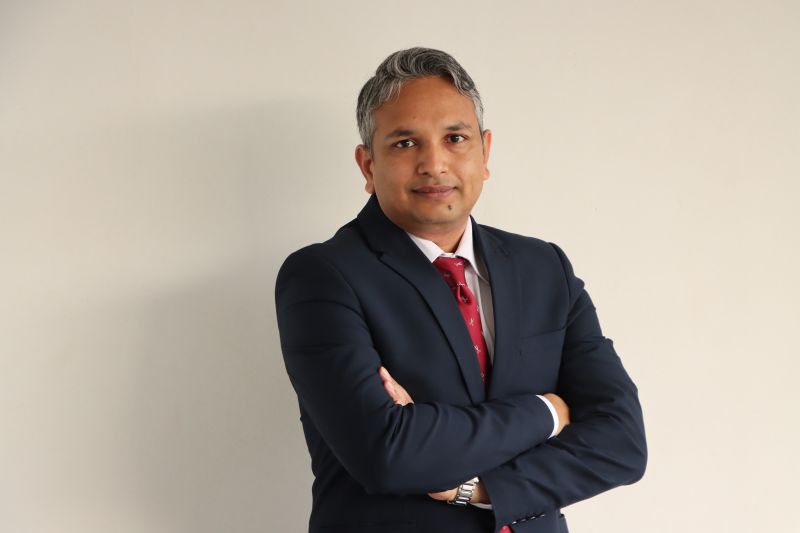
In 2021, Ajay Kumar Pal became CEO of Cipla Quality Chemicals, now QCIL.
He displayed a calm resolve of someone used to pressure.
He wasn’t just walking into a leadership role—he was walking into a storm.
QCIL, once considered one of Uganda’s most promising pharmaceutical exporters, was in trouble.
Covid-19 had scrambled global supply chains, making it harder—and costlier—to move goods.
But QCIL’s biggest blow came not from the virus, but from Zambia.
For years, the Zambian government had been a key buyer of QCIL’s life-saving drugs.
But by the time Kumar took over, those payments had dried up.
QCIL was now forced to suspend sales to Zambia after long delays in receiving money for past deliveries.
This single decision—cutting off a major buyer—sent shockwaves through the company’s finances.
The damage showed up quickly in the numbers.
By March 2020, export sales had plunged by 53%. Local sales were doing better, rising 18% thanks to bigger orders from international health organisations.
But overall revenue still fell to UGX192.6 billion, a 1.3% dip that marked the beginning of a difficult chapter.
What made things worse was that costs were climbing.
Cost of sales rose by nearly 10%, squeezing gross profit down to UGX36.9 billion—a 30.9% drop from the year before.
That kind of squeeze is hard for any company to absorb, but for QCIL, which was already exposed to the whims of donor-funded markets, it signaled deeper trouble.
To fill the gap left by Zambia, QCIL pivoted towards malaria drugs funded by the Global Fund, a major international donor.
Sales to the Fund jumped dramatically—from $2.6 million to $16.4 million. It was a smart move, and in some ways, it worked.
But not enough
Despite the impressive rise in donor-funded sales, it simply couldn’t make up for what was lost. QCIL found itself staring down a financial hole.
It started preparing for the worst, by raising impairment allowance—money set aside in case a debt isn’t recovered—from UGX3 billion to UGX32 billion.
That alone dragged the company into an operating loss of UGX31.8 billion in the year to March 2020, compared to a UGX9.7 billion profit the year before.
To keep operations afloat, QCIL borrowed more. But that came at a cost, too: finance costs surged 52% to UGX3.9 billion.
By the end of the year, the company had posted a net loss of UGX36 billion.
Just 12 months earlier, it had been in the black with a profit of UGX6.7 billion in the 2018/2019 financial year.
The board made the only call it could: no dividend for shareholders.
Behind all these numbers was a simple truth: QCIL had become too dependent on a handful of large clients, especially governments and donors.
When one failed, the entire house shook. In Zambia’s case, a delayed payment turned into a debt crisis.
And for QCIL, the cost was more than just financial. It was a hard lesson in exposure, risk, and the need to diversify early, before the cracks become impossible to patch.
A warning the market missed
The shock of 2020 didn’t arrive out of nowhere. The signs were there, etched across QCIL’s books the year before. Quiet but unmistakable.
In the financial year ending March 2019, its first full cycle since listing on the Uganda Securities Exchange, QCIL’s fortunes began to slip.
Revenue dropped by 14.2%, falling from UGX227.3 billion to UGX195.1 billion. On its own, that wasn’t a red flag. After all, costs had also ticked down slightly.
A drop in revenue isn’t always a red flag—especially if costs fall too. In QCIL’s case, while revenue fell by 14.2%, costs also declined slightly, which might have softened the blow.
But the revenue drop was far steeper than the fall in costs, leading to a sharp decline in gross profit. That imbalance is what made it a real problem.
But the trouble was in the spread
Sales were dropping faster than costs could keep up, and that squeezed profits hard.
Gross profit took a 28% hit, falling to UGX69.5 billion.
The culprit? A sudden pullback by QCIL’s biggest customer, the Global Fund.
Until then, the Geneva-based donor had been a dependable buyer, accounting for nearly half of the company’s sales.
But in 2019, its priorities shifted. Instead of buying medicines to treat malaria and HIV, the Fund began emphasizing prevention.
The shift, although rational from a public health standpoint, meant fewer orders for antiretrovirals and anti-malarials, and a sudden drop in revenue.
At the same time, QCIL was facing increased competition, especially from low-cost Asian drug manufacturers.
These new players were slashing prices across donor-funded markets, making it harder for QCIL to hold its ground.
Meanwhile, a tightening of environmental regulations in China—the world’s pharmacy—was disrupting the supply and pricing of raw materials, nudging production costs upward.
As sales pressure built, expenses kept climbing. Operating costs rose by 16.7% to UGX54.9 billion.
A chunk of that was routine—marketing, selling, and growing the company’s financials show.
But UGX2.5 billion of the costs came from one-off expenses tied to the IPO.
On top of that, new accounting rules (IFRS 9) forced QCIL to be stricter about how it judged the risk of unpaid bills, which added more pressure.
By the end of the year, operating profit had plunged to UGX13.4 billion—a sharp drop from UGX50.6 billion the year before.
Pre-tax profit fell even more dramatically, down by 83.8% to just UGX7.1 billion.
Instead of a tax credit like the year before, QCIL had to pay UGX342 million in taxes.
The net profit ended at UGX6.7 billion, a tiny slice of the UGX44.6 billion made in 2018.
The board tried to stay positive
It skipped dividends again, but this time said it was on purpose—to reinvest in the business, upgrade facilities, and maybe make a small acquisition to bring in new customers.
But the numbers told a quieter, tougher story.
QCIL was relying too much on a few big buyers, with much of its income tied to donors who could change their minds at any time.
Meanwhile, costs kept rising in an increasingly competitive market.
In the text to shareholders, there was a paragraph that showed that the board was ‘investigating a small acquisition opportunity that will further support growth initiatives.
The acquisition would also help to diversify its revenue sources.
So while investors waited for profits to bounce back, the real question was: could QCIL change fast enough to survive in a world where donor money could dry up overnight?
The man who walked into the fire
So when Kumar took over as CEO in late 2021, it wasn’t so much a promotion but more of a rescue mission.
He already knew the company well. He’d joined as chief operating officer in early 2020, after serving as head of manufacturing at Cipla South Africa.
By the time he stepped into the top job, the problems were no longer abstract—they were everywhere.
Thus, he had to deal with stagnating exports, investor cynicism, a bruised balance sheet, and a share price that had taken a nosedive.
Still, he projected quiet confidence
In interviews, Kumar came across as methodical, curious, and deeply driven by QCIL’s original mission—to make affordable, life-saving medicine available to Africans.
He described himself as a man who sets ambitious goals and follows through, an “inquisitive thinker” with a passion for learning and creative problem solving.
His résumé reflected that too: a 16-year career in the pharmaceutical world, spanning technical, operational, and commercial leadership roles across multiple countries.
But there was more to him than just experience.
His colleagues noted a combination of professional will and personal humility.
And when he spoke about his Ugandan team—the one he had inherited—he praised them, saying: “The ground has already been set. Mine is to build and consolidate further.”
“Two to three years, with sacrifice”
Kumar knew exactly what he was walking into: a company that had lost investor trust and was bleeding from past missteps.
But he was clear-eyed about it. He gave himself two to three years to steady the ship, with rigorous planning, tough choices, and sacrifice.
Together with his team, he launched a strategic reset.
The goal? ‘Rebuild profitability by sharpening focus on sustainability, operational agility, and long-term growth.’
That meant competing in the most brutal part of the pharmaceutical industry—donor-funded markets, where buyers drive hard bargains and prices keep falling.
QCIL’s model had always leaned heavily on large institutional customers. Kumar didn’t change that; instead, he wanted to make it work smarter.
His playbook included two key thrusts: Accelerate market growth for QCIL’s existing products and expand the product line to bring in new revenue streams and reduce reliance on just a few therapies.
Africa’s HIV burden, he believed, still presented a massive opportunity. More than 25 million people were living with the disease, yet many had no access to affordable treatment.
Kumar saw this gap not only as a humanitarian challenge, but as a commercial one—if Qcil could scale access, it could scale revenues.
Cold shareholders, falling stock
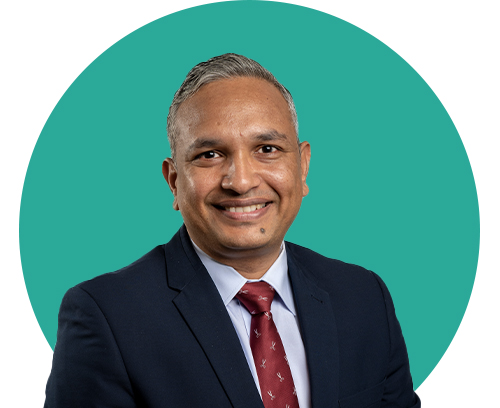
But while Kumar was setting his sights on the future, shareholders were focused on the past—and they were voting with their wallets.
Back in 2018, QCIL had made history, becoming the first pharmaceutical company to list on the USE.
The IPO was a hit. Shares were offered at UGX256 each, and excitement drove the price slightly higher, to UGX262 in the weeks that followed.
But enthusiasm quickly faded as earnings tumbled.
By the time Kumar became CEO in September 2021, QCIL’s share price had plunged to UGX95—a fall of over 60%.
Investors were not just disappointed. They were disillusioned. Many had already sold off their holdings.
For a company that was once the darling of the exchange, it was a stark reversal.
Kumar didn’t ignore it. In fact, he acknowledged the loss of faith head-on.
“Shareholders are the single most important aspect of our business,” he said.
“We must forge a sense of belonging for them.”
To rebuild that relationship, he promised two-way communication, including regular shareholder newsletters, off-season engagement, and an open feedback loop.
But promises alone wouldn’t be enough. The company needed to perform.
What Kumar still had going for him was: [QCIL] remained one of the most advanced drug manufacturing facilities in Sub-Saharan Africa.
It had scale, regulatory approval, and a mission investors could still believe in—if only the numbers could start matching the narrative.
A pandemic pivot pays off
2021 came with an unexpected turn.
Under the leadership of outgoing CEO Nevin, QCIL posted a surprisingly strong performance, even as the pandemic buffeted global markets.
Unlike many competitors who were hobbled by border closures and factory shutdowns, QCIL managed to plug critical supply gaps across the region.
Export revenue shot up by over 400%.
One landmark deal, delivering one million tenofovir, lamivudine, and dolutegravir treatments to a Southern African country whose supplier had fallen short, earned the company UGX24 billion alone.
In a world scrambling for essential medicines, being able to manufacture and deliver at scale—and quickly—became a powerful advantage.
Back home, QCIL continued to fulfill its commitments to National Medical Stores without delay, strengthening its image as a reliable public health partner.
Sales to donor agencies such as the Global Fund and the President’s Malaria Initiative also rebounded, signaling restored trust and renewed demand.
But QCIL didn’t just ride the wave. It also started planning for calmer seas.
Midway through the year, it acquired the rights to import and distribute QCIL-branded drugs made in India, marking its entry into Uganda’s competitive retail pharmaceutical market.
While this had little impact on that year’s financials, it planted seeds for a more diversified, consumer-facing revenue stream in the future.
In many ways, the 2021 performance wasn’t just a rebound. It was proof of resilience—and perhaps, a hint that the company could still evolve, even under pressure.
Turning the ship
Still, the story wasn’t all smooth sailing.
In Zambia, QCIL ran into familiar headwinds: late government payments that forced the company to pause sales. The financial hit was real.
Management made the tough but responsible call, taking a full Expected Credit Loss provision of UGX9 billion, acknowledging the risk of non-payment.
It was a costly write-down, but the kind of financial discipline that signaled a turning point.
To QCIL’s credit, the Zambian government made partial repayments totaling UGX3.9 billion, and ongoing negotiations left the door open for further recovery.
In the world of African public procurement—where promises often outpace payments—this was not insignificant.
Even amid that adversity, QCIL kept its eye on the bigger picture.
It delivered on contracts, entered new markets, and managed credit risk with a level of maturity that reflected a company growing into its responsibilities.
It wasn’t just about avoiding losses—it was about evolving into a resilient regional player.
By the time Kumar officially stepped into the CEO role in September 2021, he had taken notes. One of his first priorities – avoid repeating Zambia.
At the company’s fifth Annual General Meeting in Kampala, the following August, he laid out a clear direction.
“Focus more on direct sales in the domestic market, reduce reliance on unpredictable receivables, and ground the company in sustainable, long-term growth.”
This wasn’t just talk
QCIL signed a memorandum of understanding with Ministry of Health to begin manufacturing cancer, tuberculosis, and sickle cell medicines, broadening its therapeutic focus beyond HIV.
At the same time, it launched a series of new products like Azee500 and Cipladon+ QTiB, to carve a share in fast-growing treatments like cardiovascular disease, diabetes, pain relief, and infections.
Kumar also promised nine new product launches within a year and championed a digital roadmap—one that would connect the company more directly with customers and partners.
The numbers followed

In the year ending March 2022, QCIL swung back to profitability, registering a net profit of UGX24.1 billion, up from a loss in the previous two years.
The turnaround was driven by better margins, reduced financing costs, some recovery of the Zambian debt, and the full impact of cost-control initiatives launched earlier.
Kumar told shareholders that this was because the company’s earnings before interest and other costs (EBITDA) grew by 18%, meaning it made more money from its core operations.
His explanation was that “even though total revenue dropped by 6%, this was only because of some large one-time orders in the previous year.
 Equity Bank Rwanda Hit by Fraud, Months After Group CEO, James Mwangi’s Integrity Crackdown
If you remove those, the regular day-to-day business grew by 3%.
The company’s cash flow also got better, mainly because it recovered $5.3 million from the Zambian government.
QCIL chairman Emmanuel Katongole highlighted a particularly telling figure.
Sales of Lumartem, QCIL’s flagship malaria treatment, had doubled.
The growth came not only from better execution but from renewed confidence in the company’s retail and private market strategy—now the engine for future expansion.
QCIL also began laying the groundwork for regional exports, seeking regulatory approvals to enter DR Congo, Malawi, Burundi, Madagascar, and Sudan for the first time.
The promise
Kumar’s first letter to shareholders that year was both reflective and forward-looking. He acknowledged that he inherited a company that had posted losses for two straight years.
But he made it clear: “The return to profitability was not accidental. It was the result of deliberate restructuring, disciplined spending, and a renewed focus on long-term value creation.”
Yes, revenue fell 6%, but Kumar noted the decline: the previous year had included an unusual surge of bulk orders, and once adjusted for that, the core business had grown by 3%.
In other words, this wasn’t just a temporary spike. This was QCIL finding its stride again—slowly, but surely.
Liquidity, too, had improved—thanks in part to a $5.3 million payment recovered from Zambia.
But more than the cash itself, the win represented strategic follow-through.
It sent a signal to investors that QCIL wasn’t just hoping for better days; it was actively working to de-risk its business model.
Kumar also used the letter to outline what kind of company he wanted QCIL to become.
“Not just a manufacturer, but a mission-driven institution grounded in values, rigor, and transparency.”
Looking ahead, he laid out four priorities: ‘growth and sustainability, cost leadership, business development, and balancing profitability with future investment.’
He made it clear that technology would be a cornerstone—digitizing operations, improving efficiencies, and making QCIL more agile in the face of disruptions.
He didn’t pretend the world had become easier. Inflation, currency volatility, and geopolitical risks were still very real.
But he offered reassurance: “Systems were in place—alternate vendors, long-term supplier contracts, continuous improvement frameworks—all designed to help absorb shocks.”
In tone and substance, Kumar’s first letter to investors struck a rare balance: realistic, without being cynical and hopeful, without overselling.
A CEO quietly declaring that QCIL was learning from its past—and ready for a more durable future.
A CEO in full: From caution to conviction
In his 2023 letter to shareholders (the second one), Kumar wrote not like a new CEO feeling his way through transition, but like a man who had grown into the job.
Compared to the tone of his 2022 message, which was filled with measured optimism after turning QCIL profitable again, this second letter was more assured, more strategic, and quietly ambitious.
Kumar didn’t just report numbers. He mapped a trajectory—one that blended operational gains with a larger transformation narrative rooted in innovation and purpose.
Quality of profits
Yes, the top line told a more muted story. Revenue dipped from UGX267 billion to UGX221 billion, and net profit fell from UGX24 billion to Shs19 billion.
But Kumar quickly reframed the discussion—not in denial, but in perspective.
“This was not about volume—it was about value,” he wrote.
Rather than fixate on profit margins, he focused on the quality of profit, a term often reserved for more mature financial narratives.
Operational cash generation improved, and QCIL used that strength to slash long-term debt by 79% from UGX25.7 billion to just UGX5.4 billion.
That was no small feat. It reflected disciplined cash use and strategic debt reduction, aided in part by overdue payments recovered from the Zambian government.
More than a balance sheet fix, this was a story of de-risking—a company tightening its footing amid softening export markets, inflation, and currency headwinds.
What stood out was the consistency
In 2022, Kumar had introduced four strategic pillars: core growth, diversification, digital transformation, and ESG integration.
In 2023, he returned to those themes—but this time with tangible progress in hand.
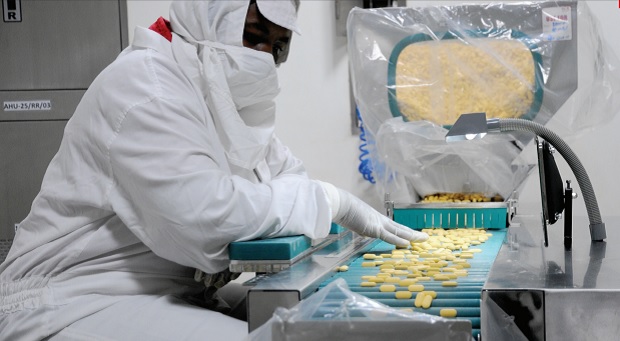
QCIL’s private market ambitions were now visibly underway, with Azicip-500, its proprietary azithromycin, gaining traction in private healthcare channels for respiratory infections.
This wasn’t just a product launch—it was a signal. QCIL was no longer relying solely on donor procurement.
It was pushing into consumer health markets with brand equity, relevance, and pricing agility.
And it was backing that move with innovation: nine new products were tech-transferred during the year, and another 10 were lined up.
Crucially, these weren’t scattered bets.
They were targeted expansions into cardiovascular care, anti-malarials, and chronic conditions like diabetes, Africa’s fastest-growing disease burden.
In closing that second letter, Kumar didn’t oversell. His tone was thoughtful, calm, and credible.
QCIL, he seemed to say, was no longer climbing out of trouble. “It was aligning itself for long-term leadership—step by deliberate step.”
The acquisition
In November 2023, the acquisition Nevin had hinted at in 2019 finally came through.
Cipla sold its 51.18% majority stake-roughly 1.9 billion ordinary shares—to a Mauritius-based investment firm for $25 million (about UGX93.7 billion).
The buyer, Africa Capitalworks SSA 3 (ACW), acquired the shares from Meditab Holdings Ltd and Cipla EU, both wholly owned subsidiaries of Cipla, the Indian based pharmaceutical giant.
Cipla had decided to pull out, redirecting its focus toward more developed markets in Europe and Asia.
Following the transaction, the company dropped the Cipla tag to become simply QCIL, which marked the beginning of a more locally anchored identity.
From realignment to ascent
By 2024, Kumar’s message had fully evolved—from one of recovery to one of regional leadership.
Gone was the cautious framing of QCIL’s fragile rebound. This was a CEO speaking with momentum—and data to match.
In a world still reeling from global inflation, commodity volatility, and geopolitical instability, Kumar contextualized QCIL’s performance with sober realism.
But that only made the results stand taller.
QCIL delivered record financials, including a 20% increase in revenue and margin growth across key categories.
The message was clear: this was no fluke. It was a strategy, executed.
He credited the gains not to macro luck, but to “supply chain strengthening, operational excellence, and a relentless focus on customer satisfaction.”
It’s a small sentence, but it pointed to big shifts inside the company—systems getting sharper, people getting leaner, decisions getting faster.
A major highlight was CiplaQCIL’s acquisition of ACW, a deal which deepened local manufacturing capacity just as regional demand surged.
This wasn’t just an expansion—it was a hedge.
In a continent where import delays, forex constraints, and donor unpredictability often distort supply chains, local production became a moat, and QCIL was building it deeper.
That year, Kumar emphasized regional strategy more than ever.
QCIL was no longer just serving Uganda. It was becoming a serious player in Africa’s public health space.
He cited 14.85 million HIV treatments and 32 million malaria treatments sold—massive figures that underscored both reach and relevance.
Even contract manufacturing, once volatile, was stabilizing.
A new three-year agreement with Cipla Medpro was inked, replacing short-term uncertainty with long-term pipeline predictability.
Meanwhile, sales to government and institutional buyers rose, reaffirming that QCIL could compete—and win—in both price-sensitive and quality-driven markets.
Perhaps most telling was the evolution in Kumar’s strategic language.
He returned to the same four pillars he introduced in earlier letters—sustainable market access, cost leadership, portfolio expansion, and local manufacturing.
But now those were no longer aspirations; they were visible, working, delivering.
The product pipeline expanded into diabetes, cardiovascular care, and over-the-counter (OTC) medicine—areas that offer volume, frequency, and high margins.
More than anything, these shifts signaled that QCIL was breaking free from the limits of donor-funded programs.
It was heading toward consumer-driven, brand-led growth.
Kumar’s closing tone was unflinching. QCIL, he declared, was now “a transformative force in African healthcare”—not just reacting to the continent’s needs, but helping shape how they’re met.
It had a healthier balance sheet, stronger manufacturing capabilities, deeper regional access, and a growing portfolio in high-demand sectors.
And, just as importantly, it had a CEO who was no longer trying to prove the company’s relevance. He was expanding it.
A firm resurgence
Now, the financials for the year ended March 31, 2025, suggest QCIL has stopped merely surviving and started to mature.
After a solid performance in 2024, the latest numbers don’t scream rapid growth, but whisper stability, strategic clarity, and a return to the basics of profit-making.
Revenue slightly rose to UGX267.1 billion from UGX265.3 billion—but the profit story tells a different story.
Gross profit jumped to UGX108.5 billion, pushing gross margins from 33.7% to 40.6%.
That’s not a small feat in pharmaceuticals, where pricing pressures and procurement politics often squeeze margins.
What changed?
For starters, the product mix: antiretrovirals (ARVs) now make up 76.3% of sales, up from 59.9%t.
These are high-volume, donor-backed drugs—predictable, stable, and margin-friendly.
Meanwhile, ACTs (malaria treatments) dropped to 21.6% from 38%, which shows that QCIL didn’t just grow its top line—it reshaped it.
The company also quietly dialed in its cost base.
Raw material prices dropped, and the manufacturing line ran more efficiently.
It all added up. Operating profit rose nearly 38% to UGX59.4 billion.
Net profit followed, reaching UGX40.7 billion, with earnings per share up by nearly 28%.
Even expenses told a disciplined story
Administrative costs rose 14.8%, partly from licensing fees, a staff incentive scheme, and inflation.
But they were growth-related—more headcount, more compliance, more reach. Not bloat.
Then came the signal shareholders always look for: dividends.
QCIL proposed UGX13.5 per share—up from UGX5.7, the largest the company has ever issued out.
And while cash dropped (to UGX34.9 billion from UGX53.5 billion), the company still paid out UGX42 billion and invested UGX6.3 billion in assets, all while generating UGX30.3 billion in operating cash.
Remember QCIL has long been having some receivables from Zambia of $12 million since 2018, it’s been receiving fragmented payments since.
In the past, QCIL had given up hope of getting paid because the payments were delayed for so long.
As a result, the company had marked that money as a loss in their books.
But Zambia finally cleared the debt, allowing QCIL to cancel the earlier loss and count the money as income again.
But if there is one challenge that QCIL continues to experience price pressure.
“In public sector procurement, the buyer holds all the cards. We just supply,” Kumar says
So QCIL has to ensure that it responds with operational finesse, control costs, supply chain wizardry and procurement hacks.
But one factor remains: you can’t cost-cut your way to infinity.
In fact, in its latest result, QCIL reported a 14% growth of administrative costs to UGX50 billion, due to inflation and licensing costs.
“To grow, you must spend. Top talent costs more—but delivers exponentially more. It’s not waste, it’s an investment,” Kumar was quoted as saying early this year.
The API conundrum
One challenge looms large over African pharma: active pharmaceutical ingredient (API) manufacturing.
APIs are the main components that give medicines their effect.
Most African drug makers don’t produce APIs themselves and instead import them from other countries, mainly in Asia and Europe.
This reliance means higher costs and risks of shortages if global supply chains are disrupted.
“It’s a chicken-and-egg situation,” Kumar says. “You can’t justify an API plant until you have scale. But you can’t scale without APIs.”
His solution? Focus on building local manufacturing muscle first. API capacity will follow, especially for high-burden diseases like HIV and TB.
In the meantime, startups and technologists may want to pay attention to the real gold mine: AI for operational efficiencies.
“Do we have data in this country regarding what product is consumed in which seasons? That is a sellable solution.”
Forget flashy drug discovery for now.
QCIL believes Uganda’s pharma AI opportunity lies in predictive analytics for seasonal drug use, diagnostic support, and supply chain optimization.
The future
New therapies are on the radar—diabetes, anti-infectives, cardiovascular care—but the public health space still shapes QCIL’s path.
The private sector, he says, doesn’t touch HIV treatment.
That domain belongs to governments and global institutions, and it’s still where the largest impact—and demand—lies.
Over a 10-year horizon, he says, the share of revenue from newer therapies will grow.
The idea is that as the company’s revenue expands—from UGX267 billion to maybe UGX300 billion—new drugs will claim more space.
But HIV and malaria will remain dominant. Not because QCIL lacks ambition, but because it knows where it can move the needle.
“We don’t target boutique problems,” he says. “We make products for population-wide issues. Not just ‘small small’ ones.”
On average, QCIL supplies drugs to about 14 countries across Africa.
But this is no grocery aisle—it’s a tender-driven business.
Demand is shaped by governments, procurement timelines, and emergencies, not marketing pitches.
In short, QCIL didn’t chase revenue. It chose to become more efficient, more profitable, and more focused.
It’s a quieter kind of growth—less headline-grabbing, but far more sustainable.