In the heart of Kampala’s busy central business district, the rhythm of modern life pulses through the fingertips of Gen Z digital influencers and their smartphones.
At concerts, fashion shows, or corporate events, they glide through a stream of apps on sleek, glass-encased smartphones—devices that have become more command centers than mere phones.
With a tap, the internet brings real-time social updates to life, AI tools polish photos before they’re posted, and mobile wallets handle everything from splitting bills to paying Uber fares.
Now rewind to 1993, just three decades earlier.
In the same city, another young Ugandan was perhaps by then hunched beside a public phone booth, cradling the earpiece and dialing a landline number with anxious precision.
The contrast between the two scenarios captures Uganda’s extraordinary technological journey, where social media influencers thrive in a digital ecosystem rich with opportunity, speed, and global reach
While a Ugandan in 1993 struggled to communicate, innovation was scarce, and the idea of mobile connectivity was beginning to emerge.

The genesis
October 21, 1998, is a historic milestone in Uganda’s telecommunications history.
On this day, President Museveni placed Uganda’s first commemorative call on MTN’s brand-new cellular network to former South African president, Nelson Mandela.
That phone call came just five months after MTN Uganda had been awarded the second National Operator (SNO) license, setting the ground for a period in which Celtel’s monopolistic hold of Uganda’s telecom sector was broken.
It was a symbolic moment and has, over the past three decades, set Uganda on a remarkable journey of growth and innovation.
Once dominated by a poorly performing state monopoly, the sector is now one of the most liberalized and competitive in East Africa.
The path to this transformation is deeply rooted in political will, donor-driven policy reform, regulatory restructuring, and aggressive private sector participation.
Drawing from a detailed World Bank case study, this explainer provides an in-depth look at how Uganda transitioned from telecom stagnation to mobile boom, highlighting service expansion, market dynamics, and the performance of major telecom providers.
In the early 1990s, Uganda’s telecom sector was among the least developed in Sub-Saharan Africa.
At the time of reform in 1994, Uganda had a population of about 18 million people and a teledensity of just 1.6 main lines per 1,000 inhabitants—well below the regional average.
The sector was run entirely by the Uganda Posts and Telecommunications Corporation (UPTC), a state monopoly that managed only 30,449 active lines, despite having an installed capacity for 62,000.
Most of the functional infrastructure was concentrated in Kampala, with rural areas nearly cut off from any reliable communication services.
Regional disparities were stark. In 1993, Kampala, home to less than 10% of Uganda’s population, held over 70% of all telephone subscriber lines.
In contrast, the entire eastern and western regions—home to over half the population—had only 20% of the lines.
Even within Kampala, only a third of the installed network capacity was being used.
The rest of the country was left behind due to non-operational electromechanical switches, a lack of spare parts, and donor-funded technologies that were incompatible with UPTC’s aging systems.
Service quality was abysmal. Only 25% of local calls and 40% of international calls were completed.
Faults plagued the network, and only 30% of technical faults were resolved within 24 hours, well below the 60% target set by a World Bank-supported rehabilitation project.
Customer dissatisfaction ran high due to issues like delayed connections, billing errors, and fraudulent diversion of lines.
Financially, UPTC was unsustainable. Despite charging exorbitant international tariffs—reaching up to $7.0 per minute to the UK or US in 1993—the company was not generating significant revenue for the government.
Only about half of its billing was collected. In 1993, international calls made up 70% of its total accounting revenues, a reflection of the skewed focus toward foreign traffic rather than domestic service delivery.
Meanwhile, return on assets hovered around 9% in the early 1990s before collapsing due to falling tariff revenue and rising administrative costs.
Far from being a “cash cow,” UPTC became a financial burden.
The push for reform: politics, crisis, and policy choices
The reform of Uganda’s telecom sector emerged from a broader macroeconomic restructuring agenda pursued by government.
After assuming power in 1986 following years of civil conflict, Museveni prioritized economic liberalization.
By the early 1990s, the country was facing persistent inflation, a widening budget deficit, and diminished donor confidence.
With telecommunications seen as a bottleneck to investment and growth, government initiated reforms under the guidance of the Committee on Investment in Telecommunications (CIT).
In 1994, government issued a white paper endorsing the CIT’s recommendation to split UPTC into separate postal and telecom services, incorporate the telecom unit as Uganda Telecom Limited (UTL), and license a second national operator to introduce competition.
These decisions were codified in the Uganda Communications Act of 1997, which also created an independent regulator—the Uganda Communications Commission (UCC).
Politically, telecom reform was feasible. The ruling party had no entrenched ties to UPTC workers, who were not part of its rural support base.
Moreover, the sector’s poor performance meant little public sympathy for resistance.
The government’s intent was not only to offload a non-performing state asset but also to create a sector capable of attracting private capital and supporting economic expansion.
The 1997 Uganda Communications Act provided a robust legal framework for a competitive telecom market.
It established UCC with regulatory autonomy, backed by funding from licensing and spectrum fees and a 1% levy on operator revenues designated for rural communications.
The Act outlined UCC’s powers to regulate tariffs, oversee interconnection, license new operators, enforce service quality standards, and promote universal access.
Importantly, the law emphasized universal access—not universal service—focusing on making public payphones and communication centers available across the country rather than providing household connections.
The Act also stipulated the formation of a Uganda Communications Tribunal to hear appeals and prevent abuse of regulatory power, although this body remained non-operational by 2000.
In practice, UCC gained early credibility. It remained largely free from political interference and managed sensitive issues such as interconnection disputes fairly.
Despite some ministerial oversight in budget approvals and policy guidance, the commission’s operational independence was respected.

Privatization and the entry of competitors
The government implemented a dual-track strategy: privatize UTL while issuing a license for a Second National Operator (SNO).
The SNO license was awarded in 1998 to Mobile Telephone Networks (MTN) of South Africa for $5.6 million.
MTN committed to install 89,605 new subscriber lines over five years, with at least 45% outside Kampala.
The company also pledged to provide payphones in all district capitals and 200 sub-county headquarters with road and electricity access.
Privatizing UTL proved more complex. The initial attempt in 1998 attracted only one bidder—Telekom Malaysia—with an unsatisfactory offer. A second round also failed.
Eventually, government sold a 51% stake in June 2000 for $33 million to Ucom, a consortium backed by Telecel International, Germany’s Detecon, and Egypt’s Orascom.
By April 2007, with government struggling to inject the capital needed to expand the company’s services, Libya’s state-backed Libya Africa Portfolio (LAP)—later rebranded as LAPGreenN—stepped in.
It bought out Ucom’s stake and increased its shareholding to 69%, leaving government with 31%.
By then, investor confidence had improved due to MTN’s successful entry, visible demand growth, and the regulator’s growing credibility.
The effects of competition were immediate and transformative. MTN rapidly deployed a modern cellular network, reaching 36,500 subscribers within a year.
Celtel, the first private operator licensed in 1994, had grown slowly but expanded aggressively after MTN’s entry, reaching 20,000 subscribers by the end of 1999.
The telecom market experienced exponential growth. From a fixed-line-dominated sector with just 30,000 connections in 1994, Uganda transitioned to a mobile-led market with over 100,000 subscribers in less than five years.
MTN, Celtel, and UTL engaged in fierce competition, driving down prices and expanding coverage.
Tariffs dropped significantly, particularly for international calls. UTL’s international call rates, once pegged at over $7 per minute, fell to under $1.
MTN and Celtel adopted competitive pricing structures, introduced prepaid services, and leveraged GSM technology to extend coverage beyond urban centers.
Service quality improved sharply. By the fifth year of their license obligations, both MTN and UTL were required to achieve 85% call completion rates and 85% fault clearance within 24 hours.
Maximum waiting times for connections in urban areas dropped from four months to two weeks.
Geographical expansion
Telecom operators invested significantly in extending services beyond Kampala.
According to rollout obligations, MTN was required to install nearly 14,000 lines in the central region, over 16,000 in the eastern region, and nearly 4,000 in northern Uganda.
UTL committed to 30,000 lines with 70,000 additional connections in unspecified regions, aiming for national coverage.
These efforts were supported by UCC’s Rural Communications Development Fund.
Though the fund’s administration remained in development, its potential to subsidize payphones and rural internet cafes signaled the government’s commitment to inclusive access.
Key towns and trading centers like Jinja, Mbale, Gulu, Mbarara, Fort Portal, and Arua began to see improved coverage.
The requirement for district and county-level payphones ensured that even remote areas such as Moroto, Bundibugyo, and Nebbi were gradually brought online.
Building momentum
In its formative years, MTN moved quickly to invest in infrastructure and bridge Uganda’s glaring connectivity gaps.
By 2001, it had completed its first fiber optic ring on the African continent, laying the foundation for robust data transmission and internet services.
In 2004, it introduced the MTN Village Phone Project, an initiative aimed at connecting remote and underserved communities by enabling rural entrepreneurs to operate payphone businesses.
This approach not only expanded coverage but also empowered rural livelihoods.
By 2005, MTN had crossed the 1 million subscriber milestone, and within a few years, it had become the dominant player in the market.
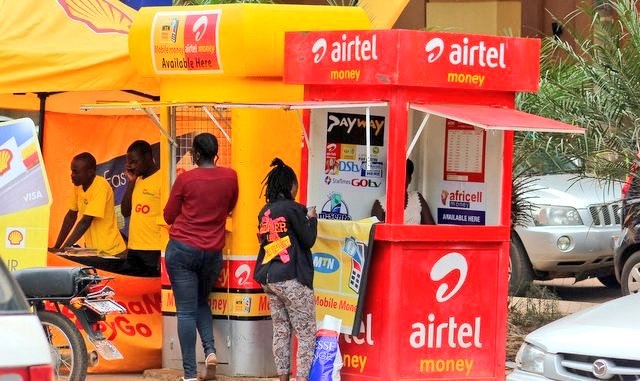
Arguably, MTN’s most transformative contribution came in 2009 with the launch of MTN Mobile Money (MoMo).
At the time, access to financial services was limited, especially in rural Uganda. MoMo changed that dramatically by allowing users to send, receive, and store money on their phones.
By 2012, MTN Mobile Money had over 1 million customers and 1,500 agent outlets across Uganda.
By that time, it had facilitated transactions worth over UGX 590 billion. This innovation democratized banking, especially for the unbanked, and laid the foundation for a fintech revolution in the country.
Another decade of competition wars, mergers, and exits
With strict regulation and stiff market competition, Uganda’s telecom industry experienced drastic change from 2007 onwards.
The industry saw the acquisition of Celtel in 2007, and the entrance of Warid Telecom in 2008, and Orange Telecom in 2009 (as a successor to HiTs telecom).
The operations of Warid Telecom and Orange Telecom were later taken over by Airtel Uganda and Africell Uganda, respectively in 2013 and 2014.
Other new entrants such as K2 Telecom, Vodafone Uganda and Smart Telecom emerged with a primary focus on broadband services.
As fate would have it, the new entrants didn’t live for long.

For instance, Africell’s exit from Uganda’s telecom market in 2021 marked the end of a difficult journey in a highly competitive and structurally unbalanced industry.
At its peak, Africell was Uganda’s third-largest telecommunications provider, with over 1.2 million subscribers.
Yet, it consistently struggled to gain significant traction in a market dominated by two giants—MTN and Airtel, who together controlled over 90% of the mobile telephony and data market.
For years, smaller players had attempted to break this duopoly, but most eventually folded under pressure. Africell’s departure followed a familiar script.
The company’s trouble started as early as 2014 when it took over the operations of Orange Uganda. What Africell inherited was not just the infrastructure and customer base, but also a company plagued by financial instability.
 6 Ugandans Arrested in Connection to USD 3.4 Mn Equity Bank Rwanda Digital Heist
By the time Africell took control, Orange Uganda had already posted significant losses. Africell’s financial health never recovered from this burden.
By 2019, its losses had ballooned to over UGX 1.5 trillion, while debts to tower operators and service providers continued to grow.
Despite promising a $150 million investment to overhaul and expand its network, Africell’s footprint remained largely urban, and its services failed to reach Uganda’s vast rural population.
Its 4G coverage never matched the breadth and reliability of MTN or Airtel, and this restricted its ability to compete on equal footing.
Although Africell attempted to carve a niche by offering competitively priced data bundles and positioning itself as a digital-first operator, it could not sustain these efforts in the face of constant price wars and limited spectrum access.
The official announcement of Africell’s exit in September 2021 did not, therefore, come as a surprise to industry insiders.
Uganda Telecom troubles

Uganda Telecom, or simply UTL, was poised to take its place among the titans of East Africa’s telecom renaissance.
But what began as a success story—a showcase of public-private partnership and cross-border investment—slowly unraveled into a harrowing saga of underfunding, political meddling, international sanctions, and corporate neglect.
Today, UTL, even under its new rebrand, stands as a hollow shell of what it once aspired to be, crippled under the weight of debt, dwindling market share, and a trail of broken promises.
In March 2011, the fall of Muammar Gaddafi triggered international sanctions that sent tremors across Libya’s far-reaching business empire.
UTL, as part of Libya’s state-backed Libya Africa Portfolio (LAP), became collateral damage.
Uganda, in line with UN resolutions, froze Libyan assets worth $375 million, including LAP’s majority stake in UTL.
Although the freeze was lifted in 2012, Gaddafi’s absence had left LAP rudderless.
The political chaos in Tripoli seeped into Kampala. Ugandan actors, emboldened by Libya’s weakness, began to play a selfish and cynical game—one that would slowly bleed UTL dry.
Despite the asset freeze lifting, UTL’s operational troubles deepened. In 2012, the company posted a UGX 132 billion turnover—a respectable performance given its precarious ownership.
Yet, it lagged far behind MTN, which posted a staggering UGX 1,007 billion, and Airtel’s UGX 368 billion.
But beneath these figures lay rot. A series of government failures—both acts of omission and commission—set UTL on a terminal path.
The government had failed to resolve UGX 165 billion in pension liabilities originating from the UPTC unbundling. It was a financial burden that hung around UTL’s neck like a millstone.
Worse still, government ministries and agencies—many of which were among UTL’s largest clients—refused to pay their bills.
By some estimates, 30% of UTL’s UGX 133 billion in uncollected receivables was owed by the government itself.
When UTL threatened to disconnect defaulting agencies, it was met with resistance, interference, and political intimidation.
The final betrayal came in the form of a refusal to grant capital investment.
LAP expressed readiness to invest in upgrading UTL’s obsolete 2G network, but government, wielding its influence as a shareholder, refused to allow further share dilution.
With no capital infusion, UTL remained stuck in the past, while its competitors surged ahead with 3G and later 4G rollouts.
In February 2015, Ali Amir, the company’s Managing Director, resigned. Mark Shoebridge, then Chief Fixed Services Officer, was appointed Acting MD in March 2015.
Strapped for cash and options, Shoebridge began selling off UTL’s prime properties.
That year, the telecom posted UGX 213 billion in turnover—but this was largely from property sales, not actual telecom revenue. Losses stood at UGX 169 billion.
In 2016, with no assets left to liquidate, UTL spiraled further. Revenue dropped to UGX 68 billion, and losses were UGX 84 billion.
The network was falling apart, market share evaporated, and cash flows dried up.
By this point, UTL had cost-cut itself to death, slashing overheads while revenues tanked and debt piled up.
In April 2017, the inevitable happened. UTL was declared insolvent and placed under administration. Shoebridge and his team, including board Chairman Stephen Kaboyo, stepped down.
The then registrar general of the Uganda Registration Services Bureau (URSB), Twebaze Bemanya, was appointed as the administrator.
Broken promises and political interference
Bemanya entered the stage with bold declarations and promises of reform. But he soon found himself hamstrung by the same forces that had paralyzed his predecessors.
Before his appointment, Finance Minister Matia Kasaija had sworn an affidavit that government would inject UGX 10 billion monthly into UTL to help it recover. Not a single shilling was disbursed.
By the end of 2017, UTL’s revenue had sunk to UGX 50 billion, while losses remained higher—UGX 56 billion.
A search for buyers began, but even that process was mired in political interference. Bemanya spent more time fighting boardroom wars in the media and Parliament than he did running the company.
In January 2020, prominent lawyer Ruth Sebatindira of Ligomarc Advocates was appointed the new administrator.
However, with no capital injections and mounting losses, her task was akin to administering CPR to a corpse.
Then came the government’s final move. On April 8, 2021, it registered a new company: Uganda Telecommunications Corporation Limited (UTCL).
The Minister of Finance was allotted 60% ownership, and the Minister of ICT and National Guidance, 40%.
In February 2022, UTCL signed an asset purchase agreement to acquire all UTL’s business and assets—a move that is yet to materialise into tangible results.
Airtel and MTN: A game of numbers

The next defining moment came in June 2010, when India’s Bharti Airtel acquired Zain Africa’s operations, including those in Uganda.
This acquisition brought the global Airtel brand into the Ugandan market, rebranding Zain Uganda as Airtel Uganda.
The entry of Bharti Airtel introduced not only a new name but also a new level of ambition, innovation, and investment.
Since the rebranding, Airtel Uganda has consistently positioned itself as a pioneer in Uganda’s telecom sector.
Among its landmark achievements was the rollout of 100% 4G and 5G LTE technology across all its sites, making it the first mobile network operator in Uganda to achieve this milestone.
This network expansion significantly improved service quality, especially in data speed and coverage, empowering millions of Ugandans to access fast, affordable internet across the country.
In addition to its technological milestones, Airtel Uganda has been instrumental in deepening financial inclusion and digital transformation through its Airtel Money channel and integrated digital services.
Its product offerings have evolved to meet the needs of a diverse customer base, from rural farmers to urban entrepreneurs, schools, and large businesses.
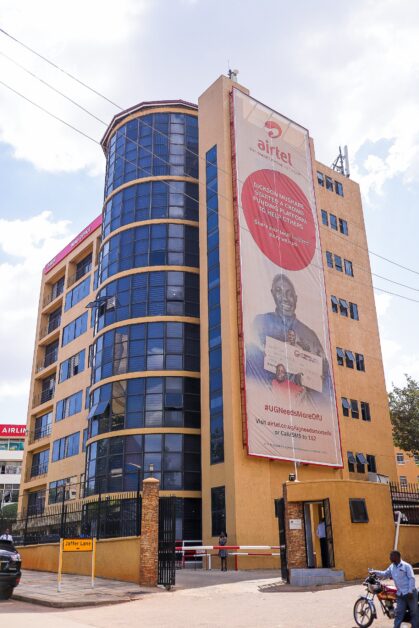
By the end of 2022, Airtel Uganda had grown to become the second-largest telecom operator in the country, serving over 13.8 million active subscribers across 146 districts.
Its listing in 2023 was a crowning moment
This expansive footprint underscores the company’s success in building a robust and inclusive mobile network.
Its journey from Celtel to Airtel is more than a story of rebranding—it reflects the broader shifts in Uganda’s telecom sector: liberalization, foreign investment, infrastructure modernization, and customer-driven innovation.
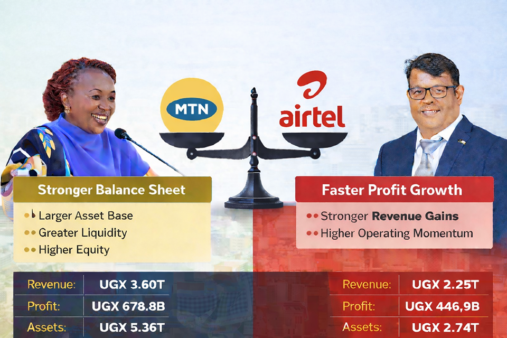
2024 also proved another competitive year for Airtel, in which Airtel reported a profit after tax (PAT) of UGX 316.7 billion for the 12 months to December 2024.
The UGX 316.7 billion was UGX 19.7 billion higher than the UGX 297 billion that the telecom reported in the 12 months to December 2023.
The growth was largely due to the telecom’s strong revenue performance, continued cost efficiencies, innovation, stable macroeconomic environment, and commitment to meeting the needs of clients and employees.
Airtel kept a sustained growth in 2024, with revenues of UGX 1.987 trillion, an 11.4% increase compared to UGX 1.784 trillion recorded in 2023.
Data revenue and value-added services saw significant growth in the past year, reaching UGX 961 billion compared to UGX 776 billion in 2023, primarily driven by a rise in data usage, with more clients accessing data services.
Voice revenue, including interconnect, was slightly above data revenues, reaching UGX 996 billion from UGX 980 billion in 2023, while the customer base grew by 13.9% compared to the previous year.
Whereas there’s no direct disclosure of its customer base for the full year, Airtel’s total revenue-earning customers stood at 15.6 million by the half-year of 2024.
The continued investment in network expansion and enhancement, coupled with an overall strategy to improve smartphone penetration, has seen a 13.9 percent increase in data usage per subscriber.
MTN Uganda has also kept pace, raking in UGX 3.17 trillion in total revenue, a monumental 18.9% leap from UGX 2.67 trillion in 2023.
The heartbeat of this growth? Service revenue, which hit UGX 3.14 trillion, up from 19.5% year-on-year.
Voice still echoes—but it’s data and MoMo that roar
In a world increasingly going digital, voice still matters. MTN’s voice revenue grew by 12.7%, totaling UGX 1.26 trillion.
With 2.6 million new subscribers added, bringing the base to 22 million, voice traffic grew by 18.8%.
But beneath the numbers was a subtle shift—the digital share of service revenue shrank from 42.5% in 2023 to 40.1% in 2024.
Why? Because MTN’s data and fintech segments caught fire.
Data revenue rocketed by 30.5%, climbing from UGX 622 billion to UGX 812 billion. It wasn’t just about more people coming online—it was how they were doing it.
Smartphone penetration rose to 44.9%, up from 39.1%. MTN’s device financing programme and relentless investment in 4G and 5G infrastructure (which grew from 37 to 538 5G sites) drove a 49% surge in data traffic.
And then came MTN MoMo—the golden goose
Fintech revenue surged 22.8% to UGX 947.5 billion, on the back of a 13.9% increase in active fintech users to 13.8 million.
MoMo was no longer just a mobile wallet; it had become a cornerstone of Uganda’s financial system.
With over 4.3 billion transactions processed (up 26.6%) and a transaction value of UGX 158.6 trillion (up 19.9%), MoMo now contributed 30.1% of total service revenue.
And it wasn’t just about basic wallets. MTN’s advanced services, like banktech and digital payments, grew 39.1%, accounting for 28% of MoMo revenue.
Behind the dazzling numbers lay a mountain of investment.
MTN committed UGX 418 billion in capex (excluding leases) in 2024, extending fiber footprint by 47.2% to 17,774 km and broadening 4G coverage to 87.9% of the population.
This is expected to be much higher by the close of 2025.
And 5G? That futuristic buzzword turned practical utility, now reaching 15.3% of the population.
Smartphone penetration rose to 44.9%, up from 39.1%. MTN’s device financing programme and relentless investment in 4G and 5G infrastructure (which grew from 37 to 538 5G sites) drove a 49% surge in data traffic.
Industry numbers
A UCC quarterly market performance report shows that by March 2025, Uganda had recorded 38.3 million active mobile cellular subscriptions, up from 37 million at the close of 2024.
The 3.5% growth represents an addition of more than 1.3 million new SIM cards in just three months and pushed the mobile penetration rate to 80.3 lines per 100 Ugandans.
A parallel trend is unfolding in phone ownership. The number of unique mobile device holders stood at 28.5 million, suggesting a continued narrowing of the gap between SIM card use and actual device access.
This surge in smartphone ownership is being driven by a wave of low-cost devices entering the market, many priced between UGX 100,000 and UGX 300,000.
Internet subscriptions also grew to 28.5 million, up from 27.3 million. The vast majority of this traffic—over 96%—is generated by mobile broadband, affirming the central role of mobile devices in Uganda’s digital ecosystem.
From social media scrolling and video streaming to mobile banking and digital learning, Ugandans are using their smartphones for more than ever before.
Financially, the telecom sector remained buoyant. The industry posted revenues of UGX 1.353 trillion in the first quarter of 2025, up from UGX 1.297 trillion in Q4 2024—a quarter-on-quarter increase of 4.3%.
Uganda’s telecommunications story offers a blueprint for reform in developing countries.That competition, if combined with sound regulation and political resolve, can transform public utilities from stagnant monopolies into engines of growth, connectivity, and social inclusion.