
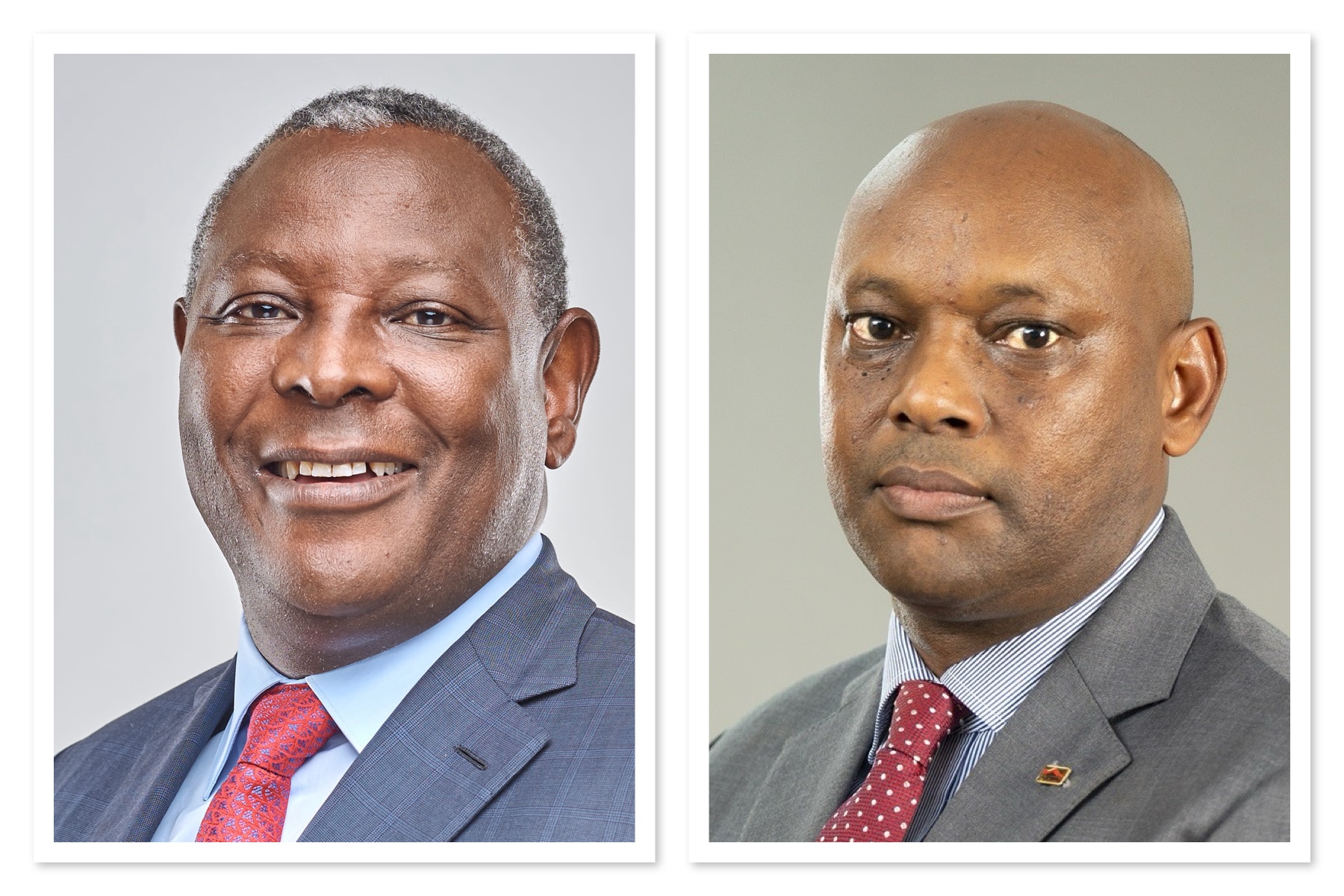
Hardly a few months after Equity Group CEO Dr. James Mwangi declared that the bank had purged “wrong elements” from its ranks in a sweeping integrity crackdown across the regional lender, a new fraud incident has surfaced at its Rwanda subsidiary, raising fresh questions about the persistence of financial crime risks within one of East Africa’s largest banking groups.
Equity Bank Rwanda confirmed on March 15, 2026 that it had detected and contained irregular transactions within its systems, triggering internal security and incident response procedures and reversing the majority of the transactions within 24 hours.
The bank said it is working closely with law enforcement and regulatory authorities, including the National Bank of Rwanda, as investigations into the incident continue.
“Our internal monitoring systems detected the irregular transaction activity and immediately triggered the security and incident response protocols in line with operational and risk management procedures,” Equity Bank Rwanda said in a public announcement issued from Kigali.
While the bank did not disclose the amount involved, the statement effectively confirms that a fraud incident occurred, even as the lender emphasised that the situation had been swiftly contained.
Bank says customers’ funds remain safe
Equity Bank Rwanda sought to reassure customers and stakeholders that deposits remain safe and that the incident had not affected customer balances.
“We wish to reassure our customers and stakeholders that customer deposits and accounts remain safe and secure, and the bank’s operations continue as normal. No customer funds have been lost,” the statement said.
The assurance suggests that any unrecovered funds would ultimately be absorbed by the bank itself rather than customers — a standard practice in banking where institutions reimburse affected accounts and provision for fraud losses through their own balance sheets.
Media reports allege multi-billion-franc fraud
Although Equity Bank Rwanda did not disclose the financial value involved in the incident, media reports in Rwanda have suggested that the fraud could involve billions of Rwandan francs.
A media report by Taarifa Rwanda alleged that the transactions under investigation may amount to approximately Rwf4.7 billion (about US$3–4 million), though the figure has not been independently confirmed by the bank.
According to the report, authorities have so far managed to recover about Rwf1.2 billion, leaving roughly Rwf3.5 billion still under recovery.
Investigators are still working to determine the precise amount involved and how the transactions were executed.
The report further alleges that at least 35 suspects are currently in custody as authorities expand the investigation. The Rwanda Investigation Bureau (RIB) is conducting forensic analysis of digital systems, financial transactions and electronic devices seized from suspects in an effort to trace how the fraudulent transactions were initiated.
Some of those under investigation are believed to be individuals whose bank or mobile money accounts received suspicious transfers linked to the scheme.
According to the Taarifa report, two employees from Equity Bank Rwanda’s IT department, working in areas related to data centre operations, have also been detained as investigators examine whether perpetrators may have gained technical or physical access to the bank’s systems.
The probe is also believed to have a cross-border dimension, with six suspects reportedly arrested in Uganda in connection with the case.
Digital forensic teams are now analysing devices and financial records obtained from the suspects to establish whether they were directly involved in the scheme or whether their accounts and identities were used by the network responsible for the fraud.
Related
 Uganda, Tanzania Move to Eliminate Trade Barriers in Bid to Correct UGX 9 Trillion Trade Imbalance
Integrity questions resurface after Mwangi crackdown
The Rwanda fraud incident comes months after Equity Group launched one of the largest internal anti-fraud crackdowns in the region’s banking sector.
Last year, the bank said it had dismissed more than 1,000 employees across its operations after internal investigations uncovered widespread fraud involving staff collusion and suspicious financial transactions.
At the time, CEO James Mwangi took a tough stance, warning that the institution would no longer tolerate corrupt practices within its ranks.
“I will clean the bank, and I will be ruthless. This is not a toll station,” Mwangi said during the integrity campaign.
The Rwanda incident highlights the ongoing challenge financial institutions face in managing operational risks in increasingly digital and interconnected financial ecosystems.
Growing cyber-fraud risks across East Africa
The investigation also underscores the broader risks facing banks across East Africa as digital banking and mobile money systems continue to expand rapidly.
Banks across the region now process millions of transactions daily through mobile banking platforms, agent networks, internet banking systems and third-party financial technology providers. While this infrastructure has dramatically expanded financial inclusion, it has also created new operational and cybersecurity vulnerabilities that sophisticated fraud networks are increasingly exploiting.
Equity Group, one of the region’s largest banking institutions, has itself faced several high-profile fraud incidents in recent years, illustrating the scale of the challenge confronting banks operating large digital ecosystems.
In Uganda in 2024, Equity Bank was linked to one of the largest suspected banking frauds in the country after investigators uncovered irregular transactions estimated at UGX 65 billion (about US$17 million) linked to its Eazzy Stock digital lending platform, a financing facility used by small retailers to purchase inventory. The case raised concerns about weaknesses in digital credit systems and internal controls.
The bank was also reportedly exposed to an additional UGX 4 billion loss from unreconciled Visa-enabled card transactions, highlighting vulnerabilities in online payment monitoring systems.
Earlier cases across the group have also involved insider fraud and documentation manipulation. In one instance reported in Kenya, an Equity Bank Uganda operations manager was charged in court over the alleged theft and laundering of about US$2.8 million (Sh274 million) from the lender.
Other cases reported in the region have included title deed fraud schemes worth roughly Sh490 million, where the same property was allegedly used to secure loans from multiple lenders, as well as disputes involving fraudulent teller transactions exceeding Sh39 million and payment instructions linked to forged documents worth Sh26.2 million.
The recurrence of such incidents prompted Equity Group CEO Dr. James Mwangi to launch a sweeping internal integrity purge across the bank’s regional operations.
Equity Bank Rwanda in a statement, said it is continuing to strengthen its cybersecurity infrastructure and internal monitoring systems as the investigation progresses.
“Equity Bank Rwanda maintains a zero-tolerance approach to financial crime and continues to strengthen its cybersecurity infrastructure, transaction monitoring systems, and internal controls to safeguard customer assets and maintain the highest standards of financial security,” the bank said.
Authorities are expected to release further details once forensic investigations are completed and investigators determine how the fraudulent transactions were executed and who was responsible for the scheme.