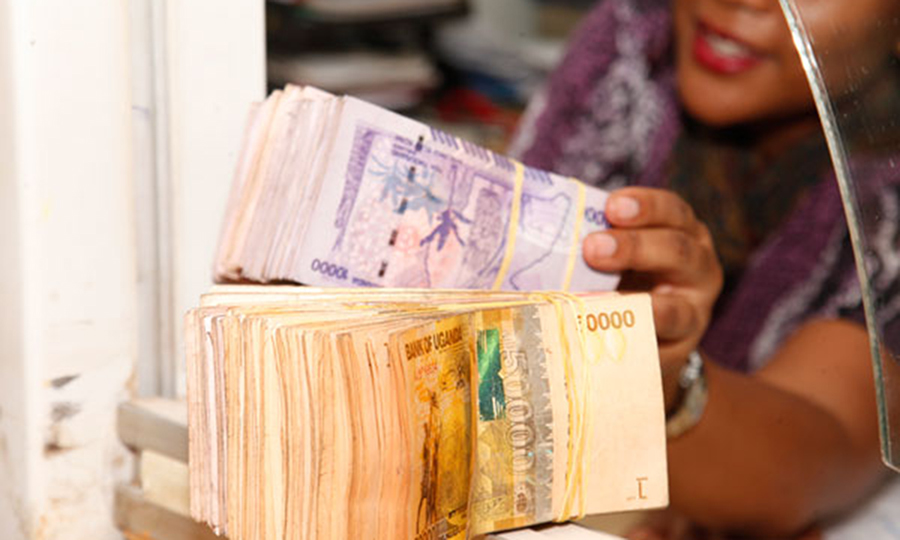
A fixed deposit is the plainest promise a bank can make. Lock away your money for a set period, and in return, you get a guaranteed return.
It is designed for savers who prefer certainty over speculation.
But why do banks pay more for fixed deposits than for ordinary savings accounts? The answer lies in how banking itself works.
Logic behind fixed deposits
At its core, banking is a balancing act between borrowing and lending. Deposits are liabilities; loans are assets.
Banks attract funds through current, savings, and fixed accounts. Current accounts offer liquidity but no interest.
Savings accounts pay a modest return but allow withdrawals. Fixed deposits, by contrast, tie up money for a fixed term.
That commitment is valuable to banks because it provides predictable, stable funding.
With that pool of assured funds, banks extend credit, home loans, business loans and car loans, at rates well above what they pay depositors.
The spread between lending rates and deposit rates is the bank’s profit margin.
As banking consultant Daniel Babonereirwe explains: “Loans are a bank’s assets and deposits are its liabilities.”
“By fixing money, you are essentially lending to the bank for a defined period, knowing you cannot call it back until maturity.”
For the depositor, the higher rate is compensation for giving up liquidity; for the bank, it is the oxygen that keeps its lending machine running.
“The certainty is what banks crave,” Babonereirwe adds.
“If I have UGX1 billion in a current account, the bank cannot know if I will withdraw it tomorrow. But if I fix that amount for six months or a year, the bank can count on it and plan its lending accordingly.”
Why people fix money
At heart, fixing money is about fixing time. The calculation is simple: principal, rate, and tenure.
Yet the decision is rarely only mathematical; it is also about the motives behind holding money. Economic theory identifies four such motives: transactions, precaution, speculation, and investment.
Money meant for daily spending sits best in a current account, where liquidity is absolute.
Funds kept for precaution, say, a medical emergency or school fees due next term, fit in a savings or short-term fixed deposit.
Money held in anticipation of an investment opportunity may sit in a savings account until the opportunity materialises.
And money set aside purely to earn a return, where the investor is willing to give up access for a period, belongs in a fixed deposit.
“The bank gets from those who have money and lends to those who don’t. Some people have more money than the ideas or the energy to pursue them,” Babonereirwe explains.
“For such people, fixing money is rational, you put it away, the bank uses it, and you earn your return without lifting a finger.”
Liquidity, flexibility, and risk
Fixed deposits are near-liquid assets. The money is cash-like, but subject to a time lock.
If an investor fixes UGX 1 billion at 11% for a year, yet six months in discovers a business opportunity yielding 30 percent, they can “break” the deposit.
The principal is returned, but interest is usually forfeited or reduced depending on the bank’s terms.
Some banks offer “window” fixed deposits, allowing partial withdrawals without losing all accrued interest.
Salary earners, for instance, may channel part of their monthly pay into a fixed deposit, while retaining partial access. Such arrangements depend on client–bank negotiations.
Owen Amanya, CEO of Opportunity Bank, says individuals should treat fixed deposit accounts as investment products.
“A fixed deposit account is one of the easiest investment products anyone can use,” he explains.
“You simply agree with the bank and fix the money. It doesn’t require opening a central securities depository account like bonds or equities.
“With other vehicles, such as equities and bonds, you must follow markets and calculate risks, but with fixed deposits, that complexity isn’t there,” he says.
Negotiating with the bank
 Equity Group Posts Record 55% Surge in Profit to KSh75.5b: Uganda Bounces Back With 500% Growth in Net Profit - A Defining First Year for MD Gift Shoko
Negotiation power depends on two variables: the size of the deposit and the length of the term.
“Your ability to negotiate is directly proportional to the amount and period you are fixing,” says Babonereirwe.
A saver with UGX 1 billion to lock up for two years is in a stronger position than someone fixing UGX 300,000 for three months.
The former can bargain for a higher rate; the latter is more likely to accept the posted rate.
For retirees, fixed deposits can be structured as passive income. Interest payouts can be directed monthly into a current account, leaving the principal untouched.
In this way, the deposit works like an annuity; the money now works for the saver, rather than the saver working for the money.
Comparing investments
For many Ugandans, land and buildings are the default investment. Yet returns on real estate often lag behind fixed deposits once costs are factored in.
Rental income can be eroded by maintenance, tenant disputes, and vacancies.
By contrast, an 11% fixed deposit requires no effort beyond the initial placement.
In Uganda, fixed deposits typically yield between 8 and 12%, depending on tenure and the bank’s appetite for funds.
Savings accounts return far less, while government securities often pay more. A six-month Treasury bill may yield 15–16%, and long-dated government bonds can exceed 17%.
Unit trusts, pooling investor money across Treasury bills, bonds, and equities, have returned between 10 and 13% in recent years.
The trade-off is risk and complexity. Government securities and unit trusts can fluctuate in value; a fixed deposit cannot.
For the cautious saver, the fixed deposit remains the plainest, and perhaps the most trusted, promise in banking.
Taxes and net returns
Ugandan law subjects fixed deposit interest to a 15% withholding tax, deducted at source by the bank. That reduces the net return but provides clarity: savers know upfront what they will receive after tax.
Suppose you fix UGX 100 million in a one-year deposit at 11%. The bank credits UGX 11 million in gross interest.
After a 15% tax deduction of UGX 1.65 million, you receive UGX 9.35 million net, bringing your total maturity amount to UGX 109.35 million.
By contrast, the same UGX 100 million in a six-month Treasury bill yielding 16% annualised could earn about UGX 8 million in half a year (before tax), and more if rolled over.
Unlike bonds or unit trusts, however, a fixed deposit shields savers from day-to-day price swings.
Paul Sefa-Badu, Head of Wealth and Retail Banking at Standard Chartered Bank, says most rates in fixed deposits range from 11 to 14% because a bank looks at what the central bank is paying on short-term Treasury bills and then uses the tenor to determine the return.
“Once you fix the deposit, your return is locked in; it doesn’t matter whether interest rates rise or fall the next day, the bank must honour the agreed rate,” he says.
The hidden cost of impatience
For all their simplicity, fixed deposits are not foolproof. One of the most common mistakes is treating them like flexible savings accounts.
Sefa-Badu observes that many clients commit to a one or two-year tenor, only to pull out the funds midway when other financial needs arise.
“You might not even get that interest at all,” he warns.
“Before you enter any investment, you need proper planning. Be sure when you’ll really need that money back, say in a year or six months, so that you can collect the full interest at maturity,” he explains.
This impatience can be costly. Fixed deposits reward discipline; break them early and you forfeit the return you locked in, and in some cases, may incur penalties.
Unlike a mobile wallet, encashing a fixed deposit ahead of schedule is not instant.
The lesson is that fixed deposits work best when matched to realistic time horizons.
If your liquidity needs are uncertain, it is better to split funds across different maturities, say, three, six, and 12 months, rather than locking everything up for a year.
In the end, the biggest risk with fixed deposits is not market volatility, it is human behaviour.
A lack of planning, or a sudden bout of impatience, can quietly erode the very returns that made the product attractive in the first place.